
lovethailand home >South Travel Attractions >Songkhla Travel Attractions >Muang Songkhla >Bo Yang > Songkhla City Pillar Shrine
TL;DR: Songkhla City Pillar Shrine is located at Nang Ngam Road, Bo Yang Subdistrict, Mueang Songkhla District, Songkhla Province 90000, open Daily, hours 07.00 – 17.00.
Songkhla City Pillar Shrine
Open Days: Daily
Opening Hours: 07.00 – 17.00
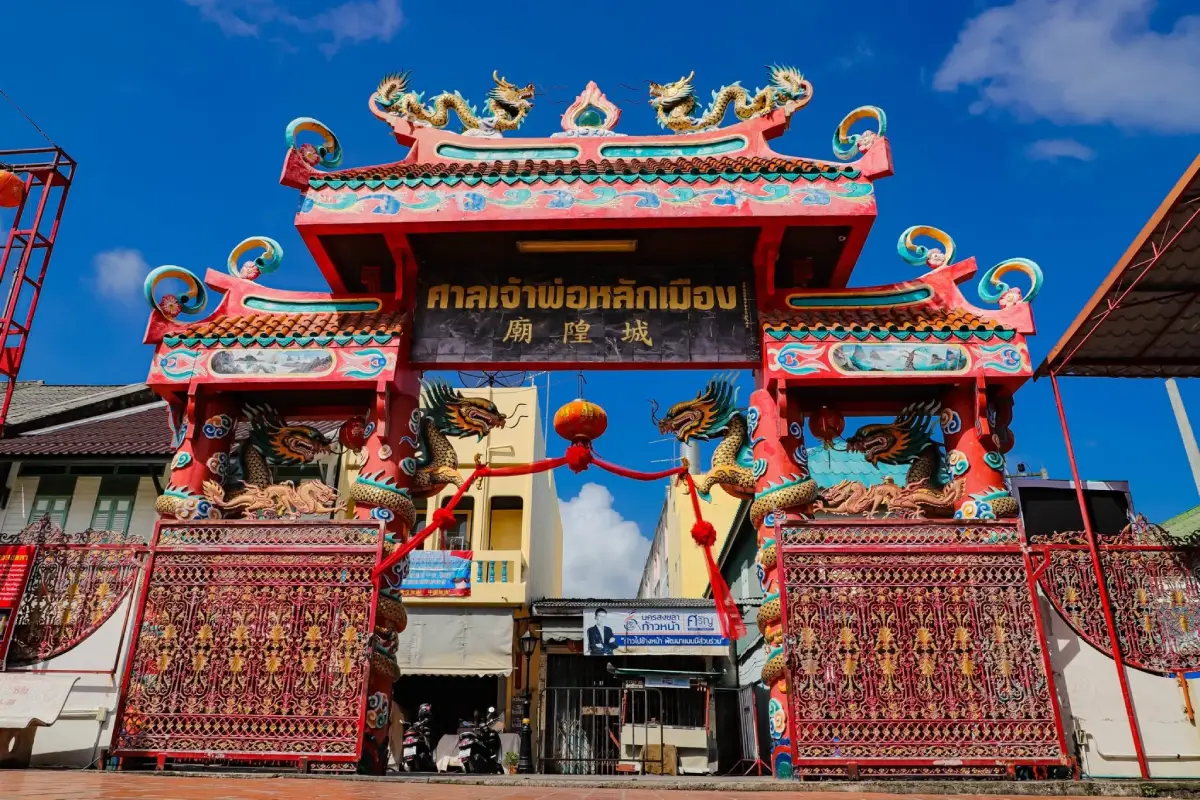
Songkhla City Pillar Shrine, locally known as San Chao Pho Lak Mueang Songkhla, stands on Nang Ngam Road in Bo Yang Subdistrict, Mueang Songkhla District, Songkhla Province. It is one of the most important spiritual and historical landmarks in Songkhla Old Town. The shrine brings together the story of the city’s founding, Thai and Thai-Chinese beliefs, Chinese shrine architecture, and the everyday life of one of southern Thailand’s most atmospheric old-town food streets. Visitors can pay respect to the city pillar and guardian deities, admire the Chinese-style shrine, and continue walking to Nakhon Nai Road, Nakhon Nok Road, local dessert shops, old restaurants, museums, and lakefront heritage sites in the same trip.
Songkhla Old Town offers a different rhythm from Hat Yai, the province’s larger commercial and transport hub. The old town is quieter, slower, and more intimate, with historic shophouses, narrow streets, long-running local restaurants, Chinese shrines, and community spaces that still feel closely connected to daily life. The area around Nakhon Nok Road, Nakhon Nai Road, Nang Ngam Road, and Yala Road preserves a distinctive mix of Chinese, Sino-Portuguese, Sino-European, and old commercial architecture. With Songkhla City Pillar Shrine as a starting point, travelers can understand the old town not only as a photogenic heritage quarter, but as a living cultural landscape shaped by trade, migration, faith, and food.
The shrine is a Chinese-style building on Nang Ngam Road, a road historically linked with the city pillar celebration and the old Kao Hong, or Nine Rooms, quarter. Its location is one of the reasons it is so rewarding to visit. The shrine does not stand apart from the town; it sits within a walkable neighborhood of old houses, food shops, dessert stalls, and historic lanes. A visit here therefore combines worship, architecture, community history, and local cuisine within a compact area. This is what makes Songkhla City Pillar Shrine one of the most practical and meaningful entry points into Songkhla Old Town.
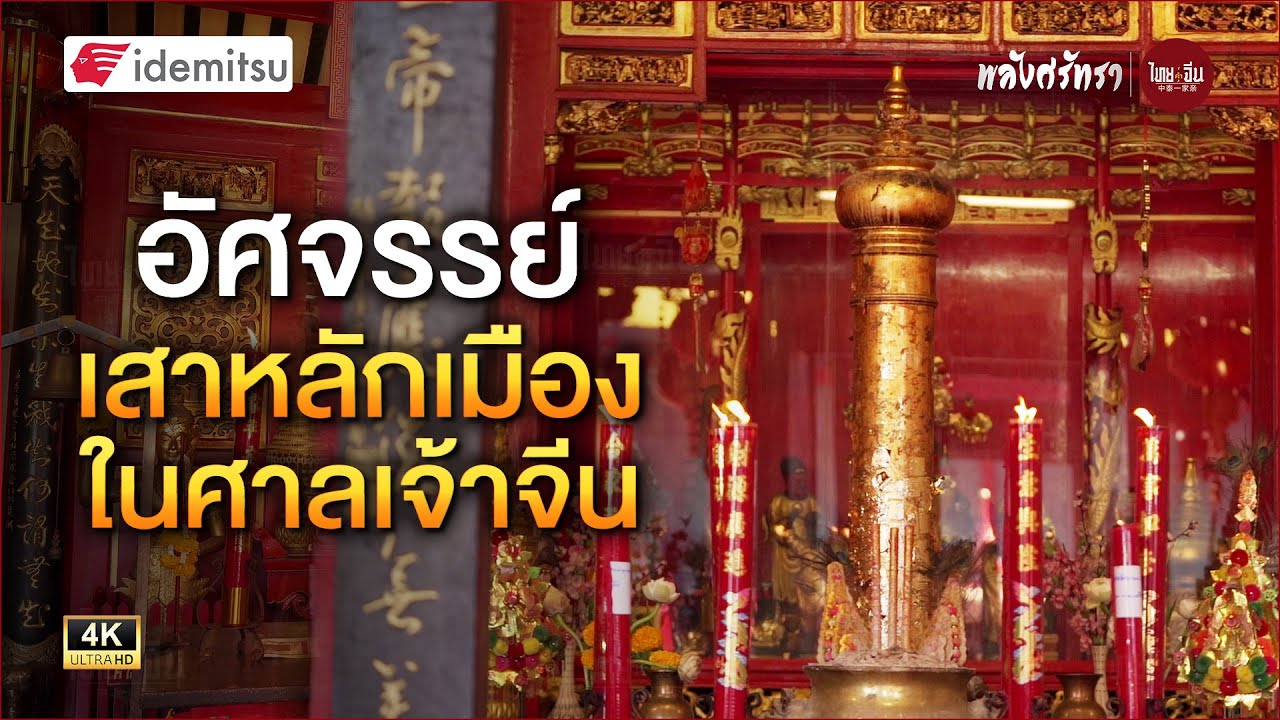
The history of Songkhla City Pillar Shrine is closely connected with the establishment of Songkhla on the Bo Yang side during the Rattanakosin period. The city pillar was made from Chaiyaphruek wood and was granted by King Rama III as the symbolic pillar of the city. The ceremony to install the city pillar took place on 10 March 1842, during the time of Phraya Wichian Khiri, also known as Thian Seng Na Songkhla, who governed Songkhla at that time. This date remains a major historical marker because it represents the formal laying of the city’s spiritual and administrative foundation.
The original city pillar ceremony in 1842 combined Buddhist, Brahmin, Thai, and Chinese elements. Royal monks and Brahmin priests were assigned to preside over the ritual, while local Thai and Chinese communities took part in the procession that brought the Chaiyaphruek pillar and ceremonial candle to the city center. After the pillar was installed, a five-day and five-night celebration followed, with performances such as khon-style theatre, puppetry, Chinese opera, and Nora or southern dance-drama. These details show that Songkhla was already a multicultural port city, and that the city pillar shrine became a shared sacred space from the beginning.
After the installation of the city pillar, Chinese-style buildings were constructed over and around the pillar, and an additional shrine for the city guardian spirit was also built. This gives Songkhla City Pillar Shrine a distinctive identity. Unlike many city pillar shrines in Thailand that follow a more clearly Thai architectural language, this shrine expresses the meeting point between Thai city-pillar belief and Chinese guardian-deity worship. The city pillar therefore functions both as the city’s symbolic foundation and as a spiritual focus for Thai and Thai-Chinese communities.
In 1917, during the reign of King Rama VI, the city pillar was restored after the original structure had deteriorated. Merchants and residents of Songkhla contributed funds to create a new, more durable city pillar using concrete. The replacement ceremony took place on 1 March 1917. This restoration was more than a repair project. It demonstrated the community’s commitment to preserving the city’s spiritual center and confirmed the shrine’s role as a place sustained by public faith, local memory, and shared responsibility.
The shrine was registered as an ancient monument by the Fine Arts Department on 25 February 1935, with the announcement published in the Royal Gazette on 8 March 1935. This status confirms the shrine’s value as both a place of worship and a cultural heritage site. Visitors should therefore treat the site with respect. Modest clothing, quiet behavior inside the shrine, and sensitivity toward local worshippers are appropriate. The best visit is one that recognizes the shrine as a sacred place first and a tourist attraction second.
One of the first architectural details visitors notice is the pair of stone lions at the entrance. Paired lions are an important element in Chinese shrine architecture and traditionally symbolize protection, authority, and auspicious guardianship. After passing through the entrance, visitors encounter the worship areas where the city pillar and several deities are enshrined. The combination of the city pillar, Chinese guardian gods, and local historical figures makes the shrine an especially strong example of Chinese religious culture in a Thai southern port-town setting.
Inside the shrine are the city pillar, Chao Pho Lak Mueang, also known as Seng Thong Lao Ia, Phra Suea Mueang, the Goddess Tubtim, Lim Ko Niao, the Tiger God, Guan Yin, King Rama V, Phraya Songkhla, and other deities. This diversity makes the shrine more than a single-purpose place of worship. Local residents and visitors come to pray for protection, stability, good fortune, health, business success, and family wellbeing. The shrine remains especially meaningful to Thai-Chinese communities in Songkhla and nearby provinces.
The annual celebration of Songkhla City Pillar Shrine is one of the clearest expressions of its continuing importance. The festival includes rituals such as raising the Ko Teng pole, carrying deities in processions, parading around the city, candle-circling rituals for removing misfortune, birthday worship for the city guardian deity, lion dances, dragon dances, and Chinese opera performances at night. During the festival, Nang Ngam Road and nearby areas become lively with red lanterns, local food stalls, community activities, and worshippers from across the region. For travelers who want to see the shrine at its most vibrant, the annual celebration is the most memorable time to visit.
Nang Ngam Road is another reason this shrine should be included in any cultural itinerary for Songkhla. Around the shrine are long-established restaurants and dessert shops selling local dishes and sweets such as Songkhla-style stew rice, large steamed buns, traditional ice cream, roti, tofu pudding, sampanni, thong muan, thong phlap, and khao tu. These foods reflect the layered cultural influences of Thai, Chinese, Muslim, and port-city communities. A visit to the shrine can therefore be combined naturally with a food walk, making the experience useful for both cultural travelers and food-focused visitors.
Songkhla was recognized as a UNESCO Creative City of Gastronomy in 2025, which adds a current global context to the old town’s food culture. Songkhla’s culinary identity draws on the resources of Songkhla Lake and the Gulf of Thailand, as well as Thai, Chinese, Indian, Muslim, and Javanese influences. In the old town, these influences are not abstract. They appear in everyday dishes, old family recipes, street food, heritage restaurants, and local sweets. Because Songkhla City Pillar Shrine sits directly within this food heritage area, travelers can understand the city through both worship and cuisine in a single walkable route.
A practical walking route can begin at Songkhla City Pillar Shrine, continue along Nang Ngam Road for old shops and local food, move toward Nakhon Nai Road for historic buildings and Ban Nakhon Nai, and then continue to Nakhon Nok Road and Hub Ho Hin, the red rice mill near Songkhla Lake. This short route gives visitors architecture, local life, food, photography, and historical context without requiring a car once they are in the old town. Travelers with more time can continue to Phathammarong Museum, Tang Kuan Hill, Samila Beach, and the Golden Mermaid statue.
For architecture lovers, the shrine rewards close observation. The entrance, paired lions, roofline, shrine hall, Chinese characters, deity images, and ceremonial layout all communicate the cultural role of Chinese communities in Songkhla. When viewed together with the nearby shophouses and Sino-European buildings, the shrine helps explain how Songkhla developed as a port city where faith, trade, family networks, and food culture grew side by side. This makes the shrine valuable not only for worshippers but also for travelers interested in urban heritage.
Visitors who plan to worship should allow at least 30 minutes to 1 hour at the shrine. Those who want to combine worship with an old-town walk should allow 2 to 3 hours or more. Morning and late afternoon are usually the most comfortable times to walk around the old town, especially for photography and food stops. Inside the shrine, visitors should speak softly, avoid blocking worshippers, and follow any instructions from shrine staff. Photography should be discreet and respectful, particularly when people are praying.
Getting There is easiest by private car, rental car, taxi, local hired vehicle, or local public transport to Nang Ngam Road in Bo Yang, Mueang Songkhla. From Hat Yai, the drive to Songkhla Old Town generally takes about 40 to 60 minutes depending on traffic. Once in the old town, walking is the best way to explore because the streets are narrow and many important places are close to each other. Visitors arriving by public transport from Hat Yai can take a van or bus to Songkhla city, then continue by local transport to Nang Ngam Road.
Songkhla City Pillar Shrine is especially valuable because it gives travelers a complete view of Songkhla’s cultural identity in one place. It explains the city’s founding through the city pillar, preserves Thai-Chinese spiritual practice through its deities and rituals, connects to the old town through Nang Ngam Road, and links naturally with the city’s food heritage. For anyone planning a meaningful visit to Songkhla Old Town, this shrine is not just one stop on the route. It is the historical and spiritual center that helps the rest of the old town make sense.
| Name | Songkhla City Pillar Shrine |
| Location | Nang Ngam Road, Bo Yang Subdistrict, Mueang Songkhla District, Songkhla Province 90000 |
| Address | Nang Ngam Road, Bo Yang, Mueang Songkhla, Songkhla 90000, Thailand |
| Coordinates | 7.1965361, 100.5885169 |
| Highlights | A Chinese-style city pillar shrine in Songkhla Old Town, enshrining the city pillar and Chao Pho Lak Mueang on historic Nang Ngam Road |
| History | A Rattanakosin-period ancient monument associated with the establishment of Songkhla on the Bo Yang side in 1842; the city pillar was restored in 1917 |
| Name Origin | The name refers to the city pillar and the guardian deity believed to protect Songkhla and its people |
| Distinctive Features | Chinese shrine architecture, paired guardian lions, the city pillar, Chao Pho Lak Mueang, and several Thai-Chinese deities enshrined in one sacred complex |
| Key Evidence | The city pillar, the 10 March 1842 installation history, the 1917 restoration, and the 25 February 1935 Fine Arts Department ancient monument registration |
| Travel Information | Reach Nang Ngam Road by private car, rental car, taxi, local hired vehicle, or local public transport. Once in Songkhla Old Town, walking is the best way to visit the shrine, old streets, food shops, and nearby heritage sites |
| Current Status | Open for worship and cultural visits; remains an important city shrine and heritage attraction in Songkhla Old Town |
| Open Days | Daily |
| Opening Hours | 07.00 – 17.00 |
| Fees | No admission fee |
| Facilities | Worship area inside the shrine, local food and dessert shops along Nang Ngam Road, and walkable old-town streets nearby |
| Main Areas / Zones | 1. Entrance and paired guardian lions 2. City pillar worship area 3. Chao Pho Lak Mueang worship area 4. Deity worship area inside the shrine 5. Nang Ngam Road and old-town food area |
| Caretaker | Mr. Sakkaphan Anantphong, President of Songkhla City Pillar Shrine |
| Official Website / Official Page | Songkhla City Municipality - Tourist Attractions Section |
| Nearby Tourist Attractions | 1. Nang Ngam Road and Songkhla Old Town, about 0 km 2. Ban Nakhon Nai, about 0.3 km 3. Hub Ho Hin Red Rice Mill, about 0.4 km 4. Songkhla Tae Raek Walking Street, about 1 km 5. Phathammarong Museum, about 1 km 6. Tang Kuan Hill, about 1 km 7. Golden Mermaid Statue at Samila, about 2 km |
| Nearby Restaurants | 1. Khao Stu Kiat Fang, about 0.1 km, Tel. 074-311-998 2. Chin Kua Yuan Ice Cream Yiw, about 0.2 km, Tel. 074-311-104 3. Roti Nang Ngam 111, about 0.2 km, Tel. 085-958-2462 4. Nakhon Nai Suki, about 0.4 km, Tel. 074-314-146 5. Ancient Yen Ta Fo Je Paed, about 0.3 km 6. Itim Ong Nang Ngam, about 0.2 km, Tel. 074-315-594 |
| Nearby Accommodations | 1. The Roo Classic Hometel, about 0.3 km, Tel. 081-823-1433 2. Songkhla Tae Raek Antique Hotel, about 0.5 km, Tel. 094-317-3338 3. A.List Hotel Songkhla, about 1 km, Tel. 092-740-6600 4. Club Tree Hotel, about 2 km, Tel. 074-313-888 5. Montana Hotel, about 2 km, Tel. 074-300-614 6. The Bed Vacation Rajamangala Hotel, about 3 km, Tel. 087-674-4444 |
Frequently Asked Questions (FAQ)
Q: Where is Songkhla City Pillar Shrine located?
A: Songkhla City Pillar Shrine is located on Nang Ngam Road, Bo Yang Subdistrict, Mueang Songkhla District, Songkhla Province, within Songkhla Old Town.
Q: What are the opening hours of Songkhla City Pillar Shrine?
A: The shrine is open daily from 07.00 to 17.00.
Q: Is there an admission fee for Songkhla City Pillar Shrine?
A: No. There is no admission fee to enter the shrine.
Q: Why is Songkhla City Pillar Shrine important?
A: It is the city shrine of Songkhla’s Bo Yang side, connected with the city pillar installation ceremony on 10 March 1842 and regarded as a spiritual center for local communities.
Q: What can visitors see inside Songkhla City Pillar Shrine?
A: Visitors can see the city pillar, Chao Pho Lak Mueang, paired guardian lions, and several deities including Phra Suea Mueang, the Goddess Tubtim, Lim Ko Niao, the Tiger God, Guan Yin, King Rama V, and others.
Q: What nearby places should travelers visit with Songkhla City Pillar Shrine?
A: Good nearby places include Nang Ngam Road, Ban Nakhon Nai, Hub Ho Hin Red Rice Mill, Songkhla Tae Raek Walking Street, Phathammarong Museum, Tang Kuan Hill, and Samila Beach.
Q: Does Songkhla City Pillar Shrine have an annual festival?
A: Yes. The annual celebration includes rituals such as raising the Ko Teng pole, deity processions, city parades, candle-circling rituals, lion dances, dragon dances, and Chinese opera performances.
Q: How can travelers get to Songkhla City Pillar Shrine?
A: Travelers can go by private car, rental car, taxi, local hired vehicle, or local transport to Nang Ngam Road. From Hat Yai, the drive to Songkhla Old Town usually takes about 40 to 60 minutes depending on traffic.
 Category: ●Places of Worship
 Group: ●Other Sacred Sites
Last Update : 2 MonthAgo
 Last Update : 2 MonthAgo
 Click to Access the Navigation Map GPS
Songkhla City Pillar Shrine Map
Recommend

 Art, Culture and Heritage
 Historical Sites and Monuments(2)
 Landmarks and Memorials(7)
 Royal Palace(1)
 Art, Craft Centres, Tradition(4)
 Museums(4)
 Art Gallery(1)
 Educational Places
 Library(1)
 Educational Gardens, Farm(3)
 Temple(52)
 Mosque(2)
Other Sacred Sites(11)
 Suburban Living
 Village, Community(3)
 Local Market(3)
 Floating Market(2)
 Nature and Wildlife
 National Parks and Marine Reserves(5)
 Mountain (Doi)(6)
 Dam, Reservoir, Lake(5)
 Waterfalls(12)
 Caves(4)
 River, Canal(2)
 Bays and Beaches(13)
 Islands(3)
 Other natural attractions(2)
 Entertainment and Agricultural
 Zoos and Aquariums(2)
 Animal camps and shows(1)
 Farms, Parks and Ecotourism(6)
 Waterpark(1)
 Travel Articles, Recipes
 Travel Review, Food Review(1)
 Southern Food Menu, Southern Food Recipes(2)


