
lovethailand home >North Travel Attractions >Phitsanulok Travel Attractions >Muang Phitsanulok >Nai Muang > City Pillar Shrine
TL;DR: City Pillar Shrine is located at Western bank of the Nan River, Nai Mueang Subdistrict, Mueang Phitsanulok District, Phitsanulok Province, open Daily, hours 06.00 – 18.00.

City Pillar Shrine
Open Days: Daily
Opening Hours: 06.00 – 18.00
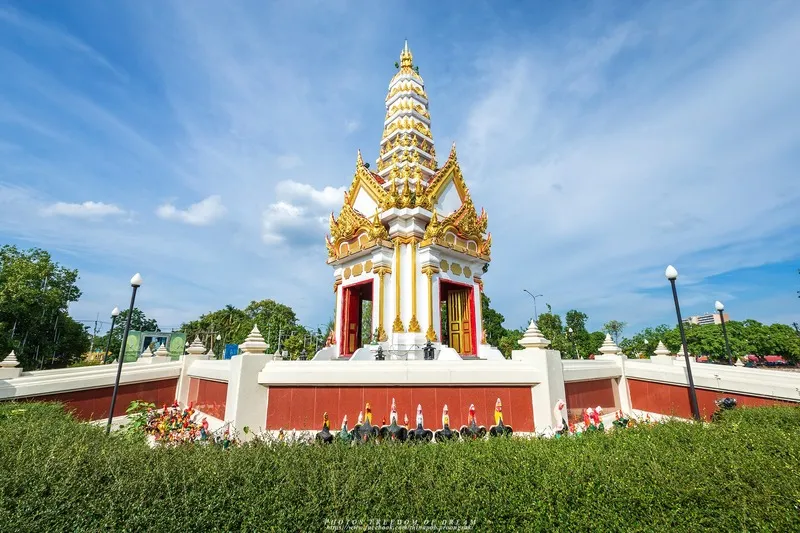
Phitsanulok City Pillar Shrine is one of the most meaningful historical and cultural landmarks in Phitsanulok Province. Located on the western bank of the Nan River, near the Mueang Phitsanulok District Office and within easy reach of major old-town attractions, the shrine is a sacred place where local residents and visitors come to pay respect, make wishes, and learn about the spiritual foundation of the city. It is also an excellent starting point for travelers who want to explore Phitsanulok through its temples, riverside scenery, local food, and historical sites in one convenient route.
The shrine is important not only because it houses the city pillar, but also because it represents the deep relationship between the city, faith, public ritual, and local identity. For Thai communities, a city pillar shrine is more than a religious structure. It is regarded as a spiritual anchor of the city, a place that symbolizes stability, protection, prosperity, and continuity. In Phitsanulok, this meaning is especially strong because the city has long been one of the most historically significant urban centers in the lower northern region of Thailand.
The location of Phitsanulok City Pillar Shrine adds another layer of meaning to the visit. The Nan River has shaped the development of Phitsanulok for centuries as a route of settlement, transport, trade, and community life. By standing close to the river, the shrine visually and symbolically connects the city’s spiritual center with its natural landscape. Visitors who come here can feel how the sacred space, government area, riverside setting, old temples, and local neighborhoods all form one continuous cultural environment.
The shrine building was designed by the Fine Arts Department of Thailand in the form of a prang-style structure. Its base is 16.60 meters wide and the building rises to a height of 10.65 meters. The prang form gives the shrine a graceful and dignified appearance, drawing from traditional Thai architectural language associated with sacredness, verticality, and spiritual elevation. Although the structure is not massive, its proportions, roofline, and symbolic shape make it one of the most distinctive religious landmarks in the old town area.
At the heart of the shrine is the city pillar itself. The pillar was made from several types of auspicious wood, each carrying a specific cultural meaning. The main section from the base to the carved body was made from golden shower wood, a tree associated with prosperity and auspiciousness in Thai culture. The upper rounded section was made from rosewood, a strong and durable hardwood symbolizing stability and strength. The lotus-bud top and crystal-like decorative element were made from golden teak, a highly valued wood often associated with sacred craftsmanship and refined Thai artistry.
The careful selection of these auspicious woods reflects the Thai belief that sacred objects should carry both physical quality and spiritual meaning. The Phitsanulok city pillar was not created merely as a ceremonial object; it was crafted to embody stability, good fortune, protection, and collective confidence. For this reason, people come to the shrine not only to admire the architecture but also to seek blessings for life stability, career progress, safe journeys, family well-being, and new beginnings.
Before being installed at the shrine, the city pillar was consecrated in a Buddhist ceremony at Wat Phra Si Rattana Satsadaram, commonly known as the Temple of the Emerald Buddha, in Bangkok. This ceremony added strong religious and ceremonial significance to the pillar. It also reflects the close connection between Buddhism, royal ritual, public authority, and the Thai tradition of establishing sacred city centers. For visitors, this background helps explain why the shrine is treated with such respect by local people.
Phitsanulok City Pillar Shrine was established on 8 April 1997. This date remains significant because the province holds an annual worship and celebration ceremony for the city pillar around early April. The event usually includes formal rites, cultural performances, traditional dances, offerings, and public participation. For travelers interested in living culture, visiting during this period provides an opportunity to see how the shrine continues to function in the social and ceremonial life of the city, not merely as a static monument.
For local residents, the shrine is a place of personal devotion and collective memory. Many people visit before starting important journeys, beginning new work, making major decisions, or seeking peace of mind. For the city as a whole, the shrine stands as a symbol of continuity. It reminds visitors that Phitsanulok is not just a transit city between central and northern Thailand, but a province with deep historical roots, significant religious heritage, and a strong sense of local identity.
For travelers, the shrine is especially convenient because it sits close to many of Phitsanulok’s most important attractions. Wat Phra Si Rattana Mahathat, also known as Wat Yai, is only a short distance away and houses the highly revered Phra Phuttha Chinnarat Buddha image. Wat Nang Phaya, Wat Ratchaburana, Wat Wihan Thong, and the Wang Chan Palace historical area are also nearby. This makes the City Pillar Shrine a practical first stop for a half-day or full-day cultural route in the old town.
The atmosphere around the shrine is calm but not isolated. It is part of a living riverside cityscape where temples, official buildings, restaurants, hotels, local traffic, and community life exist side by side. After paying respect at the shrine, visitors can take a short walk along the surrounding area, enjoy the breeze from the Nan River, continue to nearby temples, or stop for local food. This compact urban setting makes Phitsanulok easy to explore, especially for travelers who prefer meaningful cultural sites within short travel distances.
Architectural visitors should take time to observe the shrine’s compact but elegant form. The prang-style roof, the balanced proportions, and the sacred interior space all contribute to the shrine’s identity. Unlike large ancient ruins, this shrine is a modern sacred structure built with traditional symbolism. Its value lies in the way it translates historical and spiritual ideas into a contemporary civic landmark that remains accessible to the public.
When visiting Phitsanulok City Pillar Shrine, travelers should dress respectfully and behave quietly, as the site is an active place of worship. The visit does not require a complicated ritual. Most people simply pay respect to the city pillar, make a wish, and spend a moment in silent reflection. The most important point is to approach the place with respect for local customs and for the people who regard the shrine as a sacred symbol of their city.
Phitsanulok itself has played an important role in Thai history for many centuries. It has been connected with royal history, regional administration, Buddhism, trade routes, and artistic heritage. The presence of the City Pillar Shrine in the old-town area helps visitors understand Phitsanulok as a city with a strong historical foundation. A visit here can therefore deepen the experience of nearby sites such as Wat Yai, Wat Nang Phaya, Wat Ratchaburana, and the Wang Chan Palace area.
The shrine is also an excellent place to begin a cultural walking or short driving route. A recommended sequence is to start at the City Pillar Shrine in the morning, continue to Wat Phra Si Rattana Mahathat to pay respect to Phra Phuttha Chinnarat, then visit Wat Nang Phaya and Wat Ratchaburana. If time allows, travelers can continue to the Wang Chan Palace historical area or enjoy a riverside meal along the Nan River. This route combines faith, history, architecture, and local food without requiring long transfers.
During the annual city pillar celebration, the area becomes livelier than usual. Local residents, officials, and visitors gather for ceremonial activities and cultural performances. This period is suitable for travelers who want to observe public rituals and local participation. Those who prefer a quieter experience should visit on a normal weekday morning or late afternoon, when the atmosphere is more peaceful and the light is suitable for photography.
Getting There is straightforward. Visitors can reach the shrine by private car, rental car, local taxi, songthaew, or ride-hailing service within Phitsanulok city. From Phitsanulok Railway Station, the shrine is only a short ride away. Drivers can use the area near Wat Phra Si Rattana Mahathat and the Nan River as key landmarks. During major festivals and the annual city pillar celebration, visitors should allow extra time for traffic and parking because the old-town area can become busier than usual.
For travelers coming from Bangkok, Phitsanulok can be reached by road, train, or domestic flight. Once in the city, the shrine is easy to combine with nearby temples and riverside restaurants. Because most key attractions in this part of town are close to one another, the City Pillar Shrine works well for both short visits and deeper cultural itineraries. It is suitable for families, cultural travelers, spiritual travelers, and foreign visitors who want to understand the meaning behind Thai city pillar shrines.
In summary, Phitsanulok City Pillar Shrine is a compact but deeply meaningful landmark. It combines sacred belief, traditional architecture, auspicious materials, Buddhist consecration, annual public ritual, and a riverside old-town setting. A visit here offers more than a quick prayer stop. It gives travelers a clear introduction to Phitsanulok’s identity as a historic, spiritual, and culturally rich city in Thailand’s lower northern region.
| Name | Phitsanulok City Pillar Shrine |
| Location | Western bank of the Nan River, Nai Mueang Subdistrict, Mueang Phitsanulok District, Phitsanulok Province |
| Address | Nai Mueang Subdistrict, Mueang Phitsanulok District, Phitsanulok 65000, Thailand |
| Coordinates | R7F5+PWV, Nai Mueang, Mueang Phitsanulok District, Phitsanulok |
| Highlights | A sacred city pillar shrine, prang-style architecture, riverside location, and a city pillar made from 3 types of auspicious wood |
| History | Established on 8 April 1997 as a spiritual landmark and civic symbol of Phitsanulok Province |
| Name Origin | The name refers to the city pillar, a sacred pillar regarded as the spiritual foundation and protective symbol of the city |
| Distinctive Features | Designed by the Fine Arts Department in prang style, with a base width of 16.60 meters and a height of 10.65 meters |
| Main Materials of the City Pillar | Golden shower wood, rosewood, and golden teak, each selected for auspicious and symbolic meaning |
| Important Rituals | The city pillar was consecrated at Wat Phra Si Rattana Satsadaram in Bangkok, and an annual worship and celebration ceremony is held around early April |
| Travel Information | Accessible by private car, rental car, local taxi, songthaew, or ride-hailing service; a short ride from Phitsanulok Railway Station |
| Current Status | Open to the public as an active sacred site and important cultural attraction in Phitsanulok old town |
| Open Days | Daily |
| Opening Hours | 06.00 – 18.00 |
| Fees | No admission fee |
| Facilities | Worship area, surrounding courtyard, nearby parking areas, and restaurants in the old-town area |
| Main Areas / Zones | Shrine building, city pillar chamber, worship courtyard, and surrounding riverside area |
| Caretaker / Related Authorities | Phitsanulok Province, Phitsanulok City Municipality, and related local government agencies for major ceremonies and public activities |
| Nearby Tourist Attractions | 1. Wat Phra Si Rattana Mahathat, about 0.2 km 2. Wat Nang Phaya, about 0.3 km 3. Wat Ratchaburana, about 0.4 km 4. Wat Wihan Thong, about 0.7 km 5. Phitsanulok Railway Station Roundabout, about 1.2 km |
| Nearby Restaurants | 1. Hoikha Rimnan Noodle, about 0.6 km, Tel. 096-6630631, 055-245569 2. Long Cafe, about 0.8 km, Tel. 064-5414966 3. Pa Yao Sticky Rice Behind Wat Yai, about 0.5 km 4. Krua Nannum, about 1.4 km, Tel. 055-230444 5. Dragon River Restaurant, about 0.8 km, Tel. 055-242242 |
| Nearby Accommodations | 1. Dragon River Avenue Hotel, about 0.8 km, Tel. 055-242242 2. Topland Hotel & Convention Centre, about 0.9 km, Tel. 055-247801 3. Wangchan Riverview, about 1.4 km, Tel. 055-252555, 088-5934609 4. Proud Residence Phitsanulok, about 4 km, Tel. 062-4299292 5. Hop Inn Phitsanulok, about 5 km |
Frequently Asked Questions (FAQ)
Q: Where is Phitsanulok City Pillar Shrine located?
A: It is located on the western bank of the Nan River in Nai Mueang Subdistrict, Mueang Phitsanulok District, close to Wat Phra Si Rattana Mahathat and the old-town area.
Q: Why is Phitsanulok City Pillar Shrine important?
A: It is the spiritual landmark of Phitsanulok and houses the city pillar, which symbolizes stability, protection, prosperity, and the shared faith of the local community.
Q: What are the opening hours of Phitsanulok City Pillar Shrine?
A: The shrine is generally open daily from 06.00 to 18.00. During the annual city pillar celebration, event hours may differ from the regular visiting hours.
Q: Is there an admission fee?
A: No. Visitors can enter and pay respect at the shrine without an admission fee.
Q: What is the Phitsanulok city pillar made from?
A: The city pillar was made from 3 auspicious woods: golden shower wood, rosewood, and golden teak, each carrying meanings of prosperity, strength, and sacredness.
Q: What attractions can be visited near the shrine?
A: Nearby attractions include Wat Phra Si Rattana Mahathat, Wat Nang Phaya, Wat Ratchaburana, Wat Wihan Thong, and the Wang Chan Palace historical area.
Q: Can travelers visit the shrine by train?
A: Yes. Travelers can get off at Phitsanulok Railway Station and continue by local taxi, songthaew, or ride-hailing service to the shrine area near the Nan River.
Q: When is the annual city pillar celebration held?
A: The annual worship and celebration ceremony is generally held in early April to honor the city pillar and bring together local residents, officials, and visitors in cultural activities.
 Category: ●Places of Worship
 Group: ●Other Sacred Sites
Last Update : 4 MonthAgo
 Last Update : 4 MonthAgo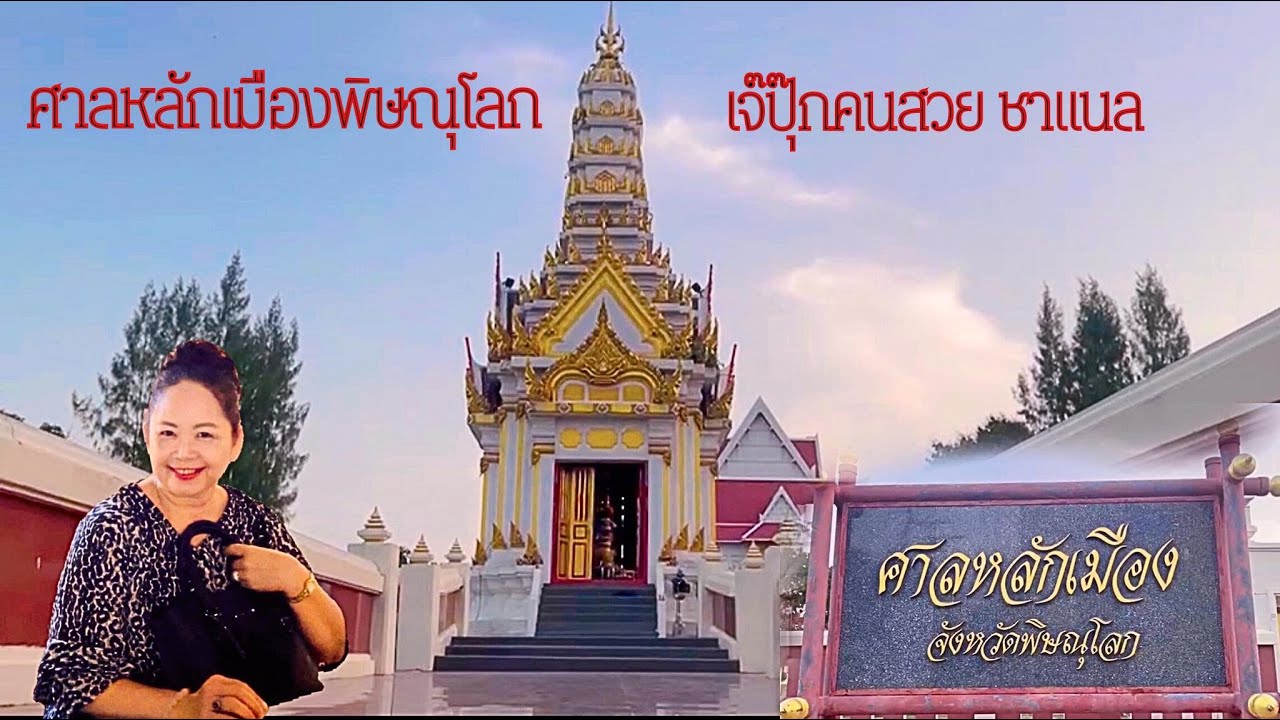
 Click to Access the Navigation Map GPS
City Pillar Shrine Map
Recommend

 Art, Culture and Heritage
 Historical Sites and Monuments(1)
 Landmarks and Memorials(2)
 Art, Craft Centres, Tradition(3)
 Museums(3)
 Educational Places
 Educational Gardens, Farm(1)
 Temple(29)
 Mosque(1)
Other Sacred Sites(3)
Mosque(1)
Other Sacred Sites(3)
 Research and Development
 Royal Project(1)
 Suburban Living
 Village, Community(1)
 Nature and Wildlife
 National Parks and Marine Reserves(7)
 Mountain (Doi)(4)
 Dam, Reservoir, Lake(5)
 Waterfalls(19)
 Caves(3)
 River, Canal(9)
 Other natural attractions(1)
 Entertainment and Agricultural
 Farms, Parks and Ecotourism(2)
 Outdoor and Adventure Activities(1)


