
lovethailand home >Central Travel Attractions >Bangkok Travel Attractions >Phra Nakhon >Phra Borommaha Ratchawang > Bangkok City Pillar Shrine
TL;DR: Bangkok City Pillar Shrine is located at Phra Nakhon District, Bangkok (southeast corner of Sanam Luang, opposite the Grand Palace), open Daily, hours 06.30 – 18.30.
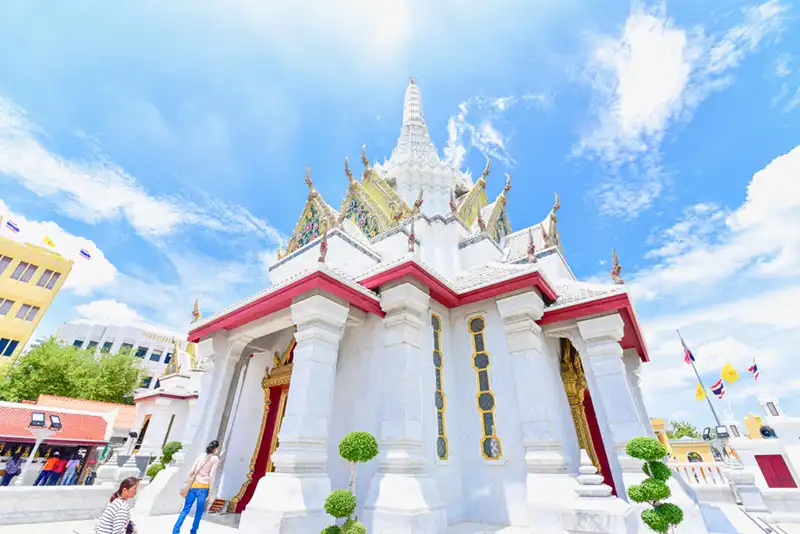
Bangkok City Pillar Shrine
Open Days: Daily
Opening Hours: 06.30 – 18.30
Bangkok City Pillar Shrine is one of those places people in Bangkok and travelers alike intentionally stop by to “reset their footing” in life—whether it’s starting a new job, moving house, opening a business, or simply looking for steadiness and peace of mind when the pace of a big city starts to feel heavy. The shrine was established alongside the founding of Rattanakosin as the capital, rooted in a Brahmanical tradition that says a city should first raise its city pillar at an auspicious central site before construction begins, as a way to bless and stabilize the new realm. So this isn’t merely a place to pray; it’s a living ceremonial marker of the capital’s beginning that still feels present today.
The defining moment most clearly remembered is that King Rama I (Phra Phutthayotfa Chulalok the Great) graciously ordered the royal ceremony to install Bangkok’s city pillar on Sunday, 21 April 1782 (B.E. 2325), and that the horoscope of the new capital was placed within the City Pillar Shrine. This idea of “binding the city’s fate” gives the shrine a dual identity: ceremonially, it functions as a symbolic pillar of governance; spiritually, it becomes a shared refuge for ordinary people who hope their lives will move forward without constant disruption. In one sense it is a national landmark; in another, it is a personal anchor.
The original city pillar in the reign of Rama I is described as being made from chaiyaphruek wood, sheathed with sandalwood on the outside, and crowned with a lotus-bud finial. It was installed at the heart of the new royal city, which was bestowed the name “Krung Rattanakosin Inth Ayothaya,” later known widely as “Krung Thep Maha Nakhon” (Bangkok). Over time, materials naturally deteriorated. In the reign of King Mongkut (Rama IV), a replacement city pillar was established to substitute for the original that had weakened with age. This newer pillar used teak as an inner core, sheathed with chaiyaphruek wood, and the city’s horoscope was ritually renewed so that the nation and its people under royal protection might prosper with lasting stability. Seen as a whole, the story makes the City Pillar Shrine more than a single historical ritual—it becomes something carefully maintained as the city itself evolves.
Another major chapter came during the 200th anniversary celebration of Rattanakosin in B.E. 2525 (1982). His Majesty King Bhumibol Adulyadej the Great graciously visited the City Pillar Shrine as part of the royal rites to bless the metropolis according to ancient tradition. He further ordered improvements to make the shrine dignified and complete as the sacred abode of the city pillar. This included bringing the original city pillar to be enshrined alongside the current pillar after restoration was completed. A subsequent consecration ceremony for the City Pillar was held following the successful renovation. The continuity of these events reinforces the shrine as a “memory space” of Bangkok—where royal ritual and the everyday life of the city meet and remain intertwined.
Within the shrine complex, there are elements many visitors come specifically to pay respect to, based on particular strands of belief. One important feature is the guardian-deity pavilion, regarded as the abode of five protective deities: Phra Suea Mueang, Chao Chetkhup, Chao Hoklong, Phra Song Mueang, and Phra Kan Chai Si. There is also a Buddha image hall. Together, these layers mean the experience is not limited to the city pillar alone—it feels like moving through “tiers of faith,” with the space designed to help visitors gradually settle their minds, gather composure, and then speak the wishes they most want to become real.
In the most contemporary sense, making a wish at the City Pillar Shrine can be seen as using ritual as a tool to organize one’s thoughts. It begins with clarifying your intention—what you’re asking for, why you’re asking, and what actions you will take on your side—before paying respect in line with the shrine’s guidance. Many people bring offerings such as flowers, incense, candles, and other items according to personal devotion. What matters just as much is etiquette: dressing respectfully and sharing the space gently with others, since people of many ages and backgrounds come here every day.
If you’re wondering, “When is the best time to go?” mornings are often calm and cooler, especially if you plan to continue walking around Sanam Luang and the Rattanakosin area afterward. Late afternoon can be less crowded on some days, though long holidays and peak travel seasons naturally draw more visitors. One useful detail is that during certain festivals there may be extended hours that run until midnight, so if you’re aiming for a special time slot, it’s wise to check the latest notice for that particular day to avoid a wasted trip.
Getting There If you’re coming by MRT, many visitors use the metro to reach the Rattanakosin (Old Town) area and then continue by car/ride or on foot toward Sanam Luang and Lak Mueang Road, which is ideal for exploring at an unhurried pace. Another classic option is arriving by Chao Phraya River boat and getting off at a nearby pier—often around Tha Chang—before walking into the inner historic quarter. Taxis and private cars are convenient, but you should allow extra time for traffic and be mindful that parking can be limited because this is a key government and landmark zone.
One of the biggest advantages of visiting the City Pillar Shrine is that you can “continue the trip immediately” because it sits close to nationally significant landmarks such as the Grand Palace, Wat Phra Kaew, Wat Pho, and the Bangkok National Museum. If you enjoy the old-city atmosphere, you can walk slowly, take in the architecture along smaller streets, and end the day with long-established eateries that locals have loved for decades. Done this way, the trip becomes more than “pray and leave”—it turns into a half-day that feels both nourishing and complete.
One gentle thought worth keeping is that a wish can be most powerful when it sends you back into life with more intention. Sometimes that’s something small: organizing your workspace, speaking more carefully with family, or finally starting what you’ve been postponing. In a big city, “sacredness” doesn’t always mean miracles. Sometimes it means having a place that helps you stand honestly with yourself again—and then step forward with a calmer mind than before.
| Place Name | Bangkok City Pillar Shrine |
| Location | Phra Nakhon District, Bangkok (southeast corner of Sanam Luang, opposite the Grand Palace) |
| Highlights | A spiritual and ceremonial center tied to Bangkok’s city pillar and the capital’s horoscope, established at the founding of Rattanakosin; includes the guardian-deity pavilion with five protective deities and a Buddha image hall within the complex |
| Period | Founded in the reign of Rama I (B.E. 2325 / 1782); a new pillar was established in the reign of Rama IV |
| Key Evidence | Traditions describing the installation ceremony on 21 April 1782 (B.E. 2325), the placement of the city’s horoscope, and major renovation tied to the 200th anniversary of Rattanakosin |
| Name Origin | “City Pillar” refers to the ceremonial pillar and symbolic center established according to Brahmanical tradition before founding a city |
| Travel | MRT: reach the Old Town/Rattanakosin area and continue by car/ride or on foot to Sanam Luang and Lak Mueang Road; Chao Phraya River boat: get off near Tha Chang and walk in; taxi/private car: allow extra time for traffic and limited parking |
| Current Status | Open to the public for worship (check notices on major festivals or special ceremonial days) |
| Contact Number | 02-225-4403, 085-485-2464 |
| Nearby Tourist Attractions + Distance | The Grand Palace ~0.8 km Tel 02-623-5500 Wat Phra Kaew (Temple of the Emerald Buddha) ~0.9 km Tel 02-623-5499 Wat Pho (Wat Phra Chetuphon) ~1.4 km Tel 083-057-7100 Museum Siam ~1.5 km Tel 02-225-2777 Bangkok National Museum ~1.8 km Tel 02-224-1402 |
| Popular Restaurants Nearby + Distance | Thip Samai (Pad Thai Pratu Phi) ~2.6 km Tel 02-226-6666 Jay Fai (Pratu Phi) ~2.5 km Tel 02-223-9384 Methavalai Sorndaeng ~1.7 km Tel 02-224-3088 Khao (Krua) Apsorn (Dinso Road) ~1.6 km Tel 080-550-0310 On Lok Yun ~2.5 km Tel 02-224-2463 |
| Popular Accommodations Nearby + Distance | Royal Rattanakosin Hotel ~1.1 km Tel 02-222-9111 New Siam Palace Ville ~2.6 km Tel 02-282-4142 Navalai River Resort ~3.1 km Tel 02-280-9955 Riva Arun Bangkok ~1.6 km Tel 02-221-1188 sala rattanakosin Bangkok ~1.8 km Tel 02-622-1388 |
| Facilities | Designated worship areas, offering/amenity counters within the complex, and staff present during opening hours |
| Fees | No admission fee (donations and offerings are optional) |
Frequently Asked Questions (FAQ)
Q: Is Bangkok City Pillar Shrine open every day?
A: Yes. It is open daily, though it’s still a good idea to check official notices during major festivals or special ceremonial days.
Q: What are the opening hours of Bangkok City Pillar Shrine?
A: The shrine is generally open from 06.30 – 18.30.
Q: Can I get to Bangkok City Pillar Shrine by MRT?
A: Yes. Many visitors use the MRT to reach the Old Town/Rattanakosin area, then continue on foot or by a short ride toward Sanam Luang and Lak Mueang Road. Allow extra time for walking and traffic conditions in Phra Nakhon.
Q: What do people usually pray for at Bangkok City Pillar Shrine?
A: Many people pray for stability in life, new beginnings, work and business matters, family well-being, and safe travels. It helps to set a clear intention and pair it with practical actions in daily life.
Q: Do I need to prepare any special offerings?
A: Not necessarily. You can bring flowers, incense, candles, or other offerings according to your devotion. Dress respectfully and be considerate of others sharing the space.
 Category: ●Places of Worship
 Group: ●Other Sacred Sites
Last Update : 9 MonthAgo
 Last Update : 9 MonthAgo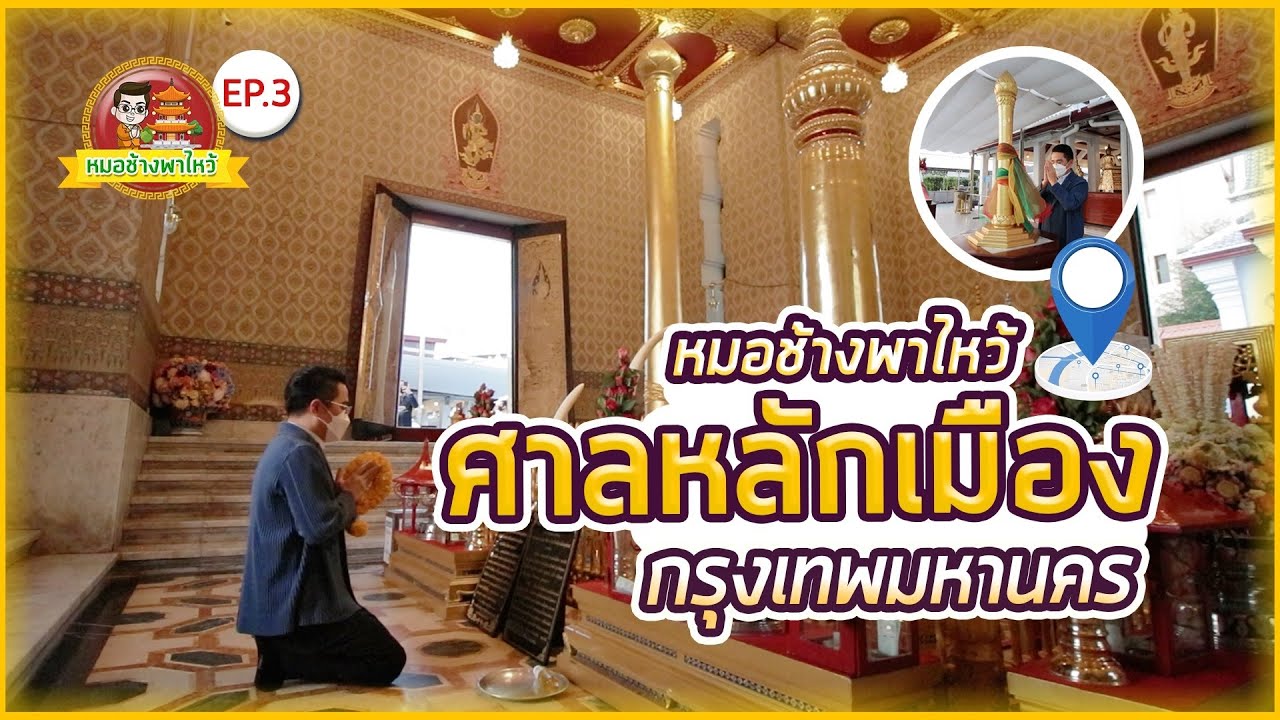
 Click to Access the Navigation Map GPS
Bangkok City Pillar Shrine Map
Recommend

 Art, Culture and Heritage
 Historical Sites and Monuments(3)
 Landmarks and Memorials(23)
 Royal Palace(13)
 Art, Craft Centres, Tradition(35)
 Museums(59)
 Historic Homes and Cities(3)
 Art Gallery(16)
 Educational Places
 Museum for Study(6)
 Library(4)
 Temple(72)
 Church(2)
 Mosque(67)
Other Sacred Sites(8)
Mosque(67)
Other Sacred Sites(8)
 Research and Development
 Royal Project(1)
 Suburban Living
 Village, Community(5)
 Local Market(9)
 Floating Market(2)
 Nature and Wildlife
 River, Canal(3)
 Bays and Beaches(1)
 Other natural attractions(1)
 Entertainment and Agricultural
 Zoos and Aquariums(5)
 Animal camps and shows(5)
 Stadium(9)
 Farms, Parks and Ecotourism(20)
 Amusement Park(1)
 Waterpark(4)
 Theater(7)
 Cinema(1)
 Shopping
 Shopping and Night Market(20)
 Department Store(7)
 Spas and Wellness
 Spas and Wellness(1)
 Restaurant
 Michelin Star(5)
 Accommodation
 Hotel(3)
 Call Customer Service in Tourism
 Call Customer Service in Tourism(1)
 Travel Articles, Recipes
 Travel Review, Food Review(41)
 Royal Thai Desserts and Recipes(56)


