
lovethailand home >Northeastern Travel Attractions >Khon Kaen Travel Attractions >Muang Khon Kaen >Nai Muang > Khon Kaen City Pillar Shrine
TL;DR: Khon Kaen City Pillar Shrine is located at Srichan Road, near the intersection with Prachasumran Road, Nai Mueang Subdistrict, Mueang Khon Kaen District, Khon Kaen Province, open Daily, hours 06.30 – 22.00.
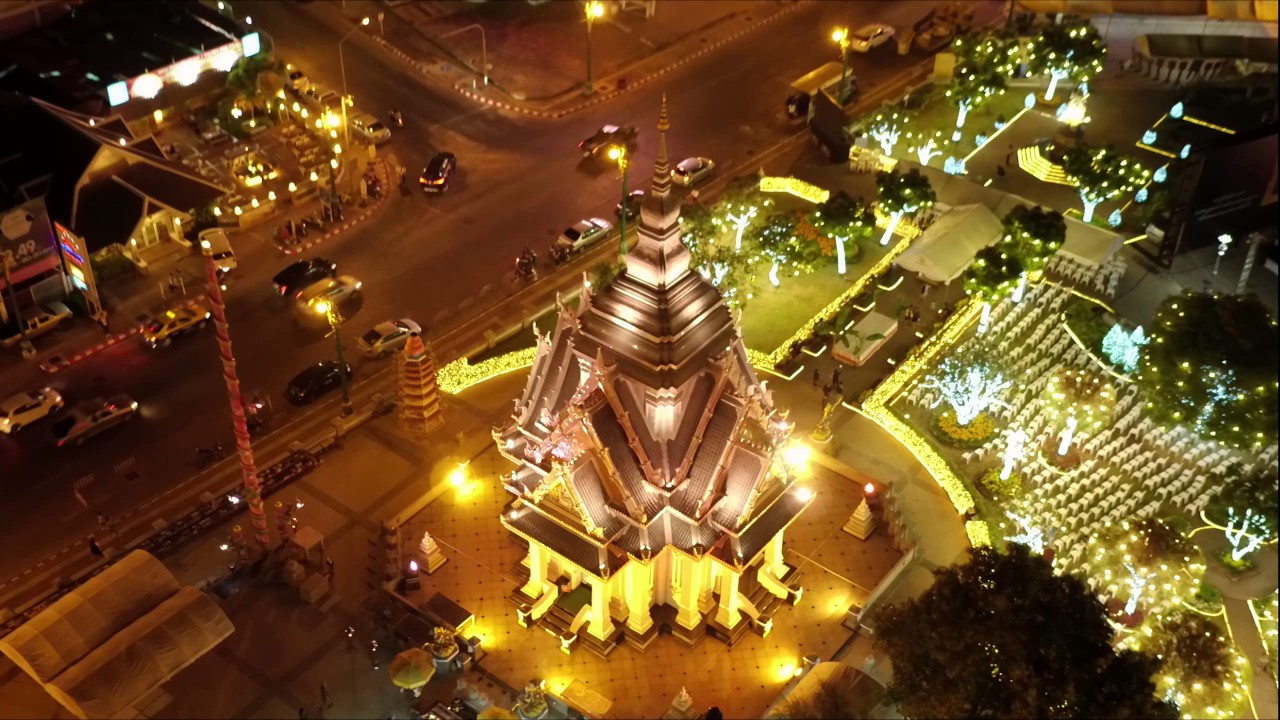
Khon Kaen City Pillar Shrine

Open Days: Daily
Opening Hours: 06.30 – 22.00
Khon Kaen City Pillar Shrine, also known in Thai as San Chao Pho Thepharak Lak Mueang Khon Kaen, is one of the most important sacred landmarks in Khon Kaen Province. Located in the heart of the city on Srichan Road, near the municipality area and the intersection with Prachasumran Road, the shrine serves as a spiritual center for local residents and visitors. People come here to pay respect to the city pillar, ask for blessings before beginning important life events, and experience a place where Thai and Chinese beliefs have been harmoniously blended into one meaningful urban sanctuary. For foreign travelers, this shrine is one of the best starting points for understanding the cultural heart of Khon Kaen.
The shrine is not only a place of worship. It is also a cultural and historical site that tells the story of Khon Kaen’s identity. The city pillar was formally established on 20 August 1956 through the initiative of Phra Ratchasanthammuni, also known as Luang Pho Kanha of Wat Si Nuan, and Luang Thuranai Phinit, a former governor of Khon Kaen Province. A sandstone pillar and related stone elements were brought from an archaeological site in Chum Phae District, especially the ancient area known as Non Mueang, and were consecrated through Buddhist ceremonies before being enshrined as the city pillar of Khon Kaen. This gives the shrine a deeper significance than a modern religious landmark, because it connects present-day Khon Kaen with the ancient cultural landscape of the region.
The original city pillar is a sandstone pillar with an octagonal form. It is associated with the Dvaravati cultural period and was later enshrined as the symbolic heart of Khon Kaen. Within the shrine, the pillar is covered with gold leaf and sacred cloth according to local devotional practices. Although some original inscriptions are now difficult to see, the historical value of the pillar remains highly important. It represents the link between ancient settlement, local belief, Buddhist ceremony, and modern provincial identity. For visitors interested in Thai history, the shrine provides a rare opportunity to see how an ancient stone object became a living symbol of a contemporary city.
Local tradition tells a meaningful story about the origin of the city pillar. According to the story, an elderly villager once had repeated dreams of a white-clad elder who wished to come and live in the city as a spiritual guardian. When the story reached Phra Ratchasanthammuni, he recognized that if the object was to become the spiritual heart of the city, it should be established as a city pillar. At that time, Khon Kaen still did not have an official city pillar, so the process of bringing the stone pillar from Chum Phae to Khon Kaen began. Whether understood as faith, memory, or cultural symbolism, the story shows how deeply the people of Khon Kaen regard the city pillar as a guardian of the province.
The shrine was originally named “San Thepharak Lak Mueang,” meaning the shrine of the guardian deity of the city pillar. Thai people commonly call it San Lak Mueang or San Chao Pho Lak Mueang, while many Thai-Chinese residents refer to it as San Lak Mueang Kong. This dual naming reflects the cultural character of Khon Kaen as a city where Thai Buddhist beliefs and Chinese spiritual traditions have long existed side by side. Inside and around the shrine, visitors can see the city pillar, the Heaven-and-Earth pillar, a spirit shrine, and Chinese-style offerings. Together, these elements create a sacred space that welcomes people from different backgrounds under a shared sense of respect.
The present shrine building is architecturally striking. It is a four-sided pavilion, or jaturamuk-style hall, measuring 13 by 13 meters. The structure has an open and spacious hall, verandas on all four sides, and a three-tiered roof crowned with an Isan-inspired stupa-like finial. The total height from the courtyard floor to the top of the golden spire is approximately 27.50 meters. Its white exterior, ornate gables, golden details, and northeastern Thai design elements make the shrine stand out clearly in the middle of the city. Although it is surrounded by roads, shops, hotels, and modern buildings, the shrine retains a peaceful and dignified atmosphere.
The main focus inside the shrine is the city pillar itself. Devotees usually come to pray for stability, prosperity, success in work or study, good health, safety, and auspicious beginnings. Outside the main pillar, a replica is provided for visitors who wish to apply gold leaf or make offerings without affecting the original pillar. This arrangement helps preserve the historical city pillar while allowing worshippers to continue their devotional practices. It also shows how conservation and living faith can coexist in one sacred site.
One of the most distinctive features of Khon Kaen City Pillar Shrine is the red Heaven-and-Earth pillar. This tall pillar reflects Chinese belief and symbolizes a connection between heaven, earth, and humanity. Worshippers often pay respect to this pillar in addition to the city pillar, asking for blessings, fortune, and protection. Its bold red color contrasts beautifully with the white shrine building and makes the site visually memorable. For foreign visitors, this is one of the clearest examples of the Thai-Chinese cultural blend that gives the shrine its special character.
The shrine grounds also include the Phra Mae Thorani shrine, a spirit shrine, offering areas, and landscaped spaces where visitors can rest briefly after paying respect. Many people follow a sequence of worship that includes the Heaven-and-Earth pillar, the main city pillar, the spirit shrine, and the entrances of the shrine. Offerings may include flowers, incense, candles, garlands, gold leaf, or simple devotional items. The most important aspect, however, is not the size of the offering but the sincerity of the person who comes to pray. Visitors who do not know the full ritual can simply bow respectfully, remain quiet, and follow the atmosphere of the place.
The shrine remains active throughout the year. Local residents, students, business owners, government officers, travelers, and families regularly come here before examinations, new jobs, business openings, long journeys, or important personal decisions. Some people return to give thanks after their wishes are fulfilled. This continuous flow of worship keeps the shrine alive as part of everyday Khon Kaen life. It is not a frozen historical monument, but a living spiritual landmark that still plays a role in the city’s emotional and cultural rhythm.
The atmosphere changes throughout the day. In the morning, the shrine is calm and suitable for quiet worship. During the day, people from nearby businesses, hotels, and shopping areas often stop by. In the evening, the shrine becomes especially photogenic as lighting enhances the white pavilion, golden spire, and red Heaven-and-Earth pillar. The site is beautiful both in daylight and at night, making it a good destination for travelers who enjoy cultural photography. Visitors should, however, avoid blocking pathways or disturbing worshippers while taking photos.
Getting There is easy because the shrine is located in central Khon Kaen. It stands on Srichan Road near the busy commercial area of the city, close to Central Khon Kaen, hotels, cafés, restaurants, and night markets. Travelers can arrive by private car, taxi, local songthaew, ride-hailing service, or Khon Kaen city bus routes that pass through the central area. From Khon Kaen Airport, the trip usually takes around 15 to 25 minutes by car, depending on traffic. From Khon Kaen Railway Station or central bus areas, the distance is shorter and local transport is easy to arrange.
Because the shrine is in a dense urban district, parking may be limited during peak hours, festivals, or auspicious days. Visitors staying in nearby hotels may prefer to walk or take a short ride rather than drive. The location is also convenient for planning a half-day or full-day city route. A typical itinerary can begin with paying respect at Khon Kaen City Pillar Shrine, then continue to Central Khon Kaen, Ton Tann Market, Bueng Kaen Nakhon, and Phra Mahathat Kaen Nakhon at Wat Nong Waeng.
Visitors should dress respectfully because this is a sacred place. Although the shrine is not a temple in the strict monastic sense, it is deeply respected by local people. Clothing should be neat, and behavior should be calm. Loud conversations, disruptive photography, careless handling of offerings, and disrespectful gestures should be avoided. If a ritual is taking place, visitors should wait quietly and give space to those who are worshipping. Respectful behavior helps preserve the sacred atmosphere and allows everyone to experience the shrine comfortably.
In terms of belief, people often pray here for stability and a strong foundation in life. The Thai phrase “lak mueang,” or city pillar, is closely associated with the idea of a firm center and secure beginning. This is why many people come before starting something important, such as a new job, a new home, a business, an examination, or a long journey. For travelers, even if they do not share the same belief, visiting the shrine can still be meaningful as a way to understand how local people relate faith, city identity, and daily life.
From a cultural travel perspective, the shrine is suitable for several types of visitors. Those interested in religion can observe Thai and Chinese devotional practices in one place. Those interested in history can learn about the Dvaravati-period stone pillar and its journey from Chum Phae to Khon Kaen. Those interested in architecture can admire the jaturamuk pavilion, Isan-style spire, and symbolic layout of the shrine. Those with limited time in Khon Kaen can still visit easily because the shrine is centrally located and close to many other attractions.
Khon Kaen has grown into one of the major urban centers of northeastern Thailand, known for its education, medical services, transportation, business, and modern lifestyle. Yet the City Pillar Shrine reminds visitors that the city’s identity is not built only from roads, buildings, malls, and institutions. It is also built from memory, belief, community, and shared symbols. The shrine stands in the middle of the modern city as a reminder that progress and tradition can exist together.
The area around the shrine makes it easy to continue exploring Khon Kaen. Central Khon Kaen is nearby for shopping and dining. Ton Tann Market and Khon Kaen Walking Street are good evening options for food and local products. Bueng Kaen Nakhon offers a lakeside atmosphere, while Phra Mahathat Kaen Nakhon at Wat Nong Waeng is one of the city’s most important Buddhist landmarks. This makes the shrine a natural starting point for travelers who want to understand both the spiritual and urban sides of Khon Kaen.
Families can also use the visit as a cultural learning experience. Children can see how Thai and Chinese beliefs appear in the same sacred space through the city pillar, Heaven-and-Earth pillar, spirit shrine, and offering areas. They can also learn basic etiquette such as speaking softly, walking carefully, and respecting places that local people consider sacred. For foreign families, this can be a gentle and accessible introduction to Thai urban spirituality.
The best time to visit is in the morning or early evening. Morning visits are quieter and more comfortable, while evening visits offer beautiful lighting and easy access to nearby night markets and restaurants. On major holidays, New Year, Chinese New Year, Buddhist holy days, or provincial events, the shrine may be busier than usual. Visitors should allow extra time and follow the flow of worshippers respectfully.
There is no admission fee for general visits. Worshippers may prepare their own offerings or use items available at the shrine according to their faith and convenience. Donations are voluntary. Visitors should help keep the shrine clean, place offerings neatly, and avoid blocking walkways. Small acts of care help preserve the dignity of this important city landmark.
Khon Kaen City Pillar Shrine is therefore more than a place to make a wish. It is a spiritual center, a historical site, a Thai-Chinese cultural landmark, an example of Isan-inspired architecture, and an accessible gateway to understanding Khon Kaen. Whether you come to pray, take photographs, learn local history, or begin your journey through the city with a sense of blessing, this shrine is one of the most meaningful places to visit in Khon Kaen.
| Name | Khon Kaen City Pillar Shrine / San Chao Pho Thepharak Lak Mueang Khon Kaen |
| Location | Srichan Road, near the intersection with Prachasumran Road, Nai Mueang Subdistrict, Mueang Khon Kaen District, Khon Kaen Province |
| Address | Srichan Road, Nai Mueang Subdistrict, Mueang Khon Kaen District, Khon Kaen 40000, Thailand |
| Coordinates | 16.431105, 102.828434 |
| Type | Sacred city shrine, cultural attraction, and spiritual landmark of Khon Kaen |
| Highlights | City pillar, Heaven-and-Earth pillar, jaturamuk-style shrine building, Thai-Chinese spiritual elements, and central city location |
| History | Established as Khon Kaen’s city pillar shrine on 20 August 1956 using a stone pillar brought from an ancient site in Chum Phae District |
| Founding Figures | Phra Ratchasanthammuni and Luang Thuranai Phinit, former Governor of Khon Kaen Province |
| Key Evidence | Octagonal sandstone pillar from Non Mueang ancient site in Chum Phae District, associated with the Dvaravati cultural period |
| Name Origin | Originally named San Thepharak Lak Mueang, meaning the shrine of the guardian deity of the city pillar. Thai people call it San Lak Mueang or San Chao Pho Lak Mueang, while Thai-Chinese residents also call it San Lak Mueang Kong. |
| Distinctive Features | Four-sided pavilion measuring 13 x 13 meters, three-tiered roof, Isan-style stupa finial, and 27.50-meter height to the golden spire |
| Main Areas / Zones | 1. Main shrine building and city pillar 2. Replica city pillar for worship and gold leaf offering 3. Heaven-and-Earth pillar 4. Phra Mae Thorani shrine 5. Spirit shrine and offering area 6. Courtyard and landscaped garden 7. Offering preparation area |
| Worship Practices | Visitors commonly pay respect to the city pillar, Heaven-and-Earth pillar, spirit shrine, and shrine entrances for blessings, stability, success, and auspicious beginnings |
| Caretaker | Khon Kaen Province, Khon Kaen Provincial Administrative Organization, and Khon Kaen Municipality |
| Open Days | Daily |
| Opening Hours | 06.30 – 22.00 |
| Fees | No admission fee |
| Facilities | Worship area, offerings, seating area, landscaped surroundings, walkways, and nearby urban parking options |
| Travel Information | Located in central Khon Kaen and accessible by private car, songthaew, city bus, taxi, or ride-hailing service. From Khon Kaen Airport, travel time is about 15-25 minutes by car. |
| Current Status | Open to local residents and travelers as a major sacred landmark and cultural attraction of Khon Kaen Province |
| Nearby Tourist Attractions | 1. Central Khon Kaen, about 0.4 km 2. Khon Kaen Night Food Market, about 0.8 km 3. Khon Kaen Walking Street, about 1.3 km 4. Ton Tann Market, about 1.8 km 5. Bueng Kaen Nakhon, about 1.9 km 6. Phra Mahathat Kaen Nakhon at Wat Nong Waeng, about 2.6 km 7. Bueng Thung Sang, about 2.6 km |
| Nearby Restaurants | 1. Ting Ting Bingsu Nam Khing Khon Kaen, about 0.1 km, Tel. 098-674-8310 2. WOODEN HOUSE crepe&beverage, about 0.1 km, Tel. 064-293-5945 3. Godfather Coffee Khon Kaen, about 0.1 km, Tel. 065-712-4464 4. Rak An Coffee, about 0.1 km, Tel. 095-661-0199 5. Khao Tom Kok 24 Hours Lak Mueang, about 0.2 km, Tel. 061-629-5455 6. Mum Zaap, about 0.3 km, Tel. 063-736-6663 7. Tiao Seng, about 0.4 km, Tel. 082-414-2882 |
| Nearby Accommodations | 1. Pullman Khon Kaen Raja Orchid, about 0.3 km, Tel. 043-913-333 2. Ad Lib Khon Kaen, about 0.5 km, Tel. 043-100-555 3. Kosa Hotel Khon Kaen, about 0.8 km, Tel. 043-320-320 4. OMG Hotel Khonkaen, about 0.7 km, Tel. 043-239-060 5. Charoen Thani Khon Kaen Hotel, about 0.9 km, Tel. 043-220-400 6. HOP INN Khon Kaen, about 1.4 km 7. Romantic Khonkaen Hotel, about 1.7 km, Tel. 061-929-8484, 043-043-595 |
Frequently Asked Questions (FAQ)
Q: Where is Khon Kaen City Pillar Shrine located?
A: It is located on Srichan Road near Prachasumran Road in Nai Mueang Subdistrict, Mueang Khon Kaen District, Khon Kaen Province.
Q: What are the opening hours of Khon Kaen City Pillar Shrine?
A: The shrine is open daily from 06.30 to 22.00, making it convenient for morning, evening, and night visits.
Q: Is there an admission fee?
A: No. General visits and worship at Khon Kaen City Pillar Shrine are free of charge.
Q: Why is Khon Kaen City Pillar Shrine important?
A: It is the spiritual landmark of Khon Kaen, housing a sandstone city pillar associated with an ancient site in Chum Phae District and serving as a center of local faith.
Q: Who initiated the establishment of the shrine?
A: Phra Ratchasanthammuni and Luang Thuranai Phinit, a former Governor of Khon Kaen Province, played key roles in establishing the city pillar shrine.
Q: What can visitors see inside the shrine area?
A: Visitors can see the city pillar, a replica city pillar, the Heaven-and-Earth pillar, Phra Mae Thorani shrine, spirit shrine, offering areas, and landscaped courtyard.
Q: What do people usually pray for at the shrine?
A: People commonly pray for stability, success in work or study, business prosperity, good health, safety, and auspicious beginnings.
Q: What nearby places can be visited after the shrine?
A: Nearby places include Central Khon Kaen, Khon Kaen Walking Street, Ton Tann Market, Bueng Kaen Nakhon, and Phra Mahathat Kaen Nakhon at Wat Nong Waeng.
 Category: ●Places of Worship
 Group: ●Other Sacred Sites
Last Update : 3 MonthAgo
 Last Update : 3 MonthAgo
 Click to Access the Navigation Map GPS
Khon Kaen City Pillar Shrine Map
Recommend

 Art, Culture and Heritage
 Historical Sites and Monuments(7)
 Landmarks and Memorials(3)
 Art, Craft Centres, Tradition(2)
 Museums(4)
 Educational Places
 Museum for Study(2)
 Temple(27)
Other Sacred Sites(5)
 Suburban Living
 Village, Community(3)
 Local Market(1)
 Nature and Wildlife
 National Parks and Marine Reserves(5)
 Mountain (Doi)(1)
 Dam, Reservoir, Lake(4)
 Waterfalls(8)
 Caves(9)
 River, Canal(10)
 Bays and Beaches(3)
 Islands(1)
 Other natural attractions(5)
 Entertainment and Agricultural
 Zoos and Aquariums(2)
 Animal camps and shows(2)
 Farms, Parks and Ecotourism(7)
 Waterpark(3)
 Travel Articles, Recipes
 Travel Review, Food Review(1)


