
lovethailand home >Central Travel Attractions >Suphan Buri Travel Attractions >Muang Suphan Buri >Rua Yai > Suphan Buri City Pillar Shrine
TL;DR: Suphan Buri City Pillar Shrine is located at Malai Maen Road, Rua Yai Subdistrict, Mueang Suphan Buri District, Suphan Buri Province, open Daily, hours 08.00 – 17.00.
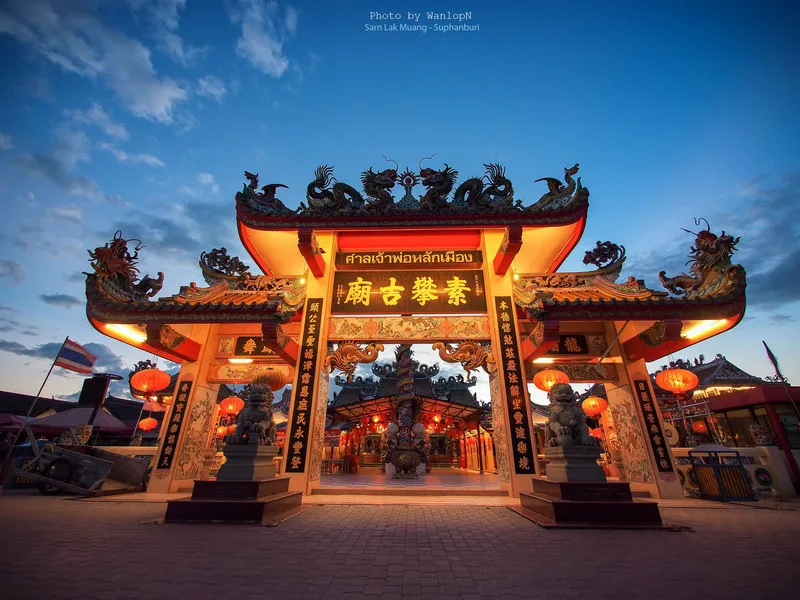
Suphan Buri City Pillar Shrine
Open Days: Daily
Opening Hours: 08.00 – 17.00
Suphan Buri City Pillar Shrine, widely known as Chao Pho Lak Mueang Shrine, is one of the most sacred cultural landmarks in Suphan Buri Province. It is located on Malai Maen Road in Rua Yai Subdistrict, Mueang Suphan Buri District, on the western side of the Suphan Buri River, also known as the Tha Chin River. The shrine enshrines an ancient stone relief identified as Avalokitesvara Bodhisattva, locally called Phra Narai Si Kon, or the Four-Armed Narayana. This Mahayana Buddhist stone relief in Khmer-style art is dated to around 642–707 CE, or approximately 1,300–1,400 years ago. The shrine is therefore not only a city guardian shrine, but also an important site of archaeology, Mahayana Buddhism, Thai-Chinese devotion, and local identity.
Originally, the shrine was a Thai-style wooden shrine. It housed sacred green-stone images interpreted as Shiva and Narayana wearing a cylindrical headgear known locally as a tuek-style cap. Over time, the shrine was rebuilt in the form of a viharn and Chinese pavilion. This transformation gave the site its distinctive Thai-Chinese character. Today, visitors encounter Chinese shrine architecture, colorful decorative elements, incense offerings, and an ancient stone sculpture with deep roots in Mahayana Buddhism and Khmer-style religious art.
The heart of the shrine is the Avalokitesvara Bodhisattva stone relief. Avalokitesvara is the Bodhisattva of Compassion in Mahayana Buddhism, believed to hear the cries of suffering beings and respond with mercy. In Suphan Buri, local people call the image Phra Narai Si Kon, reflecting the way communities interpret sacred images through Buddhist, Brahmanical, and local belief systems. This blending of interpretations is one of the most important features of the shrine.
The age and style of the sculpture make the shrine extremely important in archaeological terms. A stone relief of this kind helps reveal the long cultural history of Suphan Buri and its connection with ancient religious networks in the Tha Chin and Chao Phraya river basins. Its Khmer-style artistic features and Mahayana Buddhist identity show that Suphan Buri was part of a much older cultural world before the rise of Ayutthaya. The shrine therefore preserves evidence of ancient religious diversity in western central Thailand.
According to local history, about 150 years ago, the Avalokitesvara image was found buried in mud and soil near Khlong San Chao Pho, the canal associated with the shrine. Local people helped lift the sacred image out of the ground and enshrined it above the site. A shrine was then built for worship. This discovery story is central to the shrine’s identity because it transformed an ancient buried object into a living sacred guardian of the city.
Such discovery stories are common in Thai sacred geography. Sacred objects are often found in earth, water, forests, or old ruins, then raised into public worship. In the case of Suphan Buri City Pillar Shrine, the stone relief was not merely preserved as an artifact. It became an object of devotion, a guardian figure, and a spiritual center for the people of the province.
The shrine gained further importance during King Chulalongkorn’s royal visit in 1904. During his Praphat Ton journey, King Rama V visited the shrine and performed ritual offerings to Chao Pho Lak Mueang. He also donated his personal funds to build an embankment around the shrine mound, create a worship platform, build a surrounding wall, and extend the shrine in the form of a Chinese pavilion. This royal association reflects the importance of the shrine as a sacred urban landmark.
The improvement of the shrine during the reign of King Rama V shaped its present character. What had once been a wooden Thai-style shrine gradually developed into a more Chinese-style sacred space. Later, around 1937, Prince Narisara Nuvadtivongs and Chao Phraya Yommarat also showed interest in improving the shrine. These layers of royal and official attention helped ensure the shrine’s continued preservation and development.
Suphan Buri City Pillar Shrine is a clear example of cultural fusion. The main image is a Mahayana Buddhist stone relief in Khmer-style art. Local people interpret it as Phra Narai Si Kon. The shrine architecture follows Chinese forms. Worshipers include both Thai and Chinese communities. Rather than creating confusion, this diversity gives the shrine its unique identity as a shared sacred center for multiple traditions.
People come to the shrine to pray for stability, prosperity, business success, health, family well-being, and safe travel. The idea of a city pillar is closely associated with protection and stability. Worshiping Chao Pho Lak Mueang is therefore a way of placing oneself under the guardianship of the city’s sacred power. Many visitors come before starting a business, moving home, traveling, or beginning an important stage of life.
The shrine is located in the same cultural area as the Dragon Descendants Museum and the Heavenly Dragon Park, known in Thai as Utthayan Mangkorn Sawan. The large golden dragon landmark has made the shrine area one of the most visited cultural sites in Suphan Buri. Visitors often combine worship at the shrine with photography and cultural learning around the dragon park. This makes the area both a sacred site and a major tourism destination.
The Heavenly Dragon Park expands the meaning of the shrine by highlighting the Thai-Chinese heritage of Suphan Buri. The province has long been home to Thai-Chinese communities, and the shrine’s Chinese-style architecture, together with its annual rituals, reflects this cultural presence. The shrine is therefore not only a guardian shrine, but also an important space for expressing Chinese cultural identity within Suphan Buri.
One of the most important annual traditions associated with the shrine is the Ting Krachat ceremony, also known as the charity distribution ritual. It is held every year on the full moon day of the 7th lunar month according to the Chinese calendar. The ritual is connected with Mahayana Buddhist practice and Chinese beliefs about compassion for departed spirits. Offerings and necessary goods are prepared and later distributed to poor people. This makes the ceremony both a religious ritual and a social charity event.
The Ting Krachat ceremony clearly expresses the virtue of compassion. It is not only a ritual for spirits, but also an act of giving to the living. Rice, food, supplies, and useful items are distributed to people in need. Participants make merit for departed souls while also helping the poor. Through this ritual, the shrine becomes a place where the worlds of the living, the dead, and the disadvantaged are connected through generosity.
From an anthropological point of view, Ting Krachat reflects the adaptation of overseas Chinese religious culture in Thailand. The ritual follows the Chinese lunar calendar and Mahayana ideas, but it is performed in a Thai provincial city and involves people from different backgrounds. Suphan Buri City Pillar Shrine is therefore an important example of a blended cultural space where religion, community charity, and local identity come together.
A visit to the shrine should begin with respectful worship of Chao Pho Lak Mueang. Visitors may offer incense, candles, garlands, or other appropriate items according to shrine practice. They should keep their mind calm and observe how local worshipers perform the ritual. If unsure, visitors may ask shrine staff or caretakers. Respectful behavior is especially important because the site is an active place of devotion, not only a tourist attraction.
The shrine is ideal for learning about the history of Suphan Buri town. It is located within the old cultural area of the province and can be combined with other nearby attractions, including Wat Phra Si Rattana Mahathat, Wat Pa Lelai Worawihan, Suphan Buri National Museum, Banharn-Jamsai Tower, and Chalerm Patthara Rachini Park. A half-day or full-day route can easily begin at the shrine and continue to temples, museums, and city landmarks.
For visitors interested in ancient art, the most important object is the Avalokitesvara stone relief. It should be appreciated as an archaeological and religious object much older than the present shrine building. Its Khmer-style features and Mahayana identity reveal the region’s pre-Ayutthaya religious world, while its later worship as Chao Pho Lak Mueang shows how ancient art can become part of living local faith.
For international travelers, Suphan Buri City Pillar Shrine is a valuable introduction to Thai-Chinese religious culture. It brings together an ancient stone relief, a Mahayana Bodhisattva, Khmer-style art, Chinese shrine architecture, and an annual Chinese charity ritual. It is different from many Thai city pillar shrines that focus on a wooden or pillar-like city guardian. Here, the sacred center is an ancient image that has been reinterpreted through several cultural layers.
Getting There is convenient by private car or local transport. The shrine is located on Malai Maen Road in Rua Yai Subdistrict, Mueang Suphan Buri District, on the western side of the Suphan Buri River. Visitors can search for Suphan Buri City Pillar Shrine or Heavenly Dragon Park on navigation apps. The area has parking and is close to several major attractions, making it a practical starting point for exploring Suphan Buri town.
The best time to visit is from morning to afternoon. This allows enough time to worship, walk around the shrine and dragon park, and continue to nearby attractions. During Chinese festivals or the Ting Krachat ceremony, visitors should allow more time because the area may be busier than usual. On ordinary days, the shrine is suitable for a quieter and more reflective visit.
Overall, Suphan Buri City Pillar Shrine is one of the most meaningful cultural sites in the province. It combines a 1,300–1,400-year-old Avalokitesvara relief, the discovery story near the shrine canal, King Rama V’s royal visit, Chinese-style restoration, the Ting Krachat charity ritual, and the living faith of Thai and Chinese communities. Visitors gain blessings, historical knowledge, and a deeper understanding of Suphan Buri’s multicultural identity in one place.
| Name | Suphan Buri City Pillar Shrine / Chao Pho Lak Mueang Shrine |
| Location | Malai Maen Road, Rua Yai Subdistrict, Mueang Suphan Buri District, Suphan Buri Province |
| Address | Malai Maen Road, Rua Yai Subdistrict, Mueang Suphan Buri District, Suphan Buri Province, on the western side of the Suphan Buri River / Tha Chin River |
| Highlights | Avalokitesvara Bodhisattva, locally known as Phra Narai Si Kon; an ancient low-relief Khmer-style stone sculpture about 1,300–1,400 years old; Chinese-style shrine architecture; Heavenly Dragon Park; and the annual Ting Krachat ceremony |
| History | The main sacred image is a Mahayana Buddhist stone relief in Khmer-style art, dated around 642–707 CE. The shrine later developed into a viharn and Chinese pavilion-style sacred place |
| Name Origin | Formerly known as San Thepharak Lak Mueang, the shrine later became known as Chao Pho Lak Mueang because it serves as a sacred guardian shrine and spiritual pillar of Suphan Buri |
| Distinctive Features | A sacred shrine combining Mahayana Buddhism, Khmer-style ancient art, Thai local belief, and Chinese cultural architecture within one worship and cultural tourism complex |
| Tradition / Rituals | The Ting Krachat charity ritual is held annually on the full moon day of the 7th Chinese lunar month. It is a Mahayana Buddhist ceremony dedicated to departed spirits and the distribution of goods to the poor |
| Travel Information | Travel into Mueang Suphan Buri and follow Malai Maen Road to Rua Yai Subdistrict. Visitors can search for Suphan Buri City Pillar Shrine or Heavenly Dragon Park on navigation apps. Parking is available in the area |
| Current Status | An important sacred shrine and cultural attraction of Suphan Buri, located in the same area as Heavenly Dragon Park |
| Open Days | Daily |
| Opening Hours | 08.00 – 17.00 |
| Fees | No admission fee for the shrine area |
| Facilities | Parking area, worship area, photo spots, Heavenly Dragon Park, toilets, shops, and Chinese cultural walking areas |
| Main Areas / Zones | City Pillar Shrine Avalokitesvara Bodhisattva / Phra Narai Si Kon worship area Chinese pavilion and offering area Heavenly Dragon Park Ting Krachat ceremony area Parking and photo areas |
| Caretaker | Suphan Buri City Pillar Shrine committee and related local authorities |
| Main Contact Number | 035-521-690 |
| Nearby Tourist Attractions | 1. Heavenly Dragon Park, about 0.1 km 2. Wat Phra Si Rattana Mahathat Suphan Buri, about 2 km 3. Banharn-Jamsai Tower, about 3 km 4. Chalerm Patthara Rachini Park, about 3 km 5. Wat Pa Lelai Worawihan, about 4 km 6. Suphan Buri National Museum, about 5 km |
| Nearby Restaurants | 1. Zaap Yok Krok Som Tam Suphan Buri, about 0.6 km 2. Je Pai Noodles, about 0.4 km 3. Playground Bistro, about 1 km 4. Ko Ae Ancient Pork Noodles Suphan Buri, about 1 km 5. Café Amazon near the shrine, about 1 km 6. Khua Restaurant on Nang Phim Road, about 3 km, Tel. 035-521-045 |
| Nearby Accommodations | 1. Sri U-Thong Grand Hotel, about 3 km, Tel. 035-501-290 2. Khum Suphan Hotel, about 3 km, Tel. 035-522-273 3. Songphanburi Hotel, about 4 km, Tel. 035-522-555-7 4. Vasidtee City Hotel, about 4 km, Tel. 035-526-111, 035-526-123 5. HOP INN Suphanburi, about 5 km, Tel. 065-945-9006 |
Frequently Asked Questions (FAQ)
Q: Where is Suphan Buri City Pillar Shrine located?
A: The shrine is located on Malai Maen Road in Rua Yai Subdistrict, Mueang Suphan Buri District, on the western side of the Suphan Buri River, also known as the Tha Chin River, in the same area as Heavenly Dragon Park.
Q: What is the main sacred object at Suphan Buri City Pillar Shrine?
A: The main sacred object is Avalokitesvara Bodhisattva, locally called Phra Narai Si Kon, an ancient low-relief Khmer-style stone sculpture about 1,300–1,400 years old.
Q: What did the shrine look like in the past?
A: It was originally a Thai-style wooden shrine housing green-stone images interpreted as Shiva and Narayana wearing cylindrical headgear. It was later rebuilt as a viharn and Chinese pavilion.
Q: How is King Rama V connected with the shrine?
A: During his 1904 Praphat Ton journey, King Chulalongkorn visited the shrine, performed ritual offerings, and donated personal funds to improve the shrine area, including an embankment, worship platform, wall, and Chinese-style extension.
Q: What is the Ting Krachat ceremony?
A: Ting Krachat is a Mahayana Buddhist charity ritual held annually on the full moon day of the 7th Chinese lunar month. It is dedicated to departed spirits and includes the distribution of goods to the poor.
Q: Is there an admission fee at Suphan Buri City Pillar Shrine?
A: No admission fee is collected for the shrine area. Visitors can pay respect and explore the shrine and Heavenly Dragon Park during opening hours.
Q: What nearby attractions can be visited with the shrine?
A: Nearby attractions include Heavenly Dragon Park, Wat Phra Si Rattana Mahathat, Banharn-Jamsai Tower, Chalerm Patthara Rachini Park, Wat Pa Lelai Worawihan, and Suphan Buri National Museum.
Tel : 035521690
 Tel : 035521690
 Category: ●Places of Worship
 Group: ●Other Sacred Sites
Last Update : 4 MonthAgo
 Last Update : 4 MonthAgo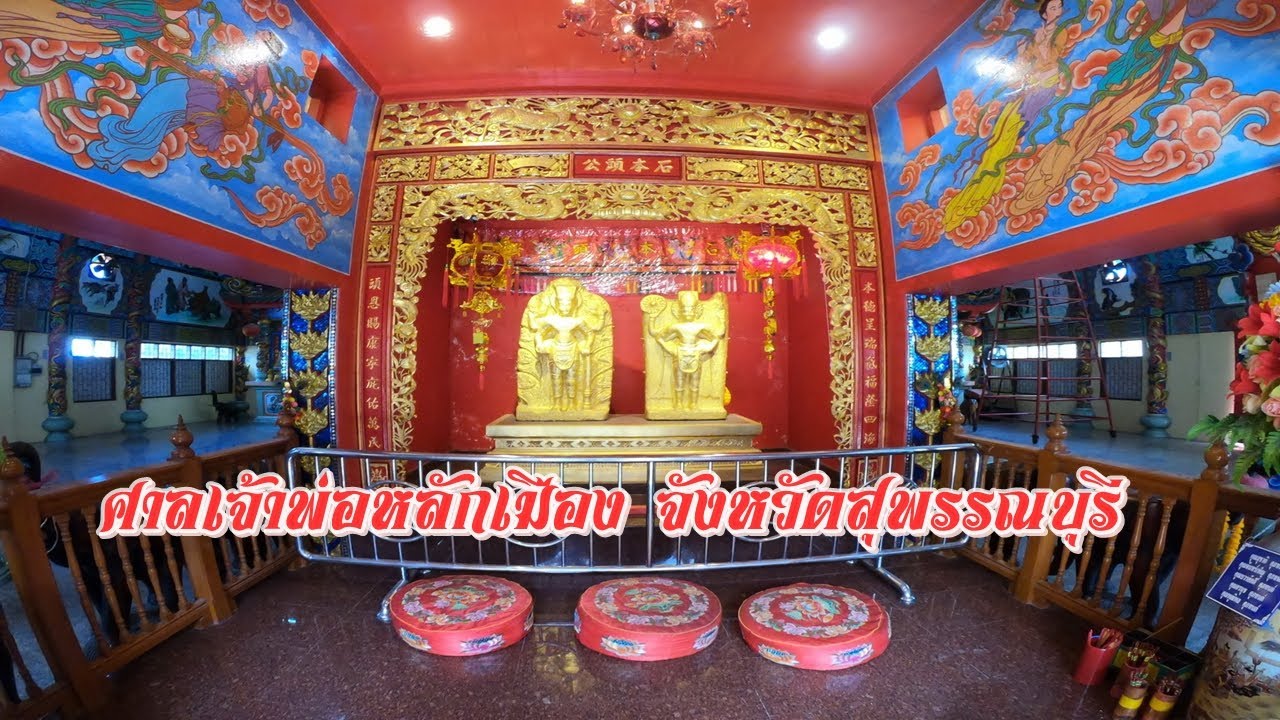
 Click to Access the Navigation Map GPS
Suphan Buri City Pillar Shrine Map
Gellery
Recommend

 Art, Culture and Heritage
 Historical Sites and Monuments(2)
 Landmarks and Memorials(4)
 Art, Craft Centres, Tradition(2)
 Museums(5)
 Educational Places
 Educational Gardens, Farm(4)
 Training Center(2)
 Temple(36)
Other Sacred Sites(4)
Temple(36)
Other Sacred Sites(4)
 Suburban Living
 Village, Community(6)
 Local Market(7)
 Floating Market(1)
 Nature and Wildlife
 National Parks and Marine Reserves(4)
 Mountain (Doi)(2)
 Dam, Reservoir, Lake(3)
 Caves(1)
 Bays and Beaches(1)
 Entertainment and Agricultural
 Farms, Parks and Ecotourism(6)
 Theater(1)


