
lovethailand home >Northeastern Travel Attractions >Sakon Nakhon Travel Attractions >Muang Sakon Nakhon >That Choeng Chum > Chao Pho Mahesak Shrine (The City Pillar Shrine)
TL;DR: Chao Pho Mahesak Shrine (The City Pillar Shrine) is located at Ngio Don Subdistrict, Mueang Sakon Nakhon District, Sakon Nakhon Province, open Daily, hours 08.00 – 17.00.
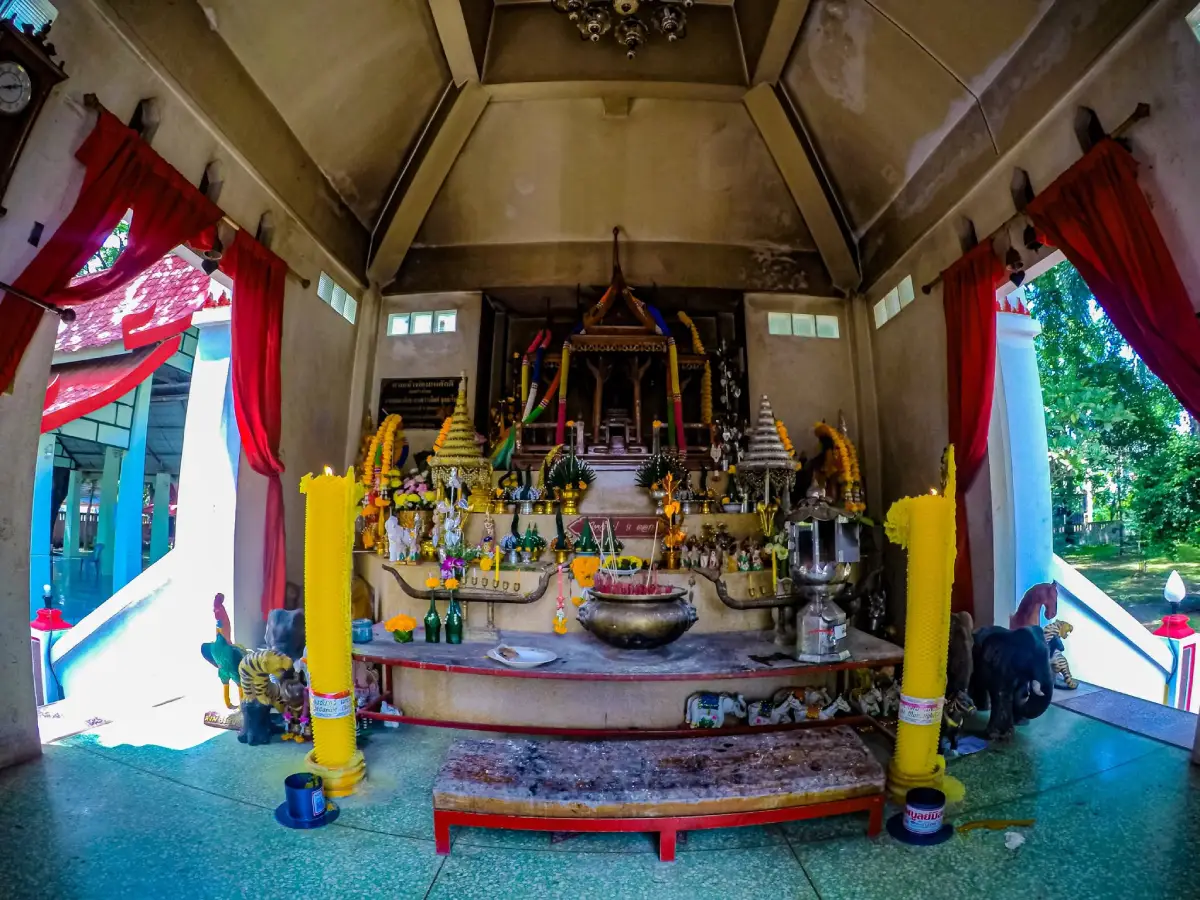
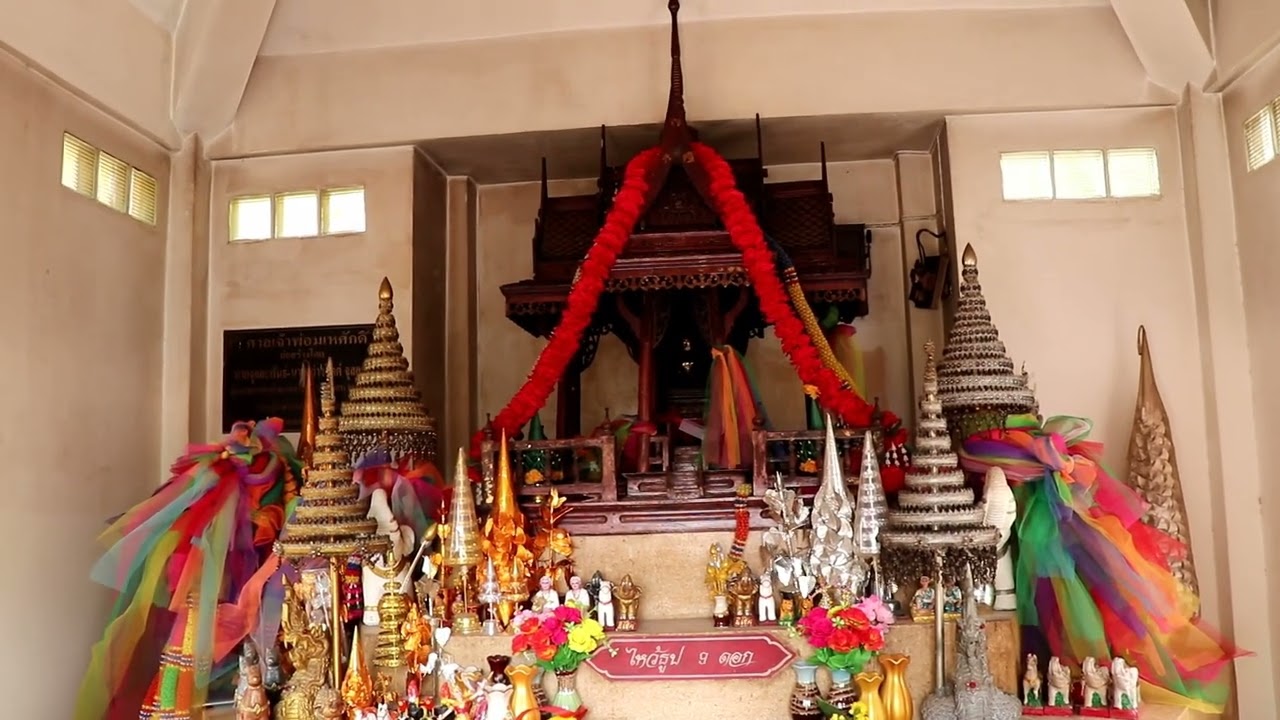
Chao Pho Mahesak Shrine (The City Pillar Shrine)
Open Days: Daily
Opening Hours: 08.00 – 17.00
Chao Pho Mahesak Shrine, also known as the City Pillar Shrine of Sakon Nakhon, is an important sacred local shrine in Ngio Don Subdistrict, Mueang Sakon Nakhon District, Sakon Nakhon Province. The shrine was formerly known as Chao Pu Tong Mahesak Lak Mueang Shrine and is associated with the legend of Chao Pu Tong, or Phra Uphat Tong, a royal deputy figure from the Mekong-region polity of Saraphan Wan Thong. According to local belief, he was sent to protect the people of old Nong Han Luang city and to safeguard Phra That Choeng Chum. Today, the shrine remains a place for worship, local remembrance, city guardian belief, and an annual offering ritual held on the 3rd waxing moon day of the 6th lunar month.
Chao Pho Mahesak Shrine, Sakon Nakhon, is one of the most meaningful local sacred places in the provincial city. It is not only a shrine for personal worship, but also a place connected with the deeper memory of old Sakon Nakhon, formerly associated with Nong Han Luang, Phra That Choeng Chum, old city moats, Khu Mak Suea, and Non Lak Mueang. The shrine reflects a layer of local belief in city guardians, ancestral protectors, and sacred presences who watch over the well-being of the community.
The shrine was formerly known as Chao Pu Tong Mahesak Lak Mueang Shrine. In 2000, the name was changed to Chao Pho Mahesak, while tourism sources also use the spelling Chao Pho Mahesak or Chao Pho Mahesak Shrine with the note that it is the City Pillar Shrine of Sakon Nakhon. These different names reflect the character of an old local sacred place with oral history, ritual usage, and contemporary tourism references. At the heart of all these names is the memory of Chao Pu Tong, the guardian figure of the shrine.
The word Tong in local explanation carries several meanings. In one sense, it refers to the end or farthest point of a line, such as the tip, end, or extreme edge of something. In another sense, in the local Isan language it can refer to the act of receiving or catching something that has been thrown, flowed, or fallen down, such as a fish trap or water flowing from a roof edge. This gives the name Chao Pu Tong a linguistic and cultural depth. The name is not merely a personal title, but also carries the idea of receiving, holding, and protecting.
The central legend of the shrine states that Chao Pu Tong, or Phra Uphat Tong, came from the royal line of Saraphan Wan Thong on both sides of the Mekong River. He was sent to protect the people of Nong Han Luang and to safeguard Phra That Choeng Chum, a major sacred Buddhist landmark of the old city. Nong Han Luang was connected with Nong Han Lake, the Kam River, and waterways leading toward the lower Mekong. For this reason, the protective role of Chao Pu Tong is understood as covering both land and water, including the wider life of communities in the Nong Han basin.
After Phra Uphat Tong passed away, local belief holds that he continued to dwell in Sakon Nakhon and protect the city. People then established Chao Pu Tong Mahesak Lak Mueang Shrine as a sacred place of worship. The shrine therefore connects city history, guardian belief, ancestral memory, and community ritual in one place. It is a space where the story of a protector of the old city continues to be remembered through worship and annual offerings.
Local accounts connect the shrine with sacred places along the old city landscape, including the city moat, Khu Mak Suea, and Non Lak Mueang. These names point to the historical and ritual geography of old Sakon Nakhon. City moats and city-pillar areas often carry meanings of boundary, protection, authority, and sacred order. The connection between Chao Pho Mahesak Shrine and these places shows that the shrine belongs to a wider cultural landscape rather than existing as an isolated small shrine.
In the context of city pillar belief, Chao Pho Mahesak Shrine serves as a spiritual anchor for people seeking blessing, security, protection, and stability in life. City pillar shrines in Thailand often represent the sacred foundation of a town. In Sakon Nakhon, this idea is distinctive because it is intertwined with the legend of Chao Pu Tong, a royal deputy figure, the old city of Nong Han Luang, and the protection of Phra That Choeng Chum. This gives the shrine a local identity different from many other city pillar shrines.
The most important annual ritual is the offering ceremony for Chao Pu Tong Mahesak Lak Mueang Shrine, held on the 3rd waxing moon day of the 6th lunar month every year. The traditional offerings include a cow head, cow legs, meat, internal organs, popped rice, flowers, sour fruits, sweets, cooked food, white liquor, ceremonial attire, and local musical instruments such as pi, phin, khaen, and ching. These elements form part of the inherited ritual practice of Sakon Nakhon people.
The annual offering ceremony reveals the deep Isan cultural roots of the shrine. The offerings are not simply objects placed before a sacred figure. They are a ritual language through which the community honors the city guardian. Local musical instruments such as pi, phin, khaen, and ching connect the ritual with Isan sound culture, while ceremonial clothing and colored cloths reflect respect for the guardian spirit as a powerful and honored presence.
The shrine also reveals the relationship between Sakon Nakhon people and Phra That Choeng Chum. The legend states that Chao Pu Tong was sent to protect both the people of Nong Han Luang and Phra That Choeng Chum. Phra That Choeng Chum is one of the most important Buddhist landmarks of Sakon Nakhon. When the shrine is understood through this connection, it becomes part of a sacred network linking local guardian belief, Buddhism, city memory, and the spiritual center of the province.
Chao Pho Mahesak Shrine is located in Ngio Don Subdistrict, Mueang Sakon Nakhon District. It is not far from the city area and can be combined easily with other major sites in Sakon Nakhon. The atmosphere of the shrine is modest and local, different from large tourist attractions. Visitors encounter a sacred community space with the main shrine, city pillar-related area, subsidiary shrines, and places for offerings and annual ritual activity.
Important areas within the shrine include Chao Pho Mahesak Shrine, also known as Chao Pu Tong Mahesak Lak Mueang Shrine, the city pillar-related worship area, subsidiary shrines, offering space, annual ritual ground, and the surrounding area connected in local memory with the old city moat and Non Lak Mueang. Subsidiary shrines mentioned in contemporary descriptions include Chao Pho Thao Si Phumi, Chao Pho Thao Si Phuma, Chao Pho Thao Si Uthai, and Chao Pho Thao Si Wantha. These elements show that the shrine is part of a multi-layered sacred system.
On ordinary days, the shrine has a quiet atmosphere suitable for worship and for learning about local history. During the annual ritual on the 3rd waxing moon day of the 6th lunar month, the atmosphere becomes more active and ceremonial. The difference between normal days and the ritual day shows two sides of the place: calm personal devotion and collective community faith. Both are important to the life of the shrine.
Chao Pho Mahesak Shrine offers a deeper understanding of Sakon Nakhon. The province is widely known for Wat Phra That Choeng Chum, Wat Pa Sutthawat, Nong Han Lake, the Thai Forest Tradition, and Tha Rae Catholic community. The shrine adds another dimension: the belief in a city guardian and the old sacred geography of Nong Han Luang. Visiting this place helps reveal the layered identity of Sakon Nakhon as a city of Buddhism, local guardians, water landscapes, and inherited ritual memory.
The old name Chao Pu Tong also preserves local language and memory. Even though the official or common contemporary name is Chao Pho Mahesak, the older name still appears in local history and oral accounts. The coexistence of old and new names gives the shrine cultural depth. Sacred places like this do not live only through buildings; they live through names, stories, rituals, and the voices of people who continue to remember them.
Visitors interested in the history of Sakon Nakhon can use this shrine as a starting point before continuing to Wat Phra That Choeng Chum Worawihan, Wat Pa Sutthawat, the Luang Pu Mun Bhuridatta Museum, Nong Han Lake, and the city gate area. This route connects the city’s guardian shrine, Buddhist landmarks, meditation heritage, water landscape, and modern civic symbols in one journey.
Getting There is most convenient by private car, rental car, or local transport within Sakon Nakhon city. From the city area, travel toward Ngio Don Subdistrict in Mueang Sakon Nakhon District. The shrine is within easy reach of other important city attractions, making it suitable for a combined itinerary with Wat Phra That Choeng Chum, Wat Pa Sutthawat, Nong Han Lake, and the city gate area.
The best time to visit is from morning to afternoon during the opening hours from 08.00 to 17.00. Morning offers a calmer and cooler atmosphere for worship, photography, and reading the shrine history. Afternoon visits are convenient for travelers connecting from other places in the city. Evening visits should be avoided unless there is a specific ritual or community event, because the shrine is a sacred community place with local care hours.
Visitors should dress modestly and behave respectfully. Voices should be kept low, offerings should be placed only in appropriate areas, and visitors should not climb on shrine structures or touch sacred objects inappropriately. Photography should be done with restraint and should not disturb people who are worshipping. The shrine is a sacred place of the community, not merely a sightseeing stop.
For families, Chao Pho Mahesak Shrine can serve as a cultural learning place. Children can learn about city pillar belief, local guardian spirits, the legend of Nong Han Luang, the role of Phra That Choeng Chum, and Isan offering rituals. The shrine shows that city history is not preserved only in books or museums, but also in sacred places, ceremonies, local names, and inherited stories.
Culturally, the shrine demonstrates the layered character of Isan belief. It connects a city pillar, a guardian ancestor, Phra That Choeng Chum, the Nong Han basin, local waterways, and traditional music used in ritual. These elements make the shrine more than a place for asking blessings. It is a cultural space that expresses how local people understand protection, sacred power, city identity, and the relationship between human life and unseen forces.
Nearby attractions in Mueang Sakon Nakhon include Wat Phra That Choeng Chum Worawihan, Wat Pa Sutthawat, the Luang Pu Mun Bhuridatta Museum, Nong Han Lake, Sakon Nakhon City Gate, and Phu Phan Museum. Because the shrine is in the city area, visitors can connect it easily with major religious and cultural sites. This makes the visit suitable for travelers who want to understand Sakon Nakhon through city heritage, Buddhism, local belief, and museum learning.
Dining options are available in Sakon Nakhon city, within a short drive from the shrine. Publicly listed restaurants include P Pla Phao, Nong Han Boat Noodles, Sabun Nga Restaurant, Pla Phao Op Thang, Mit Uppatham, and other local restaurants in the city area. These restaurants make it convenient to combine shrine worship with a meal before or after visiting other city attractions.
Accommodation is most convenient in Sakon Nakhon city. Publicly listed options include MJ The Majestic Hotel, Dusit Hotel, Sakol Grand Palace, P.C. Grand Palace, NH The Elegant, and other city hotels. Staying in the city allows visitors to reach Chao Pho Mahesak Shrine, Wat Phra That Choeng Chum, Wat Pa Sutthawat, Nong Han Lake, and local restaurants without long travel times.
For international visitors, Chao Pho Mahesak Shrine helps explain the diversity of belief in Sakon Nakhon. The province includes Buddhist stupas, forest monasteries, Catholic heritage at Tha Rae, and a city guardian shrine tied to old Nong Han Luang. A visit to this shrine shows how local guardian belief, city pillar traditions, ancestral protection, Buddhist landmarks, and Mekong-region cultural memory coexist within the same provincial landscape.
Chao Pho Mahesak Shrine, or the City Pillar Shrine of Sakon Nakhon, is therefore an important destination for those who want to understand the city beyond its best-known temples. The shrine connects Chao Pu Tong, the royal deputy figure from Saraphan Wan Thong, old Nong Han Luang, Phra That Choeng Chum, the city moat, the annual 6th lunar month offering ritual, and the living faith of local people. Visiting the shrine is not only an act of worship; it is a way to encounter the old spiritual foundation of Sakon Nakhon.
| Name | Chao Pho Mahesak Shrine (Sakon Nakhon City Pillar Shrine) |
| Former Name | Chao Pu Tong Mahesak Lak Mueang Shrine |
| Common Names | Chao Pho Mahesak Shrine / Chao Pho Mahesak City Pillar Shrine / Sakon Nakhon City Pillar Shrine / Chao Pu Tong Mahesak Lak Mueang Shrine |
| Location | Ngio Don Subdistrict, Mueang Sakon Nakhon District, Sakon Nakhon Province |
| Place Type | City Pillar Shrine / Local Guardian Shrine / Sacred Local Shrine / Faith-Based And Cultural Destination |
| Local Care / Ritual Continuity | Sakon Nakhon local community and people involved in the annual offering ritual of Chao Pu Tong Mahesak Lak Mueang Shrine |
| Current Status | Open For Worship And Respectful Visits During Shrine Hours |
| Open Days | Daily |
| Opening Hours | 08.00 – 17.00 |
| Admission Fee | Free Admission |
| Significance | A city guardian shrine associated with Chao Pu Tong, or Phra Uphat Tong, who is believed to have been sent to protect the people of Nong Han Luang and safeguard Phra That Choeng Chum |
| History / Legend | Chao Pu Tong is remembered as a royal deputy figure from Saraphan Wan Thong on both sides of the Mekong River, connected with the protection of Nong Han Luang, the Nong Han basin, the Kam River, and the lower Mekong cultural region |
| Meaning Of The Name Tong | Tong can refer to the farthest end of a line, and in local Isan usage it can refer to receiving or catching something that is thrown, flows, or falls, such as a fish trap or water flowing from a roof edge |
| Important Annual Ritual | The annual offering ritual for Chao Pu Tong Mahesak Lak Mueang Shrine, held on the 3rd waxing moon day of the 6th lunar month every year |
| Traditional Ritual Offerings | Cow head, cow legs, meat, internal organs, popped rice, flowers, sour fruits, sweets, cooked food, white liquor, ceremonial attire, and local musical instruments such as pi, phin, khaen, and ching |
| Main Areas / Zones | Chao Pho Mahesak Shrine or Chao Pu Tong Mahesak Lak Mueang Shrine, city pillar-related worship area, subsidiary shrines, offering area, annual ritual ground, and the surrounding area connected in local memory with the old city moat, Khu Mak Suea, and Non Lak Mueang |
| Subsidiary Shrines Mentioned In Local Accounts | Chao Pho Thao Si Phumi, Chao Pho Thao Si Phuma, Chao Pho Thao Si Uthai, And Chao Pho Thao Si Wantha |
| Travel Information | From Sakon Nakhon city, travel toward Ngio Don Subdistrict in Mueang Sakon Nakhon District. Private car, rental car, or local transport is convenient. The shrine can be combined with Wat Phra That Choeng Chum, Wat Pa Sutthawat, and Nong Han Lake |
| Facilities | Worship area, offering area, shrine courtyard, nearby parking according to local conditions, and easy access to Sakon Nakhon city attractions |
| Visitor Guidelines | Dress modestly, keep voices low, respect worship areas, do not climb on shrine structures, do not place inappropriate items in sacred areas, avoid disturbing worshippers, and keep the shrine clean |
| Nearby Tourist Attractions | 1. Sakon Nakhon City Gate And Phraya Prachanthaprathet Thani Monument, About 3 Km 2. Wat Phra That Choeng Chum Worawihan, About 5 Km 3. Wat Pa Sutthawat And Luang Pu Mun Bhuridatta Museum, About 6 Km 4. Nong Han Lake, Sakon Nakhon, About 7 Km 5. Phu Phan Museum, About 8 Km 6. Chalerm Phrakiat Lotus Park, Sakon Nakhon, About 14 Km |
| Nearby Restaurants | 1. P Pla Phao, Mueang Sakon Nakhon, About 5 Km, Tel. 098-140-1184 2. Nong Han Boat Noodles, Mueang Sakon Nakhon, About 5 Km, Tel. 062-871-1916 3. Sabun Nga Restaurant, Mueang Sakon Nakhon, About 6 Km 4. Pla Phao Op Thang, Mueang Sakon Nakhon, About 6 Km, Tel. 093-052-2431 5. Mit Uppatham, Mueang Sakon Nakhon, About 6 Km, Tel. 042-711-633 6. Local Restaurants In Sakon Nakhon City, About 5–7 Km |
| Nearby Accommodations | 1. MJ The Majestic Hotel, Mueang Sakon Nakhon, About 6 Km, Tel. 042-733-771 2. Dusit Hotel, Mueang Sakon Nakhon, About 6 Km, Tel. 042-711-198 3. Sakol Grand Palace, Mueang Sakon Nakhon, About 6 Km, Tel. 042-714-886 4. P.C. Grand Palace Hotel, Mueang Sakon Nakhon, About 6 Km, Tel. 042-733-988 5. NH The Elegant, Mueang Sakon Nakhon, About 7 Km, Tel. 042-713-338, 042-713-339, 081-768-6277 6. The Luxury Hotel, Mueang Sakon Nakhon, About 7 Km, Tel. 095-169-9705 |
Frequently Asked Questions (FAQ)
Q: Where Is Chao Pho Mahesak Shrine Located?
A: Chao Pho Mahesak Shrine is located in Ngio Don Subdistrict, Mueang Sakon Nakhon District, Sakon Nakhon Province. It is also known as the City Pillar Shrine of Sakon Nakhon.
Q: What Are The Opening Days And Hours?
A: The shrine is open daily from 08.00 to 17.00.
Q: Is There An Admission Fee?
A: Admission is free. Visitors may enter for worship and respectful visits during shrine hours.
Q: What Was The Former Name Of The Shrine?
A: The former name was Chao Pu Tong Mahesak Lak Mueang Shrine. In 2000, it was renamed Chao Pho Mahesak.
Q: Who Is Chao Pu Tong In The Shrine Legend?
A: Chao Pu Tong, or Phra Uphat Tong, is remembered as a royal deputy figure from Saraphan Wan Thong on both sides of the Mekong River, sent to protect the people of Nong Han Luang and safeguard Phra That Choeng Chum.
Q: When Is The Annual Offering Ritual Held?
A: The annual offering ritual for Chao Pu Tong Mahesak Lak Mueang Shrine is held on the 3rd waxing moon day of the 6th lunar month every year.
Q: What Are The Main Areas Inside The Shrine?
A: Important areas include the main Chao Pho Mahesak Shrine, the city pillar-related worship area, subsidiary shrines, offering area, and ritual ground.
Q: What Nearby Places Can Be Visited On The Same Trip?
A: Nearby places include Sakon Nakhon City Gate, Wat Phra That Choeng Chum Worawihan, Wat Pa Sutthawat, Luang Pu Mun Bhuridatta Museum, Nong Han Lake, Phu Phan Museum, and Chalerm Phrakiat Lotus Park.
 Category: ●Places of Worship
 Group: ●Other Sacred Sites
Last Update : 3 MonthAgo
 Last Update : 3 MonthAgo
 Click to Access the Navigation Map GPS
Chao Pho Mahesak Shrine (The City Pillar Shrine) Map
Recommend

 Art, Culture and Heritage
 Historical Sites and Monuments(9)
 Landmarks and Memorials(2)
 Royal Palace(1)
 Art, Craft Centres, Tradition(8)
 Museums(3)
 Educational Places
 Educational Gardens, Farm(2)
 Temple(18)
 Church(2)
Other Sacred Sites(4)
 Research and Development
 Royal Project(3)
 Suburban Living
 Village, Community(7)
 Nature and Wildlife
 National Parks and Marine Reserves(4)
 Mountain (Doi)(3)
 Dam, Reservoir, Lake(14)
 Waterfalls(4)
 Caves(4)
 River, Canal(9)
 Bays and Beaches(1)
 Islands(1)
 Other natural attractions(5)
 Entertainment and Agricultural
 Zoos and Aquariums(1)
 Farms, Parks and Ecotourism(4)
 Outdoor and Adventure Activities(1)
 Travel Articles, Recipes
 Travel Review, Food Review(1)


