
lovethailand home >Eastern Travel Attractions >Trat Travel Attractions >Muang Trat >Wang Krachae > Trat City Pillar Shrine
TL;DR: Trat City Pillar Shrine is located at Lak Mueang Road, Bang Phra Subdistrict, Mueang Trat District, Trat Province, near Wat Yothanimit, open Daily, hours 05.00 – 21.00.

Trat City Pillar Shrine
Open Days: Daily
Opening Hours: 05.00 – 21.00
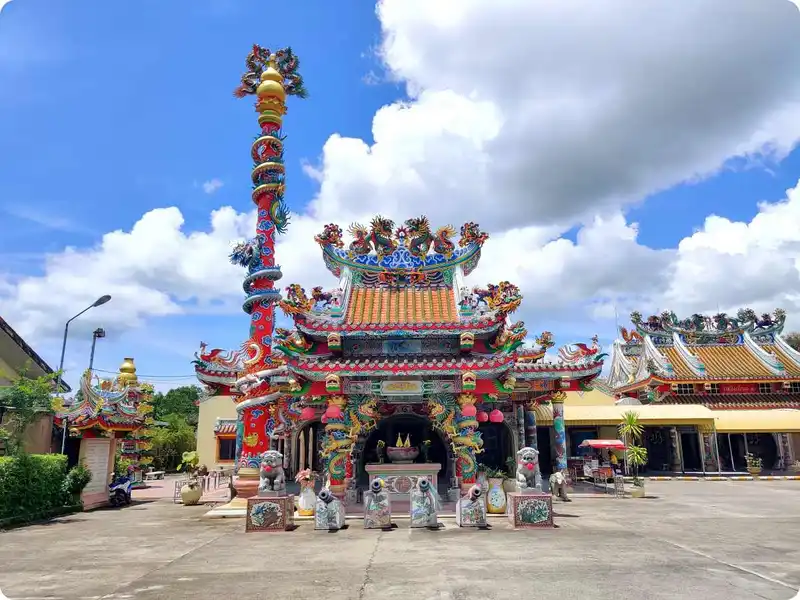
Trat City Pillar Shrine, also known as San Chao Pho Lak Mueang Trat, is located on Lak Mueang Road in Bang Phra Subdistrict, Mueang Trat District, Trat Province, near Wat Yothanimit. It is one of the most distinctive city pillar shrines in Thailand because its main building was constructed in the style of a Chinese shrine rather than a typical Thai city pillar shrine. This unique architectural character reflects the long relationship between Thai and Chinese communities in Trat and gives the shrine a special cultural identity within the historic center of the city.
For travelers visiting Trat, the City Pillar Shrine is one of the most meaningful places to visit before exploring the rest of the province. It is easy to reach, located in the town center, and surrounded by other important cultural sites. A visit here introduces travelers to Trat not only as a gateway to islands such as Koh Chang, Koh Kood, and Koh Mak, but also as a historic eastern city with deep spiritual traditions, local legends, Chinese-Thai cultural connections, and memories linked to King Taksin the Great.
The history of Trat City Pillar Shrine is closely associated with King Taksin the Great. During the period when he gathered forces and supplies in Trat to restore Siamese independence, he ordered the establishment of the city pillar shrine according to Chinese beliefs. The shrine was created to protect Trat from danger and to bring peace and prosperity to the people of the city. Because of this origin, the shrine is not only a sacred site but also a symbolic reminder of Trat’s role in the wider history of the Thai nation.
The Chinese-style architecture is the most visible feature of the shrine. While many city pillar shrines in Thailand are built in Thai or Thai-influenced architectural forms, Trat City Pillar Shrine stands out with its Chinese pavilion style, auspicious decorative details, roof form, shrine atmosphere, and worship practices. The building immediately communicates the presence of Chinese cultural influence in the spiritual life of Trat. For foreign travelers, this makes the shrine easier to understand as a cultural hybrid: it is a Thai city pillar shrine expressed through Chinese architectural and ritual language.
This architectural difference is not decorative only. It reflects the social history of Trat as a coastal trading town where Thai and Chinese communities lived, traded, worshipped, and built local identity together. Chinese settlers played an important role in the economy and cultural life of Trat, and the shrine became a shared sacred space respected by both Thai and Chinese residents. Over time, the shrine developed into one of the strongest symbols of unity in the city.
In Thai belief, a city pillar shrine represents the spiritual foundation and stability of a town. It is a sacred center that protects the community and gives people a sense of security. Trat City Pillar Shrine therefore has meaning at both personal and civic levels. Local people come to pay respect, ask for blessings, pray for safety, begin new ventures, seek success in trade, and express gratitude. Travelers often visit before continuing to the islands or other parts of the province, as a gesture of respect and good fortune.
One of the most famous legends of Trat City Pillar Shrine dates to the period when the French occupied Trat. Local stories say that the French noticed how often local people came to worship at the shrine and attempted to remove the city pillar. Workers tried to dig it out but could not remove it. Even when an elephant was used to pull the pillar, it did not fall; it only leaned slightly. The people of Trat later restored the pillar and preserved the shrine. This legend has become one of the most powerful stories associated with the shrine’s sacred reputation.
The legend is important because it shows how deeply the shrine is connected with the identity of the city. The city pillar is not simply a sacred object. It represents Trat itself. As long as the pillar remained in place, the people felt that the city still had its spiritual foundation. The story of the failed attempt to remove the pillar strengthened the belief that Chao Pho Lak Mueang protects the city and its people.
Trat City Pillar Shrine is also a major center of Thai-Chinese cultural relationship. Every year, on the 6th waxing moon day of the 6th lunar month, an annual celebration is held. The event is known in Thai as Wan Phli Mueang and in Chinese tradition as Se Kong Sae Yid, meaning the birthday of Chao Pho Lak Mueang. The celebration includes Thai-style merit-making and almsgiving, together with Chinese-style rituals. This combination makes the event one of the clearest examples of Thai and Chinese religious practices existing together in local tradition.
In addition to Wan Phli Mueang, the shrine is also connected with the annual Chinese-style celebration of the Pun Thao Ma Shrine, held around the period before and after Chinese New Year. During this time, the area becomes especially lively as people come to worship, make offerings, and take part in annual community rituals. These events preserve the local Chinese heritage of Trat and show how Chinese traditions remain active in the city’s annual cultural calendar.
Visitors should take time to observe the shrine respectfully. The building, worship areas, city pillar, incense, offerings, and surrounding atmosphere all reveal layers of meaning. A short visit may be enough for a quick prayer, but a slower visit allows travelers to understand the shrine as a living cultural site. It is a place where architecture, belief, history, and community memory meet in one compact space.
Worship at the shrine should be done with respect. Visitors may follow the designated worship points and use incense, candles, or offerings according to local practice. Those unfamiliar with Chinese-style worship can observe the instructions on site or ask caretakers politely. The purpose of worship at a city pillar shrine is not only personal blessing. It is also an expression of respect for the city, its people, and the protective spirit believed to guard the community.
Because the shrine is located in central Trat, it can easily be included in a town walking or driving route. Travelers can begin with the City Pillar Shrine, then continue to Wat Yothanimit, Trat City Museum, the old town area, the municipal market, and local restaurants. This itinerary is ideal for travelers who want to understand Trat beyond its islands and beaches. It gives a clearer picture of the city’s historical, religious, and everyday life.
Wat Yothanimit, located very close to the shrine, is another important site to visit. The proximity between the Buddhist temple and the Chinese-style city pillar shrine reflects the layered spiritual landscape of Trat. Within a short distance, visitors can see Buddhist tradition, city pillar belief, and Chinese religious influence existing side by side. This is one of the most distinctive cultural impressions of the old town area.
For travelers interested in King Taksin the Great, Trat City Pillar Shrine is especially meaningful. It helps connect Trat with the historic period of gathering forces in the eastern region before the restoration of Siamese independence. The shrine created under his royal command remains a living reminder of that moment. Visiting the shrine therefore adds historical depth to any cultural journey through Trat.
Trat City Pillar Shrine is also highly suitable for foreign travelers interested in Thai-Chinese culture. It demonstrates how religious traditions in Thailand often combine several cultural systems. A Chinese-style shrine functioning as a Thai city pillar shrine may seem unusual at first, but it clearly shows how local belief in Southeast Asia can adapt, blend, and become shared civic heritage. This makes the shrine more than a local place of worship; it is an excellent example of cultural fusion in eastern Thailand.
Getting There is simple because the shrine is located on Lak Mueang Road in central Trat. Travelers can drive directly to the shrine or use Wat Yothanimit as a nearby landmark. From Trat Bus Terminal, local transport, hired vehicles, or songthaews can take visitors into the town center. Travelers staying in central Trat can reach the shrine conveniently, and many nearby attractions are within a short driving distance.
The best time to visit is in the morning or late afternoon when the weather is more comfortable and the atmosphere is calmer. During the 6th waxing moon day of the 6th lunar month or around the annual Chinese shrine festival period near Chinese New Year, the shrine becomes livelier than usual. These periods are ideal for travelers who want to see local ceremonies, but visitors should allow extra time and follow the instructions of shrine staff and organizers.
Before visiting, travelers should dress politely and behave respectfully. Although the shrine welcomes the public, it remains a sacred place for local people. Avoid loud behavior, intrusive photography, touching sacred objects without permission, or blocking worshippers. Families traveling with children should help them understand the importance of the place. A respectful visit makes the experience more meaningful for both travelers and the local community.
Overall, Trat City Pillar Shrine is small in physical size but large in historical and spiritual importance. It connects King Taksin the Great, Thai-Chinese belief, the legend of the French occupation, the annual Wan Phli Mueang ceremony, the Pun Thao Ma Chinese festival, and the civic identity of Trat in one place. Visitors who come here do more than make a wish. They encounter the spiritual heart of Trat and one of the most distinctive city pillar shrines in Thailand.
| Name | Trat City Pillar Shrine / San Chao Pho Lak Mueang Trat |
| Location | Lak Mueang Road, Bang Phra Subdistrict, Mueang Trat District, Trat Province, near Wat Yothanimit |
| Address | Lak Mueang Road, Bang Phra Subdistrict, Mueang Trat District, Trat Province 23000, Thailand |
| Highlights | A rare Chinese-style city pillar shrine associated with King Taksin the Great and regarded as a Thai-Chinese spiritual center of Trat |
| History | Established under King Taksin the Great when he gathered forces in Trat to restore Siamese independence; built according to Chinese belief to protect the city |
| Name Origin | The shrine enshrines Chao Pho Lak Mueang and the city pillar of Trat, respected as the spiritual foundation and protective guardian of the city |
| Distinctive Features | The building is constructed as a Chinese pavilion, making it different from many other city pillar shrines in Thailand |
| Traditions / Rituals | Wan Phli Mueang or Se Kong Sae Yid is held on the 6th waxing moon day of the 6th lunar month every year; the shrine is also linked with the annual Chinese-style Pun Thao Ma celebration around Chinese New Year |
| Travel Information | Located on Lak Mueang Road in central Trat. Travelers can drive, take local transport, or use Wat Yothanimit as a nearby landmark |
| Current Status | Open to the public as an active sacred shrine and important cultural attraction of Trat town |
| Open Days | Daily |
| Opening Hours | 05.00 – 21.00 |
| Fees | No admission fee |
| Facilities | Worship area, offering area, nearby parking, and convenient access to attractions in central Trat |
| Main Areas / Zones | Chinese pavilion building, city pillar, Chao Pho Lak Mueang worship area, Chinese-style worship area, and shrine courtyard |
| Caretaker | Trat City Pillar Shrine Committee |
| Nearby Tourist Attractions | 1. Wat Yothanimit, about 0.2 km 2. Trat City Museum, about 0.7 km 3. Trat Municipal Market, about 0.8 km 4. Wat Phai Lom Trat, about 1.2 km 5. Wat Buppharam, about 2 km 6. Chao Mae Tubtim Shrine Trat, about 1 km 7. Trat Old Town Area, about 1 km |
| Nearby Restaurants | 1. Saeng Fah Restaurant, about 0.8 km 2. Kiao Nong Bua, about 0.7 km 3. Khon Phlat Thin, about 1 km 4. Kuai Tiao Pu, about 1 km 5. Tao Tueng King Phet, about 1 km 6. Khao Tom Tha Ruea Chang, about 1.5 km 7. Orchid Restaurant, about 1 km |
| Nearby Accommodations | 1. Rimklong Boutique Hotel Trat, about 0.5 km 2. Trat 101 Hotel, about 0.8 km 3. Artist’s Place Trat, about 0.8 km 4. Hotel Toscana Trat, about 1.5 km 5. Canvas Family Home, about 1.5 km 6. Paradiso Boutique Resort, about 2 km 7. Li Calla Resort Trat, about 3 km |
Frequently Asked Questions (FAQ)
Q: Where is Trat City Pillar Shrine located?
A: Trat City Pillar Shrine is located on Lak Mueang Road in Bang Phra Subdistrict, Mueang Trat District, Trat Province, near Wat Yothanimit.
Q: What makes Trat City Pillar Shrine unique?
A: It is unique because the shrine building was constructed in Chinese pavilion style, unlike many other Thai city pillar shrines, and it is historically linked to King Taksin the Great.
Q: What are the opening hours of Trat City Pillar Shrine?
A: The shrine is open daily from 05.00 to 21.00.
Q: Is there an admission fee for Trat City Pillar Shrine?
A: No. There is no admission fee for visitors who wish to pay respect at the shrine.
Q: When is the Wan Phli Mueang ceremony held?
A: Wan Phli Mueang, also known as Se Kong Sae Yid, is held on the 6th waxing moon day of the 6th lunar month every year to celebrate the birthday of Chao Pho Lak Mueang.
Q: What is the legend about the French occupation and Trat City Pillar?
A: Local legend says that during the French occupation of Trat, attempts were made to remove the city pillar, but it could not be pulled out. Even when an elephant was used, the pillar did not fall and only leaned slightly.
Q: What nearby places can travelers visit with Trat City Pillar Shrine?
A: Nearby places include Wat Yothanimit, Trat City Museum, Wat Buppharam, Trat Municipal Market, and the old town area of Trat.
Q: What should foreign travelers know before visiting?
A: Foreign travelers should dress politely, behave respectfully, avoid disturbing worshippers, and understand that this is a Thai city pillar shrine with strong Chinese architectural and ritual influences.
 Category: ●Places of Worship
 Group: ●Other Sacred Sites
Last Update : 4 MonthAgo
 Last Update : 4 MonthAgo
 Click to Access the Navigation Map GPS
Trat City Pillar Shrine Map
Recommend

 Art, Culture and Heritage
 Historical Sites and Monuments(1)
 Landmarks and Memorials(1)
 Art, Craft Centres, Tradition(3)
 Museums(2)
 Educational Places
 Museum for Study(1)
 Educational Gardens, Farm(2)
 Temple(11)
 Mosque(2)
Other Sacred Sites(2)
Mosque(2)
Other Sacred Sites(2)
 Suburban Living
 Village, Community(6)
 Local Market(2)
 Nature and Wildlife
 National Parks and Marine Reserves(2)
 Mountain (Doi)(1)
 Dam, Reservoir, Lake(3)
 Waterfalls(15)
 River, Canal(1)
 Bays and Beaches(21)
 Islands(19)
 Other natural attractions(12)
 Entertainment and Agricultural
 Outdoor and Adventure Activities(1)
 Shopping
 Shopping and Night Market(1)
 Travel Articles, Recipes
 Travel Review, Food Review(1)


