
lovethailand home >North Travel Attractions >Sukhothai Travel Attractions >Sawan Khalok >Nai Muang > Sawankhalok City Pillar Shrine
TL;DR: Sawankhalok City Pillar Shrine is located at Mueang Sawankhalok Subdistrict, Sawankhalok District, Sukhothai Province, open Daily, hours 08.00 – 17.00.

Sawankhalok City Pillar Shrine
Open Days: Daily
Opening Hours: 08.00 – 17.00
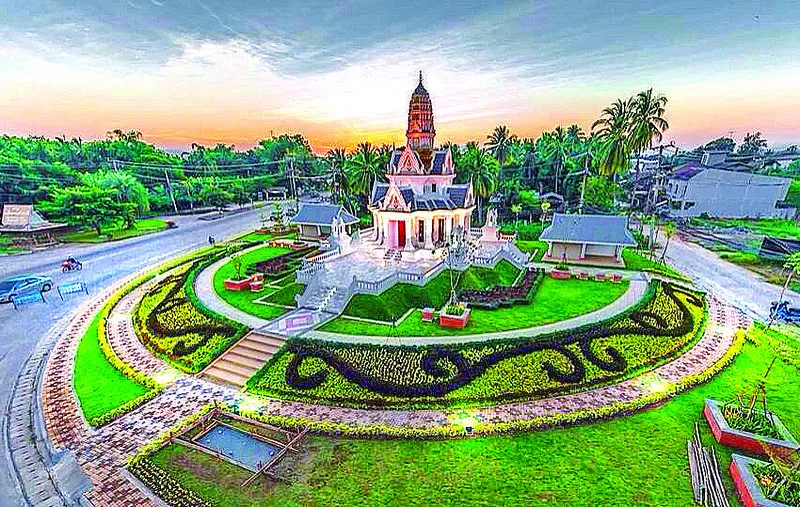
Sawankhalok City Pillar Shrine in Sukhothai Province is an important sacred landmark of Sawankhalok District. Located in Mueang Sawankhalok Subdistrict near the Yom River and National Highway 1048, the shrine represents the historical, cultural, and spiritual center of the local community. For Thai visitors, a city pillar shrine is traditionally understood as the spiritual anchor of a town. For foreign travelers, this shrine offers a meaningful introduction to how Thai communities connect territory, protection, governance, and sacred belief into one symbolic place.
In simple terms, Sawankhalok City Pillar Shrine is a sacred place where local residents come to pay respect and pray for prosperity, safety, stability, and peace. It is also a cultural landmark that reflects the historical identity of Sawankhalok, an old riverside town connected with the Yom River, local administration, and the broader history of Sukhothai Province. A visit to this shrine helps travelers understand Sawankhalok not only as a district name but as a community with deep historical roots.
According to local historical tradition, Sawankhalok City Pillar Shrine is believed to be connected with the early Rattanakosin period. It is associated with the time when Khun Dan, Phra Sawankhalok, received an official royal appointment from King Rama I in 1781. Khun Dan was responsible for guarding the border area, protecting the town, and overseeing defensive structures. This background gives the shrine a meaning beyond ordinary worship. It links the site to historical concepts of security, territorial control, and the protection of the town.
In Thai tradition, establishing a city pillar is an important symbolic act. A city is not seen merely as a place where people live. It is also a space that needs a spiritual center, a protective force, and a point of collective identity. The city pillar represents stability and order. When local people worship at the shrine, they are not only asking for personal blessings. They are also acknowledging the foundation of the town and the continuity of community life.
The Yom River adds another layer of meaning to Sawankhalok City Pillar Shrine. Sawankhalok developed in a region where rivers played an essential role in settlement, transport, agriculture, and trade. A shrine located near the river naturally carries both practical and spiritual significance. The river shaped the lives of the people, while the city pillar symbolized the town’s stability. Together, they reflect the relationship between landscape, community, and belief.
Local residents of Sawankhalok and nearby communities continue to hold the shrine in deep respect. Many people come to pray for family well-being, career stability, success in business, safe travel, and protection for the town. This living belief makes the shrine more than a historical remnant. It remains an active sacred space where different generations of local people continue to meet, worship, and pass on respect for the town’s spiritual foundation.
From a historical point of view, Sawankhalok City Pillar Shrine is a symbol of urban order and local governance. The city pillar marks a sense of place. It suggests that the town has a recognized center, a protected identity, and a shared memory. Sawankhalok itself has long been connected with the history of Sukhothai, Si Satchanalai, river routes, ceramic traditions, and local communities. The shrine therefore provides a useful starting point for travelers who want to explore the district with historical awareness.
The architecture of the shrine is modest but dignified. Its purpose is not only visual beauty but also ritual function. The space is arranged for worship, prayer, offerings, and respectful visitation. Visitors may bring flowers, incense, candles, or other appropriate offerings. The atmosphere encourages calm behavior and reflection. This is the type of place where the meaning of the site is felt through quiet respect rather than grand spectacle.
Worship at a Thai city pillar shrine is usually simple. Visitors stand or kneel respectfully, offer flowers or incense where permitted, and pray with a calm mind. Common prayers concern stability, protection, prosperity, successful work, family harmony, and safe journeys. The most important aspect is respectful intention. Visitors should keep the area clean, avoid loud behavior, and treat the shrine as a sacred place for the local community.
During important occasions such as Thai New Year, New Year’s Day, local ceremonies, and other auspicious periods, the shrine may receive more visitors. Local people often come to begin the year or a new chapter of life with a blessing. These moments show the continuing role of the shrine in everyday community life. The shrine connects personal hope with the well-being of the town as a whole.
For cultural travelers, Sawankhalok City Pillar Shrine is a good place to begin a walking or driving route through Sawankhalok. Nearby attractions include Sawankhalok Street Art, Sawankhaworanayok National Museum, Wat Sawang Arom Worawihan, and Sawankhalok Railway Station. These places together reveal different sides of the district: faith, art, transport history, museum collections, and local town life.
The shrine also helps visitors understand Sukhothai Province in a broader way. Many travelers think of Sukhothai mainly through Sukhothai Historical Park and Si Satchanalai Historical Park. These World Heritage sites are extremely important, but the province also contains living towns, community shrines, old railway areas, temples, markets, and local traditions. Sawankhalok City Pillar Shrine belongs to this living cultural landscape.
Travelers interested in history can continue from the shrine to Si Satchanalai Historical Park, one of the most important ancient city sites in northern Thailand. The park includes temples such as Wat Chang Lom, Wat Chedi Chet Thaeo, and Wat Nang Phaya. A route that begins at Sawankhalok City Pillar Shrine and continues to Si Satchanalai allows visitors to experience both the living town and the ancient city landscape in one journey.
Getting There is convenient by private car, rental car, or local transport within Sawankhalok District. From Sukhothai town, travelers can drive toward Sawankhalok District. The shrine is located in Mueang Sawankhalok Subdistrict near Highway 1048 and the Yom River. Those arriving by public transport can reach Sawankhalok town first and then continue by local vehicle or a short ride to the shrine area.
The best time to visit is in the morning or late afternoon, when the weather is more comfortable and the atmosphere is calm. Visitors who want to take photos or walk around the nearby town area may prefer soft morning or evening light. Those who want to see local devotional activity may visit during Thai New Year or other auspicious periods when local residents come to pay respect.
Foreign travelers should understand that a city pillar shrine is not simply a tourist photo spot. It is a sacred civic space. Modest dress, quiet behavior, and respect for local worshippers are recommended. Photography should be done politely and without interrupting anyone who is praying. By visiting with respect, travelers can better appreciate the spiritual meaning of the shrine.
The value of Sawankhalok City Pillar Shrine lies in its many layers. It is connected with early Rattanakosin history, the concept of city protection, the Yom River landscape, local worship, and the identity of Sawankhalok. Its importance does not come from size alone. It comes from the fact that people still return to the shrine for blessings, memory, and connection with their town.
In summary, Sawankhalok City Pillar Shrine is a meaningful cultural and spiritual landmark in Sukhothai Province. It is suitable for travelers who want to pay respect, learn about local history, and understand how Thai communities preserve the symbolic heart of a town. A visit to the shrine can be combined with nearby attractions in Sawankhalok and onward travel to Si Satchanalai Historical Park, making it a worthwhile stop for anyone exploring Sukhothai beyond the main tourist routes.
| Name | Sawankhalok City Pillar Shrine |
| Location | Mueang Sawankhalok Subdistrict, Sawankhalok District, Sukhothai Province |
| Address | Highway 1048, Mueang Sawankhalok Subdistrict, Sawankhalok District, Sukhothai 64110, Thailand |
| Coordinates | 17.303267, 99.833769 |
| Highlights | A sacred city pillar shrine of Sawankhalok, located near the Yom River and regarded as a symbol of town stability, protection, and local faith |
| History | Associated with the early Rattanakosin period and the time when Khun Dan, Phra Sawankhalok, received a royal appointment from King Rama I in 1781 |
| Name Origin | Named after the city pillar of Sawankhalok, symbolizing the spiritual and civic foundation of the town |
| Distinctive Features | A sacred place where people pray for stability, prosperity, safety, family well-being, and peace for the town |
| Travel Information | Travel from Sukhothai town to Sawankhalok District. The shrine is located in Sawankhalok town near Highway 1048. Private car, rental car, or local transport is convenient |
| Current Status | Open for worship and cultural visits; remains a sacred landmark and cultural attraction of Sawankhalok District |
| Open Days | Daily |
| Opening Hours | 08.00 – 17.00 |
| Facilities | Worship area, nearby parking, walking space around the shrine, and convenient access to Sawankhalok town attractions |
| Caretaker / Related Authority | Sawankhalok Town Municipality, Tel. 055-642200 |
| Official Website / Official Page | Sawankhalok Town Municipality Website |
| Nearby Tourist Attractions | 1. Sawankhalok Street Art, about 1 km 2. Sawankhaworanayok National Museum, about 1 km 3. Wat Sawang Arom Worawihan, about 2 km 4. Sawankhalok Railway Station, about 2 km 5. Sukhothai Heritage Resort / Sukhothai Airport Area, about 13 km 6. Si Satchanalai Historical Park, about 30 km |
| Nearby Restaurants | 1. Steak Krua Khun Wan & Fresh Coffee, behind the City Pillar Shrine, about 0 km, Tel. 085-400-6468 2. Som Tam Yam Phayom, Sawankhalok City Pillar Intersection, about 0 km, Tel. 086-937-1150 3. Puu-Yaa House, about 2 km 4. Je Niao Thai Noodle Sawankhalok, about 2 km 5. Kuk Mian Restaurant, about 2 km 6. All Blues Home & Cafe, about 3 km |
| Nearby Accommodations | 1. Swankaburi Boutique Hotel, about 1 km, Tel. 055-644197, 087-312-6767 2. Saengsin Hotel, about 1 km, Tel. 055-641259, 094-167-3809, 082-573-8865 3. Baan SP Resort Sawankhalok, about 4 km, Tel. 087-737-9393, 055-644395 4. Sukhothai Heritage Resort, about 13 km, Tel. 055-647564-7, 087-556-1385 5. Accommodations in Sawankhalok Town, about 1 km |
Frequently Asked Questions (FAQ)
Q: Where is Sawankhalok City Pillar Shrine located?
A: It is located in Mueang Sawankhalok Subdistrict, Sawankhalok District, Sukhothai Province, near the Yom River and Highway 1048.
Q: Why is Sawankhalok City Pillar Shrine important?
A: It is the spiritual center of Sawankhalok and symbolizes the town’s foundation, stability, protection, and local identity.
Q: How is the shrine connected with King Rama I?
A: Local history connects the shrine with the period when Khun Dan, Phra Sawankhalok, received a royal appointment from King Rama I in 1781.
Q: What do people usually pray for at the shrine?
A: People commonly pray for stability, safety, prosperity, family well-being, career success, business fortune, and peace for the town.
Q: Is Sawankhalok City Pillar Shrine open every day?
A: Yes. It is open daily, and the recommended visiting hours are 08.00 to 17.00.
Q: How should visitors behave at the shrine?
A: Visitors should dress modestly, behave respectfully, keep the area clean, speak quietly, and avoid disturbing worshippers.
Q: What nearby attractions can travelers visit after the shrine?
A: Nearby attractions include Sawankhalok Street Art, Sawankhaworanayok National Museum, Wat Sawang Arom Worawihan, Sawankhalok Railway Station, and Si Satchanalai Historical Park.
 Category: ●Places of Worship
 Group: ●Other Sacred Sites
Last Update : 5 MonthAgo
 Last Update : 5 MonthAgo
 Click to Access the Navigation Map GPS
Sawankhalok City Pillar Shrine Map
Recommend

 Art, Culture and Heritage
 Historical Sites and Monuments(4)
 Landmarks and Memorials(5)
 Art, Craft Centres, Tradition(11)
 Museums(5)
 Temple(40)
Other Sacred Sites(10)
Temple(40)
Other Sacred Sites(10)
 Suburban Living
 Village, Community(3)
 Nature and Wildlife
 National Parks and Marine Reserves(3)
 Mountain (Doi)(2)
 Dam, Reservoir, Lake(4)
 Waterfalls(8)
 Caves(4)
 River, Canal(2)
 Entertainment and Agricultural
 Farms, Parks and Ecotourism(3)
 Travel Articles, Recipes
 Travel Review, Food Review(1)


