
lovethailand home >Northeastern Travel Attractions >Si Sa Ket Travel Attractions >Muang Si Sa Ket >Muang Nuea > Si Sa Ket City Pillar Shrine
TL;DR: Si Sa Ket City Pillar Shrine is located at Intersection Of Thepha Road And Lak Mueang Road, Mueang Nuea Subdistrict, Mueang Si Sa Ket District, Si Sa Ket Province 33000, Thailand, open Daily, hours 08.00 - 17.00.

Si Sa Ket City Pillar Shrine
Open Days: Daily
Opening Hours: 08.00 - 17.00
Si Sa Ket City Pillar Shrine is located at the intersection of Thepha Road and Lak Mueang Road in Mueang Nuea Subdistrict, Mueang Si Sa Ket District, Si Sa Ket Province. It stands in the heart of the provincial city, close to Si Sa Ket Provincial Hall, government offices, banks, restaurants, hotels, and the main urban routes. For local people, this shrine is one of the most important sacred landmarks of the province. For travelers, it is a meaningful place to begin a visit to Si Sa Ket by paying respect to the city’s spiritual pillar before continuing to temples, museums, old buildings, parks, and cultural sites around the city.
A city pillar shrine in Thai culture is more than a place for making offerings. It represents the founding, stability, protection, and auspicious center of a city. The city pillar symbolizes the point where the life of the city is spiritually established. People come here to pray for success, safety, smooth work, good fortune, and stability in life. This is why the Si Sa Ket City Pillar Shrine is deeply respected by local residents, government workers, business owners, students, travelers, and families.
The present shrine building was constructed in 1976 and completed in 1988 during the period when Chamlong Ratprasert served as governor of Si Sa Ket Province. The new shrine was built to provide the province with a strong, beautiful, and dignified sacred place suitable for civic rituals and public worship. Its location near the provincial administrative center reflects its double role: it is both a sacred site and a symbolic civic landmark of Si Sa Ket.
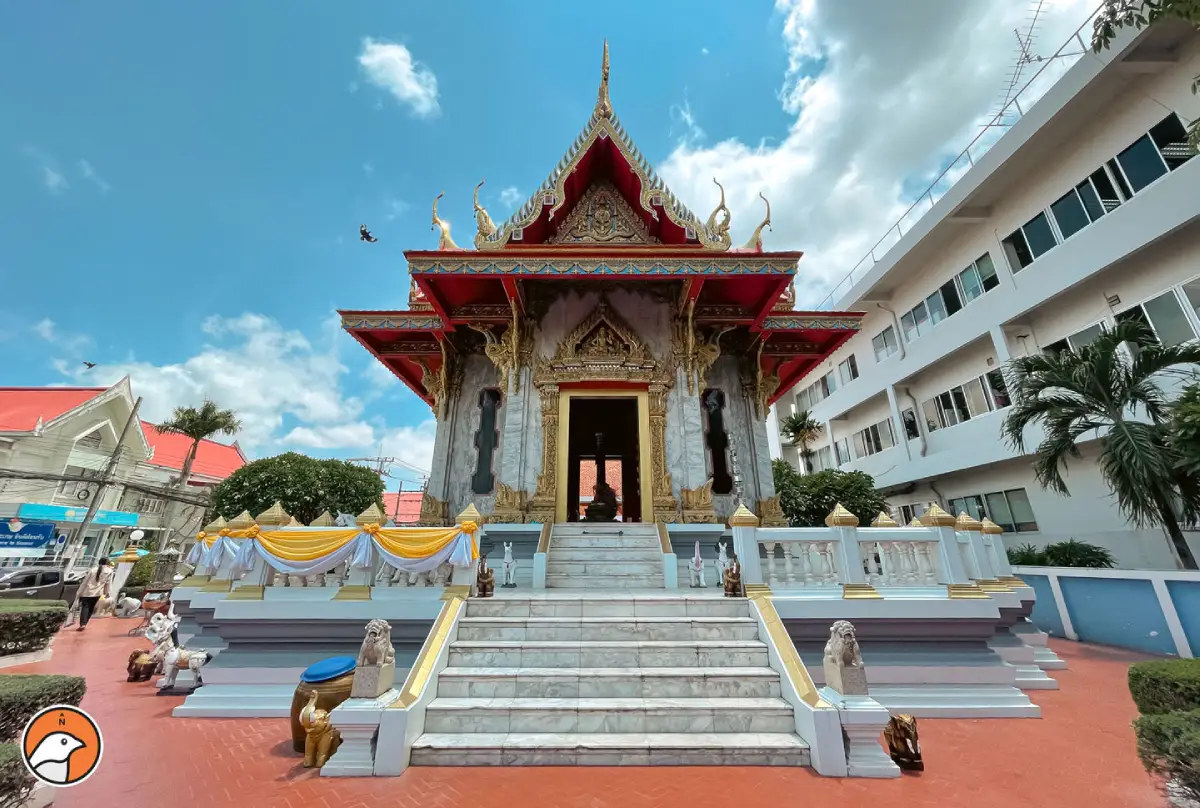
The architecture of the shrine is one of its most striking features. The building is raised on a high base, giving it a dignified appearance above street level. Its Thai-style four-gabled roof, known as a chaturamuk form, gives the structure balance and presence from all directions. The walls are clad in marble and decorated with colored glass, creating a clean, bright, and refined sacred atmosphere. The combination of marble, stained glass, roof ornaments, and Thai architectural form makes the shrine visually memorable even though the building is compact.
On the southern gable of the shrine is the Kanchanaphisek emblem, connected with the commemoration of the 50th anniversary of the reign of King Rama IX. This emblem adds a national historical dimension to the shrine. It links the sacred city pillar of Si Sa Ket with the wider story of the Thai monarchy and the nation. For visitors, this detail shows that the shrine is not only a local devotional place but also part of Thailand’s civic and royal symbolic landscape.
The city pillar itself is made from chaiyaphruek wood, a tree name associated with victory, success, and auspiciousness. The pillar has a diameter of about 30 centimeters and rises about 229 centimeters from its base. Its top is carved into a rounded pointed finial. Inside the shrine, the pillar stands at the center of the worship area, surrounded by offerings such as garlands, flowers, cloth, incense, candles, and devotional items brought by worshippers.
Local people visit the Si Sa Ket City Pillar Shrine on many occasions. Some come before beginning a new job, taking an examination, opening a business, starting a journey, moving into a new home, or making an important decision. Others come simply to pay respect to the guardian spirit of the city and to feel connected with their hometown. The act of worship usually includes offering flowers or garlands, lighting incense, bowing respectfully, and making a personal wish for stability and good fortune.
The shrine also expresses the emotional relationship between people and their city. For many Si Sa Ket residents, it is not just a building at an intersection. It is a symbol of home, protection, and shared identity. People who return to the province often stop here to pay respect. Visitors who are new to Si Sa Ket can also begin to understand the city through this shrine, because it sits at the meeting point of government, commerce, local faith, and urban daily life.
The location of the shrine is especially convenient. It is close to Si Sa Ket Provincial Hall, the railway station, local markets, restaurants, and city hotels. From here, visitors can continue easily to Wat Maha Phuttharam to pay respect to Luang Pho To, Khun Ampai Panich Building to see old urban architecture, Sisaket Aquarium for a family-friendly visit, or Phra That Rueang Rong for a deeper look at Buddhist faith and four-ethnic-group heritage. This makes the city pillar shrine a natural starting point for a city itinerary.
Inside the shrine, the worship area is orderly and calm. The marble floor gives a cool and clean feeling, while the marble walls brighten the interior. Colored glass and natural light add a sacred atmosphere. When light enters the building, the marble and glass surfaces create soft reflections. This makes the interior suitable for a brief moment of stillness before making an offering or prayer.
The exterior area includes the entrance, boundary wall, steps, and front space where visitors prepare before entering the shrine. From the front, the building can be seen clearly: the four-gabled roof, high base, entrance, gable decorations, and central roof ornaments. Many visitors take photos here because the entrance sign and the shrine building can be captured together. Photography should be done politely and without blocking people who are coming to worship.
A visit to the shrine does not require much time, but it carries strong meaning. Most visitors can pay respect, take photos, and admire the architecture within 15 to 30 minutes. Those interested in local history and culture may spend longer observing the architectural details, the city pillar, the offering area, and the shrine’s relationship to the provincial administrative zone. Understanding the shrine within its urban context makes the visit more meaningful.
Culturally, the city pillar shrine marks the symbolic center of the city. Si Sa Ket is a province shaped by old urban memory, the former identity of “Si Nakhon Lamduan,” and the presence of Lao, Khmer, Suai or Kui, and Yoe communities. The City Pillar Shrine therefore serves as an entry point to understanding the province. After paying respect here, visitors can continue to temples, old buildings, museums, and cultural routes that reveal the diverse identity of Si Sa Ket.
The beauty of the shrine lies in its balance. It is not overwhelmingly large, yet it is dignified. It is easy to reach, yet it remains sacred. It stands in a busy urban area, yet the interior encourages quietness. This balance makes the shrine useful for both local people and travelers. It is suitable for a quick devotional stop, a cultural introduction, or the first destination of a full-day city route.
The morning atmosphere around the shrine is calm and suitable for worship. Afternoon visits are convenient for travelers already moving through the city. Late afternoon light can make the marble and colored glass appear softer. Visitors who want to photograph the shrine should choose morning or late afternoon and should remain aware of traffic around Thepha Road and Lak Mueang Road because the shrine stands at a central intersection.
Worship should be done with respect. Visitors may prepare garlands, flowers, incense, candles, colored cloth, or other appropriate offerings. Inside the shrine, visitors should move quietly, avoid standing in front of others who are praying, and refrain from touching the city pillar or sacred objects inappropriately. Since people come here with personal hopes and faith, maintaining a calm atmosphere is part of respecting the place.
For families, the shrine is a good place to teach children about respect for public sacred spaces and the meaning of local identity. Children can learn that a city pillar shrine is not only a photo spot, but a symbol of the city’s foundation and protection. They can also learn basic manners such as speaking quietly, bowing respectfully, waiting for others, and keeping the area clean.
For international visitors, the Si Sa Ket City Pillar Shrine is a clear introduction to the Thai concept of a City Pillar Shrine. The city pillar represents the ritual foundation and protection of the city. The architecture, marble surfaces, colored glass, and four-gabled Thai roof make the concept visually accessible. A visit here helps foreign travelers understand why many Thai provinces have city pillar shrines and why local people continue to worship them.
The shrine’s central location also makes it easy to connect with food and local life. After worshipping, visitors can continue to nearby restaurants, cafés, and old food shops around Thepha Road, Lak Mueang Road, Khukhan Road, and the city center. A simple itinerary can begin at the shrine, continue to local breakfast or coffee, and then proceed to temples, parks, or museums nearby.
For route planning, the shrine works best as the first stop in Mueang Si Sa Ket. A faith-based route can continue to Wat Maha Phuttharam, Wat Chiang I Si Mongkhon Wararam, or Phra That Rueang Rong. A history route can include Khun Ampai Panich Building and the old city area. A family or leisure route can continue to Somdet Phra Srinagarindra Park and Sisaket Aquarium. This flexibility is one reason the shrine remains important for visitors.
Visitors with private cars should park only in permitted areas around the shrine and nearby city streets. The area is close to government offices, so traffic rules and parking signs should be observed carefully. Local transport is also convenient because the shrine is well known by drivers. From Si Sa Ket Railway Station, it takes only a short ride to reach the shrine.
Getting There from Si Sa Ket Railway Station or the central city area is straightforward. Travel toward Thepha Road and Lak Mueang Road, near Si Sa Ket Provincial Hall. Visitors arriving from other provinces by private car should enter Mueang Si Sa Ket and use Thepha Road or Lak Mueang Road as the main route. The shrine’s central location makes it easy to combine with hotels, restaurants, and other city attractions.
There is no fixed admission fee at the Si Sa Ket City Pillar Shrine. Visitors may enter during opening hours to pay respect and view the architecture. Offerings such as garlands, flowers, incense, candles, cloth, lamp oil, and donations are voluntary according to personal faith. This open access allows local residents, Thai travelers, students, and international visitors to visit respectfully.
Even though the shrine is compact, it is highly important as the spiritual symbol of the province. Visitors should dress modestly, keep quiet, avoid eating inside the shrine, avoid littering, avoid obstructing the entrance, and avoid taking disrespectful photographs. Proper conduct helps preserve the dignity of the place and respects the faith of local worshippers.
The Si Sa Ket City Pillar Shrine is therefore an essential stop for anyone visiting Mueang Si Sa Ket. The chaiyaphruek wooden pillar, Thai four-gabled roof, marble surfaces, colored glass, and Kanchanaphisek emblem combine sacred meaning, architecture, and civic history. Because it stands in the heart of the city, the shrine is both a spiritual landmark and a practical starting point for exploring Si Sa Ket.
In summary, the Si Sa Ket City Pillar Shrine brings together faith, history, architecture, and daily urban life. It is a place where visitors can greet the city respectfully before exploring temples, museums, old buildings, local restaurants, and community routes. Paying respect here is more than a brief ritual. It is a symbolic way of beginning a journey through Si Sa Ket with mindfulness and auspicious intention.
| Place Name | Si Sa Ket City Pillar Shrine |
| Related Names | Chao Pho Lak Mueang Si Sa Ket Shrine, Si Sa Ket Provincial City Pillar Shrine, Si Sa Ket City Pillar, City Pillar Shrine Si Sa Ket |
| Place Type | City Pillar Shrine, Provincial Sacred Site, Faith-Based Cultural Landmark, And Important Urban Landmark In Mueang Si Sa Ket |
| Location | Intersection Of Thepha Road And Lak Mueang Road, Mueang Nuea Subdistrict, Mueang Si Sa Ket District, Si Sa Ket Province 33000, Thailand |
| Setting | Located in the city center near Si Sa Ket Provincial Hall, government offices, restaurants, hotels, and the main urban travel routes |
| Distance From Key Points | About 0.3 km from Si Sa Ket Provincial Hall, about 1 km from Si Sa Ket Railway Station, and located in the central area of Mueang Si Sa Ket |
| Significance | The sacred city pillar shrine of Si Sa Ket Province and a spiritual center where people pray for auspiciousness, stability, protection, and a good beginning in important life matters |
| Historical Summary | The present shrine building was constructed in 1976 and completed in 1988 during the period of Governor Chamlong Ratprasert, providing the province with a dignified city pillar shrine suitable for civic worship and public ceremonies. |
| City Pillar Material | Chaiyaphruek wood, with a rounded pointed finial, about 30 cm in diameter and about 229 cm high from its base |
| Architectural Highlights | Raised-base building, Thai four-gabled roof, marble-clad walls, colored glass decoration, Kanchanaphisek emblem on the southern gable, and a dignified sacred atmosphere in the city center |
| Main Sacred Elements | Si Sa Ket City Pillar, Chao Pho Lak Mueang Si Sa Ket, central worship area, offering area, and prayer space inside the shrine |
| Caretaker | Si Sa Ket Province together with local agencies in Mueang Si Sa Ket and Si Sa Ket Town Municipality as the local administrative body of the city area |
| Current Status | Open as a provincial worship site and faith-based cultural landmark where visitors can pay respect, pray, photograph, and appreciate the architecture during opening hours |
| Open Days | Daily |
| Opening Hours | 08.00 - 17.00 |
| Admission Fee | Free Admission. Garlands, flowers, incense, candles, colored cloth, lamp oil, and donations are voluntary according to personal faith. |
| Main Areas / Zones | 1. Entrance And City Pillar Shrine Sign Zone 2. Shrine Staircase Zone 3. Thai Four-Gabled Shrine Building Zone 4. Chaiyaphruek City Pillar Zone 5. Offering Table And Garland Zone 6. Incense And Flower Offering Zone 7. Marble Wall And Colored Glass Interior Zone 8. Southern Gable With Kanchanaphisek Emblem Zone 9. Front Courtyard Photo Zone 10. Shrine Walkway And Lak Mueang Road Connection Zone |
| Facilities | Worship area, front courtyard, offering area, photo area, nearby restaurants and shops, city hotels, and local transport services in Si Sa Ket Town Municipality |
| Related Contact | Si Sa Ket City Pillar Shrine, Tel. 045-611-283 Si Sa Ket Town Municipality, Tel. 045-620-211 To 4 Si Sa Ket Provincial Local Administration Office, Tel. 045-613-786 |
| Travel Information | From Si Sa Ket Railway Station or the central city area, travel toward the intersection of Thepha Road and Lak Mueang Road near Si Sa Ket Provincial Hall. Private car, hired car, motorcycle taxi, or local city transport is convenient. |
| Visitor Etiquette | Dress modestly, keep quiet, remove shoes where required, do not touch the city pillar or sacred objects inappropriately, do not obstruct worshippers, keep the area clean, and photograph respectfully. |
| Nearby Tourist Attractions | 1. Si Sa Ket Provincial Hall, about 0.3 km 2. Wat Maha Phuttharam / Luang Pho To, about 1 km 3. Si Sa Ket Railway Station, about 1 km 4. Khun Ampai Panich Building, about 1.5 km, Tel. 045-644-375 5. Chao Pho Lak Mueang And Lak Mueang Road Area, about 0 km 6. Somdet Phra Srinagarindra Park, Si Sa Ket, about 5 km, Tel. 094-581-4357 7. Sisaket Aquarium, about 5 km, Tel. 045-612-686, 087-450-7484 8. Sri Lamduan Tower, about 5 km 9. Phra That Rueang Rong / Wat Ban Sang Rueang, about 9 km, Tel. 063-181-5217, 081-977-3078 10. Wat Nong Takhian, Chan Subdistrict, about 19 km |
| Nearby Restaurants | 1. Kao Kao Moo Kata, opposite the City Pillar Shrine, about 0.1 km, Tel. 093-368-6399 2. Kuay Jab Khon Hen, Thepha Road, about 0.2 km 3. Mala Cafe, Thepha Road, about 1 km, Tel. 087-963-8414 4. The Wine Room Cafe, about 2 km, Tel. 082-678-7468 5. Jiree Cafe, about 2 km, Tel. 080-799-1890 6. The Cup Cafe, about 2 km, Tel. 095-742-6323 7. Dear Cup Coffee, about 3 km, Tel. 066-119-6968 8. Chio Kee Breakfast Restaurant, Mae Si Circle, about 1 km, Tel. 045-966-989 |
| Nearby Accommodations | 1. Boonsiri Boutique Hotel, about 1 km, Tel. 045-622-222, 045-622-555 2. Gallery Design Hotel, about 2 km, Tel. 045-611-999 3. B2 Sisaket Boutique & Budget Hotel, about 2 km, Tel. 052-009-161, 088-263-2897 4. Prompiman Hotel, about 1 km, Tel. 045-612-667, 045-612-696, 045-612-150 5. Tree House Hotel, about 5 km, Tel. 045-611-563, 080-477-7854 6. The Impress Sisaket, about 4 km, Tel. 045-961-566 |
Frequently Asked Questions (FAQ)
Q: Where is the Si Sa Ket City Pillar Shrine located?
A: The Si Sa Ket City Pillar Shrine is located at the intersection of Thepha Road and Lak Mueang Road in Mueang Nuea Subdistrict, Mueang Si Sa Ket District, Si Sa Ket Province, near Si Sa Ket Provincial Hall in the city center.
Q: What are the opening days and hours?
A: The shrine is open daily from 08.00 to 17.00. Visitors can pay respect, pray, appreciate the architecture, and take photos in the appropriate areas during these hours.
Q: Is there an admission fee?
A: There is no admission fee. Garlands, flowers, incense, candles, colored cloth, lamp oil, and donations are voluntary according to personal faith.
Q: When was the present Si Sa Ket City Pillar Shrine built?
A: The present shrine building was constructed in 1976 and completed in 1988 during the period when Chamlong Ratprasert served as governor of Si Sa Ket Province.
Q: What is the city pillar made from?
A: The Si Sa Ket city pillar is made from chaiyaphruek wood. It has a rounded pointed finial, a diameter of about 30 centimeters, and a height of about 229 centimeters from its base.
Q: What are the main architectural highlights?
A: The shrine features a raised-base structure, Thai four-gabled roof, marble-clad walls, colored glass decoration, and the Kanchanaphisek emblem on the southern gable.
Q: How should visitors worship at the shrine?
A: Visitors should dress modestly, prepare offerings such as garlands, flowers, incense, candles, or cloth according to personal faith, enter quietly, pray respectfully, and avoid disturbing others who are worshipping.
Q: What nearby places can be visited on the same trip?
A: Nearby places include Wat Maha Phuttharam, Khun Ampai Panich Building, Somdet Phra Srinagarindra Park, Sisaket Aquarium, Sri Lamduan Tower, Phra That Rueang Rong, and restaurants around Thepha Road and Lak Mueang Road.
 Category: ●Places of Worship
 Group: ●Other Sacred Sites
Last Update : 2 MonthAgo
 Last Update : 2 MonthAgo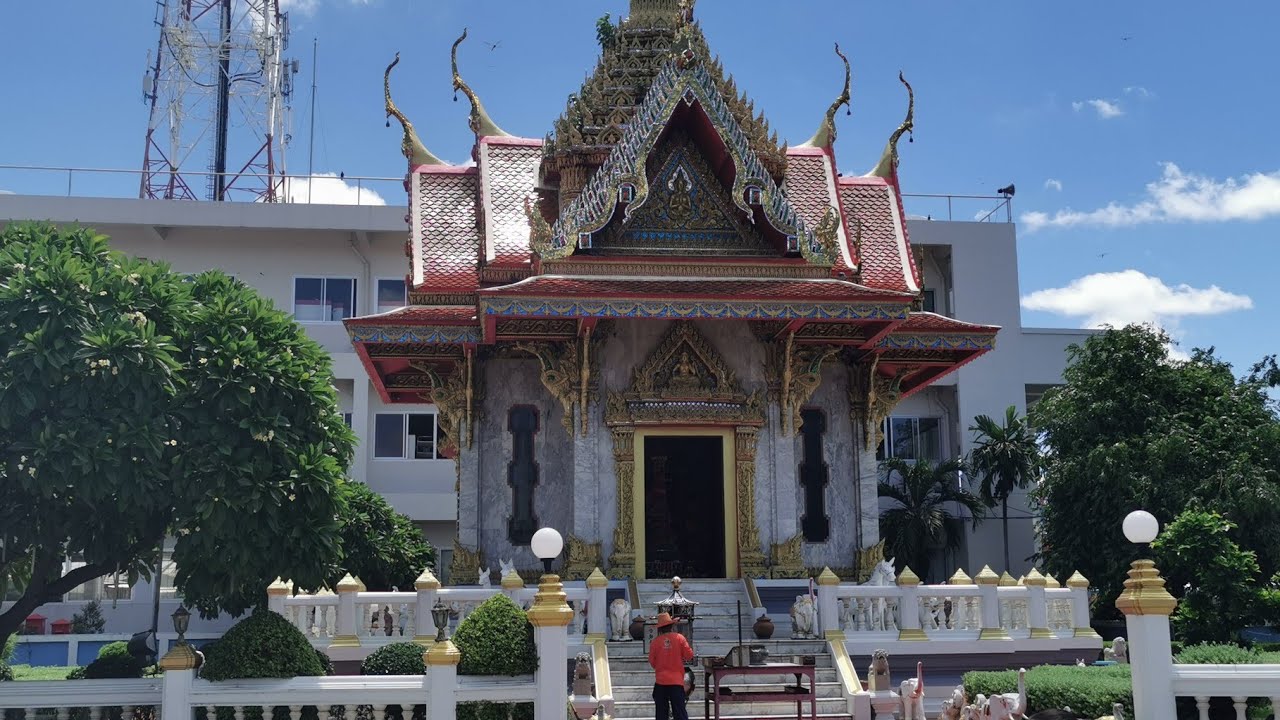
 Click to Access the Navigation Map GPS
Si Sa Ket City Pillar Shrine Map

 Art, Culture and Heritage
 Historical Sites and Monuments(12)
 Landmarks and Memorials(1)
 Art, Craft Centres, Tradition(8)
 Temple(13)
Other Sacred Sites(3)
Temple(13)
Other Sacred Sites(3)
 Suburban Living
 Village, Community(2)
 Nature and Wildlife
 National Parks and Marine Reserves(2)
 Dam, Reservoir, Lake(7)
 Waterfalls(5)
 River, Canal(5)
 Bays and Beaches(2)
 Entertainment and Agricultural
 Zoos and Aquariums(1)
 Farms, Parks and Ecotourism(3)
 Travel Articles, Recipes
 Travel Review, Food Review(1)


