
 Home
Home North(
 Chiang Mai(


Riyayatul Qadiri Mosque (Qadiri Family Memorial)
Rating: 3.8/5 (4 votes)
 Search By
  Map
Map 
 Have Map
  No Map
Bangkok attractions
Attractions in Thailand
Open Days: Please contact the mosque to confirm (usage periods may vary according to religious activities and community events).
Opening Hours: Please contact the mosque to confirm.
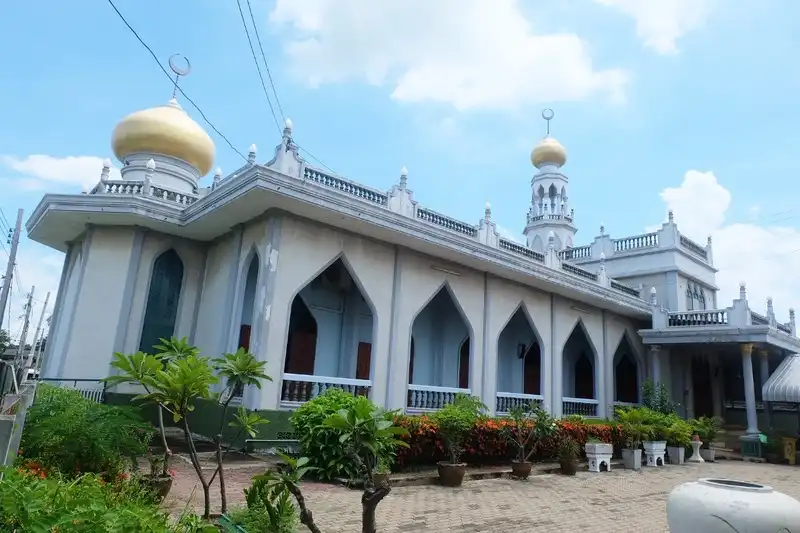
Riyayatul Qadiri Mosque (Qadiri Family Memorial) is a community mosque located in eastern Bangkok, a place with a long-standing and very much “living” history. It was not built to be a photo landmark, but rather as a space of faith and learning that has grown alongside the local community over time. Tracing back more than 90 years to around 1913, the origins of this place are deeply intertwined with the collective memory of the community and the Qadiri family, so much so that it came to be known as the “Qadiri Family Memorial.” This name is not merely symbolic; it represents remembrance of those who contributed their labor, devotion, and resources to establish a religious and educational space for Muslim children and families in the area.
When speaking of its beginnings, the community often recalls an important ancestor, Tuan Haji Wang Qadiri, affectionately known as “Kru Wang Qadiri.” He initiated the idea and worked together with fellow Muslims to construct a “balai,” a simple structure that served as the foundation. In its earliest form, the balai was modest in size—approximately 8 meters long and 6 meters wide—with a thatched roof. It functioned as a place for congregational prayer and religious instruction. This small building reflects a broader truth shared by many community religious spaces: they rarely begin with grandeur, but with necessity and a shared intention to create a common space for faith and learning.
The first administrative committee, remembered collectively in community history, consisted of: 1) Tuan Haji Wang Qadiri, 2) Tok Yah Deng Nisu, 3) Tok Moh Nil Mureh, 4) Tok Gimah Khamka, 5) Chalek Wanghitang, 6) Tok Giloh, 7) Village Head Kep Khamthong, 8) Mr. Ae Masalae, and 9) Mr. Mad Mahitsawan. These individuals devoted their physical effort, moral support, and financial resources to establish the first religious school, driven primarily by concern for Muslim children and families in the area. Their story shows that the history of Riyayatul Qadiri Mosque is not only about buildings, but about “building people,” a value deeply embedded in the community from the very beginning.
After the first administration concluded its term, the second committee took over, with members recorded in community narratives as follows: 1) Tok Yah Deng Nisu, 2) Village Head Kep Khamthong, 3) Mr. Mad Mahitsawan, 4) Mr. Sulaiman Samanphet, 5) Tuan Haji Harun Srimala, 6) Mr. Wangsem Wanghitang, 7) Haji Abdulmutolib Qadiri, 8) Mr. Ae Masalae, 9) Teacher Mad Phongthirawat, 10) Mr. Chamrat Mureh, 11) Village Head Prakob Khamthong, and 12) Teacher Mureh Khamka, along with Teacher Roh Khamka, who played a key role in religious and academic instruction. The repeated mention of teachers and administrators in community memory highlights how education has always been central to the mosque’s mission, not merely an auxiliary role added later.
A major turning point occurred in 1955 when Tok Puk Nisu endowed approximately 2 rai of land adjacent to the original plot as waqf (endowment) for public Islamic activities. The committee unanimously agreed to relocate and rebuild the balai on this waqf land in accordance with the donor’s intention. This relocation was marked by collective effort, as community members dismantled and rebuilt the structure together, completing it within the same year. Around the same time, Tok Yah Deng Nisu, husband of Tok Puk Nisu, further endowed two additional land plots totaling approximately 49 rai. These acts of waqf demonstrate that the mosque’s growth did not rely on a single budget, but on long-term communal resource foundations to sustain religious and public benefit activities.
Approximately two years later, the second committee convened to formally consider constructing a full mosque and unanimously agreed to proceed. However, the project faced financial challenges. Despite contributions from local worshippers, funds were insufficient, prompting outreach to Muslim communities in other areas. Teacher Mureh Khamka, responsible for religious education, personally sought donations from benefactors. Support also came from generous individuals remembered in community accounts, such as Tok Yah Him Assalam, Tok Yimah Khlong 14, and Haji Abdullah Phongphibun with Hajjah Riem Phongphibun (née Qadiri) from Bang Lamphu. Their substantial donations enabled construction to continue smoothly.
The charm of this narrative lies in its small details that reflect genuine community spirit. Beyond monetary donations, construction relied heavily on volunteer labor, with worshippers working without wages. Many households also took turns providing meals twice daily. Such scenes help us understand that, for the community, a mosque is not merely a structure, but a collective creation shaped by shared responsibility for communal space.
After completion, additional donations were made to support mosque activities, including a long-tail boat, ceremonial trays, and ceramic tableware. A concrete embankment was also constructed along the canal bordering the waqf land. An application for official mosque registration was later submitted but was not approved at that time. For today’s readers, this detail underscores a reality faced by many community religious institutions: perseverance, patience, and sustained collective effort are often required before stability is achieved.
For non-Muslim visitors interested in learning, it is important to respect the rhythm of the space. The mosque is primarily a place of worship, not a casual tourist site. Visitors should dress modestly, keep noise to a minimum, avoid prayer times or major religious activities, and request permission before taking photographs or seeking in-depth information. Beginning with respect often leads to more meaningful learning and a deeper understanding of the “stories of place” beyond what signs or brief posts can convey.
Getting There The Riyayatul Qadiri Mosque (Qadiri Family Memorial) is best accessed by private vehicle or taxi/ride-hailing services. It is recommended to pin the mosque’s name in navigation apps and follow the main roads of Nong Chok District before entering community lanes, which helps avoid unnecessary detours. For a well-planned day trip, consider arranging a circular route that includes nearby attractions in the Min Buri–Nong Chok area, then returning via main roads to save time and ensure smoother travel.
| Place Name | Riyayatul Qadiri Mosque (Qadiri Family Memorial) |
| Location | Nong Chok District, Bangkok (Kratum Rai area), near canal-side communities in eastern Bangkok |
| Current Status | Actively used as a community mosque and religious space (visitation times should be confirmed in advance) |
| Open Days | Please contact the mosque to confirm |
| Opening Hours | Please contact the mosque to confirm |
| Key Highlights | History dating back to 1913, beginning as a simple balai for congregational prayer and religious education, later expanding through major waqf land endowments (1955) and collective community efforts, becoming a mosque remembered as the “Qadiri Family Memorial.” |
| Contact Number | 085-935-9905 |
Frequently Asked Questions (FAQ)
Q: Which area of Bangkok is Riyayatul Qadiri Mosque located in?
A: It is located in eastern Bangkok, Nong Chok District, within the Kratum Rai community area, which still retains a strong local way of life.
Q: What are the historical origins of the mosque?
A: The story dates back to around 1913, beginning with the construction of a simple balai used for congregational prayer and religious teaching, which later evolved into a full community mosque.
Q: Why is the year 1955 significant in the mosque’s history?
A: It marks the year when waqf land was endowed for Islamic public benefit, enabling physical expansion and long-term development of the mosque.
Q: Can non-Muslims visit the mosque for educational purposes?
A: Yes, in principle, but visitors should dress modestly, respect prayer times, minimize noise, and request permission before taking photographs or asking in-depth questions.
Q: How can the mosque be contacted?
A: By phone at 085-935-9905
 Mobile: 0859359905
 Riyayatul Qadiri Mosque (Qadiri Family Memorial) Map
 Category:
  Group:
  Tag: ●Riyayatul Qadiri Mosque (Qadiri Family Memorial)●riyayatul qadiri mosque ●qadiri family memorial ●mosque in nong chok ●muslim community bangkok ●historic mosque bangkok ●islamic heritage bangkok ●waqf land mosque ●eastern bangkok mosque
Last Update: 2 MonthAgo
Tag: ●Riyayatul Qadiri Mosque (Qadiri Family Memorial)●riyayatul qadiri mosque ●qadiri family memorial ●mosque in nong chok ●muslim community bangkok ●historic mosque bangkok ●islamic heritage bangkok ●waqf land mosque ●eastern bangkok mosque
Last Update: 2 MonthAgo
Comment
 Nearby Attractions
| Keyword (Advance) |
 Facebook Fanpage
 Region
 Art, Culture and Heritage
 Historical Sites and Monuments(
 Landmarks and Memorials(
 Royal Palace(
 Art, Craft Centres, Tradition(
 Museums(
 Historical Houses and The Ancient City(
 Art Gallery(
 Educational Places
 Museum for Study(
 Library(
 University
 Temple(
 Church(
 Other religious and spiritural sites(
 Research and Development
 Royal Project(
 Suburban Living
 Village, Community(
 Local Market(
 Floating Market(
 Nature and Wildlife
 River, Canal(
 Bays and Beaches(
 Other natural attractions(
 Entertainment and Agricultural
 Zoos and Aquariums(
 Animal camps and shows(
 Stadium(
 Farm, Parks, Gardens and Ecotourism(
 Amusement Park(
 Waterpark(
 Theater(
 Cinema(
 Shopping
 Shopping and Night Market(
 Department Store(
 Spas and Wellness
 Spas and Wellness(
 Restaurant
 Michelin Star(
 Accommodation
 Hotel(
 Call Customer Service in Tourism
 Call Customer Service in Tourism(
 Travel Articles, Recipes
 Travel Review, Food Review(
 Royal Thai Desserts, Traditional Dessert, Thai Dessert Recipes(
 Copyright 2012,