

 Home
Home Chiang Mai(















Darul Ibadah Mosque (Huamak Noi)
Rating: 4/5 (4 votes)
 Search By
  Map
Map 
 Have Map
  No Map
Bangkok attractions
Attractions in Thailand
Open Days: Daily (for religious activities; visitors are advised to contact / make an appointment in advance)
Opening Hours: Varies by prayer times and mosque activities – please call before you go
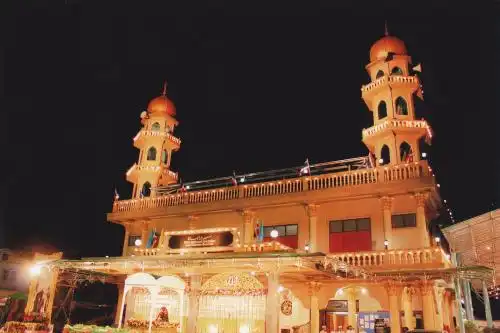
Darul Ibadah Mosque (Huamak Noi), Bangkok If you know the Hua Mak–Ramkhamhaeng area mainly as big roads, traffic that comes and goes, and a place people simply pass through on the way to work or school, there’s a good chance you’ve overlooked an important community landmark without meaning to. Inside Ramkhamhaeng Soi 60, there is a long-standing mosque that has served as a center of community life for generations: Darul Ibadah Mosque (Huamak Noi). Locals originally called it “Surao Huamak Noi,” and it has been officially registered since 16 September 1949
What makes this mosque worth getting to know is not the idea of “checking in” like a typical tourist spot, but the fact that it reflects the real Bangkok—a city built from many communities and cultures living together. Darul Ibadah Mosque grew from a waqf land dedication for religion and public benefit by the Bunmalert family line, with community narratives mentioning To Ki Ko (Tokikok) Bunmalert and the family network that helped sustain the shared religious space, before gradually developing into a large mosque capable of serving a far bigger congregation today
In its earliest era, Surao Huamak Noi was a teak-wood building with a tiled roof, approximately 8 meters wide and 18 meters long. That simple wooden structure captures the community mindset at the time: start with a space that works for shared use, then expand as the number of people and the frequency of religious activities grow. During that early period, To Ki Ko was approved by the congregation (sappaburut) to serve as imam
When the first generation of leaders passed on, the community did not stop at remembrance—they continued organizing the mosque’s care and operations. One important point is that mosque work is not carried by an imam alone. Roles such as khatib and bilal help ensure religious services run systematically. The continuity of these responsibilities reflects the strength of the community, because a mosque endures not only through a strong building, but through people who are truly willing to carry the work forward
Another layer of meaning is that Huamak Noi once served as a Friday prayer hub for a wide surrounding area, with more than 40 worshippers attending Jumu’ah regularly. As the local population increased and travel became easier, parts of the community later separated to establish new mosques in different areas so residents could access religious facilities closer to home. This is a clear picture of community growth in Bangkok—an expansion driven by real use and real needs, not trends
As legal frameworks and mosque administration systems became clearer, Darul Ibadah Mosque (Huamak Noi) was officially registered. Records note registration number 49 and the registration date of 16 September 1949. This matters because official registration supports more structured management of property, land, and community activities, helping the mosque and its surrounding community function with greater stability and organization
The mosque then entered a “reinforced concrete era” when the original teak structure was replaced by a 2-storey reinforced-concrete building. Construction began around October 1973 and was completed around 1989. This transition does not imply the old was without value—it was the community’s practical answer to changing realities: more worshippers, more activities needing space, and the need for long-term safety and usability at a larger scale than before
Today, what makes Darul Ibadah Mosque “more than a place to pray” is the surrounding system of spaces and social roles connected to it. These include religious teaching buildings, learning activities for youth and community members, a general school that uses mosque land for instruction, and public-support facilities such as a public library, a health center, and a sports ground. Together, these elements help you see the mosque clearly as both a place of faith and a place where people look after one another in their shared neighborhood
If you plan to visit as someone interested in community history or cultural storytelling, the key is to remember that a mosque has its own rhythm of religious activities. Modest dress, an appropriate speaking volume, avoiding disturbance during prayer times, and asking permission before taking photos in certain areas are basic courtesies that help the visit feel positive for both visitors and the people who actively use the space. If you want a deeper learning visit or plan to bring a larger group, contacting the mosque in advance is recommended
Getting There To reach Darul Ibadah Mosque (Huamak Noi), pin “Ramkhamhaeng Soi 60” and follow navigation into the soi until you arrive at the mosque. For many visitors, the most straightforward option is a private car or taxi, since Ramkhamhaeng Road is a major artery connecting multiple neighborhoods. If you want to reduce the risk of traffic delays at certain times, you can plan to connect via a nearby transport node such as the Airport Rail Link on the Hua Mak side, then continue by taxi or motorcycle taxi. In the morning and evening, it’s wise to allow extra time because this area becomes crowded around school dismissal, work hours, and local activities
A good way to plan your day is to treat the mosque as a “community learning stop,” then continue to nearby Hua Mak–Ramkhamhaeng landmarks such as sports venues, shopping areas, or large parks on Bangkok’s eastern side. This kind of route gives you community history, a lived sense of faith, and an everyday-city perspective you won’t get from the usual tourist zones
| Place Name | Darul Ibadah Mosque (Huamak Noi) (Former name: Surao Huamak Noi) |
| Location | No. 49, Ramkhamhaeng Soi 60, Ramkhamhaeng Road, Hua Mak Subdistrict, Bang Kapi District, Bangkok 10240 |
| Period | Registered on 16 September 1949; the 2-storey reinforced-concrete building began construction around 1973 and was completed around 1989 |
| Mosque Highlights | Evolved from a teak-wood surao into a large 2-storey mosque that can accommodate about 1,000 worshippers, with strong community, education, and public-benefit roles around the mosque |
| Mosque Administrators | Imam: Mr. Sutham Bunmalert; Khatib: Mr. Pridi Bunmalert; Bilal: Mr. Phichit Sonkhiao |
| Current Status | Active community mosque (visitors are advised to contact in advance) |
| Contact Number | 02-735-2412, 083-984-1077, 086-880-1284 |
| Nearby Attractions (Approx. Distance) | Airport Rail Link (City Line) – Call Center – 1690 / 02-091-1595 Sports Authority of Thailand (SAT) / Rajamangala National Stadium – 4.0 km – 02-186-7111 Ramkhamhaeng University – 3.5 km – 02-310-8000 (main number) The Mall Lifestore Bangkapi – 6.5 km – 02-173-1000 Seacon Square Srinakarin – 8.5 km – 02-721-8888 |
| Nearby Restaurants (Approx. Distance) | Bungaraya Halal Restaurant (Regent Ramkhamhaeng Hotel) – 3.5 km – 02-318-4444 ext. 202, 203 Zinda Halal Food (Phatthanakan 30) – 7.5 km – 092-262-0800 Husna Yen Ta Fo (Phatthanakan 20) – 7.0 km – 099-215-0444 Aeb Yum Nuar Halal (Phatthanakan 69) – 9.0 km – 088-777-0760 The Hope Cafe (Krungthep Kreetha) – 7.5 km – 065-890-1639 |
| Nearby Accommodations (Approx. Distance) | Zircon Hotel (Ramkhamhaeng 40) – 4.5 km – 02-732-0828 Bangkok Inter Place Hotel – 5.5 km – 02-319-0330 Nasa Bangkok Hotel (formerly Nasa Vegas) – 6.5 km – 02-719-9888 The Platinum Suite Hotel (Phatthanakan 11) – 9.5 km – 02-318-4884 The Grand Fourwings Convention Hotel Bangkok – 10.0 km – 02-378-8000 |
Frequently Asked Questions (FAQ)
Q: Where is Darul Ibadah Mosque (Huamak Noi) located?
A: It is at No. 49, Ramkhamhaeng Soi 60, Ramkhamhaeng Road, Hua Mak Subdistrict, Bang Kapi District, Bangkok 10240.
Q: What was the mosque originally called?
A: Locals originally called it “Surao Huamak Noi” before it became officially known as Darul Ibadah Mosque (Huamak Noi).
Q: Can tourists visit the mosque?
A: The mosque is primarily an active place of worship. Visitors are advised to dress modestly, follow proper etiquette, and contact the mosque in advance to choose a suitable time around prayers and community activities.
Q: What is the highlight of this mosque?
A: Its key highlight is the community story—from a teak-wood surao to a large 2-storey mosque—along with its surrounding learning and public-benefit roles that make it a true community hub.
Q: When is the best time to visit without disturbing religious activities?
A: It is best to avoid key prayer periods and major mosque activity times. Calling ahead is recommended so the visit can be suitable for both visitors and the community.
Q: Which phone numbers should I call to contact the mosque?
A: You can contact the mosque at 02-735-2412, 083-984-1077, or 086-880-1284.
 Mobile: 0839841077
 Darul Ibadah Mosque (Huamak Noi) Map
 Category:
  Group:
  Tag: ●Darul Ibadah Mosque (Huamak Noi)●darul ibadah mosque ●huamak noi mosque ●sulao huamak noi ●ramkhamhaeng 60 mosque ●islamic heritage bangkok ●muslim community huamak ●bangkapi mosque ●cultural places in bangkok ●things to do in ramkhamhaeng ●local community travel bangkok Last Update: 2 MonthAgo
Comment
 Nearby Attractions
| Keyword (Advance) |
 Facebook Fanpage
 Region
 Art, Culture and Heritage
 Historical Sites and Monuments(
 Landmarks and Memorials(
 Royal Palace(
 Art, Craft Centres, Tradition(
 Museums(
 Historical Houses and The Ancient City(
 Art Gallery(
 Educational Places
 Museum for Study(
 Library(
 University
 Temple(
 Church(
 Other religious and spiritural sites(
 Research and Development
 Royal Project(
 Suburban Living
 Village, Community(
 Local Market(
 Floating Market(
 Nature and Wildlife
 River, Canal(
 Bays and Beaches(
 Other natural attractions(
 Entertainment and Agricultural
 Zoos and Aquariums(
 Animal camps and shows(
 Stadium(
 Farm, Parks, Gardens and Ecotourism(
 Amusement Park(
 Waterpark(
 Theater(
 Cinema(
 Shopping
 Shopping and Night Market(
 Department Store(
 Spas and Wellness
 Spas and Wellness(
 Restaurant
 Michelin Star(
 Accommodation
 Hotel(
 Call Customer Service in Tourism
 Call Customer Service in Tourism(
 Travel Articles, Recipes
 Travel Review, Food Review(
 Royal Thai Desserts, Traditional Dessert, Thai Dessert Recipes(
 Copyright 2012,