
lovethailand home >Central Travel Attractions >Bangkok Travel Attractions >Patum Wan >Lum Phi Ni > Lumpinee Boxing Stadium
TL;DR: Lumpinee Boxing Stadium, Bangkok attractions : Entertainment and Agricultural, Stadium.
Lumpinee Boxing Stadium
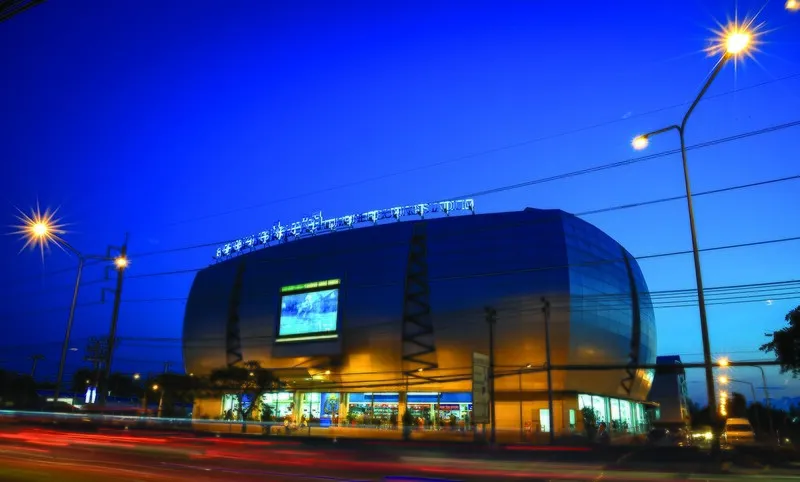
Open Days: Based on the fight schedule (evening events are commonly held several days per week)
Opening Hours: Based on show rounds and event start times (recommended to check the schedule before visiting)
Lumpinee Boxing Stadium is a name that does not mean only “a place to watch fights.” It is more like a historical stage of Muay Thai in Bangkok—one that makes the idea of “professional Muay Thai” feel real and tangible. For many Thai people, Lumpinee represents a standard of the ring: a place that builds fighters, builds reputations, and lets both Thai and international audiences witness Thailand’s fighting art in an atmosphere that feels serious, ceremonial, and unmistakably itself.
If you want to visit Lumpinee in a way that “understands its meaning,” keep in mind that it carries two layers of memory at once. The first is “Lumpinee in history,” tied to the era when permanent boxing stadiums were taking shape in Thailand. The second is “Lumpinee today,” a working venue for modern audiences. So your visit can be both a night of “watching Muay Thai” and a moment of “touching Muay Thai history” at the same time.
Lumpinee Boxing Stadium, a historic boxing venue in the Rattanakosin era. Muay Thai, a defensive martial art, has long been a Thai national cultural heritage for hundreds of years. However, in the past it was not organized and widely promoted as systematically as it is today. Expert Muay Thai practitioners in earlier times had the chance to show their skills only during annual festivals on special occasions. They did not rely on boxing as a profession; most Thai people who trained Muay Thai did so mainly as a method of self-defense.
Later, during the reign of King Vajiravudh (Rama VI) of the Rattanakosin Kingdom, Muay Thai was revived as a national sport. A boxing ring was built within Suankularb Wittayalai School, and boxing matches were held every Saturday. In 1921, this was considered an early period when boxing began to be recognized as a profession within Thai life.
After that, many permanent boxing stadiums were built successively, such as Suankularb Stadium, Tha Chang Stadium, Lak Mueang Stadium, Suan Chao Chet Stadium, Tha Phra Chan Stadium, Phatthanakorn Ring, Si Ayutthaya Ring, Thonburi Ring, Rajadamnern Boxing Stadium, and Lumpinee Boxing Stadium.
Many of the early top-tier stadiums did not remain in operation for long and were eventually dissolved for various reasons and necessities. The venues that have endured to the present are Rajadamnern Boxing Stadium, which held its first match on 23 December 1945, and Lumpinee Boxing Stadium, which held its first match on 8 December 1956, according to official evidence.
Lumpinee Boxing Stadium has built its reputation by developing and producing leading Thai boxers of the country, promoting the art of Muay Thai widely both domestically and internationally, and producing professional boxers who became world champions. It has also supported Thailand’s domestic economy by creating careers for fighters, boxing camps, promoters, and by promoting tourism—encouraging foreign visitors to come and watch the art of Muay Thai.
Objectives
1. Lumpinee Boxing Stadium is an activity under the Royal Thai Army, intended as a welfare benefit for army officials and to support various units within the Army.
2. To preserve and promote the art of Muay Thai as a distinctive identity of Thai people.
3. To create stable careers for Muay Thai and boxing athletes as one form of professional livelihood.
4. To produce world champion professional boxers in order to promote national prestige.
5. To cooperate with other institutions that share the same objectives.
Area: 1,501.75 square wah (approximately 3 rai and a little over 3 ngan), leasing land from the Crown Property Bureau. Founder: Gen. Praphas Charusathien (Commander of the 1st Division, King’s Guard at the time). If you come as a “spectator,” the thrill of Lumpinee lies in the intensity of its atmosphere. You will see the pre-fight rituals, the musical rhythm that carries the mood, and the fine details of ring strategy that rely not only on power, but on craft. Beginners do not need to worry about “not understanding.” Just focus on three things: distance control, accuracy of strikes, and how fighters escape dangerous corners—and you will naturally start to “read the fight.”
Another reason Lumpinee feels worth visiting is that it becomes a “window into contemporary culture.” You will meet many kinds of audiences—from travelers seeing Muay Thai for the first time to regular fans who follow fight cards closely. That mix turns a night at the stadium into more than sport; it becomes an urban experience in Bangkok with a character that is hard to find elsewhere.
Getting There To reach Lumpinee Boxing Stadium with the least uncertainty, it is best to pin “Lumpinee Boxing Stadium (current venue)” on your map and choose a taxi or ride-hailing app, because it brings you directly to the entrance and reduces the risk of getting dropped at the wrong spot. If you use rail transit, follow the idea of “get off at a station that makes short onward transfers easy,” then continue by local transport, because the venue is in the Ram Inthra zone where evening traffic can become dense. Allow extra time if there is a major fight card or if you are going on a popular night.
If you want the trip to feel “complete” like a serious city outing, try planning it within one zone: arrive early to eat around Ram Inthra, then enter for the show. When it ends, leave without rushing—because crowds often exit together. Giving the city a little extra time will make the experience softer and less tiring.
| Place Summary | Lumpinee Boxing Stadium is an institutional Muay Thai venue that has played a major role in shaping Thailand’s professional Muay Thai scene and offers an intense fight-night experience for both Thai and international audiences. |
| Highlights | Serious stadium atmosphere with Muay Thai rituals and tradition. Suitable for first-time viewers and regular fans. A “contemporary cultural” night out that blends sport with Bangkok’s distinctive energy. |
| Location | No. 6 Ram Inthra Road, Anusawari, Bang Khen, Bangkok |
| Contact | Tel. 02-618-5049, 02-618-5051 |
| Ticket Fees | Multiple price tiers and may vary by event and seating plan (recommended to check and purchase through official channels before visiting) |
| Nearby Attractions (Approx. Road Distance) | MRT Ram Inthra 3 Station (1 km) MRT Lat Pla Khao Station (2 km) Central Ram Inthra (4 km) Fashion Island (7 km) Don Mueang Airport (10 km) |
| Popular Restaurants Nearby (Approx. Road Distance + Phone) | Sarang Sarang, Ram Inthra Soi 5 (1 km) Tel. 086-977-3317 Kai Yang Wichianburi, Ram Inthra 5 (1 km) Tel. 084-386-5883 Krua Khun Jen, Ram Inthra Km. 2 (2 km) Tel. 088-544-2415 Isan Rim Bueng Je Sopha (1 km) Tel. 087-704-7177 Centara Grand at Central Plaza Ladprao (11 km) Tel. 02-541-1234 |
| Popular Accommodations Nearby (Approx. Road Distance + Phone) | Best Western Nada Don Mueang Airport Hotel (3 km) Tel. 02-551-2222 B2 Don Mueang Premier Hotel (3 km) Tel. 052-009-161 12 The Residence Hotel (10 km) Tel. 02-566-3333 Amari Don Muang Airport Bangkok (12 km) Tel. 02-566-1020 The Riche Boutique Hotel Don Mueang (9 km) Tel. 02-954-9900 |
Frequently Asked Questions (FAQ)
Q: If I want to watch Muay Thai at Lumpinee, what should I check first?
A: Check the fight schedule for your intended date first, then review the seating plan and official ticket channels, because start times and ticket prices vary by event.
Q: I’m a beginner and don’t really understand Muay Thai—will it still be fun?
A: Yes. Try focusing on distance control, strike accuracy, and how fighters escape dangerous corners. You will start reading the match naturally.
Q: What is the most convenient way to get there?
A: A taxi or ride-hailing app is the most direct and reduces the chance of getting dropped at the wrong location. If you use rail transit, get off at a station where a short transfer is easy, then continue by local transport.
Q: How early should I arrive before the event starts?
A: Arrive at least 30–60 minutes early to allow time for queues, ticket checks, finding your seat, and taking in the atmosphere—especially on popular nights when it is busier.
Q: If I want a “complete” trip, what should I do before entering the stadium?
A: Eat around the Ram Inthra area first, then go in for the show. After it ends, leave without rushing because crowds often exit together. Allowing extra time makes the night smoother.
Tel : 022514303 ,022537702 ,022537940
 Tel : 022514303 ,022537702 ,022537940
 Category: ●Entertainment and Agricultural
 Group: ●Stadium
Last Update : 9 MonthAgo
 Last Update : 9 MonthAgo
 Click to Access the Navigation Map GPS
Lumpinee Boxing Stadium Map
Recommend

 Art, Culture and Heritage
 Historical Sites and Monuments(3)
 Landmarks and Memorials(23)
 Royal Palace(13)
 Art, Craft Centres, Tradition(35)
 Museums(59)
 Historic Homes and Cities(3)
 Art Gallery(16)
 Educational Places
 Museum for Study(6)
 Library(4)
 Places of Worship
 Temple(72)
 Church(2)
 Mosque(67)
 Other Sacred Sites(8)
 Research and Development
 Royal Project(1)
 Suburban Living
 Village, Community(5)
 Local Market(9)
 Floating Market(2)
 Nature and Wildlife
 River, Canal(3)
 Bays and Beaches(1)
 Other natural attractions(1)
 Zoos and Aquariums(5)
 Animal camps and shows(5)
Stadium(9)
Animal camps and shows(5)
Stadium(9)
 Farms, Parks and Ecotourism(20)
 Amusement Park(1)
 Waterpark(4)
 Theater(7)
 Cinema(1)
 Shopping
 Shopping and Night Market(20)
 Department Store(7)
 Spas and Wellness
 Spas and Wellness(1)
 Restaurant
 Michelin Star(5)
 Accommodation
 Hotel(3)
 Call Customer Service in Tourism
 Call Customer Service in Tourism(1)
 Travel Articles, Recipes
 Travel Review, Food Review(41)
 Royal Thai Desserts and Recipes(56)


