
lovethailand home >Central Travel Attractions >Bangkok Travel Attractions >Bangkok Noi >Bang Khun Non > Wat Chao Am
TL;DR: Wat Chao Am is located at Bang Khun Non, Bangkok Noi, Bangkok, Thailand, open Daily, hours 06:00 – 18:00 for general visits.
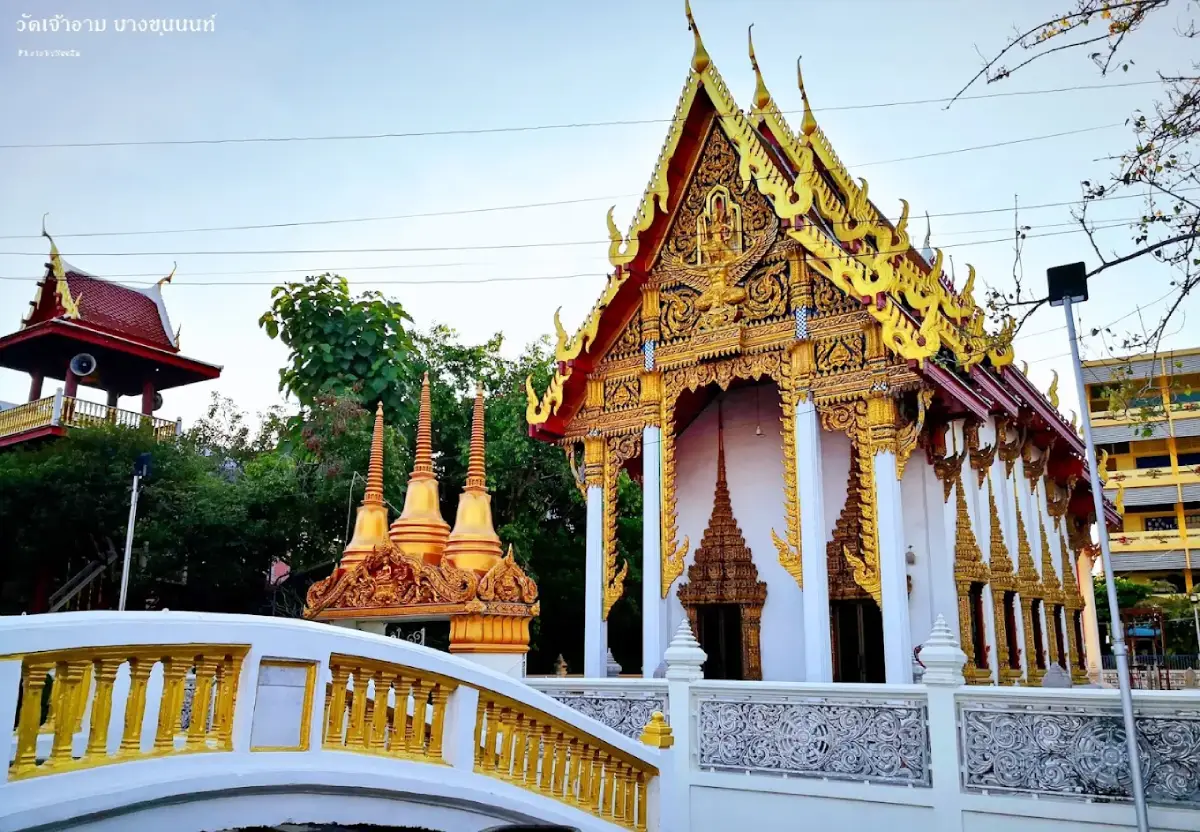
Wat Chao Am
Open Days: Daily
Opening Hours: 06:00 – 18:00 for general visits
Admission Fee: Free Admission
Wat Chao Am is a historic Buddhist temple dating back to the Thonburi Kingdom, located at 137 Bang Khun Non Road, Bang Khun Non Subdistrict, Bangkok Noi District, Bangkok, Thailand. Founded around 1779 during the reign of King Taksin the Great, the temple was established to dedicate royal merit to a royal consort known as Chao Am. Its most significant historical landmark is a large prang associated with her memory. The temple also houses a principal Buddha image in the U Thong artistic tradition, the revered Luang Pho To Buddha image, and several religious structures reflecting more than two centuries of cultural and spiritual development on Bangkok's Thonburi side. Wat Chao Am remains an active Buddhist temple where visitors can make merit, worship, and explore historic architecture without paying an admission fee.
Wat Chao Am is a community Buddhist temple belonging to the Maha Nikaya order of Thai Theravada Buddhism. Its grounds cover approximately 12 rai, equivalent to about 19,200 square meters. The temple stands in Bang Khun Non, an established neighborhood within the historic Bangkok Noi district. What makes Wat Chao Am particularly interesting is not simply its age, but the connection between its foundation, the royal court of the Thonburi period, the story of Chao Am, and the construction of a commemorative prang. These historical associations, combined with successive restorations and the temple's continuing importance to local residents, give it religious, architectural, and cultural significance.
The history of Wat Chao Am begins in the final years of the Thonburi Kingdom. According to the traditional account associated with the temple, King Taksin the Great commissioned its construction to dedicate religious merit to a royal consort named Am, commonly remembered as Chao Am. The historical narrative recounts a tragic misunderstanding involving the consort, which resulted in a royal punishment and subsequently became associated with the establishment of the temple. Over time, this story became an integral part of the temple's identity, preserving the name of Chao Am through a place of Buddhist worship rather than allowing her memory to disappear from the historical landscape.
To appreciate the temple's origins, it is important to understand the circumstances of the Thonburi period. Following the fall of Ayutthaya in 1767, King Taksin reunified much of Siam and established Thonburi as the capital. The new capital developed on the western bank of the Chao Phraya River, an area strategically important for military operations, government administration, trade, transportation, and the reconstruction of Buddhist institutions. Temples founded or restored during this period were connected to a wider process of rebuilding the country after years of conflict. Wat Chao Am belongs to this historical setting.
Bangkok Noi was very different in the eighteenth century from the urban district visitors encounter today. Much of the area consisted of orchards, low-lying gardens, canals, and small waterways. Households were scattered across cultivated land, while canals served as important transportation routes and sources of water for everyday life. Religious institutions acted as gathering places for these communities, providing spaces for Buddhist ceremonies and maintaining connections between families. Although Wat Chao Am now fronts Bang Khun Non Road, its earlier surroundings were largely agricultural, with gardens and waterways defining the landscape.
This setting helps explain why the temple's construction did not progress continuously. King Taksin had extensive responsibilities involving warfare, administration, and the consolidation of political authority. As a result, construction work on the temple's religious buildings was not fully completed during his reign. When the Thonburi period ended in 1782 and Bangkok became the capital of the Rattanakosin Kingdom, Wat Chao Am still required further development. Rather than being completed as a single royal project, the temple gradually evolved through the contributions of local residents and later supporters.
During the early Rattanakosin period, people living around Bang Khun Non helped maintain and improve the temple according to their available resources. Construction and restoration were gradual, partly because access to the area remained difficult and many older structures deteriorated over time. Local residents contributed labor, materials, and donations to keep the temple functioning. This part of its history illustrates the importance of community patronage in preserving Buddhist institutions, even when direct royal support was no longer available.
Wat Chao Am received its consecrated boundary, known in Thai as wisungkhamasima, around the time of its original foundation in 1779. This boundary is important in Theravada Buddhist monastic practice because it defines an officially recognized area for particular ceremonies, including the ordination of monks. Its establishment reflects the temple's religious status and its intended role in supporting the monastic community. Wat Chao Am was therefore designed not merely as a commemorative site but as a functioning Buddhist institution capable of supporting the formal religious activities of the Sangha.
The development of Wat Chao Am can be understood through several important periods: its foundation under King Taksin, the unfinished construction during the final years of the Thonburi Kingdom, its continued care by neighboring communities, the restoration of religious structures in later periods, and its emergence as an accessible urban temple. These changes took place alongside Bangkok's transformation from a city shaped largely by canals and orchards into a modern metropolis with extensive roads, residential neighborhoods, and rapid transit connections.
The temple's name is itself a form of cultural memory. Place names often preserve associations with people and events that might otherwise become less familiar to later generations. By retaining the name Chao Am, the temple maintains a connection to a person associated with the eighteenth-century royal court. Visitors can therefore approach the temple not only as a place for Buddhist worship but also as a historical memorial where local tradition and the memory of the Thonburi Kingdom remain closely intertwined.
A major chapter in the temple's modern history occurred around 1969, when Field Marshal Praphas Charusathien, Than Phu Ying Sawai Charusathien, and other supporters became involved in restoration efforts. Particular attention was given to the large prang, which had suffered deterioration over time. The restoration was intended to reinforce the structure, improve its appearance, and preserve its traditional form. This work helped restore the visibility and religious significance of one of Wat Chao Am's most distinctive architectural features.
One interesting detail from the restoration concerns the external finish of the prang. An earlier proposal involved decorating the structure with imported gold-colored materials. However, concerns about maintenance and future repairs led to the decision to finish the prang in white instead. This solution preserved its dignified architectural appearance while making subsequent restoration more practical. The white prang became one of the temple's most recognizable visual landmarks, standing prominently among the surrounding religious buildings.
During this period, sacred relics associated with the Buddha were also brought from Chiang Mai Province and enshrined in the upper section of the prang. This development added another religious dimension to a monument already associated with the memory of Chao Am. In Buddhist tradition, relics of the Buddha are treated with exceptional reverence, and structures enshrining them become important places for worship. The prang therefore combines historical commemoration with a sacred function rooted in Buddhist devotion.
The restoration period also saw the introduction of a sacred Bodhi tree and a sal tree associated with Bodh Gaya in India, one of the most important pilgrimage destinations in Buddhism. The Bodhi tree symbolizes the Buddha's enlightenment, while the sal tree is connected with major events in his life, particularly his passing into final nirvana. By planting these trees within the temple grounds, supporters strengthened the symbolic relationship between Wat Chao Am and the sacred geography of Buddhism.
Modern improvements to Wat Chao Am extended beyond the prang. The temple also developed the buildings needed for religious and community activities, including its ordination hall, assembly hall, sermon hall, and monks' residences. Each structure serves a distinct purpose within the temple complex. The ordination hall is used for formal monastic ceremonies, the assembly hall provides space for Buddha images and public worship, the sermon hall supports religious gatherings, and the monks' residences accommodate the resident monastic community.
The temple grounds bring these functions together in a compact arrangement of religious buildings and open spaces. Visitors can explore the ordination hall, the Luang Pho To assembly hall, the historic prang, and other devotional areas within a single visit. Each offers a different perspective on the temple's identity. For Buddhist worshippers, the site provides places for prayer and merit-making; for travelers interested in history, it offers a direct connection to the Thonburi Kingdom and the cultural development of Bangkok Noi.
The ordination hall, or ubosot, is one of the most important buildings at Wat Chao Am. It serves as the designated area for formal ceremonies conducted by the monastic community and houses the temple's principal Buddha image. The image depicts the Buddha in the Mara-Vijaya posture, commonly translated as Subduing Mara or Calling the Earth to Witness. In this posture, the Buddha sits in meditation with his right hand reaching toward the ground, representing his victory over Mara immediately before enlightenment. The image expresses the triumph of wisdom, determination, and spiritual clarity over obstacles and temptation.
The principal image is associated with the U Thong artistic tradition, an important phase in the development of Thai Buddhist art preceding the Rattanakosin period. Buddha images created in this tradition exhibit distinctive artistic conventions that help historians and art specialists study the evolution of religious sculpture. The presence of an image in this style within a temple founded during the Thonburi era illustrates how older artistic traditions continued to influence religious institutions established in later historical periods.
The area surrounding the ordination hall includes paired boundary markers, known as bai sema. Boundary stones indicate the sacred precinct in which certain monastic ceremonies take place. Their arrangement is an important architectural and ritual feature of Thai Buddhist temples. The use of paired markers at Wat Chao Am adds interest for visitors studying religious architecture because it offers insight into the way sacred spaces were defined and organized within the temple complex.
Exploring the ordination hall offers more than an opportunity to see a historic Buddha image. It also reveals how religious architecture supports Buddhist ritual practice. The relationship between the principal image, the hall's internal arrangement, its entrances, and its surrounding boundary markers reflects the importance assigned to sacred space in Thai Buddhism. Attention to these details can transform a short temple visit into a more meaningful encounter with traditional architectural and religious concepts.
Another important part of the complex is the Luang Pho To assembly hall, which contains one of Wat Chao Am's most revered Buddha images. Luang Pho To is a laterite Buddha image in the Subduing Mara posture, with a lap width of approximately three sok, a traditional Thai unit of measurement, or slightly more. Laterite has a distinctive appearance compared with bronze, stone, and stucco, giving the image a recognizable material character. Local worshippers have long regarded Luang Pho To as an important focus of devotion.
For many Thai visitors, worshipping Luang Pho To is one of the principal reasons for coming to Wat Chao Am. The Buddha image is associated with prayers for well-being, personal strength, and auspicious beginnings. More fundamentally, paying respect to the image is an expression of reverence for the Buddha and his teachings. Visitors can offer flowers, make donations according to their means, and spend time in quiet reflection. The assembly hall remains a religious space, so respectful behavior is particularly important when other worshippers are praying.
The Chao Am prang is one of the temple's most distinctive historical landmarks. Its origins are directly connected with the temple's foundation during the reign of King Taksin. According to the temple's traditional history, the prang was built to enshrine the remains of the royal consort Chao Am, making it both a religious structure and a memorial. Its tall silhouette dominates the surrounding temple architecture and provides a visible point of reference for visitors exploring the grounds.
Architecturally, the prang belongs to a long tradition of tower-like religious structures found across mainland Southeast Asia. Prangs developed through the adaptation of earlier architectural traditions and became prominent elements of Thai religious architecture. Their vertical composition typically includes a base, a central body, and an upper section rising toward the sky. In Buddhist settings, a prang may function as a repository for sacred relics or other objects of veneration. At Wat Chao Am, that religious meaning is combined with its association with Chao Am's historical memory.
The prang also features niches containing standing Buddha images facing the four cardinal directions. Their placement contributes to the architectural balance of the structure and reinforces its sacred character. These images are particularly interesting to visitors who enjoy examining details of traditional temple design. The arrangement of niches and figures around the central tower illustrates how sculptural elements can become an integral part of a larger religious monument.
The enshrinement of Buddha relics in the upper part of the prang further enhances its importance to Buddhist worshippers. Reverence for such relics forms an established part of Buddhist devotional practice, and monuments housing them are often treated as significant pilgrimage sites. At Wat Chao Am, worship at the prang also offers an opportunity to reflect on the temple's unusual history, from the eighteenth-century memorial associated with Chao Am to the restoration work undertaken in the twentieth century.
The restoration of the prang in 1969 demonstrates the challenges involved in preserving historic religious monuments. Restoration must balance structural stability, historical character, religious use, and long-term maintenance. Preserving the traditional form of the prang was particularly important because its architectural identity is closely associated with the temple's origins. The restored structure serves as both an active religious landmark and a tangible link between the present-day community and the historical narratives surrounding its foundation.
Wat Chao Am also includes a devotional area connected with King Taksin the Great. King Taksin occupies a central place in the history of Thonburi because of his role in restoring Siamese independence and establishing the kingdom's capital after the fall of Ayutthaya. Visitors who pay their respects here can connect the temple's history with the wider events of his reign. This relationship with King Taksin distinguishes Wat Chao Am from many neighborhood temples whose histories are not directly connected with the Thonburi royal court.
Respect for King Taksin remains especially significant in Thonburi, the part of Bangkok most closely associated with his reign. Historic temples and memorials connected to the king help explain the transformation of the western bank of the Chao Phraya River into a political and religious center during the late eighteenth century. Wat Chao Am contributes another dimension to this history through its foundation as an act of Buddhist merit-making and its association with the memory of a royal consort.
Other devotional areas at the temple reflect beliefs that exist alongside mainstream Buddhist worship in contemporary Thai society. These include shrines or images associated with Rahu, the deity Saturn, and Virupaksha Naga. Some worshippers visit such sites in the hope of overcoming misfortune, gaining encouragement, or seeking an auspicious direction in life. These practices illustrate the diverse religious and cultural traditions found in Thailand, where Buddhist observance often coexists with older cosmological and astrological beliefs.
The temple's sermon hall is another important feature of the complex. In traditional Thai Buddhist communities, such halls provide space for listening to sermons, offering meals to monks, attending religious gatherings, and organizing community merit-making activities. Their purpose extends beyond formal ritual because they also function as communal meeting spaces. At Wat Chao Am, the presence of these facilities illustrates the temple's continuing role as a center of social and religious life in Bang Khun Non.
The monks' residential quarters, known as kuti, support the daily life of the resident monastic community. Historical descriptions of Wat Chao Am mention different kinds of residential buildings, including raised structures and more permanent masonry constructions. These changes reflect the evolution of building materials, available resources, and the needs of the temple over time. Although residential areas are not intended primarily for sightseeing, they form an essential part of the functioning Buddhist institution.
Open courtyards, walking areas, and trees link the principal buildings across the temple grounds. These spaces create a calmer environment than the surrounding urban streets and provide room for visitors to move between worship areas. On ordinary days, the atmosphere is largely that of a neighborhood temple, with individuals and families arriving to make merit or pay their respects. During important religious events, the same spaces accommodate larger groups and communal ceremonies.
The Bodhi and sal trees associated with the temple's modern restoration add symbolic importance to its landscape. In Buddhist tradition, the Bodhi tree is connected with enlightenment at Bodh Gaya, one of the sacred sites associated with the Buddha's life. The sal tree is linked with other major events in Buddhist history, particularly the Buddha's final passing. Their presence brings the symbolism of Buddhist sacred geography into the everyday surroundings of a Bangkok temple.
Wat Chao Am has also played a role in religious education. Historical accounts record the teaching of Buddhist scriptural studies at the temple beginning in 1969. These studies support the transmission of Buddhist teachings, monastic discipline, and religious knowledge among monks and novices. The educational function of the temple demonstrates how Buddhist institutions serve not only as places of ritual but also as centers for learning and the preservation of religious traditions.
The relationship between the temple and education extends to Wat Chao Am School, which serves children and families in the surrounding community. The close association between temples, homes, and schools is a long-established feature of Thai society. Together, these institutions have traditionally supported education, ethical development, and community relationships. Wat Chao Am's place within this social network reflects the continuing importance of religious institutions in the everyday lives of neighborhood residents.
The surrounding area is also home to Public Health Center 30 Wat Chao Am, illustrating the wider development of Bang Khun Non as an urban residential neighborhood with public services. The presence of a school, a health facility, and a historic temple within the same community highlights the area's evolution from an orchard-based settlement to a district serving residents of different ages and backgrounds. The name Wat Chao Am has therefore become associated with more than the temple itself, extending into local educational and public-service institutions.
The temple's social role can also be seen in merit-making ceremonies commemorating respected monks who contributed to its development. One important figure was Phra Khru Niwit Sathuwat, also known as Luang Pu Thonglam Yasotharo, a former abbot of Wat Chao Am. Commemorative ceremonies in his honor have included Buddhist chanting, food offerings to monks, and scholarships for monks, novices, and students of Wat Chao Am School. Such events demonstrate how remembrance, Buddhist generosity, and educational support remain connected within the temple community.
Luang Pu Thonglam was an important figure in the temple's more recent history. He contributed to the improvement and restoration of religious buildings and served as an adviser to the ecclesiastical administration of Bangkok Noi District. Following his death in 2024, commemorative ceremonies continued to honor his contributions. Royal cremation rites took place in February 2025, followed by a second-anniversary merit-making ceremony in July 2026. These events reflected the respect he had earned among monks, disciples, and local residents.
The temple's present ecclesiastical leadership is identified as Phra Maha Phonlawat Wirawangso in the 2026 Kathin ceremony information. The responsibilities of temple leadership include supervising the resident monks, maintaining religious buildings, organizing Buddhist activities, and cooperating with local residents and institutions. These duties are particularly significant at a historic temple such as Wat Chao Am, where contemporary religious life must continue alongside the preservation of an important cultural heritage site.
The relationship between Wat Chao Am and the Bang Khun Non community has deep roots in the settlement patterns of old Thonburi. When homes were scattered among gardens and canals, the temple provided a place where residents could meet, conduct Buddhist ceremonies, and support one another during important occasions. Caring for religious buildings became a shared responsibility that helped strengthen relationships across the community. The long survival of Wat Chao Am illustrates how neighborhood involvement can sustain a religious institution through changing political, economic, and social circumstances.
Bang Khun Non Road today is lined with shops, restaurants, houses, and commercial buildings, yet traditional Buddhist activities continue to connect the temple with local residents. These include offerings on Buddhist observance days, donations to the monastic community, merit-making events, robe-offering ceremonies, and major religious festivals. As Bangkok has expanded, Wat Chao Am has acquired an additional role as a quiet historical and spiritual landmark amid an increasingly busy urban environment.
The temple also reflects the transformation of Bangkok Noi from a canal-oriented society to one connected primarily by roads and rail transport. In the past, waterways enabled residents to travel, trade, transport agricultural products, and visit temples. Today, Bang Khun Non Road, Charan Sanitwong Road, and the MRT system provide easier access to the district. This change has made historic places such as Wat Chao Am more accessible to visitors while retaining traces of the area's earlier relationship with canals and orchards.
Bang Khun Non is particularly appealing because it combines local history with the everyday life of Bangkok residents. The neighborhood is known for its traditional food establishments, small shops, noodle restaurants, and casual eateries. A visit to Wat Chao Am can therefore include an experience of local Thonburi food culture without necessarily entering the busiest sightseeing districts of central Bangkok. This combination of religious heritage and neighborhood life gives the area a distinctive character.
Important Buddhist observance days remain central to the religious calendar of Wat Chao Am. Makha Bucha, Visakha Bucha, and Asalha Bucha are occasions when Thai Buddhists traditionally visit temples to make merit, listen to sermons, and participate in candlelight circumambulation ceremonies. During these ceremonies, worshippers walk around a sacred structure carrying flowers, incense, and candles in remembrance of the Buddha, his teachings, and the monastic community. The practice is both an expression of faith and a way of passing religious traditions from one generation to another.
Makha Bucha commemorates the gathering of 1,250 enlightened disciples of the Buddha and the teaching of the Ovada Patimokkha. Visakha Bucha marks three major events associated with the Buddha: his birth, enlightenment, and final passing. Asalha Bucha commemorates the Buddha's first sermon and the beginning of the Buddhist monastic community. Understanding these occasions adds meaning to temple activities, making them opportunities not simply to observe religious customs but also to appreciate the teachings they represent.
The Buddhist Lent period, known as Khao Phansa, is another important time in the temple's annual religious life. During this period, monks traditionally remain at their monastery for the rainy-season retreat. Laypeople support the monastic community by offering candles, bathing cloths, and essential supplies. The season also encourages personal religious practice, including observance of moral precepts, meditation, and reflection on the Buddha's teachings. These activities reinforce the connection between the temple and its supporters.
After the conclusion of Buddhist Lent, the religious calendar moves toward Ok Phansa and the annual Kathin robe-offering season. Kathin is an important Theravada Buddhist tradition in which lay supporters present robes to eligible monks following the rains retreat. It is also an occasion for community cooperation and collective merit-making. At Wat Chao Am, the 2026 Kathin ceremony is scheduled for October 31, 2026, at 10:00 a.m. The event reflects both the religious significance of the tradition and the ongoing support that the local community provides to the temple.
Beyond major festivals, everyday offerings and religious visits continue throughout the year. Visitors may pay their respects to Buddha images, offer necessities to monks, or contribute to the maintenance of religious buildings according to their means. These activities form part of the living culture of Thai Buddhism, in which generosity, respect, and the cultivation of inner calm are closely connected to regular temple visits. Wat Chao Am remains a place where these traditions are practiced as part of normal community life.
Wat Chao Am is classified as a community temple rather than a royal monastery, even though its origins are associated with King Taksin. The distinction concerns the official ecclesiastical status of a temple rather than its age, historical importance, or artistic value. Some community temples possess exceptional historical and architectural significance, and Wat Chao Am is an example. Its importance derives from its connection to the Thonburi Kingdom, the historic prang, its Buddha images, and its long-standing relationship with the people of Bangkok Noi.
The story of Chao Am also provides an opportunity to consider the historical memory of individuals whose lives are less widely documented than those of monarchs and major political figures. Through the temple's name and commemorative prang, her memory continues to form part of local history. The traditional narrative also reflects the long-standing Buddhist custom of establishing or supporting religious institutions to dedicate merit to deceased individuals. This combination of royal association, personal memory, and Buddhist devotion gives Wat Chao Am a distinctive place in the cultural history of Thonburi.
The wider history of the Thonburi Kingdom also offers context for understanding the cultural diversity of the district. During the eighteenth century, Thonburi was home to communities of different backgrounds, including Thai, Chinese, Mon, and other groups whose activities contributed to local trade, social life, and cultural traditions. This diversity shaped the food, settlement patterns, beliefs, and everyday practices of the western side of Bangkok. Wat Chao Am can serve as a starting point for exploring this multicultural historical setting, while its own foundation remains most directly associated with King Taksin and Chao Am.
For visitors interested in urban history, Wat Chao Am is also an excellent place from which to consider changes in land use. Its surroundings once consisted largely of low-lying gardens with canals and water channels. Over time, these areas became residential neighborhoods, commercial streets, and public-service zones. The temple has continued to function throughout this transformation, retaining its religious identity even as its surroundings changed. Its survival reflects the ability of historic cultural institutions to remain meaningful within a rapidly developing metropolis.
The atmosphere at Wat Chao Am differs from that of Bangkok's largest tourist temples. It functions primarily as a neighborhood place of worship rather than a monument designed exclusively for sightseeing. On ordinary days, visitors may see people making offerings, praying, or spending a short period of quiet reflection. On Buddhist holidays and during community merit-making events, the temple becomes more active as residents gather for religious ceremonies. These contrasting experiences reveal the continuing relationship between the temple and local daily life.
The temple's quieter environment can be particularly meaningful for older visitors and anyone seeking time for Buddhist reflection. Visiting a temple in Thailand is not limited to major festivals; it may also form part of a personal routine involving chanting, meditation, or contemplation. For families, a visit offers children an introduction to religious etiquette, respect for communal spaces, and local history. Wat Chao Am provides a setting where different generations can participate in cultural and religious activities together.
Travelers interested in architecture can spend time examining the differences between the ordination hall, assembly hall, and prang. These structures serve different religious purposes and therefore follow different architectural conventions. Their arrangement, decorative features, and restored elements illustrate the complexity of Thai temple design. They also reveal how religious buildings continue to evolve as they are maintained, repaired, and used by successive generations of worshippers.
The white prang is particularly attractive for architectural photography because of its tall profile, decorative niches, and contrast with the surrounding buildings. Visitors can observe the base, central tower, standing Buddha images, and upper sections from different viewpoints. As with other historical religious monuments, the structure should be treated carefully. Maintaining an appropriate distance from delicate decorative surfaces and avoiding unnecessary physical contact helps protect the building for future generations.
Morning is a comfortable time to explore Wat Chao Am, especially for visitors who prefer lower temperatures and a less hurried atmosphere. Arriving during the earlier part of the general visiting hours allows time to worship and examine the main buildings without rushing. An afternoon visit can also fit conveniently into a wider Bangkok Noi itinerary that includes neighboring temples, local markets, or cultural attractions. The amount of time needed depends on whether the visit focuses on worship or detailed historical exploration.
Most visitors can explore the principal areas of Wat Chao Am in approximately one to two hours. This provides time to pay respects to the principal Buddha image, visit the Luang Pho To assembly hall, see the historic prang, and walk through the main courtyard. Travelers with a particular interest in religious architecture, the Thonburi Kingdom, or the history of Bangkok Noi may prefer a longer visit. The temple is therefore suitable both for a short cultural stop and for a more focused study of local history.
Practical facilities at Wat Chao Am include on-site parking and restrooms, making the temple accessible to families and visitors arriving by private vehicle. During major Buddhist holidays, parking and shared spaces may become busier as more worshippers attend ceremonies. Weekday visits often provide a quieter experience than festival periods.
Visitors should dress modestly and follow the customs of a functioning Thai Buddhist temple. Shoes should be removed before entering buildings where signs or local practice require it, and voices should be kept low in places of worship. Visitors should avoid interrupting people who are praying, meditating, or attending ceremonies. Photography inside religious buildings should respect posted restrictions and the instructions of temple staff, since some areas are used for formal monastic activities rather than tourism.
During Buddhist festivals or other ceremonies, particular care should be taken around spaces used for chanting, sermons, and monastic rituals. Walking through the middle of a ceremony or disturbing worshippers can interfere with the religious function of the site. Visitors unfamiliar with Thai Buddhism can learn a great deal simply by observing respectfully. This approach helps preserve the temple's spiritual atmosphere and demonstrates consideration for the community that uses it regularly.
Getting There is straightforward using Bang Khun Non Road, where Wat Chao Am is located at number 137 in Bangkok Noi District. Travelers arriving by car can reach the neighborhood via Charan Sanitwong Road, Borommaratchachonnani Road, or connecting roads around the Pinklao area. Using the temple's full name and street address in a navigation application is the most convenient way to identify its entrance. Parking is available within the temple grounds.
Visitors using Bangkok's MRT Blue Line can travel to Bang Khun Non Station and continue to the temple by local transport or taxi. The station provides a useful connection to other parts of Bangkok and makes the neighborhood accessible without a private vehicle. From the station, visitors can continue along Bang Khun Non Road toward the temple, using the address as the destination.
Local buses and shared neighborhood transport also serve the Bang Khun Non area. Travelers can use services operating along the road and get off near Wat Chao Am. Those arriving from Siriraj or the Bangkok Noi riverside area can continue by taxi or other local road transport. Wat Chao Am is not directly served by a Chao Phraya Express Boat pier, so visitors arriving by river transport must complete the final part of the journey by road.
From Bangkok's eastern riverbank, visitors can cross the Chao Phraya River via Phra Pinklao Bridge and continue through the Pinklao and Bang Khun Non road network. Charan Sanitwong Road is another important route connecting different parts of Thonburi. Journey times vary according to the starting point and traffic conditions, particularly during weekday rush hours when traffic on major roads can be heavy.
Wat Chao Am can be combined with visits to several other historic temples in Bangkok Noi. Wat Sri Sudaram Worawihan is associated with the history of the Bangkok Noi canal community, while Wat Suwannaram Ratchaworawihan is especially well known for its traditional architecture and historic mural paintings. Visiting these temples together provides an opportunity to compare religious art, architectural features, and the development of Buddhist communities on Bangkok's western side.
Taling Chan Floating Market offers a different aspect of local culture. Whereas Wat Chao Am emphasizes religious heritage and historical memory, the market introduces visitors to canal-side commerce, traditional food, and the everyday character of western Bangkok. Exploring both places during a single trip can provide a broader understanding of the relationship between Buddhist institutions, waterways, markets, and residential communities in the Thonburi area.
The National Museum of Royal Barges is another important attraction in Bangkok Noi, particularly for travelers interested in Thailand's royal traditions and historic water transportation. The museum preserves ceremonial barges distinguished by elaborate craftsmanship and decorative carving. A visit can complement the history encountered at Wat Chao Am by introducing the role of waterways and royal ceremonies in Thai culture. Together, the temple and museum illustrate different aspects of the historical identity of western Bangkok.
The King Rama IX 80th Birthday Anniversary Park in the Bang Khun Non area provides a contrasting experience of green space and outdoor recreation. Its paths and landscaped surroundings offer opportunities for a break from sightseeing. For families, combining a temple visit with a nearby park can create a varied itinerary that includes Buddhist heritage, local history, and recreational activities within the same part of the city.
Bang Khun Non is also known for its local food. Restaurants along the road include traditional noodle shops, chicken rice establishments, Thai-Chinese eateries, and casual family-run restaurants. Examples include Nai Ped Braised Pork Noodles, Nai Pheng Tamlueng Noodles, Jay Hong Chicken Rice, Yuen Phuen Thick Soup Kuay Jub, and other traditional Thai restaurants. Together, these establishments represent the neighborhood's varied everyday food culture and offer convenient dining options for people visiting Wat Chao Am.
Travelers wishing to stay overnight in Bangkok Noi can choose from small hotels, neighborhood residences, and canal-side boutique accommodations. Siamotif Boutique Hotel offers a distinctive setting associated with the historic canal environment, while Tassana Residence, Riski Residence Bangkok Noi, Thamrongin Hotel, and smaller lodging properties in Bang Khun Non provide other styles of accommodation. Staying on the Thonburi side can be convenient for visitors who intend to explore multiple temples and cultural attractions without repeatedly crossing the Chao Phraya River.
The wider Bangkok Noi area is particularly rewarding for travelers seeking experiences beyond the city's most famous landmarks. Historic temples, canal neighborhoods, traditional restaurants, public parks, and museums together tell the story of a district shaped by royal history and ordinary community life. Visiting several of these places makes it easier to understand that Thonburi is not simply a residential extension of central Bangkok, but a historically significant area with cultural traditions extending back centuries.
Wat Chao Am appeals to several types of visitors. Buddhist worshippers can pay respects to the principal Buddha image, Luang Pho To, and the relics associated with the historic prang. History enthusiasts can explore the temple's connection with King Taksin and Chao Am. Architecture lovers can examine the prang, ordination hall, assembly hall, and the overall arrangement of the religious buildings. Families can use the visit as an opportunity to introduce younger generations to Thai history, Buddhist customs, and the cultural heritage of Thonburi.
The significance of Wat Chao Am extends far beyond its age. It is a Buddhist institution connected with the final years of the Thonburi Kingdom, a memorial preserving the name of Chao Am, a place containing important Buddha images and traditional religious architecture, and a continuing center of community life. Its survival through periods of changing political authority, urban expansion, and successive restoration reflects the commitment of monks and local residents to preserving their religious and cultural heritage.
For anyone interested in Bangkok's history beyond its most familiar tourist attractions, Wat Chao Am offers a meaningful cultural experience. Its story brings together the royal history of King Taksin, the traditional memory of Chao Am, U Thong-style Buddhist art, the historic prang, the devotion of local worshippers, and the transformation of Bangkok Noi from a canal-and-orchard settlement into a modern urban neighborhood. A visit provides not only an opportunity for Buddhist worship but also a deeper appreciation of the living heritage of Bangkok's Thonburi side.
| Location | Bang Khun Non, Bangkok Noi, Bangkok, Thailand |
| Opening Hours | 06:00 – 18:00 Daily |
| Admission Fee | Free Admission |
| Transportation | Private Car via Charan Sanitwong Soi 35; Buses 42, 68, 79, and 108; or Chao Phraya Express Boat to Bangkok Noi Pier, followed by local transport |
| Highlights | Historic Ordination Hall, Subduing Mara Buddha Image, Large Prang Associated with Chao Am's Remains, Chao Am Devotional Image, Ancient Chedis, and Traditional Mural Paintings |
| Facilities | Parking, Restrooms, and Rest Areas |
| Cultural Activities | Merit-Making, Almsgiving, Buddhist Sermons, Candlelight Circumambulation, Buddhist Festivals, and Community Religious Activities |
| Transportation | Route | Estimated Travel Time |
| Private Car | Charan Sanitwong Road, Soi 35 | 15 – 30 Minutes from Central Bangkok, Depending on Traffic |
| Public Bus | Routes 42, 68, 79, and 108 | 30 – 45 Minutes |
| Chao Phraya Express Boat | Bangkok Noi Pier, Followed by Motorcycle Taxi | 20 – 30 Minutes |
| Festival or Event | Period | Highlights |
| Makha Bucha Candlelight Ceremony | February – March | Candlelight Circumambulation Around the Ordination Hall |
| Visakha Bucha Candlelight Ceremony | May | Buddhist Chanting and Evening Candlelight Worship |
| Asalha Bucha Candlelight Ceremony | July | Community Religious Activities and Merit-Making |
| Buddhist Lent (Khao Phansa) | July | Buddhist Lent Candle Offerings and Merit-Making |
| End of Buddhist Lent (Ok Phansa) | October | Religious Ceremonies and Community Gatherings |
| What to See | Significance |
| Large Historic Prang | Traditionally Associated with the Remains of the Royal Consort Chao Am |
| Historic Ordination Hall | Houses the Principal Buddha Image in the Subduing Mara Posture, Associated with Early Rattanakosin Artistic Traditions |
| Mural Paintings | Depictions of Buddhist History and Traditional Community Life |
| Chao Am Devotional Image | A Revered Figure Associated with Local Beliefs in Spiritual Protection |
| Canal-Side Atmosphere | A Peaceful Historic Neighborhood Associated with Bangkok Noi's Traditional Waterway Communities |
| Name | Wat Chao Am |
| Thai Name | วัดเจ้าอาม |
| Temple Classification | Community Buddhist Temple, Maha Nikaya Order |
| Address | 137 Bang Khun Non Road, Bang Khun Non, Bangkok Noi, Bangkok 10700, Thailand |
| Coordinates | 13.77541, 100.46570 |
| Foundation | Approximately 1779 (B.E. 2322), During the Thonburi Kingdom |
| Founder | King Taksin the Great |
| Origin of the Name | Named after Chao Am, a Royal Consort Associated with the Temple's Foundation During the Thonburi Period |
| Temple Area | Approximately 12 Rai (19,200 Square Meters) |
| Consecrated Boundary | Established Around the Original Foundation of the Temple in 1779 |
| Abbot | Phra Maha Phonlawat Wirawangso (Listed in the 2026 Kathin Ceremony Information) |
| Notable Former Abbot | Phra Khru Niwit Sathuwat (Thonglam Yasotharo), Former Ecclesiastical Adviser in Bangkok Noi |
| Principal Buddha Image | U Thong-Style Buddha Image in the Subduing Mara Posture, Enshrined in the Ordination Hall |
| Revered Buddha Images | Luang Pho To, a Laterite Buddha Image in the Subduing Mara Posture, with a Lap Width of Approximately Three Sok |
| Historic Landmark | Chao Am Prang, Traditionally Associated with the Royal Consort's Remains and Later Enshrining Buddha Relics in Its Upper Section |
| Major Restoration | 1969 (B.E. 2512), Supported by Field Marshal Praphas Charusathien, Than Phu Ying Sawai Charusathien, and Other Patrons |
| Main Areas and Zones | 1. Ordination Hall and Consecrated Boundary 2. Luang Pho To Assembly Hall 3. Chao Am Prang 4. King Taksin Devotional Area 5. Additional Devotional Shrines 6. Sermon Hall and Ceremony Pavilions 7. Monks' Residential Quarters 8. Temple Courtyards and Tree-Shaded Grounds |
| Highlights | White Prang, Standing Buddha Images in Prang Niches, U Thong-Style Principal Buddha, Luang Pho To, and Historic Religious Architecture |
| Religious Activities | Buddhist Worship, Merit-Making, Sangha Offerings, Dhamma Listening, and Religious Ceremonies |
| Important Buddhist Festivals | Makha Bucha, Visakha Bucha, Asalha Bucha, Buddhist Lent, End of Buddhist Lent, and Kathin Robe-Offering |
| 2026 Kathin Ceremony | October 31, 2026, at 10:00 AM |
| Open Days | Daily |
| Opening Hours | 09:00 – 17:00 for General Visits |
| Admission Fee | Free Admission; Voluntary Donations Are Welcome |
| Suggested Visit Duration | Approximately 1 – 2 Hours |
| Facilities | On-Site Parking, Restrooms, and Wheelchair-Accessible Access in Selected Areas |
| Getting There by Car | Access Bang Khun Non Road from Charan Sanitwong Road, Borommaratchachonnani Road, or the Pinklao Area, then Follow Directions to Wat Chao Am at 137 Bang Khun Non Road |
| Getting There by MRT | Take the MRT Blue Line to Bang Khun Non Station, then Continue by Local Transport or Taxi |
| Local Public Transport | Local Buses and Shared Transport Operating Along Bang Khun Non Road |
| Temple Contact Number | +66 2 424 0363 |
| Current Status | Open for Buddhist Worship, Merit-Making, and General Visits |
Frequently Asked Questions (FAQ)
Q: Where is Wat Chao Am located?
A: Wat Chao Am is located at 137 Bang Khun Non Road, Bang Khun Non Subdistrict, Bangkok Noi District, Bangkok 10700, Thailand, on the historic Thonburi side of the city.
Q: What are Wat Chao Am's opening hours, and is there an admission fee?
A: The temple is open daily from 9:00 AM to 5:00 PM for general visits. Admission is free, and donations are voluntary.
Q: When was Wat Chao Am founded, and who founded it?
A: Wat Chao Am was founded around 1779 during the Thonburi Kingdom. King Taksin the Great commissioned the temple to dedicate Buddhist merit to a royal consort known as Chao Am.
Q: Why is the prang at Wat Chao Am historically important?
A: The prang is traditionally associated with the remains of the royal consort Chao Am. Buddha relics were later enshrined in its upper section, and the structure underwent a major restoration in 1969.
Q: Which Buddha images should visitors see at Wat Chao Am?
A: The temple's important Buddha images include the U Thong-style principal Buddha in the ordination hall and Luang Pho To, a revered laterite Buddha image in the Subduing Mara posture. Visitors can also pay respects in the devotional area associated with King Taksin.
Q: Who is the abbot of Wat Chao Am?
A: Phra Maha Phonlawat Wirawangso is identified as the abbot in the temple's 2026 Kathin information. A notable former abbot was Phra Khru Niwit Sathuwat, also known as Luang Pu Thonglam Yasotharo.
Q: How can visitors reach Wat Chao Am by MRT?
A: Take the MRT Blue Line to Bang Khun Non Station and continue to Wat Chao Am by local transport or taxi along Bang Khun Non Road.
Q: How much time should visitors spend at Wat Chao Am?
A: Approximately one to two hours is suitable for exploring the principal religious buildings, worshipping the Buddha images, and visiting the historic prang. Additional time is useful for travelers interested in detailed architectural or historical study.
 Category: ●Places of Worship
 Group: ●Temple
Last Update : 4 WeekAgo
 Last Update : 4 WeekAgo

 Click to Access the Navigation Map GPS
Wat Chao Am Map
Gellery
Recommend

 Art, Culture and Heritage
 Historical Sites and Monuments(3)
 Landmarks and Memorials(25)
 Royal Palace(13)
 Art, Craft Centres, Tradition(36)
 Museums(61)
 Historic Homes and Cities(5)
 Art Gallery(18)
 Educational Places
 Museum for Study(6)
 Library(4)
 University
 Public university(8)
 Autonomous Universities(8)
 Rajamangala University of Technology(6)
 Rajabhat University(6)
 Private University(22)
Temple(73)
 Church(2)
 Mosque(67)
 Other Sacred Sites(8)
 Research and Development
 Royal Project(1)
 Suburban Living
 Village, Community(7)
 Local Market(18)
 Floating Market(4)
 Nature and Wildlife
 River, Canal(4)
 Bays and Beaches(1)
 Other natural attractions(3)
 Entertainment and Agricultural
 Zoos and Aquariums(5)
 Animal camps and shows(5)
 Stadium(9)
 Farms, Parks and Ecotourism(21)
 Amusement Park(2)
 Waterpark(4)
 Theater(7)
 Cinema(1)
 Shopping
 Shopping and Night Market(24)
 Department Store(15)
 Spas and Wellness
 Spas and Wellness(1)
 Restaurant
 Michelin Star(5)
 Accommodation
 Hotel(3)
 Call Customer Service in Tourism
 Call Customer Service in Tourism(1)
 Travel Articles, Recipes
 Travel Review, Food Review(52)
 Royal Thai Desserts and Recipes(56)


