

 Home
Home Chiang Mai(














Samphanthawong District Museum
Rating: 4/5 (6 votes)
 Search By
  Map
Map 
 Have Map
  No Map
Bangkok attractions
Attractions in Thailand
Open Days: Tuesday – Sunday (Closed Monday) (It’s best to call ahead to confirm before you go)
Opening Hours: 08:30 – 16:30 (Hours may change due to announcements, festivals, or activities at the temple and museum)
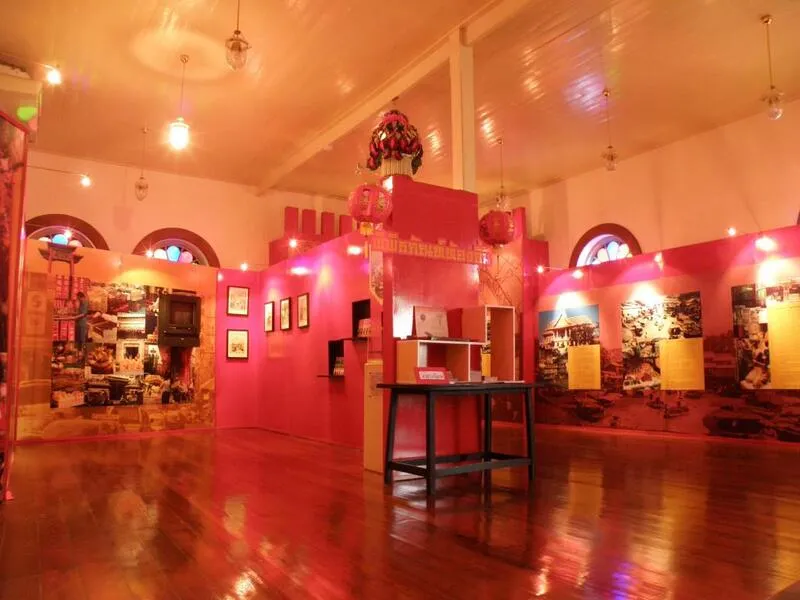
Samphanthawong District Museum is a Bangkok city-history attraction that’s perfect for anyone who wants to “read Chinatown more deeply.” Instead of starting with the usual images of street food and busy roads, the museum takes you back to the roots of Samphanthawong District—Thailand’s smallest administrative district by area, yet one of the world’s most famous trading and business quarters. It’s often described as a “tiny city with a dragon’s location,” a compact place where people, language, commerce, religion, and Thai-Chinese culture are densely woven together.
One thing that makes this museum especially engaging is its setting within Wat Traimit Witthayaram, near the Chalermphrakiat Gate. That location gives the visit a very clear “old neighborhood inside a big city” atmosphere. You quickly realize that history isn’t only kept on bookshelves—it lives on the streets where people still move through daily life: vendors and small stalls, the flow of people entering and leaving the temple, gold shops, Chinese medicine stores, restaurants, and the lanes that can lead you onward to Sampeng and Talat Noi on foot.
The museum’s content generally presents the story of Samphanthawong as the “heart of Thailand’s Chinatown,” tracing Chinese settlement and adaptation in Thailand from the early Rattanakosin period through to today. Over time, this area grew into a hub for trade, logistics, and multi-generational business networks that connect families and communities across eras. Parts of the narrative also help you visualize how key communities like Sampeng and Talat Noi formed and expanded—places that functioned both as residential neighborhoods and commercial zones, growing side by side with Bangkok for a very long time.
The charm of telling Samphanthawong’s story is that it doesn’t treat the district as just a boundary on an administrative map. It treats it as a living space for people—a space where commerce creates movement, and movement naturally creates cultural blending. You can see it in everyday language, clothing, food, beliefs, festivals, and especially in family-run businesses passed down through generations. Over time, this becomes a kind of “urban survival wisdom” that helps explain why the district never truly sleeps.
Another layer of value is that museums like this help you understand why Bangkok’s Chinese trading quarter is more than just a tourist zone. It has been a key part of the economic structure of the Rattanakosin era and remains so today. Trade, water-and-land transport, the circulation of goods, and the growth of social networks all helped assemble Bangkok’s “city-ness” piece by piece. And a small district like Samphanthawong has always carried weight far beyond its physical size.
If you’ve ever heard Samphanthawong’s district slogan—“Thai-Chinese bonds, a contemporary trading quarter, Thailand’s Chinatown, a major economic hub of Rattanakosin”—this museum helps that line become more than a nice sentence. The first phrase makes the relationships between people feel real, the next shows how commerce powers the neighborhood, and the final phrase underlines how this area truly helped drive Bangkok’s growth into a regional economic city.
From a visitor’s perspective, the Samphanthawong District Museum works beautifully as a “half-day trip.” Start with the exhibition to collect the historical overview and community context, then continue to Sampeng, Talat Noi, or Yaowarat Road to experience the living version of what you just learned. The advantage is simple: once you understand the context first, walking the same streets becomes a completely different experience. You begin noticing the meaning of lanes, temples, shops, and the everyday rhythm of the area—details most people usually pass by.
Getting There The museum is in the Hua Lamphong–Yaowarat area, so traveling by rail is generally convenient. You can take the MRT to Hua Lamphong Station and then continue by local transport or walking, depending on real-time conditions, to reach Wat Traimit Witthayaram. Another option is the MRT Wat Mangkon Station, followed by a short taxi or motorcycle taxi ride into the area. If you prefer buses, routes commonly cited as passing along Tri Mit Road and Rama IV Road include 1, 4, 7, 25, 40, 53, 73, 73ก, 177, and 529. If you drive, it’s wise to allow extra time for traffic around Rama IV–Hua Lamphong and to check practical parking options on the day for certainty.
| Place Name | Samphanthawong District Museum (inside Wat Traimit Witthayaram / Hua Lamphong–Yaowarat area) |
| Zone | Hua Lamphong – Wat Traimit – Yaowarat (Samphanthawong District) |
| Location | Wat Traimit Witthayaram, near the Chalermphrakiat Gate (Charoen Krung / Hua Lamphong area), Bangkok |
| Key Characteristics | A museum/exhibition that presents the history of Samphanthawong District and Bangkok Chinatown from early Rattanakosin to the present, including key communities such as Sampeng and Talat Noi and important temples in the area |
| Period / Main Theme | Urban history and Chinese communities in Siam/Thailand – the development of Yaowarat as a trading quarter – the Rattanakosin economy |
| Open Days | Tuesday – Sunday (Closed Monday) (Recommended to call ahead to confirm) |
| Opening Hours | 08:30 – 16:30 (Hours may change based on the latest announcement) |
| Admission Fee | Recommended to confirm the latest details before visiting (some periods may share conditions with other museum areas in the temple complex) |
| Travel | MRT Hua Lamphong or MRT Wat Mangkon, then a short walk/motorcycle taxi/taxi; bus routes commonly cited via Tri Mit Rd / Rama IV Rd: 1, 4, 7, 25, 40, 53, 73, 73ก, 177, 529 |
| Current Status | Open during official days and hours (recommended to call ahead, especially during festivals or major events in Yaowarat) |
| Contact Number | 02-623-3329 |
| Nearby Attractions (Real-Route Distance) | Wat Mangkon Kamalawat (Leng Noei Yi) – approx. 1.5 km – Tel. 02-222-3975 River City Bangkok – approx. 2.2 km – Tel. 02-237-0077 The Bangkokian Museum – approx. 3.2 km – Tel. 02-233-7027 Museum Siam – approx. 4.0 km – Tel. 02-225-2777 ICONSIAM – approx. 5.3 km – Tel. 02-495-7000 |
| Nearby Restaurants (Real-Route Distance) | Lek & Rut Seafood – approx. 1.6 km – Tel. 02-224-8587 T&K Seafood – approx. 1.7 km – Tel. 090-658-6868 Hua Seng Hong (Yaowarat) – approx. 1.8 km – Tel. 02-222-7053 Nai Mong Hoi Thod – approx. 2.0 km – Tel. 089-773-3133 Lim Lao Ngow – approx. 2.4 km – Tel. 081-640-4750 |
| Nearby Accommodations (Real-Route Distance) | ASAI Bangkok Chinatown – approx. 1.6 km – Tel. 02-220-8999 Hotel Royal Bangkok @ Chinatown – approx. 1.8 km – Tel. 02-225-0026 Shanghai Mansion Bangkok – approx. 2.0 km – Tel. 02-221-2121 Grand China Bangkok – approx. 2.0 km – Tel. 02-224-9977 River View Residence (Talat Noi) – approx. 2.6 km – Tel. 02-234-5429 |
Frequently Asked Questions (FAQ)
Q: Which days is the Samphanthawong District Museum open?
A: It is generally open Tuesday through Sunday and closed on Mondays. It’s recommended to call ahead to confirm, especially during festivals in the Yaowarat area.
Q: What time does it open, and when is the best time to visit comfortably?
A: It is generally open from 08:30 – 16:30. For a relaxed visit, go in the morning or early afternoon, then continue with a Yaowarat food walk in the evening.
Q: How long should I plan for the visit?
A: Plan around 45 – 90 minutes for a good overview and enough time to read the parts you’re most interested in. After that, you can easily continue on to Sampeng or Talat Noi.
Q: Is it convenient to visit by MRT?
A: Yes. Take the MRT to Hua Lamphong or Wat Mangkon, then use a short walk or a quick motorcycle taxi/taxi ride to reach Wat Traimit. This often helps you avoid heavy traffic when Yaowarat is busiest.
Q: What is the museum’s main highlight?
A: The museum’s strength is how it tells the story of Thailand’s smallest district while showing the outsized importance of Bangkok’s Thai-Chinese trading quarter—from early settlement and communities like Sampeng and Talat Noi to the rise of Chinatown as a major economic engine of the Rattanakosin era.
 Tel: 022460301
 Samphanthawong District Museum Map
 Category:
  Group:
  Tag: ●Samphanthawong District Museum●samphanthawong district museum ●chinatown museum bangkok ●wat traimit museum ●yaowarat museum ●things to do in chinatown bangkok ●hua lamphong attractions ●bangkok chinatown history ●talat noi walking route ●sampeng market history ●bangkok heritage museum Last Update: 2 MonthAgo
Comment
 Nearby Attractions
| Keyword (Advance) |
 Facebook Fanpage
 Region
 Historical Sites and Monuments(
 Landmarks and Memorials(
 Royal Palace(
 Art, Craft Centres, Tradition(
 Historical Houses and The Ancient City(
 Art Gallery(
 Educational Places
 Museum for Study(
 Library(
 University
 Places of Worship
 Temple(
 Church(
 Mosque(
 Other religious and spiritural sites(
 Research and Development
 Royal Project(
 Suburban Living
 Village, Community(
 Local Market(
 Floating Market(
 Nature and Wildlife
 River, Canal(
 Bays and Beaches(
 Other natural attractions(
 Entertainment and Agricultural
 Zoos and Aquariums(
 Animal camps and shows(
 Stadium(
 Farm, Parks, Gardens and Ecotourism(
 Amusement Park(
 Waterpark(
 Theater(
 Cinema(
 Shopping
 Shopping and Night Market(
 Department Store(
 Spas and Wellness
 Spas and Wellness(
 Restaurant
 Michelin Star(
 Accommodation
 Hotel(
 Call Customer Service in Tourism
 Call Customer Service in Tourism(
 Travel Articles, Recipes
 Travel Review, Food Review(
 Royal Thai Desserts, Traditional Dessert, Thai Dessert Recipes(
 Copyright 2012,