

 Home
Home Chiang Mai(














Thai Newspaper Museum
Rating: 4/5 (5 votes)
 Search By
  Map
Map 
 Have Map
  No Map
Bangkok attractions
Attractions in Thailand
Open Days: Monday – Friday (Closed Saturday – Sunday)
Opening Hours: 09:00 – 17:00 (recommended to contact staff before visiting)
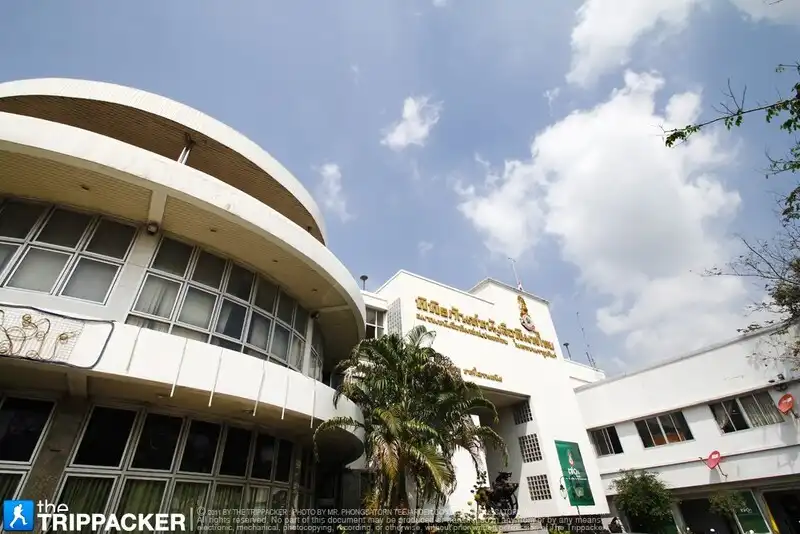
Thai Newspaper Museum is located inside the Association of Thai Journalists building on Ratchasima Road, Dusit District (opposite Suan Dusit Rajabhat University). It’s a niche museum created to genuinely support and preserve the newspaper profession — not just a casual stop to kill time. The moment you step in, it quietly reminds you that behind every news story are real people, real tools, real workflows, and the unmistakable mood of each era.
What makes a museum like this special is how it turns something that can feel distant — “media history” — into something tangible. Newspapers aren’t merely ink on paper; they’re time capsules of Thai society, reflecting shifts in politics, the economy, and everyday urban life across different periods. If you’re the type who likes city stories, history, or you work in content and communications, walking through here feels like peeking into the “engine room” of public storytelling in the past: how news was produced, what people were thinking, and what constraints shaped what could be said.
The opening section takes you back to older newsroom life through staged displays and wax figures that recreate a classic newspaper office. It helps you picture what “hands-on journalism” looked like — from writing and layout to the intensity and precision required in an era without digital convenience. Many visitors find this immersive even without prior knowledge, because seeing the desks, tools, and working posture makes one thing clear: a story doesn’t appear out of thin air. It comes from a system built on discipline, responsibility, and craft.
From there, the museum widens its lens to show the role newspapers have played in society at large — politically, economically, and culturally — and how print once served as a public space for debate, exchange, and freer expression in different eras. It also introduces key figures in Thai newspaper history whose work shaped public thought, whether as pioneers, writers, editors, publishers, or influential voices who steered the direction of the press in their time.
Another layer that gives the museum symbolic weight is how it connects “printing and publishing” with Thailand’s modernization — the growth of the state, institutions, and public life. The stories placed here help visitors see that media doesn’t move separately from power or from ordinary people. It has always moved alongside them, simply changing form as technology and social context evolve.
One thing people often overlook — but which is genuinely valuable — is the museum’s role as a learning and research hub. This isn’t only about display objects. It carries the idea of collecting documents, evidence, and historical references related to Thai newspapers from past to present. It’s especially useful for students or working professionals who want their visit to become real research. If you arrive with one or two questions you truly want to answer, the experience becomes far more rewarding because you’re not just “walking through” — you’re actively looking for insight.
Because the museum sits within an association building and the visit can be slightly formal in practice, it’s recommended to contact staff before coming, especially if you’re visiting as a group or bringing students or children. A quick coordination in advance usually makes entry and the overall visit smoother and saves time.
Getting There If you take public buses, routes 28, 108, 515, 539, and 542 can get you into the Ratchasima Road – Dusit area, then you can walk a short distance or take a taxi/motorbike taxi to the building. If you prefer rail transit, it’s practical to use BTS or MRT to a station that connects conveniently toward Dusit, then continue by taxi or motorbike taxi since the destination is an association building rather than a museum right next to a station. If you drive, allow extra time for traffic in the government district and check parking access and the building entrance before you go.
| Place Name | Thai Newspaper Museum |
| Location | Association of Thai Journalists, Ratchasima Road, Dusit District, Bangkok (opposite Suan Dusit Rajabhat University) |
| Highlights | A specialized museum supporting the newspaper profession; showcases Thai media history, the press’s role in politics–economy–society, and notable figures in the industry |
| Current Status | Open Monday–Friday (recommended to contact staff before visiting) |
| Contact Numbers | 02-669-7124, 02-669-7126, 063-593-1879 |
| Travel | Bus routes 28, 108, 515, 539, 542; or BTS/MRT then taxi/motorbike taxi to the Dusit area |
| Nearby Attractions / Learning Spots (Approx. Distance) | Wat Benchamabophit Dusitwanaram (2 km) Tel. 092-939-5646 National Library of Thailand (2 km) Tel. 02-281-5212 Bank of Thailand Learning Center (3 km) Tel. 02-356-7766 Government House (3 km) Tel. 02-629-8000 Bangkok National Museum (6 km) Tel. 02-224-1402 |
| Popular Restaurants Nearby (Approx. Distance) | Krua Apsorn (Samsen Branch) (2 km) Tel. 02-279-9180 Samsen Villa (Samsen Branch) (2 km) Tel. 02-279-0922 Steve Cafe & Cuisine (Thewet) (3 km) Tel. 02-281-0915 Khao Tom Chiao Chanchai Panich (Thewet) (3 km) Tel. 062-669-6292 Lim Hua Heng Fish Ball Noodles (Thewet Area) (3 km) Tel. 085-318-2573 |
| Popular Accommodations Nearby (Approx. Distance) | The Raweekanlaya Bangkok (2 km) Tel. 02-628-5999 The Siam Hotel (3 km) Tel. 02-206-6999 Praya Palazzo (5 km) Tel. 02-883-2998 CASA Nithra Bangkok (5 km) Tel. 02-282-3033 Centara Life Hotel Bangkok Phra Nakhon (6 km) Tel. 02-022-6336 |
Frequently Asked Questions (FAQ)
Q: What days is the Thai Newspaper Museum open?
A: It is generally open Monday to Friday and closed on Saturday and Sunday.
Q: What time does it open?
A: It is generally open from 09:00 – 17:00, and it’s recommended to contact staff before visiting.
Q: Do I need to contact staff before visiting?
A: Yes, it’s recommended to contact staff in advance to make entry smooth, since the museum is inside an association building.
Q: Who is this museum best for?
A: It’s ideal for people interested in media history, society, politics, and economics — as well as students and professionals in journalism, communications, and content work.
Q: How much time should I plan for the visit?
A: Plan for about 1–2 hours. If you come with a specific question or topic in mind, the visit becomes even more worthwhile.
 Tel: 026697124-6
 Fax: 022415929
 Thai Newspaper Museum Map
 Category:
  Group:
  Tag: ●Thai Newspaper Museum●thai newspaper museum ●thai media history museum ●history of thai newspapers ●association of thai journalists ●dusit bangkok museum ●ratchasima road dusit ●learning center bangkok ●journalism museum thailand ●thai press history ●museum in dusit district Last Update: 2 MonthAgo
Comment
 Nearby Attractions
| Keyword (Advance) |
 Facebook Fanpage
 Region
 Historical Sites and Monuments(
 Landmarks and Memorials(
 Royal Palace(
 Art, Craft Centres, Tradition(
 Historical Houses and The Ancient City(
 Art Gallery(
 Educational Places
 Museum for Study(
 Library(
 University
 Places of Worship
 Temple(
 Church(
 Mosque(
 Other religious and spiritural sites(
 Research and Development
 Royal Project(
 Suburban Living
 Village, Community(
 Local Market(
 Floating Market(
 Nature and Wildlife
 River, Canal(
 Bays and Beaches(
 Other natural attractions(
 Entertainment and Agricultural
 Zoos and Aquariums(
 Animal camps and shows(
 Stadium(
 Farm, Parks, Gardens and Ecotourism(
 Amusement Park(
 Waterpark(
 Theater(
 Cinema(
 Shopping
 Shopping and Night Market(
 Department Store(
 Spas and Wellness
 Spas and Wellness(
 Restaurant
 Michelin Star(
 Accommodation
 Hotel(
 Call Customer Service in Tourism
 Call Customer Service in Tourism(
 Travel Articles, Recipes
 Travel Review, Food Review(
 Royal Thai Desserts, Traditional Dessert, Thai Dessert Recipes(
 Copyright 2012,