

 Home
Home Chiang Mai(















Jawa Mosque
Rating: 4.4/5 (5 votes)
 Search By
  Map
Map 
 Have Map
  No Map
Bangkok attractions
Attractions in Thailand
Open Days: Please contact the mosque directly
Opening Hours: Please contact the mosque directly
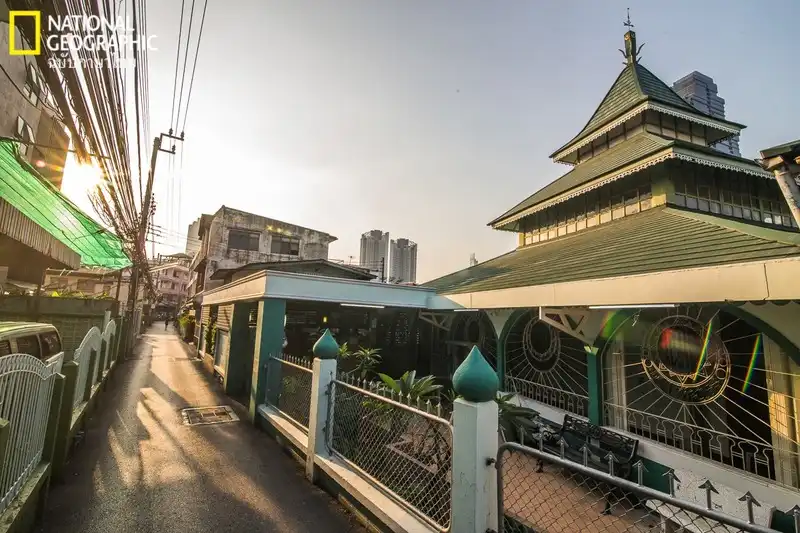
Masjid Jawa is one of Bangkok’s cultural landmarks for people who prefer to travel “deeper” than a quick photo stop. This mosque invites you into the lived history of South Sathorn through a small community that many locals associate with the Ice Factory Alley area and Charoen Rat 1. What looks like an ordinary passageway in a fast-moving city actually holds dense layers of settlement, faith, and coexistence among people of different backgrounds.

Sathorn today is often pictured as high-rises, wide roads, and a hurried urban rhythm. Yet once you turn into Charoen Rat 1, Yaek 9, the atmosphere gradually shifts into a community that moves at its own pace. Traffic noise softens, details become clearer, and the feeling of being “in someone’s neighborhood” becomes immediately noticeable. The mosque is located at No. 19 in Yan Nawa Subdistrict, Sathorn District – an address consistently listed in both mosque directory sources and the Bangkok mosque information system, which makes it a reliable reference point for first-time visitors.
What makes Masjid Jawa compelling is not only its role as a place of worship, but also its origin story – a living reflection of early Bangkok. Historical information published in mosque directories notes that some Javanese families moved into the South Sathorn Canal area. In the beginning, there was no shared place of worship, so community members used one of their houses for collective devotion. As the community strengthened over time, the idea of establishing a mosque became clearer, eventually turning into a shared effort that united people in the neighborhood.
A major turning point came in 1894 (B.E. 2437). Haji Muhammad Saleh, a Javanese Muslim under Dutch rule who lived around Ice Factory Alley on Sathorn Road, donated land for the construction of the mosque. The land had previously belonged to a Chinese owner named Joi. This seemingly small detail reveals the character of Bangkok as a port-city society: Chinese communities, Muslim communities, and multiple languages coexisted closely in the same area. Later, in 1905 (B.E. 2448), Haji Muhammad Saleh submitted a request to the authorities to issue a new land title deed under updated terms, listing himself as the manager of the mosque’s land so that the site’s stewardship would be clearly recognized in official records.
The founding of the mosque was never a one-person project. The historical record mentions local figures such as Muhammad Musa, Rakam, and other Javanese Muslims from both within and outside the village who worked together until the mosque became a reality. This is the kind of community-based story that matters, because once a religious site is established, it becomes more than an “าคาร” or a building. It becomes relationships, shared labor, shared time, and shared meaning – proof that people wanted a lasting spiritual center of their own.
Another reason Masjid Jawa stands out is its effort to preserve its distinct Javanese architectural identity. Even after two major restoration periods – the first around 1927 (B.E. 2470) and the second around 1975 (B.E. 2518) – the mosque retained its original roof form while expanding the main structure to better support community use. A particularly important area is the space for resting and religious conversation, which Javanese Muslims refer to as the “Balai.” In the community context, the Balai is not merely a seating corner. It is a social and spiritual meeting space where people connect, speak respectfully, exchange thoughts, and remain together as a community. This is one of the key reasons the mosque functions as a true community center, not only a site for formal ritual.
The history of the mosque’s imams also reflects the local social fabric. Over a long period, both Javanese and Malay Muslim leaders served as imams, often viewed as evidence of close coexistence in the same neighborhood. This was not simply about living near one another, but about sharing responsibilities and caring for the community’s spiritual center together. In the Bangkok mosque information system, the imam history is listed by period, and it states that the current imam is Mr. Chainarong Chanweerayothin, in office since 12 November 2022.
For visitors who see this as a “Bangkok attraction,” Masjid Jawa is especially meaningful for those interested in the city through the lens of people rather than places. It is not a time-consuming trip, but it can feel like opening a history book in a real setting. You start to see that Bangkok is more than shopping districts and major landmarks. It is also made of older communities that have managed to protect their roots with quiet dignity in small pockets between the city’s main roads.
Visiting a religious site inside a living urban community often becomes smoother with a few “small details” done well: dress modestly, speak softly, remove shoes before entering the prayer area, and respect the privacy of those who are worshipping. If you want to take photos, it is best to avoid photographing individuals without permission and to choose a time that will not disrupt activities. The heart of a place like this is peace and appropriateness – and those qualities are worth protecting.
Getting There The simplest approach is to pin “Masjid Jawa” on a map app and enter Charoen Rat 1, Yaek 9 in Yan Nawa, Sathorn. This is a community area with smaller lanes and multiple turns, so first-time visitors should allow extra time to read signs and confirm the correct entry points. Once you arrive nearby, walking into the community is not difficult. If you want confirmation about coordination or internal guidelines, you can contact the mosque directly using the phone number listed in the official mosque directory.
The charm of stopping by Masjid Jawa is that you can easily continue your day in multiple ways. If you prefer city skyline views, Silom–Sathorn is close. If you want riverside scenery, you can head toward Charoen Nakhon or Asiatique. And if you like slow, observational travel, you can spend time simply noticing how an older Bangkok community still lives alongside modern city rhythms. All of this makes Masjid Jawa a “quiet attraction” – one that offers depth without needing volume.
| Place Name | Masjid Jawa (มัสยิดยะวา) |
| Location | 19 Charoen Rat 1 Alley, Yaek 9, Yan Nawa Subdistrict, Sathorn District, Bangkok 10120 |
| Mosque Highlights | A historic mosque of the Javanese (Java) Muslim community in the Ice Factory Alley–Sathorn area, with a well-documented founding story dating to 1894 (B.E. 2437) and major restorations around 1927 and 1975 that retained its Javanese architectural roof identity, featuring a “Balai (Balai)” seating area for rest and religious conversation as a distinctive Javanese community element |
| Mosque Caretaker | Imam Chainarong Chanweerayothin |
| Contact Number | 02-675-6033 |
| Getting There | Pin “Masjid Jawa” on a map app and enter Charoen Rat 1, Yaek 9 (this is a community area with smaller lanes; allow extra time on a first visit and call ahead if you want confirmation) |
| Current Status | Open and actively used for worship (for confirmed timing and on-site activities, contacting the mosque directly is recommended) |
| Nearby Attractions with Distance | King Power Mahanakhon (approx. 4 km) Tel 02-677-8721 Asiatique The Riverfront (approx. 7 km) Tel 092-246-0812 ICONSIAM (approx. 6 km) Tel 02-495-7000 Queen Sirikit National Convention Center (approx. 7 km) Tel 02-229-3000 MBK Center (approx. 6 km) Tel 1285 |
| Nearby Restaurants with Distance and Phone Number | Aisha Ameenah Halal Food (approx. 1 km) Tel 090-971-8524 Khrua Khun Yai Sathorn Halal Food (approx. 1 km) Tel 084-196-3924 Khun Oum Halal Fried Beef (Charoen Rat) (approx. 1 km) Tel 091-751-4172 (HALAL) Yan Nawa (approx. 6 km) Tel 093-394-4987 Nadia Halal Food (approx. 1 km) Tel 093-463-4442 |
| Nearby Accommodations with Distance and Phone Number | Eastin Grand Hotel Sathorn (approx. 5 km) Tel 02-210-8100 Mode Sathorn Hotel (approx. 5 km) Tel 02-623-4555 ibis Bangkok Sathorn (approx. 6 km) Tel 02-659-2888 Holiday Inn Bangkok Silom (approx. 5 km) Tel 02-207-4300 Banyan Tree Bangkok (approx. 6 km) Tel 02-679-1200 |
Frequently Asked Questions (FAQ)
Q: Where is Masjid Jawa located in Bangkok?
A: It is located at No. 19, Charoen Rat 1 Alley, Yaek 9, Yan Nawa Subdistrict, Sathorn District, Bangkok. Many locals associate the area with the Ice Factory Alley neighborhood.
Q: What led to the founding of Masjid Jawa?
A: Mosque directory history states that Javanese families initially used private houses for shared worship near the South Sathorn Canal. In 1894, Haji Muhammad Saleh donated land for building a mosque, and the community worked together to establish it.
Q: What is the “Balai,” and why is it important at Masjid Jawa?
A: The Balai is a resting and social space for community interaction and religious conversation, commonly found in Javanese mosque culture. It is specifically mentioned as a meaningful functional area in the history of Masjid Jawa.
Q: What is the easiest way to get there for a first-time visit?
A: Pin “Masjid Jawa” on your map app and enter Charoen Rat 1, Yaek 9. Because the neighborhood has smaller lanes and turns, allowing extra time on a first visit is recommended.
Q: How can I contact Masjid Jawa?
A: You can call 02-675-6033 to ask about practical details such as internal guidelines or the most suitable times to use the facilities.
 Jawa Mosque Map
 Category:
  Group:
  Tag: ●Jawa Mosque●masjid jawa ●masjid jawa bangkok ●jawa mosque sathon ●charoen rat 1 yaek 9 ●ice factory alley sathon ●javanese muslim community bangkok ●jawa style mosque architecture ●balai pavilion mosque ●cultural travel sathon ●heritage walk bangkok Last Update: 2 MonthAgo
Comment
 Nearby Attractions
| Keyword (Advance) |
 Facebook Fanpage
 Region
 Art, Culture and Heritage
 Historical Sites and Monuments(
 Landmarks and Memorials(
 Royal Palace(
 Art, Craft Centres, Tradition(
 Museums(
 Historical Houses and The Ancient City(
 Art Gallery(
 Educational Places
 Museum for Study(
 Library(
 University
 Temple(
 Church(
 Other religious and spiritural sites(
 Research and Development
 Royal Project(
 Suburban Living
 Village, Community(
 Local Market(
 Floating Market(
 Nature and Wildlife
 River, Canal(
 Bays and Beaches(
 Other natural attractions(
 Entertainment and Agricultural
 Zoos and Aquariums(
 Animal camps and shows(
 Stadium(
 Farm, Parks, Gardens and Ecotourism(
 Amusement Park(
 Waterpark(
 Theater(
 Cinema(
 Shopping
 Shopping and Night Market(
 Department Store(
 Spas and Wellness
 Spas and Wellness(
 Restaurant
 Michelin Star(
 Accommodation
 Hotel(
 Call Customer Service in Tourism
 Call Customer Service in Tourism(
 Travel Articles, Recipes
 Travel Review, Food Review(
 Royal Thai Desserts, Traditional Dessert, Thai Dessert Recipes(
 Copyright 2012,