

 Home
Home Chiang Mai(













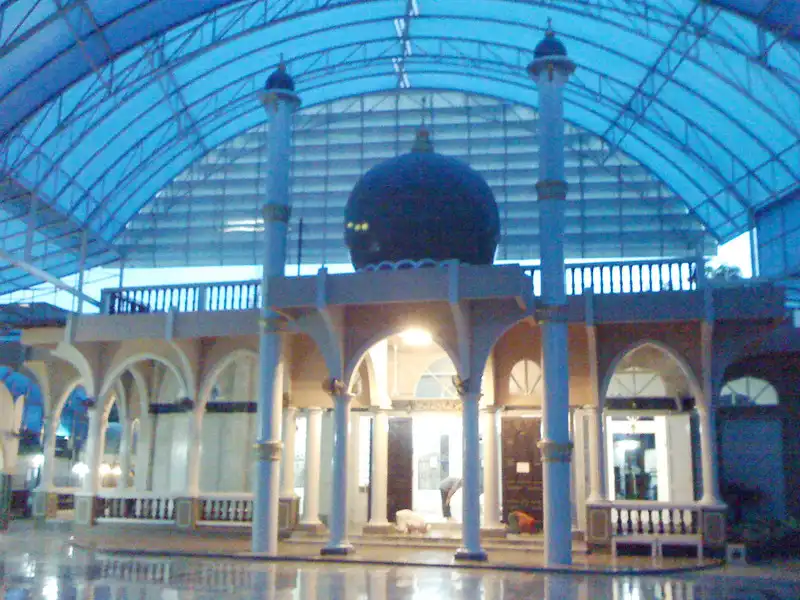
Fathul Bari Mosque
Rating: 3.6/5 (5 votes)
 Search By
  Map
Map 
 Have Map
  No Map
Bangkok attractions
Attractions in Thailand
Open Days: Daily
Opening Hours: Based on prayer times – please call ahead before visiting
Fathul Bari Mosque is a community mosque in the Hua Mak–Bang Kapi area of Bangkok, with a deeply rooted story that spans local settlement history, waqf land dedication, and formal organization as a legally registered mosque dating back to the era when Bangkok was still expanding gradually. From a traveler’s perspective, this is not a “big landmark” you simply photograph and leave behind. It is a living space of faith that actively supports everyday community life through prayer, learning, and activities that bring people of different ages together in the middle of a large city.
The mosque is situated in an area locals often refer to broadly as the Bang Kapi Market–Lam Sali intersection zone, with convenient connections between Ramkhamhaeng Road and Srinakarin Road. This makes it accessible in many ways—by private car, taxi, motorbike taxi, or by using public transport and then continuing a short distance into the community. The surrounding neighborhood is dense and urban, but as you approach the mosque, you can feel the rhythm slow down into a calmer atmosphere—a kind of quiet shaped by mutual care within the community rather than the silence of a typical tourist site.
The founding of Fathul Bari Mosque is clearly rooted in a community need. As the village population grew, it became increasingly difficult for residents to travel to nearby mosques for religious observance. This led to the idea of establishing a mosque within the village itself, so people could pray, learn, and carry out religious activities closer to home. This is a familiar pattern across many Bangkok neighborhoods, where mosques did not emerge only from official urban planning, but also from the community’s collective effort and the steady continuity of faith among local residents.
The most important figure in the earliest period was Hajji Hasan Boonmalert, the founder and first imam, who dedicated land as waqf for the construction of the mosque building. He was supported by Hajji Abdullah Boonmalert, also known as “Luang Phakdi Ratch,” the Boonmalert family patriarch, a key force that helped the community move from intention to real action. In the beginning, the first mosque building was a simple single-storey wooden structure, modest but sufficient for the number of worshippers at that time.
As the mosque’s role expanded and more people came to perform religious duties, the original wooden building became insufficient. It was later improved into a reinforced concrete structure to support heavier and more frequent use. A major turning point came in 1987, when Hajji Manusak (Mahfuz) Boonmalert dedicated personal funds to expand the prayer area to cover the entire waqf land. After that, the mosque continued to undergo periodic renovations and additions, and today it can accommodate more than 1,500 worshippers—reflecting natural community growth and a stronger supporting infrastructure.
In terms of legal status and naming, the mosque has clear milestones. It was registered as a legal-entity mosque on 27 January 1954, originally under the name “Al Fathul Bari Mosque.” It was later renamed “Fathul Bari Mosque” on 31 March 1983. Having these clear dates and formal status helps explain how the mosque has remained stable over time—standing as both a religious institution and a community institution simultaneously.
The continuity of religious leadership is another pillar of the mosque’s long-term stability. It began with Hajji Hasan Boonmalert as the first imam. Later, in 1981, Somboon (Maksud) Boonmalert was appointed to the position. After “Wiroj (Naeem) Boonmalert” graduated from Kuwait in 1980, he was appointed as imam and has continued in the role to the present day. The team also includes Supol (Sakireen) Boonmalert, who graduated from Egypt, serving as khatib, and Kittisak (Burhan) Boonmalert serving as bilal. Together, this shows how formal religious education and community service have long moved side by side.
The mosque also provides community statistics that help illustrate its true scale as an established local community. A November 2010 record states that the mosque community numbered 550 people in total, across 154 families. This is not presented as a claim of size for its own sake, but rather as context explaining why the mosque needed to expand its building, maintain administrative systems, and sustain learning activities that support youth in the area.
One highlight that is especially meaningful for those interested in culture and community life is the mosque’s “Islamic Ethics Training Center.” It provides regular instruction in the Qur’an and Islamic ethics for youth on a daily basis. Teaching and administration are carried out by instructors who graduated from overseas institutions. This makes the mosque more than just a place for prayer—it also serves as a space that builds inner values and life discipline for children and teenagers in the neighborhood, which is a particularly important role within a large city environment.
If you are visiting, the key to a smooth visit is to honor the space first. Dress modestly, keep a calm and respectful tone, avoid walking through prayer areas during active worship, and if you plan to take photos or create content, it is strongly recommended to ask for permission beforehand. For the local community, this is a sacred place and part of everyday life, not simply a backdrop for tourism.
Getting There If you are coming by private car or taxi, it is best to pin “Fathul Bari Mosque” on your map and travel into the Hua Mak–Bang Kapi area. Many people access the neighborhood via Ramkhamhaeng Soi 93 and local roads near Bang Kapi Market. For public transport users, it is often easier to arrive first in the Lam Sali intersection/Bang Kapi Market zone, then continue by motorbike taxi or taxi into the community. A useful tip is to avoid peak hours on Ramkhamhaeng and Srinakarin Roads, as traffic can significantly extend travel time.
| Name | Fathul Bari Mosque / Fathul Bari Mosque |
| Address | Chueam Samphan Soi, Ramkhamhaeng Road, Hua Mak, Bang Kapi, Bangkok 10240 (commonly accessed via Ramkhamhaeng Soi 93 and the Srinakarin–Hua Mak zone) |
| Current Status | Active as a mosque and a center for religious and community activities in the area |
| Contact Number | 02-377-1389 |
| Highlights | A long-established community mosque legally registered since 1954, supported by waqf land dedication and the founding family, developed from a wooden structure into reinforced concrete to accommodate worshippers, operates an Islamic Ethics Training Center with daily Qur’an and ethics education for youth, and can now accommodate more than 1,500 worshippers |
| Mosque Caretakers | Imam: Wiroj (Naeem) Boonmalert (serving to the present) Khatib: Supol (Sakireen) Boonmalert Bilal: Kittisak (Burhan) Boonmalert |
| Key Historical Details | Registered as a legal-entity mosque: 27 January 1954 (original name: Al Fathul Bari Mosque) Renamed to Fathul Bari Mosque: 31 March 1983 Founder and first imam: Hajji Hasan Boonmalert Prayer area expanded to cover the full waqf land: 1987 |
| Travel | Pin the mosque name and enter the Hua Mak–Bang Kapi area (commonly via Ramkhamhaeng Soi 93), or approach from the Srinakarin–Hua Mak zone and continue into the community. For public transport, reach Lam Sali/Bang Kapi Market first, then take a motorbike taxi or taxi into the area. |
| Nearby Places (Approx. Distance) | The Mall Lifestore Bangkapi – 3 km – 02-173-1000 Seacon Square Srinakarin – 7 km – 02-721-8888 The Nine Center Rama 9 – 10 km – 1285 Samitivej Srinakarin Hospital – 7 km – 02-378-9000 The Grand Fourwings Convention Hotel Bangkok (Srinakarin–Hua Mak landmark) – 6 km – 02-378-8000 |
| Popular Restaurants Nearby (Approx. Distance) | Pak Tai Halal (Ramkhamhaeng Soi 93) – 1 km – 062-236-6198 OhMySushi (Halal Sushi) (Ramkhamhaeng 24, Soi 34) – 8 km – 085-339-3844 Kin-Crepe-Kan – 7 km – 097-047-0222 Halal Beef Noodles (Ramkhamhaeng 81) – 4 km – 083-395-2520 Ban Ma Beef Soup (Ramkhamhaeng 81/4) – 4 km – 085-089-9911 |
| Popular Accommodations Nearby (Approx. Distance) | Livotel Hotel Hua Mak – 5 km – 02-732-3000 Bangkok Inter Place Hotel – 7 km – 02-319-0330 Madison Bangkok Hotel – 7 km – 02-318-4828 130 Hotel & Residence – 6 km – 02-138-7850 Alexander Hotel Bangkok – 3 km – 02-715-8888 |
Frequently Asked Questions (FAQ)
Q: Where is Fathul Bari Mosque located?
A: It is in the Chueam Samphan Soi area off Ramkhamhaeng Road, Hua Mak, Bang Kapi, Bangkok 10240. Locals commonly access it via Ramkhamhaeng Soi 93 in the Hua Mak–Bang Kapi zone.
Q: What is the contact number for Fathul Bari Mosque?
A: The verified contact number is 02-377-1389.
Q: When was the mosque registered as a legal entity?
A: It was registered as a legal-entity mosque on 27 January 1954.
Q: Why was it previously known as Al Fathul Bari Mosque?
A: The mosque originally used the name “Al Fathul Bari Mosque” and later changed its name to “Fathul Bari Mosque” on 31 March 1983.
Q: Who founded Fathul Bari Mosque?
A: The founder and first imam was Hajji Hasan Boonmalert, who also dedicated the waqf land for the mosque’s construction.
Q: Who is the current imam?
A: The current imam is Wiroj (Naeem) Boonmalert. The khatib is Supol (Sakireen) Boonmalert, and the bilal is Kittisak (Burhan) Boonmalert.
Q: Does the mosque offer Qur’an education or youth programs?
A: Yes. The mosque operates an Islamic Ethics Training Center that provides daily instruction in the Qur’an and Islamic ethics for youth.
Q: Can the general public visit, and what etiquette should be followed?
A: Yes, if you visit respectfully. Dress modestly, keep quiet, avoid active prayer times unless you are attending, and it is recommended to call ahead if you plan special activities such as photography or group visits.
 Tel: 027317443
 Fathul Bari Mosque Map
 Category:
  Group:
  Tag: ●Fathul Bari Mosque●fathul bari mosque ●huamark mosque ●bangkapi mosque ●ramkhamhaeng mosque ●mosque near bangkapi market ●islamic center bangkok ●quran class bangkok ●muslim community bangkok ●things to do bangkapi ●srinakarin huamark Last Update: 2 MonthAgo
Comment
 Nearby Attractions
| Keyword (Advance) |
 Facebook Fanpage
 Region
 Art, Culture and Heritage
 Historical Sites and Monuments(
 Landmarks and Memorials(
 Royal Palace(
 Art, Craft Centres, Tradition(
 Museums(
 Historical Houses and The Ancient City(
 Art Gallery(
 Educational Places
 Museum for Study(
 Library(
 University
 Temple(
 Church(
 Other religious and spiritural sites(
 Research and Development
 Royal Project(
 Suburban Living
 Village, Community(
 Local Market(
 Floating Market(
 Nature and Wildlife
 River, Canal(
 Bays and Beaches(
 Other natural attractions(
 Entertainment and Agricultural
 Zoos and Aquariums(
 Animal camps and shows(
 Stadium(
 Farm, Parks, Gardens and Ecotourism(
 Amusement Park(
 Waterpark(
 Theater(
 Cinema(
 Shopping
 Shopping and Night Market(
 Department Store(
 Spas and Wellness
 Spas and Wellness(
 Restaurant
 Michelin Star(
 Accommodation
 Hotel(
 Call Customer Service in Tourism
 Call Customer Service in Tourism(
 Travel Articles, Recipes
 Travel Review, Food Review(
 Royal Thai Desserts, Traditional Dessert, Thai Dessert Recipes(
 Copyright 2012,