

 Home
Home Chiang Mai(













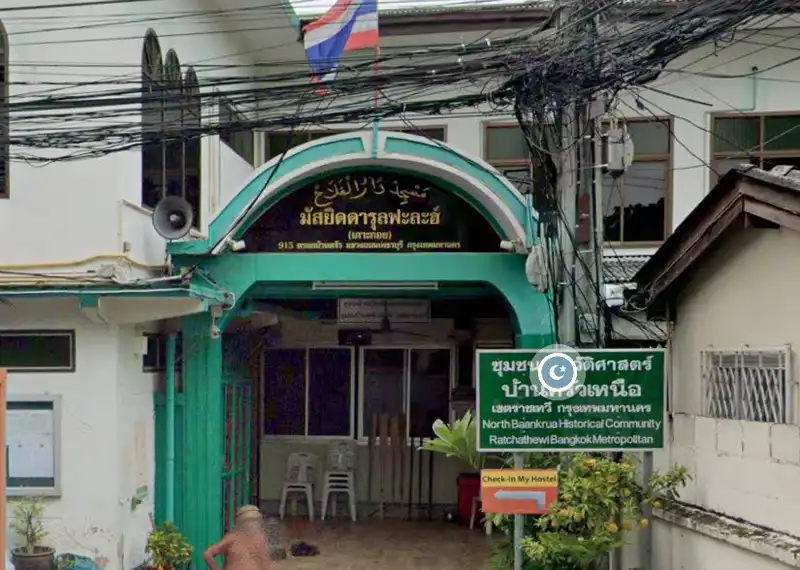
Darul Falah Mosque (Surao Koh Koi)
Rating: 4.2/5 (5 votes)
 Search By
  Map
Map 
 Have Map
  No Map
Bangkok attractions
Attractions in Thailand
Open Days: Daily
Opening Hours: According to religious activities and prayer times (it’s recommended to call ahead before visiting)
Darul Falah Mosque (Surao Koh Koi) is a religious center of the Cham Muslim community in the Ban Krua area along Saen Saep Canal, in Bangkok’s inner-city zone. If you only look at a map, you might assume it’s merely a place you pass through—but once you step deeper into the community lanes, you begin to feel a different rhythm of the city: a space of faith that residents truly use every day, and a hub for religious affairs, learning, and mutual support in a very community-rooted way.
Community narratives describe Ban Krua in earlier times as wide open land along the Saen Saep Canal. During the reign of King Rama V, Ban Krua was expansive, and in an era when travel relied mainly on boats or walking, many Cham residents had to spend significant time reaching the main mosque of the area to perform religious duties. This led a group of Cham Muslims living on the eastern side of Ban Krua to propose building a mosque of their own—so prayer and religious activities could be “closer to home” and better aligned with everyday life in the community.
The beginning of Surao Koh Koi is closely tied to Haji Tohe, a landowner in the area who allocated part of his land to establish the mosque in its early stage. The original structure was a raised wooden house on stilts, with a “sabeng” post—sometimes described by locals as a drum tower. One noteworthy feature is that the main mosque space and the “balai” were arranged within the same structure, reflecting its identity as a “community-built mosque,” designed for real use and gathering among worshippers rather than architectural grandeur.
In the earliest period, the community appointed Haji Karim Barahom as the imam. The roles of khatib and bilal were rotated among suitable community members. Names often mentioned in local accounts include Tuan Yimat, Haji Sadiah, and Yiyakull, before a later imam generation emerged, such as Haji Yafan bin Barahom, supported by community backers including Haji Mad Khong, Haji Son, and Maskul. Together, these details highlight that sustaining the mosque was never the responsibility of a single person, but rather the work of a whole network of faith and support within the community.
Over time, the structure of religious leadership became more clearly defined. In 1962 (B.E. 2505), Haji Saman Jityadsuwan (the son of Haji Yafan) became the imam, with Haji Rahmat bin Yafal serving as khatib and Haji Rahhim bin Yafan serving as bilal. The mosque was then registered under Thailand’s Islamic Mosque Act on 18 April 1980 (B.E. 2523), registration no. 122, under the name “Darul Falah Mosque.” It was also rebuilt from its earlier wooden structure into a two-story concrete building, to accommodate the increasing number of worshippers and religious activities as the surrounding city community expanded.
What makes Darul Falah Mosque especially memorable in terms of “full community use” is its role beyond being a prayer space. The mosque includes facilities for bathing the deceased (mayyit) in accordance with religious requirements, a community health center, and religious education at the fardu ain level, providing structured foundational learning for youth and those interested. Community accounts also describe the mosque’s land area as approximately 81 square wah, and note that the property is held under Crown Property title—details that reflect the realities of a centrally located mosque within Bangkok’s inner-city land and administrative context.
For those exploring Bangkok, the charm of this mosque lies in how it reveals another truth of the city: Bangkok is not only shopping malls and major roads, but also old communities with deep Cham cultural roots, a way of life connected to Saen Saep Canal, and religious sites that function as both spiritual anchors and practical community centers. If you visit to learn, the essential approach is respect: dress modestly, keep the area quiet, avoid disturbing prayer times, ask permission before taking photos, and always prioritize the prayer space as the primary place for worshippers.
Getting There The mosque is located at No. 915, Thanon Phetchaburi Subdistrict, Ratchathewi District, Bangkok. For first-time visitors, a practical “anti-lost” approach is to use Phetchaburi Road as the main route and then enter the Ban Krua area via the smaller lanes as suggested by map navigation. Because some sections transition into community alleys and narrow walkways, it’s recommended to allow extra time and reduce speed when nearing residential areas. If you use navigation apps, pin the mosque name or “Surao Koh Koi” and follow real-route guidance, especially if you are calling a ride or visiting for the first time.
If you want to plan a worthwhile day trip, this area connects easily to nearby destinations such as Siam, National Stadium, the Bangkok Art and Culture Centre, museums, and the popular food zone along Banthat Thong. The key to planning well is “timing with respect for religious activities” and ensuring that your visit never becomes a disruption to the community’s real use of the space. When approached thoughtfully, Darul Falah Mosque can become a landmark that helps you understand Bangkok more deeply than a typical city itinerary.
| Name | Darul Falah Mosque (Surao Koh Koi) |
| Location | No. 915, Thanon Phetchaburi Subdistrict, Ratchathewi District, Bangkok 10400 |
| Mosque Highlights | A Cham community mosque in Ban Krua by Saen Saep Canal, evolving from a raised wooden stilt house into a two-story concrete building. Registered under the Islamic Mosque Act (18 April 1980), Registration No. 122. Also known for community-oriented functions such as mayyit bathing facilities, a health center, and fardu ain religious education. |
| Mosque Caretakers | Imam: Haji Somnuek Jityadsuwan Khatib: Mr. Sombun Lopphaiphan Bilal: Haji Rahhim bin Yafan |
| Contact (Verified) | 02-069-9399, 08-4123-4989 |
| Nearby Accommodations (Approx. Driving Distance) | Asia Hotel Bangkok ~2 km. Tel. 02-217-0808 Holiday Inn Express Bangkok Siam ~2 km. Tel. 02-217-7555 ibis Bangkok Siam ~2 km. Tel. 02-659-2888 Novotel Bangkok on Siam Square ~3 km. Tel. 02-209-8888 Siam Kempinski Hotel Bangkok ~4 km. Tel. 02-162-9000 |
| Nearby Places (Approx. Driving Distance) | Jim Thompson House Museum ~2 km. Tel. 02-216-7368 Bangkok Art and Culture Centre (BACC) ~2 km. Tel. 02-214-6630 MBK Center ~3 km. Tel. 02-620-9000 Siam Discovery ~3 km. Tel. 02-658-1000 Suan Pakkad Palace Museum ~4 km. Tel. 02-245-4934 |
| Nearby Restaurants (Approx. Driving Distance) | Baan Khun Mae (MBK Center) ~3 km. Tel. 02-048-4593 Somboon Seafood (Siam Square One) ~3 km. Tel. 02-160-5965-6 After You (Siam Square One) ~3 km. Tel. 02-115-1949 SEE FAH (Siam Square area) ~3 km. Tel. 02-251-5517 Kouen Sushi Bar (Siam Square One) ~3 km. Tel. 061-895-7777 |
| Current Status | The mosque is listed in public mosque directories and contact databases (no indication of permanent closure was found at this time). |
Frequently Asked Questions (FAQ)
Q: Which district of Bangkok is Darul Falah Mosque (Surao Koh Koi) located in?
A: It is in Thanon Phetchaburi Subdistrict, Ratchathewi District, Bangkok, in the Ban Krua area near Saen Saep Canal.
Q: Why did the Ban Krua community build this mosque?
A: Because Ban Krua was very large in the past, and residents on the eastern side had to walk or take boats to the main mosque. Building a local mosque made it easier to perform religious duties closer to home.
Q: When was this mosque officially registered?
A: It was registered under the Islamic Mosque Act on 18 April 1980 (B.E. 2523), Registration No. 122.
Q: What facilities or activities are available inside the mosque?
A: In addition to prayers, it provides mayyit bathing facilities, a community health center, and fardu ain religious education (for specific schedules, it’s best to call and ask).
Q: If I visit as part of a Bangkok cultural trip, how should I behave?
A: Dress modestly, keep quiet, avoid disturbing prayer times, ask permission before taking photos, and always prioritize the prayer space for worshippers.
Q: What phone numbers can I use to contact the mosque?
A: 02-069-9399 and 08-4123-4989 (it’s recommended to call ahead before visiting).
 Darul Falah Mosque (Surao Koh Koi) Map
 Category:
  Group:
  Tag: ●Darul Falah Mosque (Surao Koh Koi)●darul falah mosque ●surao koh koi ●ban krua mosque ●ban krua community ●saen saep canal ●cham muslim bangkok ●ratchathewi mosque ●islamic mosque bangkok ●bangkok cultural travel ●mosques in bangkok Last Update: 2 MonthAgo
Comment
 Nearby Attractions
| Keyword (Advance) |
 Facebook Fanpage
 Region
 Art, Culture and Heritage
 Historical Sites and Monuments(
 Landmarks and Memorials(
 Royal Palace(
 Art, Craft Centres, Tradition(
 Museums(
 Historical Houses and The Ancient City(
 Art Gallery(
 Educational Places
 Museum for Study(
 Library(
 University
 Temple(
 Church(
 Other religious and spiritural sites(
 Research and Development
 Royal Project(
 Suburban Living
 Village, Community(
 Local Market(
 Floating Market(
 Nature and Wildlife
 River, Canal(
 Bays and Beaches(
 Other natural attractions(
 Entertainment and Agricultural
 Zoos and Aquariums(
 Animal camps and shows(
 Stadium(
 Farm, Parks, Gardens and Ecotourism(
 Amusement Park(
 Waterpark(
 Theater(
 Cinema(
 Shopping
 Shopping and Night Market(
 Department Store(
 Spas and Wellness
 Spas and Wellness(
 Restaurant
 Michelin Star(
 Accommodation
 Hotel(
 Call Customer Service in Tourism
 Call Customer Service in Tourism(
 Travel Articles, Recipes
 Travel Review, Food Review(
 Royal Thai Desserts, Traditional Dessert, Thai Dessert Recipes(
 Copyright 2012,