

 Home
Home Chiang Mai(













Wat Nang Ratchaworawihan
Rating: 3.8/5 (4 votes)
 Search By
  Map
Map 
 Have Map
  No Map
Bangkok attractions
Attractions in Thailand
Open Days: Daily
Opening Hours: Generally 08:00 – 17:00 (hours may vary depending on areas within the temple and specific activities)
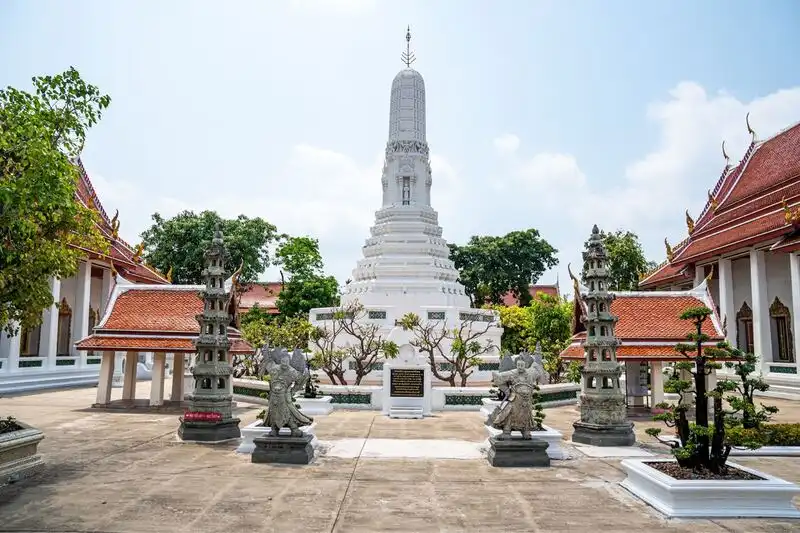
Wat Nang Ratchaworawihan is an old temple on Bangkok’s Thonburi side in Chom Thong District, located around Khlong Dan — an area that once functioned like a major “waterway artery” for transport. Khlong Dan was long regarded as a key route linking travel between several important river basins, which is why dense communities, temples, and piers historically lined its banks. Because of this, Wat Nang is not only a place to pay respects, but also a “piece of the city’s cultural landscape,” helping us understand why many ancient temples grew alongside waterways and how a single temple can carry stories of community history, local economy, and the changing tastes of craftsmanship across different eras in one place.
Although today Wat Nang is a third-class royal temple (Ratchaworawihan), a distinctive point is that it did not receive a new royal name after being elevated. The name “Wat Nang” has therefore remained as a place-name tied closely to local memory. When looking back through its historical traces, information about the original founder in the earliest period is unclear, partly because it is an ancient temple that passed through a long period of abandonment. However, the temple preserves a major piece of evidence that supports its antiquity: a bell inscription dated 2260 BE (1717 CE). The inscription states that monks and laypeople jointly created the bell, led by Phra Maha Phuttharakkhit and Muen Phet Phichit, along with many monks, novices, and devotees. Evidence like this is valuable historically because it gives both a clear date and a sense of the “collective energy” of the community that allowed the temple to endure across centuries.
The period that strengthened Wat Nang’s “status” within the city’s religious structure was the early Rattanakosin era, especially under King Rama III. The temple was elevated to royal status and re-established as a complete monastic complex. Local tradition and later compilations of the temple’s history often connect this major re-establishment to Somdet Phra Sri Sulalai, the Queen Mother of King Rama III, whose royal line is described as having ties to orchard-garden communities in this area. In Thai temple history, “re-establishing the entire monastic complex” does not mean a minor repair; it implies reorganizing and rebuilding the temple to match the dignity of a royal monastery — in architecture, monastic buildings, and ceremonial functions capable of fully supporting a royal temple’s role.
If you view Wat Nang through the lens of architecture, the first idea worth understanding is that it has a “Phatthasima” boundary system — the consecrated boundary is tied specifically to the ordination hall (ubosot). This clearly defines the sacred space and relates directly to its use in major monastic rituals. As you enter the grounds, you may notice that the temple does not rely only on grand scale to impress; instead, it invites you to observe “details,” especially the craftsmanship associated with the Rama III period. Many Thonburi-side temples from that era reveal Thai–Chinese tastes in decorative components, patterns, ornamental materials, and the rhythm of rooflines, gables, or woodwork — giving the overall atmosphere a calm, dignified tone with a refined, city-craftsman precision.
Another point that often catches the attention of visitors who read history through art is the principal Buddha image in the ordination hall, described as a Sukhothai-period Buddha image, though its original provenance is not clearly recorded. This kind of detail is compelling because it reflects the “movement of sacredness” across time: a temple may contain revered objects older than the temple’s current buildings, brought in to become the spiritual center during a major restoration or re-establishment. Seeing the principal Buddha image here is therefore not only about appreciating form, but also about reading the “layers of time” that coexist within a single sacred space.
The historical image of Khlong Dan as a wide canal that could accommodate large boats also helps explain why temples were densely established along its banks, and why Wat Nang is included in discussions about waterborne routes used for royal travel in the late Ayutthaya period. With the 2260 BE bell inscription as tangible evidence, the story of Wat Nang gains an anchor that is not merely oral tradition. That is what makes a visit more engaging: you are not only walking past buildings, but also walking through the history of waterways and community life at the same time.
If you have time, it is worth setting aside a moment for the temple’s “Education Museum,” developed from collected objects and community memories and shaped into a small learning space. It helps visitors understand the temple through lived realities — stories of important monk figures associated with Wat Nang, community narratives, and objects that reflect how this area changed from canal-based life to road-based urban life. A small museum inside a temple is a gentle reminder that “a temple is not only about rituals,” but also about shared memory that later generations can still access.
Getting There Wat Nang Ratchaworawihan is convenient if you use rail transit and then take a short onward ride. A common starting point is the BTS Silom Line: get off at Wutthakat Station, then continue by taxi or local transport into Soi Wutthakat 42. If you prefer public transport, several bus routes serve the area, and there is also the Khlong Phasi Charoen boat service for those who want a riverside-style commute before entering the soi and walking a short distance. This flexibility makes Wat Nang suitable both for visitors who come specifically to worship and for those planning a short Thonburi half-day trip.
If you treat Wat Nang as the start of your route, it is easy to continue to Talat Phlu, Khlong Bang Luang, or nearby important temples such as Wat Paknam Phasi Charoen and Wat Nak Prok. One of Thonburi’s charms is that “temples–markets–communities” still connect naturally within practical distances, so a temple visit does not end at paying respects; it can flow into reading the city through everyday life and older routes in a very organic way.
| Name | Wat Nang Ratchaworawihan |
| Location | 200 Soi Wutthakat 42, Wutthakat Road, Bang Kho Subdistrict, Chom Thong District, Bangkok 10150 |
| Type | Third-Class Royal Temple (Ratchaworawihan) |
| Estimated Founding Period | Ayutthaya period (at minimum, estimated late Ayutthaya) |
| Key Evidence | Bell inscription dated 2260 BE |
| Art & Architecture Highlights | Rama III-era craftsmanship (Thai–Chinese influences) and a Phatthasima boundary tied specifically to the ordination hall |
| Current Abbot | Phra Ratchawachirangsi (Khwan Chai Nitisaro) |
| Contact Number | 02-468-7984 |
| Travel | BTS Wutthakat then a short ride to Soi Wutthakat 42; local buses; Khlong Phasi Charoen boat service (as convenient) |
| Current Status | Open for worship and cultural visits |
| Nearby Attractions (Approx. Route Distance) | Talat Phlu – 2.5 km – 081-920-7802 Khlong Bang Luang Community & Artist House – 4.0 km – 098-097-0468 Wat Paknam Phasi Charoen – 5.0 km – 02-467-0811 Wat Nak Prok – 5.0 km – 02-467-2380 Wat Ratcha Orasaram Ratchaworawihan – 4.0 km – 02-415-3327 |
| Nearby Restaurants (Approx. Route Distance) | Id Yuan Hainanese Chicken Rice – 0.4 km – 096-541-6920 Eiew Hin Restaurant – 0.4 km – 02-476-2724 Goodie Steak (Wutthakat) – 0.3 km – 096-979-2929 Jae Muay Beef Soup (Wat Nang area) – 0.3 km – 097-038-1700 Khao Na Mee (Bang Khae Branch) – 0.3 km – 098-262-3329 |
| Nearby Accommodations (Approx. Route Distance) | Season Place – 2.0 km – 02-472-5252 Anantara Bangkok Riverside Resort – 6.0 km – 02-476-0022 Jolly Suites & Spa Bangkok – 3.0 km – 02-477-5277 MetroPark Sathorn Residence – 6.0 km – 087-825-1069 Tree Place – 2.0 km – 02-415-2255 |
| Museum / Learning Space in the Temple | Education Museum, Wat Nang Ratchaworawihan (Sat–Sun recommended; contact in advance) – 062-925-6898 |
Frequently Asked Questions (FAQ)
Q: What clear evidence supports the antiquity of Wat Nang Ratchaworawihan?
A: A key piece of evidence often cited is the bell inscription dated 2260 BE, which helps confirm the site’s long history and shows that the community jointly created religious objects during the late Ayutthaya era.
Q: How is Wat Nang connected to the era of King Rama III?
A: The temple was elevated to royal status during King Rama III’s reign and re-established as a complete monastic complex, which is why many architectural elements and the overall atmosphere reflect Rama III-era craftsmanship so clearly.
Q: Which BTS station is most convenient for visiting Wat Nang Ratchaworawihan?
A: Many visitors use BTS Wutthakat, then take a short taxi/local ride to Soi Wutthakat 42 to reach the temple.
Q: If I have limited time, what should I treat as the highlights at Wat Nang?
A: Start with the ordination hall and the Thai–Chinese-influenced craftsmanship, then, if time allows, visit the Education Museum to better understand the community context and Wat Nang’s local heritage.
Q: Where should I go after visiting Wat Nang?
A: You can continue to Talat Phlu, Khlong Bang Luang Community & Artist House, Wat Paknam Phasi Charoen, or Wat Nak Prok — all nearby and easy to combine into a half-day Thonburi route.
 Wat Nang Ratchaworawihan Map
 Category:
  Group:
  Tag: ●Wat Nang Ratchaworawihan●wat nang ●wat nang ratchaworawihan ●chom thong temple ●thonburi temples ●bangkok temple tour ●khlong dan ●royal temple bangkok ●rama iii temple ●education museum wat nang ●wat nang history Last Update: 2 MonthAgo
Comment
 Nearby Attractions
| Keyword (Advance) |
 Facebook Fanpage
 Region
 Art, Culture and Heritage
 Historical Sites and Monuments(
 Landmarks and Memorials(
 Royal Palace(
 Art, Craft Centres, Tradition(
 Museums(
 Historical Houses and The Ancient City(
 Art Gallery(
 Educational Places
 Museum for Study(
 Library(
 University
 Church(
 Mosque(
 Other religious and spiritural sites(
 Research and Development
 Royal Project(
 Suburban Living
 Village, Community(
 Local Market(
 Floating Market(
 Nature and Wildlife
 River, Canal(
 Bays and Beaches(
 Other natural attractions(
 Entertainment and Agricultural
 Zoos and Aquariums(
 Animal camps and shows(
 Stadium(
 Farm, Parks, Gardens and Ecotourism(
 Amusement Park(
 Waterpark(
 Theater(
 Cinema(
 Shopping
 Shopping and Night Market(
 Department Store(
 Spas and Wellness
 Spas and Wellness(
 Restaurant
 Michelin Star(
 Accommodation
 Hotel(
 Call Customer Service in Tourism
 Call Customer Service in Tourism(
 Travel Articles, Recipes
 Travel Review, Food Review(
 Royal Thai Desserts, Traditional Dessert, Thai Dessert Recipes(
 Copyright 2012,