
lovethailand home >Central Travel Attractions >Bangkok Travel Attractions >Ratchathewi >Mak Ka San > Thai Labour Museum
TL;DR: Thai Labour Museum, Bangkok attractions : Art, Culture and Heritage, Museums.
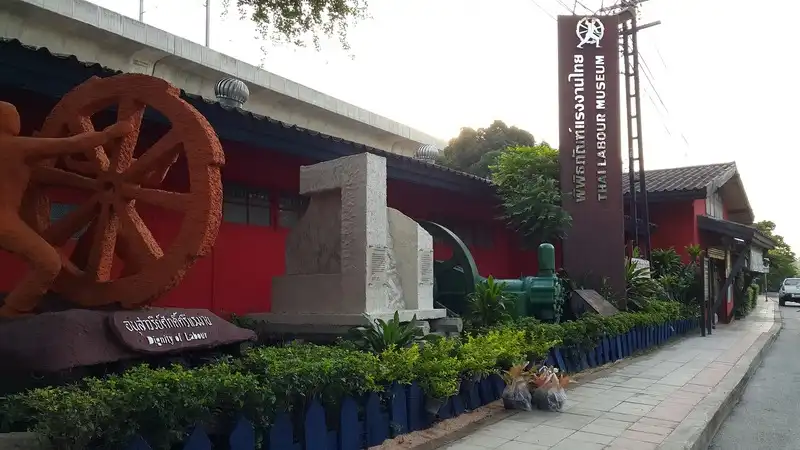
Thai Labour Museum
Open Days: Wednesday – Sunday (Closed Monday – Tuesday and Public Holidays) (It’s best to call to confirm before you go)
Opening Hours: 10:00 – 16:30 (Some sources mention 10:00 – 16:00; it’s recommended to follow the museum’s latest announcement)
Thai Labour Museum is a Bangkok knowledge-based attraction located in the former office building of the Makkasan Railway Labor Union on Nikhom Rotfai Makkasan Road, Ratchathewi District. It’s a specialized museum that clearly “tells Thai history through the lives of working people.” Instead of beginning with palaces or wars, this place starts with a direct question: the people who built the city, sustained the economy, and pushed the country forward in each era—how did they live, how visible were they in society, and what conditions did they go through before labor rights, worker protections, and welfare took on their modern meaning?
Inside, the museum is arranged into 7 rooms that trace the development of Thai labor history from the ancient social order to major political and economic transitions in the modern era. The exhibits use a mix of media such as television, slides, and computers, making the information less rigid and easier to follow. Even visitors who don’t enjoy long reading can still grasp the key ideas, while those who like deeper context will find details that help connect the broader picture of Thai society.
Room 1 focuses on forced labor under the phrai-and-slave system, the foundation of ancient Thai society. It shows how labor was structured in an era when social status was defined by the sakdina hierarchy and obligations to the state. This room lays the “roots of the story,” helping visitors understand that concepts of labor and rights did not emerge the same way in every era, but shifted gradually along with political systems, economic structures, and power relationships that either suppressed or opened space for ordinary people to have a voice.
Room 2 tells the story of early wage labor communities such as Kudijeen, portraying everyday living conditions during the transition from bound labor to wage work in a growing urban economy. Here, “work” begins to take on a modern shape—income, security, and the vulnerability of day-to-day survival for those whose lives increasingly depended on the labor market.
Room 3 explores labor during the national reforms of King Rama V, a key turning point in Thai history. As the state modernized its administration and infrastructure, transportation, communications, and other systems required large numbers of workers. This room makes it clear that “modernity” didn’t simply appear—it was built by real people working behind the scenes of national change.
Room 4 examines workers and the 1932 revolution, highlighting labor conditions before and after the political transformation. As ideas of a modern state and citizenship became more prominent, the lives of workers were affected in many ways—opportunities, organizing, and also control. In this room, visitors often begin to see that labor and politics are not separate subjects; they are connected from everyday life all the way up to structural realities.
Room 5 moves from World War II into the Cold War, showing Thai workers’ lives under major global circumstances. When international politics and economics sent shockwaves into factories, ports, transport networks, and city livelihoods, uncertainty rarely affected everyone equally—and workers were often among the first to absorb the impact.
Room 6 covers the period from the October 14 uprising through the economic crisis, telling working lives through the lens of political opening and social change. It includes stories of women workers, child labor, truck drivers, and boxers, emphasizing that “labor” is not a single identity but a wide range of occupations, conditions, hopes, and risks that society often overlooks.
Room 7 is the Art and Culture of Workers room dedicated to Jit Phumisak, an important intellectual and thinker. This space functions like a bridge connecting “labor” with “art, ideas, and culture,” showing that struggles and questions about injustice don’t exist only in factories or on the streets, but also in writing, music, and ideas that push society to recognize workers as people with dignity.
Beyond the exhibition rooms, the museum provides a library, books, and research related to labor, along with a computer training center for workers. This makes the museum not only a place that “tells the past” but also one that tries to extend learning into practical value in the present. For group visits, it’s recommended to contact the museum in advance so arrangements and visitor care can be handled smoothly.
Getting There From central Bangkok, the easiest approach is by rail. You can use the Airport Rail Link (Makkasan Station) or BTS/MRT connections toward the Phaya Thai–Ratchathewi area, then take a short taxi or motorcycle taxi ride to Nikhom Rotfai Makkasan Road. Driving is also possible, but it’s wise to allow extra time for traffic—especially during rush hours—and to check parking conditions on the day of your visit for certainty.
| Place Name | Thai Labour Museum |
| Location | Nikhom Rotfai Makkasan Road, Ratchathewi District, Bangkok |
| Key Characteristics | A specialized museum on Thai labor history with 7 rooms and mixed-media exhibits |
| Period / Main Theme | A timeline from ancient labor systems (phrai–slavery) to modern political and economic eras |
| Key Highlights | 7 exhibition rooms + the Jit Phumisak worker art-and-culture room + learning media |
| Open Days | Wednesday – Sunday (Closed Monday – Tuesday and Public Holidays) |
| Opening Hours | 10:00 – 16:30 (Recommended to confirm the latest schedule before visiting) |
| Admission Fee | Free entry |
| Facilities | Library/books/labor-related research and periodic training activities (recommended to inquire in advance) |
| Travel | Airport Rail Link (Makkasan) or BTS/MRT toward Phaya Thai–Ratchathewi, then a short taxi/motorcycle taxi ride to Nikhom Rotfai Makkasan Road |
| Current Status | Open during official days/hours (recommended to call ahead, especially for group visits) |
| Contact Number | 0-2251-3173 |
| Nearby Attractions (Real-Route Distance) | Bangkok Art and Culture Centre (BACC) – approx. 2.6 km – Tel. 02-214-6630 Jim Thompson House Museum – approx. 2.9 km – Tel. 02-612-3603 SEA LIFE Bangkok Ocean World (Siam Paragon) – approx. 3.4 km – Tel. 02-842-2000 CentralWorld – approx. 2.7 km – Tel. 02-640-7000 Victory Monument – approx. 2.3 km |
| Popular Restaurants Nearby (Real-Route Distance) | Somboon Seafood (CentralWorld) – approx. 2.8 km – Tel. 02-090-6602 Nara Thai Cuisine (CentralWorld) – approx. 2.8 km – Tel. 02-613-1658-9 Greyhound Café (Groove@CentralWorld) – approx. 2.8 km – Tel. 02-613-1263 After You (CentralWorld) – approx. 2.9 km – Tel. 02-252-5434 Savoey Seafood Co. (Mercury Ville Chidlom) – approx. 3.6 km – Tel. 02-055-6258 (ext. 5) |
| Popular Accommodations Nearby (Real-Route Distance) | The Berkeley Hotel Pratunam – approx. 1.6 km – Tel. 02-309-9999 Centara Watergate Pavilion Hotel Bangkok – approx. 1.7 km – Tel. 02-625-1234 Novotel Bangkok Platinum Pratunam – approx. 2.4 km – Tel. 02-209-1700 Amari Bangkok – approx. 2.6 km – Tel. 02-653-9000 Pullman Bangkok King Power – approx. 2.9 km – Tel. 02-680-9999 |
Frequently Asked Questions (FAQ)
Q: Which days is the Thai Labour Museum open?
A: It is generally open Wednesday through Sunday and closed Monday through Tuesday, as well as on public holidays. It’s recommended to call ahead before visiting, especially if you’re bringing children or visiting as a group.
Q: How much time should I plan for a visit?
A: As a general guide, allow at least 45 – 90 minutes to see all 7 rooms and take time to read the sections you’re interested in.
Q: Who is this museum best for?
A: It’s a great fit for visitors who enjoy specialized museums, social and historical topics, students, and anyone who wants a clearer, more grounded understanding of labor through real stories and contexts.
Q: What should I do if I’m visiting as a group?
A: It’s recommended to contact the museum in advance to coordinate your visit and ensure smooth arrangements. You can call 0-2251-3173.
Q: Is it convenient to get there by train?
A: Yes. Use the rail system to reach the Makkasan or Phaya Thai–Ratchathewi area, then take a short taxi or motorcycle taxi ride to Nikhom Rotfai Makkasan Road. This is often faster than driving during peak traffic.
Tel : 022513173
 Tel : 022513173
 Category: ●Art, Culture and Heritage
 Group: ●Museums
Last Update : 8 MonthAgo
 Last Update : 8 MonthAgo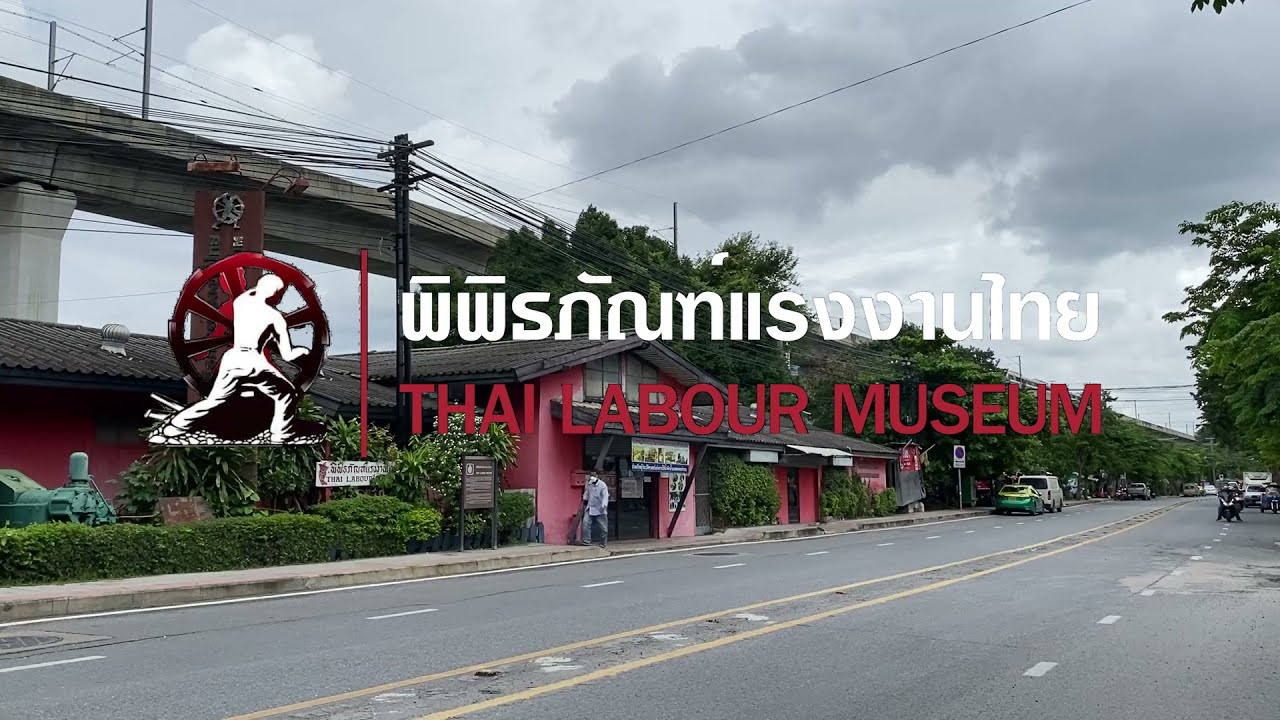
 Click to Access the Navigation Map GPS
Thai Labour Museum Map
Recommend

 Historical Sites and Monuments(3)
 Landmarks and Memorials(23)
 Royal Palace(13)
 Art, Craft Centres, Tradition(35)
Museums(59)
Art, Craft Centres, Tradition(35)
Museums(59)
 Historic Homes and Cities(3)
 Art Gallery(16)
 Educational Places
 Museum for Study(6)
 Library(4)
 Places of Worship
 Temple(72)
 Church(2)
 Mosque(67)
 Other Sacred Sites(8)
 Research and Development
 Royal Project(1)
 Suburban Living
 Village, Community(5)
 Local Market(9)
 Floating Market(2)
 Nature and Wildlife
 River, Canal(3)
 Bays and Beaches(1)
 Other natural attractions(1)
 Entertainment and Agricultural
 Zoos and Aquariums(4)
 Animal camps and shows(5)
 Stadium(9)
 Farms, Parks and Ecotourism(20)
 Amusement Park(1)
 Waterpark(1)
 Theater(7)
 Cinema(1)
 Shopping
 Shopping and Night Market(20)
 Department Store(7)
 Spas and Wellness
 Spas and Wellness(1)
 Restaurant
 Michelin Star(5)
 Accommodation
 Hotel(3)
 Call Customer Service in Tourism
 Call Customer Service in Tourism(1)
 Travel Articles, Recipes
 Travel Review, Food Review(21)
 Royal Thai Desserts and Recipes(56)


