
lovethailand home >North Travel Attractions >Chiang Mai Travel Attractions >Muang Chiang Mai >Si Phum > Kaeng Khae
TL;DR: Kaeng Khae. It is a curry that contains many kinds of vegetables. And there is also one ingredient of meat Name Kaeng Khae according to the type of.

Kaeng Khae
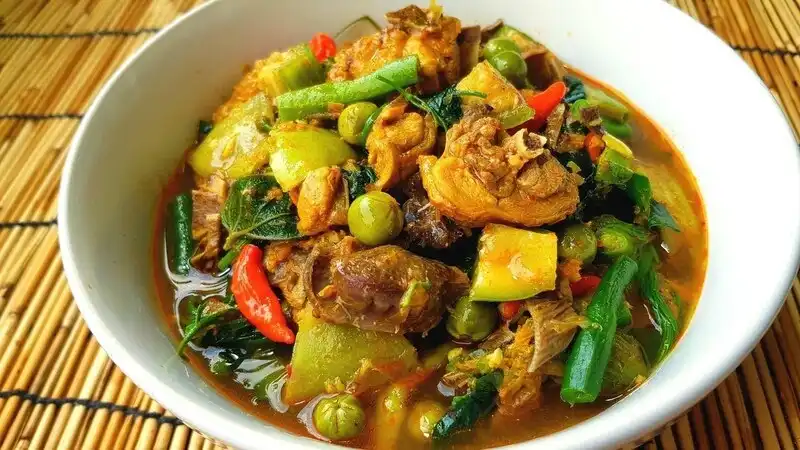
Kaeng Khae It is a curry that contains many kinds of vegetables. And there is also one ingredient of meat Name Kaeng Khae according to the type of meat used in the ingredient, such as Kaeng Khai, Kaeng Kaeng, Kaeng Kaeng, Kaeng Kaew, Kaeng Khae, Dried Fish and Vegetables as the main ingredient. Most of them consisted of gourd, cha-om, leaf chaff, parsley, amaranth, young wind mushroom, red spinach and cabbage.
Nutritional value Eating curry Makes it get protein, vitamins, minerals from vegetables and chicken. Each type of local vegetables that are cooked have different medicinal value. Vegetables used to cook Khametang, a cold, spicy, hot, oily flavor, Kaeng Khae is a suitable food to adjust the elements in the body to adapt to the changing climate. Ancient people therefore popularly eat curry. In the seam of the season.
Ingredient
1. Kai Muang = Domestic chicken (choose a young chicken)
2. Wind mushroom = Hard mushroom
3. Phak Khae = Cha Plu leaves
4. Cactus flower = Cat flower
5. Narrow vegetables = gourd
6. Phak Phet = Phak Phet
7. Toon = Coon (similar to Bon, but smaller trunk)
8.Bah Kae Waeng = Thai eggplant
9. Ba Khue Phoi = Thai eggplant
10. Flower Bha Nam Kaew = Pumpkin flower
11. Yod Ba Nam Kaew = Pumpkin
12. Crab bean = Wing bean
13. Long beans = yard long beans
14. Pea
15. Chili dae = paprika
16, Pa Ha = Fermented fish
17. Chukkai = Lemongrass
18. White onion = garlic
19. Onion = Shallot
20. Phak Pom = Coriander
21.Pa juice = fish sauce
22. Gea, Ku = Salt
23. Small Dried Chili
24. Turmeric
25. Shrimp Paste Curry
26. Fish Sauce
27. Kaffir lime leaves
How to do it
1. Prepare local vegetables by washing them thoroughly.
2. Prepare the chicken to burn the skin. Then chopped into pieces to fit the bite.
3. Prepare to make curry paste Lift the mortar, pound the garlic, then scoop and divide in half. Then add small dried chilies. Pound it with garlic, then add galangal, lemongrass and cilantro, lower until the coarse is orange. And add shallots, turmeric, fermented fish, and shrimp paste, and then set aside the curry paste.
4. Prepare a wok, add a little oil, heat, put the remaining garlic half into the pan, fry until golden, add the curry paste that has been made to roast to smell. Add the prepared chicken, combine the chicken until cooked, add enough water. Then add the mushroom, Soi Yai, and mix well. Simmer until the chicken is cooked and tender.
Then season with fish sauce Put the powder no. Add hard-cooked vegetables, such as long beans, pea, sweet eggplant, winged bean, brinjal, and Toon, then add the easy-cooked vegetables, such as Khae, Khae Flower, Pumpkin Flower, Gourd, Cha-om, and Red vegetable, then add kaffir lime leaves. Cooked
Cooking tips To roast or stir-fry the curry, use medium heat, some spices may add coriander seed, ginger leaves, galangal sprouts to enhance the aroma of the curry. Vegetables used as ingredients Can add other vegetables such as boiled bamboo shoots, coconut shoots, dried chakra, cayenne flowers, cayenne flowers.
Tips for choosing ingredients If it is chicken curry Should use the chicken house The curry flavor will be mellow. Dried paprika used Should use dried paprika and pine shoots. Mixed with paprika, garden, half each.
| Dish Name | Kaeng Kae |
| Food Type | Northern Thai cuisine / Herbal curry |
| Key Characteristics | A mixed vegetable curry featuring a variety of local herbs and one type of meat |
| Name Origin | Named according to the type of meat used, such as chicken, frog, beef, or dried fish |
| Popular Region | Northern Thailand (Lanna region) |
| Common Proteins | Chicken, frog, beef, or dried fish |
| Main Vegetables | Ivy gourd leaves, climbing wattle, wild betel leaves, culantro, pea eggplant, mushrooms, edible flowers, and seasonal vegetables |
| Curry Paste Ingredients | Dried chilies, garlic, shallots, galangal, lemongrass, coriander seeds, turmeric, fermented fish, and shrimp paste |
| Seasoning | Fish sauce, salt, fermented fish, and shrimp paste |
| Flavor Profile | Spicy, savory, herbal, and slightly earthy with a balance of natural vegetable flavors |
| Nutritional Value | Rich in protein, vitamins, minerals, and fiber from a wide variety of vegetables and herbs |
| Cultural Significance | Represents Lanna wisdom of using seasonal vegetables and balancing body elements through food |
| Best Time to Eat | Traditionally eaten during seasonal transitions to help the body adapt to changing weather |
| Serving Style | Served hot with sticky rice or steamed rice, often accompanied by traditional Northern side dishes |
Frequently Asked Questions (FAQ)
Q: What is Kaeng Kae?
A: Kaeng Kae is a traditional Northern Thai herbal curry made with a wide variety of local vegetables and one type of meat. It is known for its complex flavors and nutritional richness.
Q: Why does Kaeng Kae have different names?
A: The dish is named based on the type of protein used, such as chicken (Kaeng Kae Gai), frog, beef, or dried fish, which reflects local cooking traditions.
Q: What vegetables are commonly used in Kaeng Kae?
A: Common vegetables include ivy gourd leaves, climbing wattle, wild betel leaves, pea eggplant, mushrooms, pumpkin shoots, and edible flowers. The ingredients may vary depending on seasonal availability.
Q: What are the health benefits of Kaeng Kae?
A: Kaeng Kae provides protein from meat and a wide range of vitamins, minerals, and fiber from herbs and vegetables. Many ingredients also have traditional medicinal properties.
Q: Why is Kaeng Kae traditionally eaten during seasonal changes?
A: According to Lanna wisdom, the combination of herbs with different properties—cooling, warming, and spicy—helps balance the body and adapt to changing weather conditions.
Q: What type of chicken is best for Kaeng Kae?
A: Free-range chicken (native chicken) is preferred because it has a firmer texture and enhances the depth of flavor in the curry.
Q: What are the key cooking tips for making Kaeng Kae?
A: The curry paste should be sautéed over medium heat until fragrant. Hard vegetables should be added first, followed by softer ones, to ensure even cooking and maintain texture.
Q: Can Kaeng Kae be customized with different ingredients?
A: Yes, Kaeng Kae is highly flexible. Cooks can adapt the vegetables and herbs based on availability, making each version slightly different while preserving its traditional identity.
Q: What is Kaeng Kae typically served with?
A: It is commonly served with sticky rice or steamed rice, and can be paired with crispy pork rinds or other Northern Thai dishes for a complete meal.
 Category: ●Travel Articles, Recipes
 Group: ●Food Menu, North Recipes
Last Update : 5 MonthAgo
 Last Update : 5 MonthAgo
Recommend

 Art, Culture and Heritage
 Historical Sites and Monuments(8)
 Landmarks and Memorials(5)
 Royal Palace(2)
 Art, Craft Centres, Tradition(43)
 Museums(24)
 Educational Places
 Museum for Study(2)
 Educational Gardens, Farm(5)
 Training Center(1)
 Places of Worship
 Temple(79)
 Mosque(2)
 Other Sacred Sites(17)
 Research and Development
 Royal Project(44)
 Suburban Living
 Village, Community(41)
 Local Market(14)
 Nature and Wildlife
 National Parks and Marine Reserves(16)
 Mountain (Doi)(21)
 Dam, Reservoir, Lake(26)
 Waterfalls(43)
 Hot Springs(12)
 Caves(11)
 River, Canal(6)
 Other natural attractions(14)
 Entertainment and Agricultural
 Zoos and Aquariums(2)
 Animal camps and shows(3)
 Stadium(1)
 Farms, Parks and Ecotourism(19)
 Waterpark(2)
 Theater(1)
 Outdoor and Adventure Activities(10)
 Shopping
 Shopping and Night Market(6)
 Restaurant
 Michelin Star(1)
 Michelin Guide(23)
 Call Customer Service in Tourism
 Call Customer Service in Tourism(1)
 Travel Review, Food Review(15)
Food Menu, North Recipes(30)
Travel Review, Food Review(15)
Food Menu, North Recipes(30)
 Thai Desserts, North Recipes(17)


