
lovethailand home >North Travel Attractions >Chiang Mai Travel Attractions >Mae Rim >Sa Luang > Ban Mueang Ka Community
TL;DR: Ban Mueang Ka Community is located at Moo 5, Saluang Subdistrict, Mae Rim District, Chiang Mai, open Daily (recommended to “make an appointment/notify in advance” if you want a, hours Recommended 08.00–17.00 (ideal for entering/leaving before dark and not.
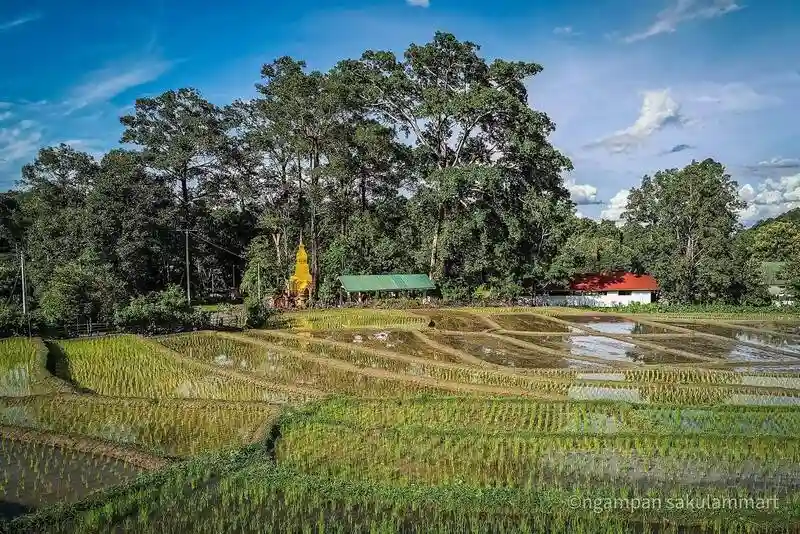
Ban Mueang Ka Community
Open Days: Daily (recommended to “make an appointment/notify in advance” if you want a community visit or to learn about local rituals, so the community can host you appropriately)
Opening Hours: Recommended 08.00–17.00 (ideal for entering/leaving before dark and not disturbing the community’s evening rhythm)
Ban Mueang Ka Community is located in Moo 5, Saluang Subdistrict, Mae Rim District, Chiang Mai. It is a Lua community where local people tie their identity closely to both “legend” and “landscape.” Visiting here isn’t just about looking at mountain views or driving past a village on winding roads—it’s stepping into a world of meanings that generations have built together. Ban Mueang Ka carries the spirit of “ban paeng mueang”: a community that settles, rebuilds, and stands firm on its own land, even after periods of deep hardship remembered by elders.
The core story many people associate with Ban Mueang Ka is its identity as a Lua community dating back to the era of Khun Luang Wirangka, said to be the same period as Queen Chamathewi of Hariphunchai. In this narrative, “Khun Luang Wirangka” is not merely a legendary name, but a central axis of shared memory through which residents explain their origins, the village name, and their ties to multiple mountains across Chiang Mai all at once. The community therefore believes the name “Mueang Ka” is linked to Khun Luang Wirangka, and many families also symbolically connect their lineage to him.
Another major chapter in the community’s history is the epidemic around 2468 BE, which left only a handful of households. This memory is often told not only with sadness, but with the weight of “survival” and “slowly becoming a village again.” Later, in 2517 BE, it was officially established as a village (Moo 5, Saluang Subdistrict, Mae Rim District) and remains so today. Overall, it is the story of a community that once nearly went dark, then rekindled itself—without abandoning its Lua roots.
What makes Ban Mueang Ka “different” from typical village visits is that its belief system is still alive—and not staged merely for outsiders. The village has a shrine believed to house the spirit of Khun Luang Wirangka, plus two more shrines for the left and right warriors. Together they form three pillars that anchor the community’s spiritual world. During the annual offering ritual, the community does not treat it as entertainment, but as a “bond” between people and ancestral spirits, between the living and those believed to protect the land. The ritual therefore carries social meaning: gathering people, reaffirming belonging, and reminding everyone that they still share a world with their ancestors.
Another layer of fascination is the belief that Khun Luang’s spirit does not reside in a single place, but is distributed across three locations: on Doi Kwam Long, at the shrine in Ban Mueang Ka, and at an area believed to be around Doi Kham in Chiang Mai City District. Doi Kham lies to the south of Doi Suthep, and today its summit is home to an important temple, Wat Phra That Doi Kham, where a monument of Khun Luang Wirangka stands near the chedi. This is where Ban Mueang Ka stops being only a village story, and becomes a story of mountain networks and a web of meanings that links Mae Rim to Chiang Mai city.
If we look through a “meaning map” lens, the relationship between Doi Kham–Doi Suthep–the belief landscape appears as three overlapping layers. The first is physical geography: Doi Kham sits south of Doi Suthep and functions like a more accessible foothill, while Doi Suthep is a major peak overlooking the city and long regarded as a sacred mountain of Chiang Mai. The second is Buddhist devotion: Wat Phra That Doi Suthep serves as a core of Lanna faith at the city scale, while Wat Phra That Doi Kham is a more accessible devotional center with strong contemporary faith (many people go to pay respects to “Luang Pho Thanjai”). The third is the ancestral/spirits layer: the Wirangka narrative, the three-residence belief, and the annual offering ritual act like threads that stitch mountains into a “home,” not merely “hills.”
When these three layers overlap, a key picture emerges: “Chiang Mai has never been a single, purely one-faith landscape.” Instead, Buddhism and ancestral-spirit beliefs have coexisted for a very long time. Rather than clashing, they often reinforce meaning in place. A temple people visit for worship can also be a landscape people believe is protected by ancestors. A major city temple can still sit within a wider network of stories that connect to ethnic communities outside the city, such as the Lua of Ban Mueang Ka. This is why understanding “Doi Suthep” fully often requires seeing “Doi Kham” too—and to understand “Doi Kham” deeply, you ultimately need to listen to communities that explain themselves through legend, like Ban Mueang Ka.
If we compare “the Lua of Ban Mueang Ka” with Lua communities in other parts of Chiang Mai, the key point is that “Lua are not a single, uniform block.” They are communities with different settlement histories, relationships with the city, and adaptation paths shaped by geography. Some Lua communities are closer to the city or within tourism networks, so language, clothing, and certain ritual forms may blend more with urban Lanna culture. Others, deeper in the mountains or more tied to forest/field livelihoods, may retain spoken language and group-specific rituals more strongly.
Ban Mueang Ka stands out in three ways compared with many Lua communities in Chiang Mai. First is “the centrality of the Wirangka legend,” which functions as a clear narrative axis and becomes a structured belief system with specific shrines, an annual ritual, and a multi-site “residence map” of the spirit. Second is “geographic positioning”: it connects Mae Rim with ridge routes, making it accessible without being too far, so it isn’t cut off from modern services and the regional economy like more remote villages can be. Third is “coexisting with the state and the urban world,” visible through official village establishment, transport links, and communication with outsiders—making the community able to tell its story outwardly while still holding its core meanings.
By contrast, some Lua communities in Chiang Mai that anchor identity more strongly in subsistence and resource-linked rituals may place narrative emphasis on protecting fields, maintaining balance with the forest, or reaffirming shared stewardship of local resources. But in Ban Mueang Ka, “the Wirangka legend” and the Doi Kham–Doi Suthep network become a kind of common language that lets people explain themselves both ethnically and geographically. This makes Ban Mueang Ka feel like a community positioned right at a boundary zone: between mountain and city worlds, between ancestral spirits and Buddhist devotion, and between local Lua identity and the broader Lanna cultural landscape.
For the “contemporary ethnic perspective,” adaptation among younger generations isn’t only about what to preserve—it’s about negotiating with three modern forces at once. The first is education and work outside the village: many must go to the city to study or earn a living, which naturally reduces the frequency of mother-tongue use and ritual participation. The second is tourism and the online world: being near the city creates opportunities—selling products, agriculture, services, or content—but also risks being flattened into simplistic stereotypes. The third is identity pride: many young people want to be storytellers of their own community, and want outsiders to show respect—not just come for photos and leave.
Common adaptation patterns seen across Chiang Mai’s ethnic communities (including Lua) include community-led storytelling (pages/clips made by locals), guided learning for outsiders with clear boundaries (what can be photographed, what should not be touched), products/food that carry stories of ingredients and memory rather than merely “souvenirs,” and collaboration with schools or temples to document vocabulary, language, songs, or rituals as a community memory archive. These are not attempts to freeze culture, but ways to keep culture alive in a fast-moving world without harming the community’s own sense of dignity and meaning.
Getting There From Mae Rim District Office to Ban Mueang Ka is approximately 30 kilometers. The route gradually climbs into a valley area. It’s recommended to check your vehicle condition and fuel, especially in the rainy season when roads can be slippery or foggy in some sections. From Chiang Mai city, you can drive toward Mae Rim first, then continue into Saluang. Building in time buffers (traffic is common in Mae Rim’s tourist zones) helps you enter the village without rushing and avoids driving back after dark.
A small tip that helps you visit Ban Mueang Ka with respect—and come away with more—is to arrive ready to listen more than to photograph. If you encounter shrines or sacred spaces, keep a respectful distance and avoid touching objects. If you want to record images or ask about rituals, ask the hosts first. For the community, ancestral-spirit matters are not casual stories, but sacred topics with boundaries. Respecting those boundaries often opens the door to sincerity—and sometimes stories you will never find on a tourism signboard.
| Place Name | Ban Mueang Ka Community |
| Location | Moo 5, Saluang Subdistrict, Mae Rim District, Chiang Mai |
| Highlights | A Lua community in a valley with a structured ancestral-spirit belief system (Khun Luang Wirangka shrines) and an annual offering ritual, linking its narrative to multiple mountains across Chiang Mai |
| Related Period/Timeline | Legendary era of Khun Luang Wirangka (told alongside Queen Chamathewi’s period) – official village establishment in 2517 BE – present |
| Key Evidence/Important Features | Khun Luang Wirangka shrine and left/right warrior shrines (3 shrines), annual offering ritual, three-residence narrative (Doi Kwam Long – Ban Mueang Ka – Doi Kham) |
| Name Origin | Locals connect the name “Mueang Ka” with Khun Luang Wirangka (local belief) |
| Travel | Mae Rim District Office → Ban Mueang Ka, approximately 30 km; recommended to travel in daylight, especially during the rainy season |
| Current Status | A living residential community (please respect local life; appointments/advance notice are recommended for deeper community learning visits) |
| Nearby Attractions with Distance | |
| Wat Phra Phutthabat Si Roi | Approx. 12 km | Tel: 053-998-348 |
| Mae Sa Waterfall | Approx. 20 km | Tel: 053-210-244 |
| Queen Sirikit Botanic Garden | Approx. 25 km | Tel: 053-114-630 |
| Mon Jam | Approx. 22 km | Tel: 081-806-3993 |
| Doi Suthep–Pui National Park | Approx. 32 km | Tel: 053-210-244 |
| Wat Phra That Doi Kham | Approx. 40 km | Tel: 053-263-001 |
| Nearby Restaurants with Distance | |
| Rabiang Na Mae Rim | Approx. 28 km | Tel: 053-861-511 |
| Pongyang Angdoi | Approx. 22 km | Tel: 053-879-151 |
| Huen Muan Jai | Approx. 35 km | Tel: 053-404-998 |
| Nearby Accommodations with Distance | |
| Four Seasons Resort Chiang Mai | Approx. 24 km | Tel: 053-298-181 |
| Panviman Chiang Mai Spa Resort | Approx. 22 km | Tel: 053-879-540 |
| Proud Phu Fah Mae Rim | Approx. 24 km | Tel: 053-879-389 |
Frequently Asked Questions (FAQ)
Q: What ethnic community is Ban Mueang Ka?
A: It is a Lua community in Mae Rim, with ancestral-spirit narratives and rituals as a central pillar of community identity.
Q: What is the key highlight of Ban Mueang Ka’s belief system?
A: The village has shrines believed to house the spirit of Khun Luang Wirangka and the left/right warriors, an annual offering ritual, and a three-residence belief (Doi Kwam Long – Ban Mueang Ka – Doi Kham).
Q: How can we understand the Doi Kham–Doi Suthep relationship in terms of beliefs?
A: Think of a three-layer meaning map: physical geography (mountain positions), Buddhist devotion (key temples), and the ancestral/spirits layer (narratives and residence beliefs) overlapping to turn mountains into a “home,” not just a “hill.”
Q: How is the Lua of Ban Mueang Ka different from Lua communities elsewhere in Chiang Mai?
A: Ban Mueang Ka is distinctive for using the Wirangka legend as a clear narrative axis, with a structured shrine-and-annual-ritual system. Its near-city boundary location also makes contemporary adaptation and outsider communication more visible.
Q: How should visitors prepare to visit Ban Mueang Ka appropriately?
A: Visit during daylight, respect sacred spaces, ask permission before photographing or discussing rituals, and notify/arrange in advance if you want a deeper community learning visit so as not to disrupt daily life.
Q: Is Ban Mueang Ka far from Mae Rim?
A: It’s about 30 km from Mae Rim District Office. Allow extra time and avoid driving back after dark, especially in the rainy season.
 Category: ●Suburban Living
 Group: ●Village, Community
Last Update : 9 MonthAgo
 Last Update : 9 MonthAgo
 Click to Access the Navigation Map GPS
Ban Mueang Ka Community Map
Recommend

 Art, Culture and Heritage
 Historical Sites and Monuments(8)
 Landmarks and Memorials(5)
 Royal Palace(2)
 Art, Craft Centres, Tradition(43)
 Museums(24)
 Educational Places
 Museum for Study(2)
 Educational Gardens, Farm(5)
 Training Center(1)
 Places of Worship
 Temple(79)
 Mosque(2)
 Other Sacred Sites(17)
 Research and Development
 Royal Project(44)
Village, Community(41)
Royal Project(44)
Village, Community(41)
 Local Market(14)
 Nature and Wildlife
 National Parks and Marine Reserves(16)
 Mountain (Doi)(21)
 Dam, Reservoir, Lake(26)
 Waterfalls(43)
 Hot Springs(12)
 Caves(11)
 River, Canal(6)
 Other natural attractions(14)
 Entertainment and Agricultural
 Zoos and Aquariums(2)
 Animal camps and shows(3)
 Stadium(1)
 Farms, Parks and Ecotourism(19)
 Waterpark(2)
 Theater(1)
 Outdoor and Adventure Activities(10)
 Shopping
 Shopping and Night Market(6)
 Restaurant
 Michelin Star(1)
 Michelin Guide(23)
 Call Customer Service in Tourism
 Call Customer Service in Tourism(1)
 Travel Articles, Recipes
 Travel Review, Food Review(15)
 Food Menu, North Recipes(30)
 Thai Desserts, North Recipes(17)


