

 Home
Home Chiang Mai(









First Royal Factory at Fang Museum
Rating: 3.4/5 (5 votes)
 Search By
  Map
Map 
 Have Map
  No Map
Chiang Mai attractions
Attractions in Thailand
Open Days: Tuesday–Sunday (Exhibition building operates as usual). Closed on Mondays except certain public holidays. There may be an annual maintenance closure around mid–late May. It is recommended to check the latest information before visiting.
Opening Hours: Exhibition building approximately 08:30–16:30. Doi Kham shop and museum shop approximately 08:00–17:00.
Royal Factory 1 Museum (Fang) is located within the Royal Factory 1 compound in Ban Yang, Mae Ngon Subdistrict, Fang District, Chiang Mai. Once an area heavily affected by opium cultivation and deforestation along the slopes of Doi Ang Khang, this land was later rehabilitated through His Majesty King Rama IX’s royal development initiatives. Today, the site has been transformed into a Living Site Museum that tells the interconnected stories of the Royal Project, the Royal Factory, and the Ban Yang community.
More than 50 years ago, Ban Yang and nearby highland communities struggled with deforested mountainsides, poverty, and lack of sustainable livelihoods. When His Majesty King Rama IX visited the northern highlands and witnessed the destruction caused by opium cultivation, He initiated a comprehensive development plan—introducing temperate crops to replace opium, improving water systems, enhancing market access, and creating opportunities for better livelihoods. The establishment of the Royal Factory 1 (Fang) served as a key mechanism for purchasing and processing agricultural produce, eventually leading to the creation of the Doi Kham brand, which has supported farmers’ income for generations.
The Royal Factory 1 Museum (Fang) is not simply a building filled with displays; it is a living space that illustrates the evolution of the Royal Project, the Royal Factory, and the local community. Through integrated exhibitions on history, agriculture, economy, culture, and the environment—visitors can understand how development has taken root from past to present.
Inside the main exhibition building, content is divided into three interconnected sections: the Royal Project, the Royal Factory 1 (Fang), and Doi Kham Products Co., Ltd. Knowledgeable guides are available to walk visitors through the timeline and significance of each stage of development.
In the “Origins of the Royal Project” section, visitors will find traditional household items used by Ban Yang villagers—pots, jars, pans, and various daily tools—donated or lent by local residents. These displays aim to help younger generations appreciate their community’s history and the legacy passed down from their ancestors.
The exhibition also presents the early challenges observed by His Majesty King Rama IX during His visits—degraded forests due to opium farming, harsh living conditions, and the lack of alternative income. Through archival photographs and interpretive media, visitors learn how the Royal Project introduced temperate crops, conducted agricultural research, supported market systems, developed water resources, and improved overall quality of life.
The “Origins of Royal Factory 1 (Fang)” section highlights the factory’s development from its early days as a temporary facility to its current modern operations. The room includes historical production photos, early Doi Kham product lines such as the first canned peach in syrup, and rare images of King Rama IX and Queen Sirikit visiting Ban Yang and the factory by helicopter in 1973.
Another highlight of this room is its portrayal of Ban Yang’s multicultural community—comprising Thai, Yunnan Chinese, Shan, and various highland ethnic groups who have coexisted peacefully for over 50 years. Their diverse religious practices—Buddhism, Christianity, Islam, and ancestral beliefs—are presented through photographs and local narratives, offering a deeper understanding of cultural integration in the region.
The outdoor area of the museum also features preserved machinery once damaged by flash floods—illustrating the environmental challenges faced by the factory during its early operations. These displays underscore the resilience, adaptation, and continuous learning needed for development work in mountainous terrains.
Beyond the indoor exhibitions, visitors can explore the Royal Factory grounds, the Doi Kham shop, nearby viewpoints, rice fields, and orchards surrounding Ban Yang village. The area includes a café and restaurant offering local produce, making it a pleasant rest stop and an ideal place to purchase Doi Kham products as souvenirs.
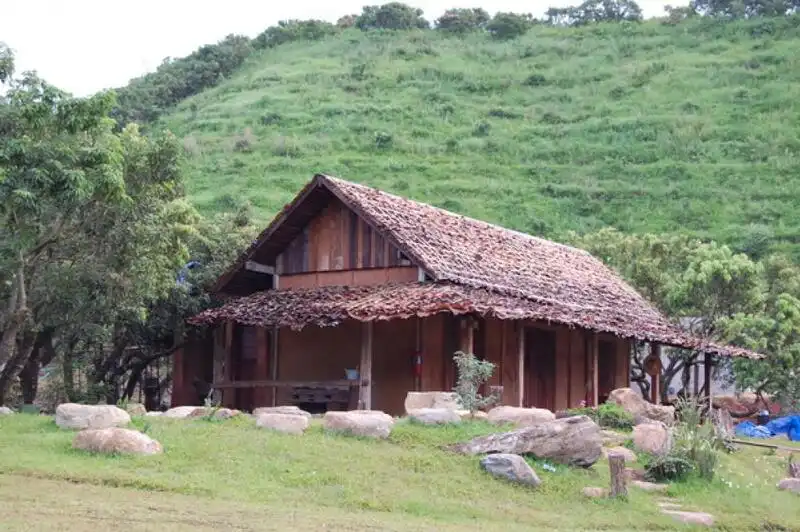
The surrounding Ban Yang village is known for its distinctive cultural identity—traditional wooden homes, Yunnan Chinese food, and scenic agricultural landscapes along the road to Doi Ang Khang. A visit to the Royal Factory 1 Museum (Fang) is not only an educational experience about royal development projects but also an immersive look at the real-life stories of the people who live here.
Getting There: From Chiang Mai, take Highway 107 (Chiang Mai–Fang) for approximately 150 km. At the intersection leading to Doi Ang Khang, turn left near Chao Mae Luang Uppatham School. Continue about 9 km into Ban Yang village. The Royal Factory 1 Museum is located within the Royal Factory 1 and Doi Kham store compound. Private cars, rental vans, or local transport may be used. Visitors are advised to check road conditions beforehand.
| Name | Royal Factory 1 Museum (Fang) within the Royal Factory 1, Ban Yang, Mae Ngon Subdistrict, Fang District, Chiang Mai |
| Location | No. 72, Moo 12, Ban Yang, Mae Ngon Subdistrict, Fang District, Chiang Mai 50320. Located on the route to Doi Ang Khang, near the Ban Yang community and surrounding Royal Project areas. |
| Key Features | A Living Site Museum combining exhibitions, the Royal Factory, the Doi Kham shop, and the Ban Yang community. The museum presents integrated development inspired by King Rama IX and showcases agriculture, culture, and community life in one place. |
| Period | Development of the area began in the late 1960s. The museum was further expanded into a formal interpretive center during the late 20th to early 21st century. |
| Key Evidence | Royal Project exhibits, household items from Ban Yang villagers, archival photos of royal visits, preserved machinery, early Doi Kham product samples, and historical media documenting the development of Royal Factory 1. |
| Name Origin | The museum is named after Royal Factory 1 (Fang), the first processed-food factory established under the Royal Project to support highland communities and sustainable agricultural development. |
| Travel | From Chiang Mai, take Highway 107 for 150 km, then turn left at the Doi Ang Khang intersection and continue 9 km to Ban Yang. Suitable for private cars, rental vans, or local transport. Visitors should check road and weather conditions beforehand. |
| Nearby Attractions with Distance | - Ban Yang Village (multicultural community), around 0–1 km, walkable - Lao Chang Clay Village (Yunnan-style clay houses & hotpot), 2–3 km, tel. 087 124 8060 / 089 852 0576 - Royal Agricultural Station Ang Khang & Mon Son Viewpoint, 25–35 km - Fang Hot Springs & Doi Pha Hom Pok National Park, 20–25 km |
| Popular Restaurants Nearby (Distance / Phone) | - Lao Chang Clay House (Yunnan cuisine), 2–3 km, tel. 087 124 8060 / 089 852 0576 - Local food stalls and noodle shops in Ban Yang Village and Mae Ngon roadside, around 1–5 km (check locally for updated hours) |
| Popular Accommodations Nearby (Distance / Phone) | - Lao Chang Resort (Yunnan-style clay houses), 2–3 km, tel. 087 124 8060 / 089 852 0576 - Fang Villa Hotel, 15–20 km, tel. 053 452 448 / 083 651 5966 - Kasarin Court, 15–20 km, tel. 086 420 7110 - Umhum Homestay (near Doi Ang Khang), 25–30 km, tel. 095 453 5293 |
| Facilities | Exhibition halls, restrooms, parking, Doi Kham shop, local restaurant & café, community activity areas, and surrounding viewpoint spots. |
| Fees | Admission is free. Donations are welcome to support museum operations and community activities. Visitors should verify updated operational details beforehand. |
| Current Status | Open as a regional learning center for the Royal Project, agricultural processing, and Ban Yang community life. Popular with general visitors and educational groups, especially those en route to Doi Ang Khang. |
| Contact | Royal Factory 1 (Fang) Museum & Royal Factory 1, tel. 053 051 021 (recommended to call ahead for confirmation on hours and group visit arrangements) |
Frequently Asked Questions
Q: Which days is the Royal Factory 1 Museum (Fang) open?
A: The museum is generally open Tuesday–Sunday from 08:30–16:30. It is closed on Mondays and may close annually for maintenance around mid–late May. Visitors should check the latest updates before planning their visit.
Q: Is there an entrance fee?
A: Admission to the museum and exhibition halls is free. Guests may make voluntary donations to support museum and community activities.
Q: What are the highlights of the Royal Factory 1 Museum?
A: Key highlights include exhibitions on the Royal Project, the early development of Royal Factory 1, Doi Kham products, and multicultural community life in Ban Yang. Visitors can also explore factory grounds, the Doi Kham shop, and surrounding agricultural areas.
Q: How much time should I spend there?
A: Viewing the indoor exhibitions takes about 1 hour. To fully enjoy the Royal Factory grounds, Doi Kham shop, Ban Yang village, and nearby attractions, plan for 2–3 hours or a half-day trip.
Q: Is it easy to travel from Chiang Mai to the museum?
A: Yes, if traveling by private car. Take Highway 107 for 150 km, then turn toward Ban Yang for 9 km. Visitors without private transport may use buses or songthaews to Fang and transfer to local transport to reach Ban Yang. It is recommended to plan ahead.
Q: Are there restaurants or accommodations nearby?
A: Yes. The area includes the Doi Kham shop and local eateries within the factory grounds. Nearby Ban Yang offers well-known Yunnan-style restaurants such as Lao Chang, along with local homestays and resorts. Additional hotels are available in Fang town (15–20 km away).
 First Royal Factory at Fang Museum Map
 Category:
  Group:
  Tag: ●First Royal Factory at Fang Museum●royal factory 1 museum fang ●royal factory fang chiang mai ●royal project museum chiang mai ●doi kham factory fang ●fang chiang mai attractions ●ban yang community fang ●doi ang khang route attraction ●highland development museum thailand ●royal project learning center ●agricultural processing museum fang Last Update: 2 MonthAgo
Comment
 Nearby Attractions
| Keyword (Advance) |
 Facebook Fanpage
 Region
 Historical Sites and Monuments(
 Landmarks and Memorials(
 Royal Palace(
 Art, Craft Centres, Tradition(
 Educational Places
 Museum for Study(
 Educational Gardens, Farm(
 Training Center(
 University
 Places of Worship
 Temple(
 Mosque(
 Other religious and spiritural sites(
 Research and Development
 Royal Project(
 Suburban Living
 Village, Community(
 Local Market(
 Nature and Wildlife
 National Parks and Marine Reserves(
 Mountain (Doi)(
 Dam, Reservoir, Lake(
 Waterfalls(
 Hot Springs(
 Caves(
 River, Canal(
 Other natural attractions(
 Entertainment and Agricultural
 Zoos and Aquariums(
 Animal camps and shows(
 Stadium(
 Farm, Parks, Gardens and Ecotourism(
 Waterpark(
 Theater(
 Outdoor and Adventure Activities(
 Shopping
 Shopping and Night Market(
 Restaurant
 Michelin Star(
 Michelin Guide(
 Call Customer Service in Tourism
 Call Customer Service in Tourism(
 Travel Articles, Recipes
 Travel Review, Food Review(
 Food Menu, North Recipes(
 Thai Desserts, North Recipes(
 Copyright 2012,