
lovethailand home >North Travel Attractions >Chiang Mai Travel Attractions >Doi Saket >Pa Pong > Pa Ton Nam Huai Ton Yang
TL;DR: Pa Ton Nam Huai Ton Yang is located at Ban Thung Yao, Moo 8, Pa Pong Subdistrict, Doi Saket District, Chiang Mai, open Generally daily (best visited in daylight; avoid heavy-rain days), hours Recommended 06:00 – 18:00.

Pa Ton Nam Huai Ton Yang
Open Days: Generally daily (best visited in daylight; avoid heavy-rain days)
Opening Hours: Recommended 06:00 – 18:00
Pa Ton Nam Huai Ton Yang (Ban Thung Yao, Moo 8, Pa Pong Subdistrict, Doi Saket District, Chiang Mai) is not the kind of forest people visit just to “see something green.” Its real charm is the job it quietly does: this is a true headwater forest for the community. Local information describes the area as being surrounded by mountains and covering roughly 2,000 rai, which gives the place a deep, layered atmosphere—part ecosystem, part living classroom, and part community memory.
For travelers, a good headwater forest naturally slows you down. The beauty is rarely one loud viewpoint; it’s the small things that start to feel vivid when you stop rushing—the scent of damp soil under shade, the steady sound of a creek that doesn’t need to roar to feel powerful, and the signs of care that don’t turn the forest into a staged attraction. Ban Thung Yao villagers have been nurturing conservation awareness and using local knowledge to develop this area as a learning space for forest ecology and practical water stewardship.
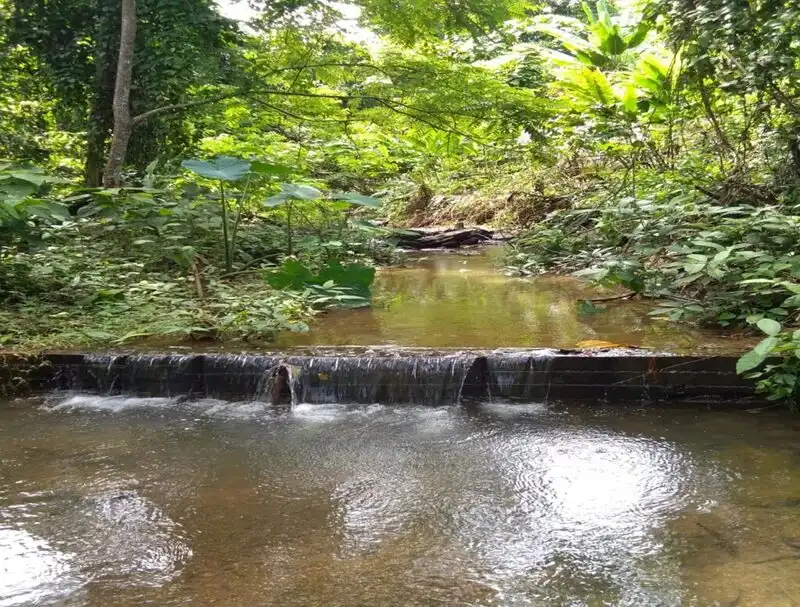
One of the most meaningful learning highlights here is the community approach to small check dams—often called fai cha lon nam or “Maeo dams.” The idea is simple but effective: slow down the water, reduce erosion, help the soil hold moisture longer, and support infiltration so the forest stays resilient. These structures aren’t designed to make water “suddenly abundant” overnight; they help stabilize the system over time. When you hear the logic explained by people who build and maintain them, conservation stops being a slogan and becomes something practical and repeatable.
Another layer that makes this forest more than just a “walk in the woods” is the presence of two old archaeological traces known by elders as “San Wat Hang.” Visitors may still find bricks roughly 8 x 2 inches and remnants resembling a temple base in some spots. The history is not clearly documented, but the remains suggest the forest is also a place of long community memory. The respectful approach is straightforward: do not dig, remove, or collect anything, and avoid stepping or placing weight on fragile structures.
The area also includes natural features like cliffs and caves, though their stories are not clearly confirmed. If you plan to explore near these features, keep safety first: avoid risky zones without a knowledgeable local, and do not visit after heavy rain when rock and soil surfaces can become dangerously slippery. This is a forest that stays beautiful precisely because it remains natural—and nature always comes with conditions.
To enjoy the visit without harming the forest, bring grippy shoes, drinking water, mosquito repellent, a light rain jacket, and your own trash bag. For children or older travelers, keep the pace gentle and choose morning to early afternoon for safer light and an easier return before evening.
Getting There From Choeng Doi area, follow the irrigation canal road, passing Ban Kio Lae and Ban Thung Yao for an approximate total of 6 km, then continue via village roads into the headwater forest area. Drive carefully, especially in the rainy season, and plan to arrive in the morning or early afternoon to allow time for learning and to return before dark.
| Name | Pa Ton Nam Huai Ton Yang (Ban Thung Yao) |
| Location | Ban Thung Yao, Moo 8, Pa Pong Subdistrict, Doi Saket District, Chiang Mai |
| Characteristics | Mountain-ringed headwater forest (approx. 2,000 rai); community-led learning on forest ecology and check dams (Maeo dams) |
| Period | Nature + community stewardship (local conservation and water management knowledge) |
| Key Evidence | Archaeological traces known as “San Wat Hang” (brick remnants and a base-like foundation); learning points on check dams and headwater ecology |
| Name Origin | Named after Huai Ton Yang creek and the forest’s role as the headwater area for Ban Thung Yao |
| Travel | From Choeng Doi: follow the irrigation canal road via Ban Kio Lae → Ban Thung Yao (approx. 6 km total), then continue into the forest via village roads; avoid heavy-rain days |
| Current Status | Community conservation and nature-learning area (visit in daylight; follow local rules and low-impact principles) |
| Contact Number | — |
| Nearby Tourist Attractions With Distance | Mae Kuang Udom Thara Dam (approx. 15 km) Wat Phra That Doi Saket (approx. 12 km) Horizon Village & Tawat Chon Botanical Garden (approx. 18 km) Bo Sang Umbrella Village (approx. 20 km) Phaen Din Whit Viewpoint, Ban Pa Sak Ngam (approx. 20 km) |
| Popular Restaurants Nearby | Suan Silp Khao Soi Doi Saket (approx. 12 km) — Tel. 081-885-5397 Huen Jai Yong (approx. 25 km) — Tel. 086-671-8710 |
| Popular Accommodations Nearby | Tao Garden Health Spa & Resort (approx. 20 km) — Tel. 053-921-200 Horizon Village & Resort (approx. 18 km) — Tel. 053-292-381 Srida Resort Lanna & Cafe Chiang Mai (approx. 20 km) — Tel. 053-038-559 Mala Dhara Eco Resort (approx. 25 km) — Tel. 093-741-7991 Rabeang Pasak Treehouse (approx. 30 km) — Tel. 093-040-6494 |
| Facilities | Community nature-learning setting (facilities depend on local management); bring your own water and essentials |
| Fees | — |
Frequently Asked Questions (FAQ)
Q: Where is Pa Ton Nam Huai Ton Yang located?
A: It is in Ban Thung Yao (Moo 8), Pa Pong Subdistrict, Doi Saket District, Chiang Mai, and is known locally as a community-managed headwater forest and learning area.
Q: What makes this place special?
A: Beyond the forest atmosphere, it functions as a real headwater system for the community, with learning points about forest ecology and check dams (Maeo dams), plus archaeological traces known as “San Wat Hang.”
Q: When is the best time to visit?
A: Morning to early afternoon is best for daylight, safer walking conditions, and an easier return. Avoid heavy-rain days because trails and surfaces can become slippery.
Q: What should I bring?
A: Grippy shoes, drinking water, mosquito repellent, a light rain jacket, and your own trash bag. Walk slowly and stay mindful near any wet ground, cliffs, or cave areas.
Q: How can I visit responsibly?
A: Follow Leave No Trace habits: take all trash out, avoid loud noise, do not collect plants or objects, and treat the “San Wat Hang” remnants with care by not touching, digging, or moving anything.
Tel : 053291106
 Tel : 053291106
Mobile : 0818840350
 Mobile : 0818840350
 Category: ●Nature and Wildlife
 Group: ●Other natural attractions
Last Update : 10 MonthAgo
 Last Update : 10 MonthAgo
 Click to Access the Navigation Map GPS
Pa Ton Nam Huai Ton Yang Map
Recommend

 Art, Culture and Heritage
 Historical Sites and Monuments(8)
 Landmarks and Memorials(5)
 Royal Palace(2)
 Art, Craft Centres, Tradition(43)
 Museums(24)
 Educational Places
 Museum for Study(2)
 Educational Gardens, Farm(5)
 Training Center(1)
 Places of Worship
 Temple(79)
 Mosque(2)
 Other Sacred Sites(17)
 Research and Development
 Royal Project(45)
 Suburban Living
 Village, Community(41)
 Local Market(14)
 National Parks and Marine Reserves(18)
 Mountain (Doi)(21)
 Dam, Reservoir, Lake(26)
 Waterfalls(43)
 Hot Springs(12)
 Caves(11)
 River, Canal(6)
Other natural attractions(14)
River, Canal(6)
Other natural attractions(14)
 Entertainment and Agricultural
 Zoos and Aquariums(3)
 Animal camps and shows(3)
 Stadium(1)
 Farms, Parks and Ecotourism(19)
 Waterpark(2)
 Theater(1)
 Outdoor and Adventure Activities(10)
 Shopping
 Shopping and Night Market(6)
 Restaurant
 Michelin Star(1)
 Michelin Guide(23)
 Call Customer Service in Tourism
 Call Customer Service in Tourism(1)
 Travel Articles, Recipes
 Travel Review, Food Review(24)
 Food Menu, North Recipes(30)
 Thai Desserts, North Recipes(17)


