

 Home
Home Chiang Mai(










Mae Wang Japanese Soldiers Memorial
Rating: 4.2/5 (6 votes)
 Search By
  Map
Map 
 Have Map
  No Map
Chiang Mai attractions
Attractions in Thailand
Open Days: Every day (outdoor memorial area within the school grounds)
Opening Hours: 08:00–17:00 (daytime visit recommended for safety and convenience)
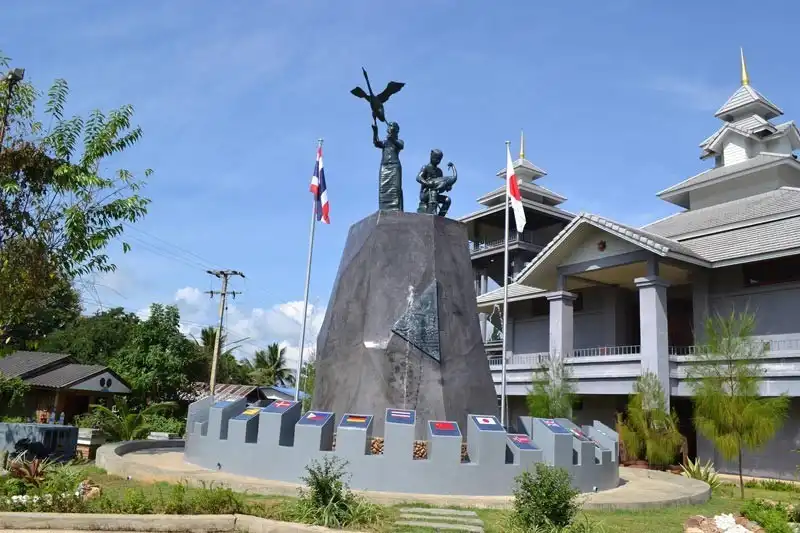
Mae Wang Japanese Soldiers Memorial is one of the most important historical sites in Northern Thailand related to World War II. It is located behind Ban Kad Witthayakhom School in Don Pao Subdistrict, Mae Wang District, Chiang Mai Province. At first glance, this small area may appear simple and unassuming, yet it holds profound stories that connect war, loss, and the “humanity” shared between two nations that once stood on opposite sides of the battlefield, before gradually transitioning into a relationship of friendship in later years.
The core idea expressed through this memorial is the hope that humankind will turn toward building peace together, while not forgetting the tragedies of the past that cost countless lives due to conflict. The memorial serves both as a “remembrance” of the Japanese soldiers who fell in the northern theater of Thailand, and as a “lesson” for future generations to recognize the painful consequences of war.
The story begins during World War II, when Japanese troops advanced into Thailand. The 15th Army had the key responsibility of constructing transportation routes between Thailand and Burma, both railways and roads. One important route linked Mae Malai Junction in Mae Taeng District to Pai District in Mae Hong Son Province, continued on to Khun Yuam District, then crossed into Burma at Ban Ton Ngun and headed toward Taungoo. This route was used during both their advance and their later retreat from the Burmese front.
Along this route, areas in Mae Hong Son and Chiang Mai Provinces served as transit corridors, encampments, field hospitals, and logistics points. Large numbers of Japanese soldiers marched through mountain ranges, forests, and rivers in the North under conditions as harsh as any battlefield. Evidence that can still be seen today—such as vehicle wrecks, military equipment, and personal belongings—is displayed in various museums and learning centers in Mae Hong Son and Chiang Mai, telling the story of a wartime route that many people have never known about.
As the war reached its turning point in 1945, Japan surrendered to the Allies. Japanese forces stationed along the Burma–Thailand frontier were then ordered to withdraw, retreating through treacherous mountain paths. Morale was low, supply lines were cut, and food and medicine were in short supply. Many soldiers were sick, exhausted, or wounded during the retreat. In these difficult times, villagers along the route from Mae Hong Son down to Chiang Mai—especially in the Mae Wang area and nearby communities—offered what help they could: food, water, temporary shelter, and basic care for the injured, all within the modest means of small rural villages.
Although, in the lens of international political history, Japanese troops of that era were often labeled as “invaders,” at the level of ordinary human lives, the small acts of kindness from Lanna villagers became something the surviving Japanese soldiers never forgot. After the war, many of them returned to life in their homeland, yet memories of fallen comrades along the retreat route and of Thai villagers who had reached out to help remained deeply engraved in their hearts. These memories eventually led to the formation of Japanese “war comrades” groups who wished to return, locate the burial places of their friends, and build memorials in their honor.
Today, Ban Kad in Don Pao Subdistrict is recognized as one of the key points on that route. It is said that in the final phase of the war, many Japanese soldiers died “like falling leaves” due to illness, exhaustion, and the severe conditions of retreat. Mass burials had to be carried out in haste. One such burial site was an abandoned well near Wat San Khayom (now an abandoned temple) in the Ban Kad area. That location effectively became a large graveyard, before time and changes in the community gradually altered the appearance of the land.
Several decades after the war, when the wounds had begun to scar over, groups of Japanese war comrades returned to survey their former route. They compiled information from documents, maps, and local villagers’ memories. Eventually, remains of Japanese soldiers from various sites in the North were collected and enshrined beneath the memorial structure at Ban Kad, Mae Wang. Some sources state that a significant number of remains were transferred here, making it a central point of remembrance for Japanese soldiers who died along the Burma–Northern Thailand front.
The construction of the Mae Wang Japanese Soldiers Memorial resulted from cooperation between Japanese war comrades’ associations, private foundations from Japan, and the local community. Ban Kad Witthayakhom School allocated a portion of its grounds for the memorial in the 1990s. From there, the area was gradually developed into the permanent remembrance space we see today.
The memorial itself consists of a raised concrete base topped with a simple stupa-like monument. Plaques inscribed in Japanese and Thai convey messages about world peace and remembering the tragedies of World War II. The surrounding landscape is modestly arranged with trees and open space, creating a serene, humble atmosphere suitable for quiet reflection and prayer for those who lost their lives.
One particularly striking aspect is that the memorial stands within a functioning school environment. Students of Ban Kad Witthayakhom walk past it daily on their way to class, under the shadow of a war monument. This juxtaposition vividly illustrates the continuity between “past” and “future”: the past of war, loss, and mass graves, and the future embodied by children growing up with access to education, peace, and new opportunities born from post-war international friendship.
Beyond the physical memorial, Japanese war comrades and associated foundations established the “Eto Foundation” to provide scholarships for children and youth in Mae Wang District and Chiang Mai Province. This ongoing support is a tangible way of “repaying” the kindness shown by Thai villagers in the past and of passing on the concept of peace to the next generation through scholarship programs and memorial ceremonies held regularly at the site.
From a tourism perspective, the Mae Wang Japanese Soldiers Memorial is not a flashy, photo-driven attraction with grand structures. Rather, it is highly meaningful for visitors interested in war history, Thai–Japanese relations, and quiet places for remembrance or contemplation of the “price of war.” The surrounding landscape remains that of simple Lanna countryside, with rice fields, streams, and mountain backdrops. Many visitors take the opportunity to stroll through the village, speak with locals, or combine their visit with nature-based and conservation activities in Mae Wang District.
Although the memorial grounds are not large, standing silently before the monument and inscriptions, thinking of the thousands of young soldiers who died far from home and the villagers who once shared food and water with those they had once viewed with suspicion, often leaves a deep impression. It reminds many people of a shared “humanity” that exists beyond the boundaries of nation, religion, and politics. In some years, delegations from Japan, diplomats, or study groups travel here to participate in remembrance ceremonies, keeping the place alive in the shared memory of both nations.
Getting There You can reach the memorial from Chiang Mai city via Highway 108 (Chiang Mai–Hang Dong–San Pa Tong), heading toward San Pa Tong District. From there, turn right onto the San Pa Tong–Mae Wang Road. The distance from Chiang Mai city to Mae Wang District is about 28 kilometers. When you reach the Mae Wang Subdistrict Municipality area, turn right onto a local road and continue for about 1 kilometer until you see Ban Kad Witthayakhom School on the left-hand side. The Mae Wang Japanese Soldiers Memorial is located behind the school. Visitors can park within the school grounds or nearby, as appropriate. Daytime visits are recommended, and modest dress is advised because the site is within a school area and close to a temple.
To make the visit more complete, travelers can combine the memorial with other cultural and nature-based attractions in Mae Wang and nearby districts, such as rafting on the Mae Wang River, visiting elephant conservation centers, exploring agricultural tourism sites, or staying overnight at homestays and resorts surrounded by nature before returning to Chiang Mai city. This creates a trip that offers both historical learning and peaceful relaxation in the embrace of mountains and waterways.
| Name | Mae Wang Japanese Soldiers Memorial, within Ban Kad Witthayakhom School, Mae Wang District, Chiang Mai |
| Location | Behind Ban Kad Witthayakhom School, No. 461, Village 4, Don Pao Subdistrict, Mae Wang District, Chiang Mai Province, approximately 28 kilometers from Chiang Mai city |
| Characteristics | A memorial dedicated to Japanese soldiers from World War II, located within a school environment. The atmosphere is quiet and simple, reflecting themes of peace, loss, and post-war friendship. Features a stupa-like monument and bilingual inscriptions in Japanese and Thai about world peace and remembering the past. |
| Historical Background / Period | Connected to events during World War II (around 1941–1945), when Japanese forces used Northern Thailand as a logistics and retreat route from Burma. Many soldiers died along these routes. Later, Japanese war comrades, together with the local community and Ban Kad Witthayakhom School, collected remains and built the memorial in the 1990s to honor the dead and promote the message of peace. |
| Key Features / Notable Elements | The memorial base and stupa containing the remains of Japanese soldiers; Japanese–Thai inscriptions emphasizing world peace and learning from loss; regular remembrance ceremonies and scholarship presentations by the Eto Foundation, showing the site’s ongoing importance in both historical and Thai–Japanese relations. |
| Origin of the Name | The name “Japanese Soldiers Memorial” reflects its role as a place of remembrance for Japanese soldiers who died in the northern theater of Thailand during World War II. Remains from several sites were brought together and enshrined beneath the memorial in Ban Kad, Mae Wang, making it a central location for honoring and remembering those who fell in the conflict. |
| Getting There | From Chiang Mai city, take Highway 108 toward San Pa Tong. Then turn right onto the San Pa Tong–Mae Wang Road. At Mae Wang Subdistrict Municipality, turn right onto a local community road and continue for about 1 kilometer to reach Ban Kad Witthayakhom School. The memorial is located behind the school. Daytime visits and modest clothing are recommended. |
| Nearby Attractions (Approximate Distance) | - Ban Kad village and local temples (within 1–2 km) - Mae Wang River and rafting routes (about 8–12 km) - Mae Wang National Park and nature activity areas (about 10–15 km) - Elephant tourism and conservation sites in Mae Wang (about 15–25 km) - Outskirts of Chiang Mai such as Hang Dong–San Pa Tong areas (about 20–30 km) |
| Recommended Nearby Restaurants (Approximate Distance) | - Local eateries and made-to-order food stalls in Mae Wang market area (about 3–5 km) - Restaurants and cafés along the Mae Wang–Mae Win rafting route (about 10–15 km) - Restaurants in San Pa Tong District, convenient for stops on the way to or from Chiang Mai city (about 10–20 km) |
| Recommended Nearby Accommodations (Approximate Distance) | - Resorts and homestays in Mae Wang District, such as riverside lodges and accommodations near Mae Wang National Park (about 10–20 km) - Homestays and small resorts in Ban Kad–Mae Win area, ideal for those who want to stay close to the community and nature (about 5–15 km) - Hotels and guesthouses in Chiang Mai city for day-trip visitors (about 28 km) |
| Facilities | Shared use of Ban Kad Witthayakhom School facilities, such as open space for ceremonies and remembrance, parking areas, and restrooms during school hours or by prior arrangement. Group visits or organized events should contact the school or relevant authorities in advance. |
| Entrance Fees | No entrance fee. The site functions as a community and school memorial space. Visitors are asked to respect school regulations and maintain a peaceful atmosphere. |
| Contact | For visit information or arranging remembrance ceremonies, contact Ban Kad Witthayakhom School, No. 461, Village 4, Don Pao Subdistrict, Mae Wang District, Chiang Mai 50360, Tel. 053-489170, 053-489116 (office hours). |
Frequently Asked Questions (FAQ)
Q: Is the Mae Wang Japanese Soldiers Memorial open to the general public?
A: Yes. It is accessible as a memorial space within the school and community. In general, visits are recommended during daytime. Groups or those planning remembrance activities should contact Ban Kad Witthayakhom School or relevant authorities in advance.
Q: Are remembrance ceremonies for Japanese soldiers still held here?
A: Yes. Ceremonies are held periodically, especially when delegations from Japan or diplomatic representatives visit. The Eto Foundation also regularly provides scholarships to local students, reflecting the ongoing post-war friendship between Thailand and Japan.
Q: How should I prepare for a visit to the memorial?
A: Modest clothing is recommended, as the site is within a school and near a temple. Visitors should keep noise to a minimum, behave respectfully, and use the area with consideration. Those wishing to lay flowers, incense, or conduct a short ceremony should consult teachers or site caretakers beforehand.
Q: Is photography allowed at the memorial?
A: Photography is allowed, but visitors should take photos respectfully, avoid stepping on or disturbing the area around the monument base, and refrain from inappropriate poses, as this is a place of remembrance for those who died in war.
Q: How can I combine a visit here with other attractions in Mae Wang?
A: You can plan a half-day or full-day trip, starting with the Japanese Soldiers Memorial at Ban Kad Witthayakhom School, then continuing to natural attractions in Mae Wang such as rafting on the Mae Wang River, elephant conservation sites, or nature resorts before returning to Chiang Mai city in the evening.
 Mae Wang Japanese Soldiers Memorial Map
 Category:
  Group:
  Tag: ●Mae Wang Japanese Soldiers Memorial●japanese war memorial mae wang ●world war 2 chiang mai ●northern thailand history site ●mae wang attractions ●japanese soldiers memorial thailand ●chiang mai historical tourism ●thai japan friendship memorial ●war history travel chiang mai ●memorial site mae wang ●ww2 heritage northern thailand Last Update: 3 MonthAgo
Comment
 Nearby Attractions
| Keyword (Advance) |
 Facebook Fanpage
 Region
 Historical Sites and Monuments(
 Royal Palace(
 Art, Craft Centres, Tradition(
 Museums(
 Educational Places
 Museum for Study(
 Educational Gardens, Farm(
 Training Center(
 University
 Places of Worship
 Temple(
 Mosque(
 Other religious and spiritural sites(
 Research and Development
 Royal Project(
 Suburban Living
 Village, Community(
 Local Market(
 Nature and Wildlife
 National Parks and Marine Reserves(
 Mountain (Doi)(
 Dam, Reservoir, Lake(
 Waterfalls(
 Hot Springs(
 Caves(
 River, Canal(
 Other natural attractions(
 Entertainment and Agricultural
 Zoos and Aquariums(
 Animal camps and shows(
 Stadium(
 Farm, Parks, Gardens and Ecotourism(
 Waterpark(
 Theater(
 Outdoor and Adventure Activities(
 Shopping
 Shopping and Night Market(
 Restaurant
 Michelin Star(
 Michelin Guide(
 Call Customer Service in Tourism
 Call Customer Service in Tourism(
 Travel Articles, Recipes
 Travel Review, Food Review(
 Food Menu, North Recipes(
 Thai Desserts, North Recipes(
 Copyright 2012,