

 Home
Home Chiang Mai(










Doi Pui Hmong Village
Rating: 2/5 (3 votes)
 Search By
  Map
Map 
 Have Map
  No Map
Chiang Mai attractions
Attractions in Thailand
Open Days: Daily (recommended to check the latest status/activities with the National Park before traveling)
Opening Hours: Recommended 08.00–17.00 (hours may change depending on season/area management)
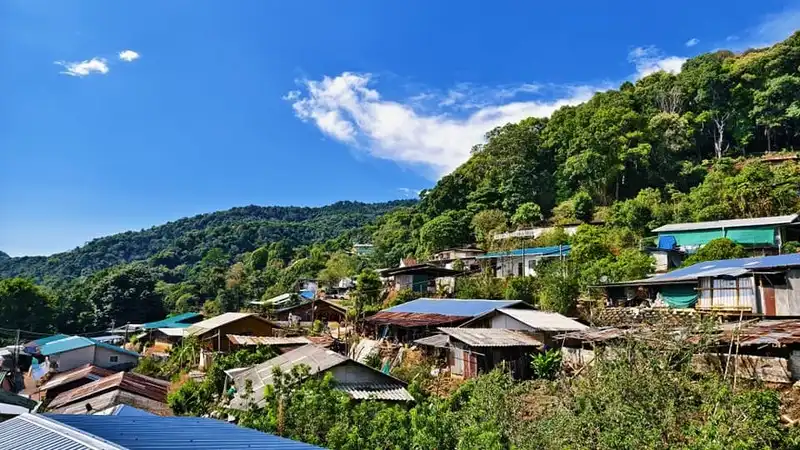
Hmong Doi Pui Village (Ban Mhong Doi Pui) is one of the easiest stops along the Doi Suthep–Doi Pui route in Chiang Mai. Many people come here because it is convenient, but if you spend more time than just browsing souvenir stalls, you will notice the village’s charm is not only about taking photos in hill-tribe clothing or carrying a bag of gifts. It is in walking slowly through misty air in certain seasons, hearing the everyday rhythm of the community, spotting small flower gardens by the path, feeling the cool mountain air shift with elevation, and seeing Chiang Mai from a viewpoint that feels far away even though it is actually very close.
Ban Mhong Doi Pui is located within Doi Suthep–Pui National Park, Suthep Subdistrict, Mueang Chiang Mai District, Chiang Mai Province. It is only about 20 kilometers from the city. The route follows the same road used to go up to Doi Suthep, passing Wat Phra That Doi Suthep and Phu Phing Palace (Phra Tamnak Phu Phing Ratchaniwet) before continuing just a few more kilometers to reach the village. Getting here is convenient by private car or the famous red songthaew (shared pickup taxi), but drivers should be careful because the road is winding and steep in some sections.
The village sits along the road up to Doi Pui, around 4 kilometers beyond Phu Phing Palace. The road is paved the whole way, yet it includes sharp bends and occasional steep climbs. This is why many visitors feel that Doi Pui is “easy to reach” compared with more remote mountains in Northern Thailand. From Chiang Mai city, the drive generally takes about 1 hour (depending on traffic, your starting point, and the travel season). That makes Hmong Doi Pui Village a strong choice for half-day trips or day trips for anyone who wants mountain views, cool air, and a light cultural experience without a long journey.
Ban Mhong Doi Pui sits in an area known for cool, comfortable weather throughout the year. Clean air and mountain scenery surround the village, creating a quietly captivating atmosphere. The walking paths inside the village twist and turn, and the ground can be uneven in places. That irregularity is part of the local character and makes exploring feel a little more adventurous and engaging.
One thing people mention often is that the scenery around the village is truly beautiful. The landscape opens to wide views of mountain ridges. On clear days, you may see far into the horizon; some visitors even say they can spot the distant outline of Doi Inthanon. Standing where the wind brushes your face and looking at layers of mountains stacking into the distance can feel like watching a living, moving topographic map. That quiet, humbling feeling is part of why mountain trips in Chiang Mai remain special no matter how many times you return.
The Hmong community here is known not only for being friendly, but also for its skill in creating local crafts. You will find patterned textiles, silverwork, and souvenirs that reflect Hmong identity in a clear, distinctive way. The commercial area is lined with many small shops offering wooden souvenirs, household items, and finely crafted accessories with careful detail.
Souvenir shops in the village sell a mix of locally made products and items brought in from elsewhere. If you want your spending to genuinely support the community, it helps to pay attention to the origin of what you buy. Look for items with a clear local signature, such as embroidered pieces, handmade crafts, small decorative goods, or certain local products that reflect everyday life here. Asking gently “Did you make this?” or “Is this from the village?” does not spoil the mood—it often opens a warm conversation and turns shopping into an exchange rather than just a transaction.
There is also a popular service to rent Hmong clothing for photos at an affordable price. Staff typically help with dressing to make the look feel authentic. If you like, you can also purchase outfits to take home. Many designs are adapted for modern use while still clearly preserving the identity and distinctive features of Hmong clothing.
Another signature activity at Hmong Doi Pui Village is renting traditional outfits for photos, usually available near the entrance or in the shop zone. If you want to do it, it can be fun and colorful—but it is best done with respect. Avoid mocking poses, do not pull accessories roughly, and do not handle parts of the outfit without permission. For more flattering photos, try finding a spot with mountain views and softer light in the morning or late afternoon. The images will feel gentler and more “mountain” than harsh midday light near the storefronts.
Beyond shopping, visitors can learn about Northern Thai culture and Hmong daily life up close. This may include demonstrations such as crossbow shooting, traditional clothing and styling, local food habits, and the way space is organized within the village. These details reflect a simple lifestyle with a charm that feels distinctly different from city life.
Even though the village is a well-known tourist stop, if you walk a little deeper you will still notice everyday life continuing in a simple, genuine way. Some homes have small gardens; you may see neighbors talking, children playing, and adults working at home or caring for shops. This is a good reminder that the village is not a “living museum” for people to observe. Visitors are guests. Being a good guest means looking with respect, not pointing a camera at someone’s face without asking, and not entering private spaces. If you want to take portraits, a smile and a quick request for permission usually creates comfort and clarity for everyone.
Although it is popular, Hmong Doi Pui Village has maintained its identity and many traditional cultural elements very well. The blend of local heritage and modern adaptation makes it an appealing destination for travelers who want to learn and experience something new while still feeling the authenticity of place.
What sets Hmong Doi Pui Village apart from many other places is how close it is to the city while still feeling like real mountain country. On cooler days, you can feel the temperature change the moment you step out of the car. From late rainy season into winter, the air becomes sharper, the sky may turn brilliantly clear, and some days bring a light veil of fog over the trees. That quick escape is why many people return to the Doi Suthep–Doi Pui route again and again: it is an easy way to reset your head without complicated planning, and the reward is fresh air and views.
If you want this trip to be more than a quick souvenir stop, try slowing the pace and adding small learning moments: look closely at embroidery patterns, notice repeated colors and shapes, try local snacks without rushing, or simply sit and watch the flow of people. Some destinations do not require many activities—they require time. Doi Pui often feels exactly like that.
Getting There From Chiang Mai city, head toward Huay Kaew Road and drive up to Doi Suthep. Continue along the route to Wat Phra That Doi Suthep and Phu Phing Palace, then drive onward toward Doi Pui for about 4 more kilometers. The road is fully paved, but it is winding and steep in some sections. Drive at a steady speed, use low gear on steep climbs and descents, and watch for oncoming vehicles—especially during weekends and peak seasons.
Small details can make the drive safer and more comfortable: check your brakes before heading up (especially if the vehicle has been heavily used), make sure you have enough fuel because there are not many options up top like in the city, bring a light jacket because mountain weather changes quickly, and allow extra time in rainy season when fog and rain reduce visibility. Some curves may also become slippery.
For the best timing, go early if you want fewer crowds and better light. You will also get the freshest air in the morning. Late afternoon can be great for warm, golden light over the ridges, but it is wise to plan your return before dark because descending the mountain at night typically requires more focus and caution.
Many people love viewpoints where you can look down toward Chiang Mai city or see distant mountain layers. If you want photos without large crowds, walk a little away from the main storefront path and choose a spot with pine trees or open ridgelines as your background. Your images will feel more like “the mountain” than “the market,” and your memory of the trip will not be reduced to just a souvenir bag in your hand.
Another important part is respectful tourism: avoid bargaining in a way that pushes handmade items unfairly low, do not litter, and avoid flying drones in community areas without permission. Drones can disturb people and animals and raise privacy concerns quickly. If you want the village to remain a good place to live and a good place to visit in the long term, these small considerations genuinely matter.
Visiting Hmong Doi Pui Village is not only a form of relaxation; it can also be a learning exchange between travelers and locals. That exchange helps build understanding and pride in Thailand’s cultural diversity. If you have the chance, do not miss experiencing it for yourself.
Finally, if you want confirmed information before going—such as weather conditions, temporary road closures, or park regulations—it is best to contact Doi Suthep–Pui National Park directly. This is the most reliable source regarding on-the-ground management and helps reduce the risk of outdated information from unofficial sources.
| Name | Hmong Doi Pui Village (Ban Mhong Doi Pui) |
| Location | Doi Suthep–Pui National Park, Suthep Subdistrict, Mueang Chiang Mai District, Chiang Mai (about 4 km beyond Phu Phing Palace) |
| Highlights | A Hmong mountain village with cool weather and scenic ridgelines near the city; enjoyable to explore on foot; local handicrafts and souvenirs; Hmong outfit rental for photos |
| Access | Drive up via Huay Kaew Road to Doi Suthep, pass Wat Phra That Doi Suthep and Phu Phing Palace, then continue about 4 km. Fully paved but winding and steep in parts. |
| Current Status | Open to visitors (check park announcements for temporary closures during heavy rain or emergencies) |
| Contact (Area Information) | Doi Suthep–Pui National Park: 053-210244, 053-210246 |
| Nearby Attractions & Distances | 1) Phu Phing Palace (approx. 4 km) Tel. 053-223065 2) Wat Phra That Doi Suthep Ratchaworawihan (approx. 10–12 km) Tel. 053-295003 3) Viewpoints / nature trails in the Doi Pui area (approx. 6–12 km depending on the spot) Tel. 053-210244 4) Ang Kaew Reservoir, Chiang Mai University (approx. 16–20 km) (no verified phone number available) 5) Chiang Mai Zoo (approx. 18–22 km) Tel. 053-221179 |
| Recommended Restaurants & Distances | 1) Ginger Farm Kitchen (One Nimman branch) (approx. 20–24 km) Tel. 052-080927 2) Huen Muan Jai (approx. 20–26 km) Tel. 053-404998 3) Han Thueng Chiang Mai (Wat Umong area, behind CMU) (approx. 18–22 km) Tel. 093-9706885 4) Khao Soi Mae Sai (Chang Phueak area) (approx. 22–28 km) Tel. 053-213284 5) Restaurants / reservations at Shangri-La Chiang Mai (approx. 24–30 km) Tel. 053-253888 |
| Recommended Accommodations & Distances | 1) U Nimman Chiang Mai (approx. 20–24 km) Tel. 052-005111 2) Chiang Mai Marriott Hotel (approx. 24–30 km) Tel. 053-253666 3) Shangri-La Chiang Mai (approx. 25–31 km) Tel. 053-253888 4) Duangtawan Hotel Chiang Mai (approx. 25–31 km) Tel. 053-905000 5) 137 Pillars House Chiang Mai (approx. 26–32 km) Tel. 053-247788 |
Frequently Asked Questions (FAQ)
Q: How far is Hmong Doi Pui Village from Chiang Mai city?
A: It is roughly about 20 kilometers (depending on where you start in the city). The drive up the mountain typically takes around 1 hour.
Q: Can I get there by the red songthaew?
A: Yes. Red songthaews commonly operate on the Doi Suthep–Doi Pui route. It is best to agree clearly on the fare, pickup point, and return waiting time before you leave.
Q: Is the road difficult, and what should I watch out for?
A: The road is paved, but it is winding and steep in some sections. Use low gear when descending, keep a steady speed, and be extra careful during busy periods.
Q: What are the main things to do at Hmong Doi Pui Village?
A: Walk around the village, shop for handicrafts and souvenirs, learn about Hmong culture and everyday life, and rent Hmong clothing for photos.
Q: Where can I check the latest road status or park rules before I go?
A: Contact Doi Suthep–Pui National Park at 053-210244 or 053-210246 to confirm the latest status and any announcements.
 Doi Pui Hmong Village Map
 Category:
  Group:
  Tag: ●Doi Pui Hmong Village●hmong doi pui village ●ban hmong doi pui ●hmong hill tribe village chiang mai ●doi suthep doi pui route ●doi pui travel ●hmong culture chiang mai ●mountain village near chiang mai ●chiang mai half day trip Last Update: 3 MonthAgo
Comment
 Nearby Attractions
| Keyword (Advance) |
 Facebook Fanpage
 Region
 Art, Culture and Heritage
 Historical Sites and Monuments(
 Landmarks and Memorials(
 Royal Palace(
 Art, Craft Centres, Tradition(
 Museums(
 Educational Places
 Museum for Study(
 Educational Gardens, Farm(
 Training Center(
 University
 Places of Worship
 Temple(
 Mosque(
 Other religious and spiritural sites(
 Research and Development
 Royal Project(
 Local Market(
 Nature and Wildlife
 National Parks and Marine Reserves(
 Mountain (Doi)(
 Dam, Reservoir, Lake(
 Waterfalls(
 Hot Springs(
 Caves(
 River, Canal(
 Other natural attractions(
 Entertainment and Agricultural
 Zoos and Aquariums(
 Animal camps and shows(
 Stadium(
 Farm, Parks, Gardens and Ecotourism(
 Waterpark(
 Theater(
 Outdoor and Adventure Activities(
 Shopping
 Shopping and Night Market(
 Restaurant
 Michelin Star(
 Michelin Guide(
 Call Customer Service in Tourism
 Call Customer Service in Tourism(
 Travel Articles, Recipes
 Travel Review, Food Review(
 Food Menu, North Recipes(
 Thai Desserts, North Recipes(
 Copyright 2012,