

 Home
Home Chiang Mai(










Ban Mae Klang Luang
Rating: 5/5 (1 votes)
 Search By
  Map
Map 
 Have Map
  No Map
Chiang Mai attractions
Attractions in Thailand
Open Days: Daily (recommended to check weather conditions and any park management announcements before traveling)
Opening Hours: Recommended 06.30–18.00 (ideal for walking and photography; morning light is beautiful and crowds are still light)
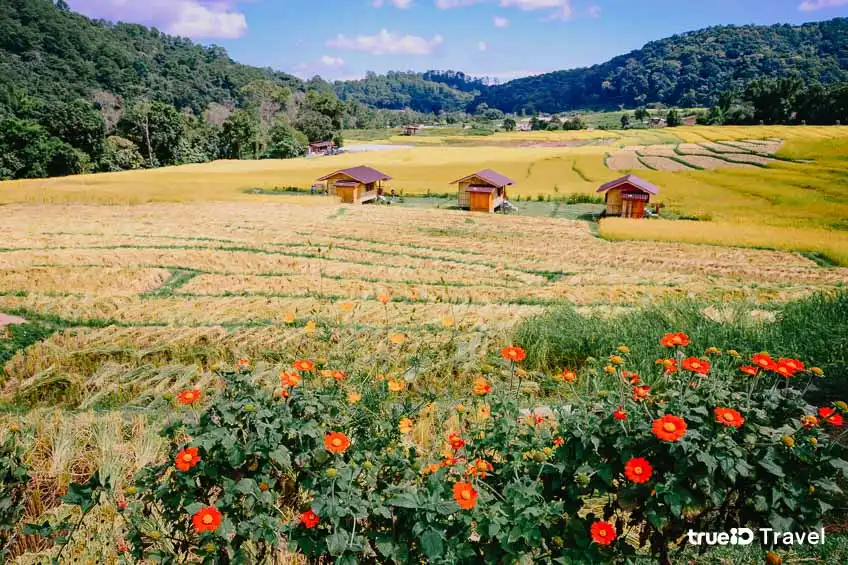
Ban Mae Klang Luang is a Pgakeunyau (Karen) village in Ban Luang Subdistrict, Chom Thong District, Chiang Mai. Many people fall for it the first time because the terraced rice fields aren’t just a “view”—they’re the real, everyday life of a farming community. You’ll see mountains wrapping around the valley, catch soft mist in certain seasons, hear stream water running nearby, and naturally slow your pace in a way big cities rarely allow. That’s why Ban Mae Klang Luang has become a favorite for anyone wanting to escape the noise and experience something gentle, meaningful, and close to nature.
The village sits along the route up to Doi Inthanon National Park. Most visitors drive Highway 108 (Chiang Mai–Hot) to Chom Thong, then continue on Highway 1009 up Doi Inthanon—the same road that connects to many of the area’s signature attractions. What makes Ban Mae Klang Luang special is how “easy to reach” it feels, yet the atmosphere somehow makes you feel much farther from the city than you really are. And once you spend real time here, you start to understand that its charm doesn’t come from staged tourism—it comes from simple routines that genuinely work in daily life.
The heart of Ban Mae Klang Luang is its terraced rice fields stepping down the mountainside. The beauty is effortless because it comes from local wisdom—farming on steep terrain requires precision, patience, and a deep understanding of water management. You’ll notice how the ridges follow the land, how the terraces form patterns like woven cloth, and how small paths lead you into new angles again and again. Walking through the village feels like exploring at a calm pace—no need to rush through a checklist; the scenery reveals itself layer by layer.
If you’re coming specifically for the terraces, timing matters. One popular window is late rainy season, roughly September to mid-October, when the paddies turn fully green and light mist often drifts above the hills, creating a soft, dreamlike look. Another is late October to early November, when the rice heads mature and the terraces shift toward golden tones that catch sunlight beautifully. If you enjoy photography, aim for early morning or late afternoon—the light is gentler and the scene looks more natural than the harsher midday sun.
But Ban Mae Klang Luang isn’t only beautiful during the “peak rice-field” moments. Some people prefer the post-harvest season because the terrace structure and the shapes of the landscape stand out more clearly, and the village is usually less crowded. The most important thing is to visit as a respectful guest. The fields you admire are real livelihoods—walking into plots without permission, stepping on ridge paths, or blocking farmers’ routes can cause real damage. If you want great photos without disturbing the community, stay on public paths or designated viewpoints, and use a zoom lens or take a step back rather than walking right into working areas.
Ban Mae Klang Luang is also perfect if you want to experience culture without turning it into a performance. You’ll see Pgakeunyau life that is simple but orderly in its own way—farming, home care, cooking, and welcoming visitors with quiet politeness. That’s part of what makes this place so endearing. If you want to photograph people or homes, smile and ask first, and avoid suddenly pointing a camera at someone’s face. This is a living village, not a set built for tourism.
For nature lovers, Ban Mae Klang Luang is often used as a base to connect with other activities around Inthanon, including forest walks and the well-known route to “Pha Dok Siew Waterfall” (a favorite because you get forest, waterfall, and village atmosphere in one). Nearby highlights that are easy to drive to include Wachirathan Waterfall, the Kew Mae Pan nature trail, Thailand’s highest point, and Ang Ka. It’s a great area to plan a day that includes both “community” and “iconic Inthanon nature” without overcomplicating anything.
If you want your day to flow smoothly, a common plan is to arrive in the village early, walk and photograph the terraces in good light, grab a simple coffee or meal locally, then drive up to the higher Inthanon viewpoints and trails from late morning into the afternoon—and come down before evening to avoid heavier fog and driving in the dark. For anyone who wants the fullest experience, an overnight stay is worth it. Morning in the village feels entirely different from a day trip—you’ll see the mist move, hear nature more clearly, and catch the village at its most authentic.
Getting There From Chiang Mai city, take Highway 108 (Chiang Mai–Hot) toward Chom Thong, then turn onto Highway 1009 (the road up to Doi Inthanon National Park). Follow the signs uphill to the kilometer area where the turn-off to Ban Mae Klang Luang appears. You can travel by private car or motorcycle. Drive at a steady speed, use a lower gear on steep climbs/descents, and be careful on curves and in fog—especially during the rainy season and winter.
If you’re using public transport, the most common option is local red truck taxis/songthaews from the Chom Thong side up toward Inthanon (routes and schedules can vary by season). The safest approach is to plan ahead and allow extra time, because during peak periods vehicles may be full and services may not run as predictably as driving yourself. No matter how you travel, it’s smart to keep a light windbreaker in the car—mountain weather changes fast, especially in the early morning and whenever fog rolls in.
In the end, Ban Mae Klang Luang is at its best when we travel with respect. Buy local products appropriately, avoid bargaining in a way that undervalues people’s work, never litter, and don’t fly drones over the community without permission—privacy matters a lot in a small village. If you do that, Ban Mae Klang Luang will give you beauty, calm, and a genuinely good feeling that stays with you long after you’ve left.
| Place Name | Ban Mae Klang Luang (Pgakeunyau Community, Doi Inthanon) |
| Location | Ban Luang Subdistrict, Chom Thong District, Chiang Mai (on the route up to Doi Inthanon National Park) |
| Highlights | A quiet Pgakeunyau village surrounded by nature and terraced rice fields—ideal for community-based travel, photography, and a slow reset |
| Best Time to Visit | Morning–late afternoon (soft light; higher chance of mist). Peak terrace season is often around Sep–Nov (depends on the year’s conditions) |
| Current Status | Open for visits (recommended to check park announcements and weather before going uphill) |
| Contact (National Park) | Doi Inthanon National Park: 053-286729 |
| Nearby Attractions with Distance | 1) Pha Dok Siew Waterfall Trail (approx. 2–6 km) Park: 053-286729 2) Wachirathan Waterfall (approx. 6–10 km) Park: 053-286729 3) Kew Mae Pan (trailhead) (approx. 15–20 km) Park: 053-286729 4) Ang Ka Nature Trail (approx. 20–25 km) Park: 053-286729 5) Mae Klang Waterfall (approx. 18–25 km) Park: 053-286729 |
| Recommended Restaurants with Distance | 1) Ban Mae Klang Luang Rim Than Inthanon (restaurant/café) (approx. 0–3 km) 061-4574735, 083-4698948 2) Royal Project Inthanon Welfare Shop (food options) (approx. 8–15 km) 065-2388142 3) Rong Fai Fa Restaurant (approx. 8–18 km) 086-1937085 4) Khun Klang Hydropower House (food options) (approx. 5–12 km) 081-0348952, 081-9515677 5) Mae Klang Luang Hill (café/stay) (approx. 0–3 km) 081-0203615 |
| Recommended Accommodations with Distance | 1) Mae Klang Luang View House (approx. 0–3 km) 086-1894075 2) Ban Mae Klang Luang Rim Than Inthanon (approx. 0–3 km) 083-4698948, 061-4574735 3) Baan Suan Mae Klang Luang (approx. 0–3 km) 097-9927598 4) Sabai Dee Mae Klang Luang (approx. 0–3 km) 080-6632210 5) Ban Ang Ka Noi Homestay (approx. 2–8 km) 084-4877449 |
Frequently Asked Questions (FAQ)
Q: What is the best time to visit Ban Mae Klang Luang?
A: If you’re visiting for the terraced rice fields, late rainy season to early winter is often best—roughly Sep–Nov (depending on the year). Early morning or late afternoon offers softer light and more comfortable weather.
Q: Do I need to stay overnight, or can I do a day trip?
A: A day trip is easy because the village is on the main Doi Inthanon route. But if you want morning mist and a truly quiet atmosphere, staying 1 night is usually more rewarding.
Q: What etiquette matters most when walking around the rice terraces and the village?
A: Avoid stepping on ridge paths or entering fields without permission, don’t litter, and ask before photographing people or homes—this is a real residential community.
Q: If I want to visit Pha Dok Siew Waterfall, where should I start?
A: Many visitors use Ban Mae Klang Luang as a convenient starting point or connector to the Pha Dok Siew route. It’s best to check current trail conditions and any requirements with the national park before hiking.
Q: Where can I confirm the latest updates before going up Doi Inthanon?
A: Contact Doi Inthanon National Park at 053-286729 to confirm important announcements, weather, and any access rules in effect.
 Ban Mae Klang Luang Map
 Category:
  Group:
  Tag: ●Ban Mae Klang Luang●ban mae klang luang ●mae klang luang village ●doi inthanon village ●mae klang luang rice terraces ●pga k'nyau village ●karen village chiang mai ●doi inthanon travel ●chom thong attractions ●pha dok siew waterfall ●chiang mai community tourism Last Update: 3 MonthAgo
Comment
 Nearby Attractions
| Keyword (Advance) |
 Facebook Fanpage
 Region
 Art, Culture and Heritage
 Historical Sites and Monuments(
 Landmarks and Memorials(
 Royal Palace(
 Art, Craft Centres, Tradition(
 Museums(
 Educational Places
 Museum for Study(
 Educational Gardens, Farm(
 Training Center(
 University
 Places of Worship
 Temple(
 Mosque(
 Other religious and spiritural sites(
 Research and Development
 Royal Project(
 Local Market(
 Nature and Wildlife
 National Parks and Marine Reserves(
 Mountain (Doi)(
 Dam, Reservoir, Lake(
 Waterfalls(
 Hot Springs(
 Caves(
 River, Canal(
 Other natural attractions(
 Entertainment and Agricultural
 Zoos and Aquariums(
 Animal camps and shows(
 Stadium(
 Farm, Parks, Gardens and Ecotourism(
 Waterpark(
 Theater(
 Outdoor and Adventure Activities(
 Shopping
 Shopping and Night Market(
 Restaurant
 Michelin Star(
 Michelin Guide(
 Call Customer Service in Tourism
 Call Customer Service in Tourism(
 Travel Articles, Recipes
 Travel Review, Food Review(
 Food Menu, North Recipes(
 Thai Desserts, North Recipes(
 Copyright 2012,