
lovethailand home >North Travel Attractions >Chiang Mai Travel Attractions >Muang Chiang Mai >Si Phum > Ho Curry
TL;DR: Ho Curry. north food, the word ho means combine. come together In the past, kaeng ho was usually made from a combination of leftover dishes, which.

Ho Curry
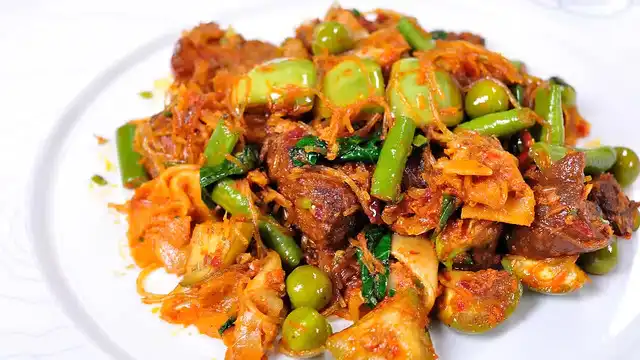
Ho Curry north food, the word ho means combine. come together In the past, kaeng ho was usually made from a combination of leftover dishes, which could be seasoned to your liking, or added something like vermicelli, bamboo shoots, and flavored with kaffir lime leaves and lemongrass. Nowadays, fresh produce is commonly used for cooking. and use kaeng hung lei as a condiment.
Gangho, a popular northern dish with the origin which comes from the leftover curry and the clever way to reduce food waste of Lanna people Hangle curry must be added to intensify the flavor, but ho in the sense of gang ho wat has a more complex dimension than that.
Hung Lay Curry or Hin Lay Curry is a Thai dish of salty-sour curry. Hang Lei curry originated from Burma, where the word hin in Burmese means curry and le in Burmese means meat. Hang Lei curry is popular with the people of northern Thailand and Xishuangbanna, China.
There are two ways to cook Hang Lei curry: Burmese and Chiang Saen. The Burmese style is more popular. The Burmese Hung Lay curry has a sour and salty taste, kumkum paste, ginger, tamarind juice, pickled garlic, peanuts, cane sugar. For the Chiang Saen Hang Lay curry, add long beans, chili, pickled bamboo shoots, and roasted sesame. The main ingredient must be curry powder or masla powder, a mixed spice powder. same as garam Indian Masala The curry paste consists of dried chili, salt, galangal, lemongrass, garlic, shallots, Thai-style Hang Lei curry. The water is drenched and eaten with mango sanab, which is chopped mango. Spicy salad with roasted shrimp paste, ground dried shrimp and fried garlic.
Ho Curry Ingredients
1. Hang Lay curry 300 g.
2. Pork Stew 200 g.
3. 200 g of bamboo shoots (if using pickled bamboo shoots, boil the water first)
4. Lemongrass, sliced 2 tablespoons
5. Sliced lentils
6 eggplants, sliced
7. Glass noodles 80 grams (soaked in water to soften)
8. Lard
9. Garlic
10. Red curry paste 1 spoon
11. Light Soy Sauce
12. Eggplant
13. Shredded kaffir lime leaves
14. Jumping Ball
15. Chaplu leaves
16. Yod gourd
17. Cha-Om
18. Pork Knuckle
How to do
1. Heat the pan, add lard and garlic, fry until golden and crispy. Then scoop out enough to have a little stick to the pan. then add red curry paste Then stir until fragrant.
2. Add in Hang Lay curry and add the pork stew that has been prepared and stir until boiling, then add Nong O, eggplant and long beans. Stir to combine. Then season with soy sauce, add chopped lemongrass and stir to combine again.
3. Put the prepared vermicelli into the pan. Add the eggplants. Then add the shredded kaffir lime leaves and the pods by roasting them until they dry up. Then put in the cha-plu leaves, sprinkle the top of the gourd and cha-om along Then roast them together again.
4. Arrange on a plate and sprinkle with kaffir lime leaves. and the rest of the fried garlic on the curry ho Then sprinkle with chili as you like. and eat with pork loin
| Dish Name | Kaeng Ho |
| Food Type | Northern Thai cuisine / Stir-fried curry dish |
| Name Meaning | “Ho” means “to combine” or “to mix various ingredients together” |
| Origin | Northern Thailand (Lanna region) |
| Historical Background | Originally made from leftover dishes, especially Kaeng Hang Lay, as a practical way to reduce food waste |
| Key Characteristics | A dry or semi-dry curry stir-fry combining various meats, vegetables, and herbs into a single flavorful dish |
| Main Ingredients | Kaeng Hang Lay curry, braised pork, bamboo shoots, glass noodles, long beans, eggplants, and herbs |
| Important Herbs | Lemongrass, kaffir lime leaves, wild betel leaves, climbing wattle, and ivy gourd shoots |
| Seasoning | Chili paste, soy sauce, pork fat/oil, and curry base from Kaeng Hang Lay |
| Flavor Profile | Savory, rich, slightly spicy, and aromatic with herbal notes |
| Texture | Semi-dry with a mix of soft, chewy, and slightly crispy textures |
| Serving Style | Served hot with steamed rice and often accompanied by crispy pork rinds |
Frequently Asked Questions (FAQ)
Q: What is Kaeng Ho?
A: Kaeng Ho is a traditional Northern Thai dish made by stir-frying leftover curries, especially Kaeng Hang Lay, with a variety of vegetables, herbs, and noodles to create a rich and flavorful meal.
Q: Why is Kaeng Ho associated with food waste reduction?
A: Historically, it was created as a way to reuse leftover food instead of discarding it. This reflects the resourcefulness and sustainability of Lanna culinary traditions.
Q: What role does Kaeng Hang Lay play in Kaeng Ho?
A: Kaeng Hang Lay provides the base flavor, adding depth, richness, and a distinctive spice profile that defines the character of Kaeng Ho.
Q: How does Kaeng Ho taste?
A: It has a savory and rich flavor with mild spiciness and strong herbal aromas. The taste is complex due to the combination of multiple ingredients.
Q: How is Kaeng Ho different from Kaeng Hang Lay?
A: Kaeng Hang Lay is a curry dish with a defined recipe, while Kaeng Ho is a mixed stir-fry dish made by combining that curry with additional ingredients, resulting in a drier texture and more variety.
Q: Are the ingredients in Kaeng Ho fixed?
A: No, the ingredients are flexible and can vary depending on what is available, which is part of the dish’s identity as a “mixed” meal.
Q: Why are glass noodles used in Kaeng Ho?
A: Glass noodles absorb the curry flavors well and add a soft, chewy texture, enhancing the overall eating experience.
Q: What is Kaeng Ho usually served with?
A: It is typically served with steamed rice and crispy pork rinds, which add a crunchy contrast to the dish.
Q: Is Kaeng Ho still made from leftovers today?
A: Nowadays, many people prepare it using fresh ingredients, but the concept of combining multiple components remains the same.
 Category: ●Travel Articles, Recipes
 Group: ●Food Menu, North Recipes
Last Update : 5 MonthAgo
 Last Update : 5 MonthAgo
Recommend

 Art, Culture and Heritage
 Historical Sites and Monuments(8)
 Landmarks and Memorials(5)
 Royal Palace(2)
 Art, Craft Centres, Tradition(43)
 Museums(24)
 Educational Places
 Museum for Study(2)
 Educational Gardens, Farm(5)
 Training Center(1)
 Places of Worship
 Temple(79)
 Mosque(2)
 Other Sacred Sites(17)
 Research and Development
 Royal Project(44)
 Suburban Living
 Village, Community(41)
 Local Market(14)
 Nature and Wildlife
 National Parks and Marine Reserves(16)
 Mountain (Doi)(21)
 Dam, Reservoir, Lake(26)
 Waterfalls(43)
 Hot Springs(12)
 Caves(11)
 River, Canal(6)
 Other natural attractions(14)
 Entertainment and Agricultural
 Zoos and Aquariums(2)
 Animal camps and shows(3)
 Stadium(1)
 Farms, Parks and Ecotourism(19)
 Waterpark(2)
 Theater(1)
 Outdoor and Adventure Activities(10)
 Shopping
 Shopping and Night Market(6)
 Restaurant
 Michelin Star(1)
 Michelin Guide(23)
 Call Customer Service in Tourism
 Call Customer Service in Tourism(1)
 Travel Review, Food Review(15)
Food Menu, North Recipes(30)
Travel Review, Food Review(15)
Food Menu, North Recipes(30)
 Thai Desserts, North Recipes(17)


