
lovethailand home >North Travel Attractions >Chiang Mai Travel Attractions >Doi Saket >Choeng Doi > Wat Rangsi Sutthawat Museum
TL;DR: Wat Rangsi Sutthawat Museum, Chiang Mai attractions : Art, Culture and Heritage, Museums.
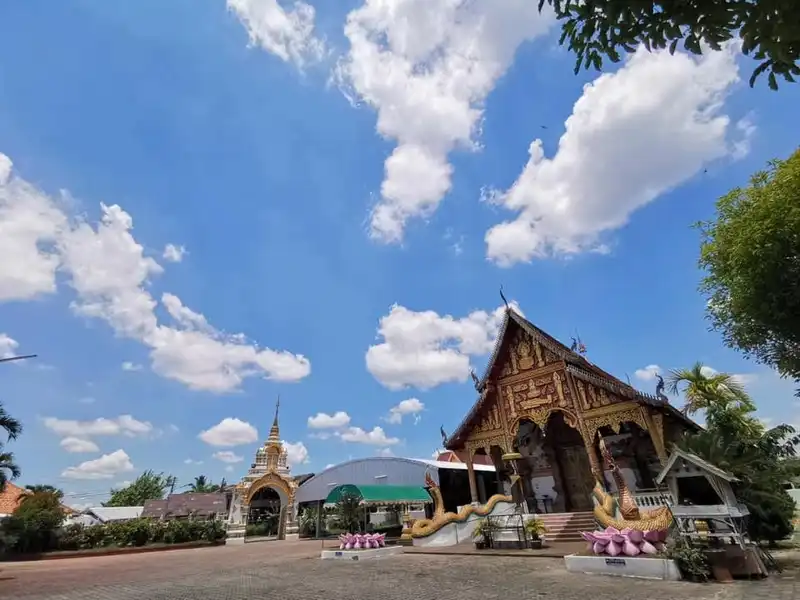
Wat Rangsi Sutthawat Museum
Open Days: Open for visits by advance appointment with the museum caretakers and the Ban Luang Tai community (dates and times are subject to change)
Opening Hours: According to the time arranged in advance with the community coordinators
Rangsee Suthawas Temple Museum (Mueang Luang Tai) is located within Wat Rangsee Suthawas in Ban Luang Tai, Choeng Doi Subdistrict, Doi Saket District, Chiang Mai Province. It is a compact local museum that systematically collects stories of the way of life, livelihood, work, and wisdom of the Tai Lue people of Mueang Luang Tai, all set within the peaceful atmosphere of a rural temple that still reflects the community’s simple lifestyle and traditional faith.
The Tai Lue people of Ban Luang Tai are an ethnic group with roots in Xishuangbanna, who migrated to settle in Lanna several hundred years ago. Their way of life is closely tied to the land, fields, rivers, and streams, along with a delicate system of beliefs and traditions. Rangsee Suthawas Temple Museum was therefore established as a center of knowledge about the Tai Lue of Mueang Luang Tai, covering settlement history, lifestyle, economy, culture, and local traditions.
Many of the objects on display in the museum are old items donated by elders and villagers from their own homes. Numerous pieces have been used for decades and have become part of their family memories: farming tools, household utensils, weaving equipment, Tai Lue textiles, traditional clothing, as well as objects associated with village beliefs and rituals.
One of the core elements of the museum is the exhibition on the settlement history of the Tai Lue community in Ban Mueang Luang Tai—how this village came into being, from migration from the original homeland, choosing the site for their homes, building the temple, developing annual traditions and festivals, until it became a Tai Lue community that continues to preserve its identity amid modern social change.
Visitors can gain a picture of Tai Lue life through the tools used for making a living, such as hoes, spades, wooden rakes, small rice mills, fishing gear, and bamboo weaving tools. There is also a traditional firewood kitchen, earthenware pots, rice jars, wooden trays, and household items that reflect a simple lifestyle based on respect and careful use of the surrounding natural resources.
Another highlight is the display of textiles and traditional clothing of the Tai Lue of Mueang Luang Tai, including old-patterned tubular skirts, shawls, and local garments, as well as handwoven cloth that still retains motifs from their place of origin. Seeing the real textiles while listening to stories about the origin of each pattern, who wove it, and on what occasion it was used helps visitors understand that textiles are not just clothing, but also a language of Tai Lue culture.
Rangsee Suthawas Temple Museum also presents knowledge related to the beliefs and traditions of the Tai Lue of Mueang Luang Tai, such as annual merit-making festivals, traditional attire for religious ceremonies, Tai Lue dances, ceremonial food offerings, and rituals associated with the temple and ancestral spirits. Visitors therefore do more than just “look at old things”—they also gain a deeper understanding of the relationships between the temple, the community, and the villagers’ way of life.
This museum was designed to be a knowledge hub for the Tai Lue of Mueang Luang Tai for students, university learners, youth, the general public, and anyone interested in local culture. Local schools often bring students here for study visits, to listen to talks by community elders, see real objects, and join activities about the Tai Lue way of life so that the younger generation can appreciate the value of their homeland and cultural roots.
In addition to permanent displays, the museum grounds and the open area in front of the temple are regularly used as venues for cultural events that preserve Tai Lue traditions in Ban Luang Tai. These include wearing traditional costumes, Tai Lue dance performances, and festivals that connect Ban Luang Tai with neighboring Tai Lue villages. This keeps the museum “alive” and prevents it from becoming just a static display behind glass.
Getting to Rangsee Suthawas Temple Museum (Mueang Luang Tai) From Chiang Mai city, take the Chiang Mai–Doi Saket route (Highway 118), then turn onto local roads heading toward Ban Luang Tai, Choeng Doi Subdistrict. Once you enter the village, look for Wat Rangsee Suthawas, which is located at the heart of the community. You can ask local residents for directions to the Tai Lue museum or “Ban Tai Lue, Ban Luang Tai,” or simply search for “Wat Rangsee Suthawas” on your phone’s map for convenience.
| Name | Rangsee Suthawas Temple Museum (Mueang Luang Tai) inside Wat Rangsee Suthawas, Ban Luang Tai, Doi Saket District, Chiang Mai Province |
| Location | Ban Luang Tai, Village 8, Choeng Doi Subdistrict, Doi Saket District, Chiang Mai Province, near Wat Rangsee Suthawas (Wat Luang Tai) and the Tai Lue community of Ban Luang Tai |
| Key Features | A local museum within the temple that collects the lifestyle, daily living, livelihoods, and wisdom of the Tai Lue people of Ban Luang Tai. It serves as a learning center on settlement history, traditions, culture, and Tai Lue identity in Doi Saket District. |
| Period | Wat Rangsee Suthawas dates back to the late Thonburi–early Rattanakosin period, while the Tai Lue local museum and cultural preservation activities began to develop more intensively in the late 20th–early 21st century. |
| Key Evidence | Everyday objects of the Tai Lue people, farming tools, traditional kitchens and cooking utensils, Tai Lue textiles and clothing, ritual objects, settlement history information, and oral histories from Tai Lue community elders in Ban Luang Tai. |
| Name Origin | The museum’s name combines the temple’s name, “Wat Rangsee Suthawas,” with the village name “Mueang Luang Tai” or “Ban Luang Tai,” reflecting its nature as a Tai Lue community museum located inside the village’s central temple. |
| Getting There | From Chiang Mai city, take Highway 118 (Chiang Mai–Chiang Rai route) toward Doi Saket District, then turn onto local roads leading to Ban Luang Tai, Choeng Doi Subdistrict. Once in the village, head to Wat Rangsee Suthawas. You can easily ask residents for directions to the Tai Lue museum in Ban Luang Tai. |
| Nearby Attractions & Distance | - Ban Tai Lue, Ban Luang Tai (learning point in front of Wat Luang Tai), about 0–0.2 km from the temple, easily reachable on foot - Ban Luang Nuea, another Tai Lue lifestyle village in Doi Saket District, about 8–10 km from Ban Luang Tai - Mae Kuang Udom Thara Dam and “Bridge of Love” suspension bridge viewpoint, around 15–20 km from Ban Luang Tai, ideal for scenic views of the reservoir and surrounding nature |
| Popular Restaurants Nearby (Distance/Phone) | - Papa's Garden, a café and restaurant in Choeng Doi Subdistrict, about 8–12 km from Ban Luang Tai, Tel. 063 651 9415 - Baan Na Coffee and Restaurant, a café and eatery in Choeng Doi Subdistrict near the Chiang Mai–Doi Saket road, about 8–12 km away, Tel. 098 014 3383 - Other local restaurants and cafés in Doi Saket District, such as field-view eateries and nature cafés, around 10–20 km away (it is recommended to check maps and opening hours in advance) |
| Popular Accommodation Nearby (Distance/Phone) | - Srida Resort Lanna & Cafe, a Lanna-style resort in Doi Saket District, approximately 10–15 km from Ban Luang Tai, Tel. 087 886 0721, 094 431 1431 - Voraman Hut, a nature-surrounded resort in Thepsadet Subdistrict, Doi Saket District, around 20–25 km from Ban Luang Tai, Tel. 090 994 6648 - Other boutique accommodations and homestays in Doi Saket, including those near Mae Kuang Dam and surrounding communities, about 15–30 km away, suitable for guests seeking a nature retreat |
| Facilities | Temple courtyard and seating areas around Wat Rangsee Suthawas, indoor exhibition space within the museum building, restrooms inside the temple grounds, parking area within the temple, and a community activity space used for Tai Lue cultural events. |
| Fees | Generally, there is no fixed admission fee for the museum and Tai Lue learning area. Visitors may make donations to support museum maintenance and community activities. It is recommended to confirm the latest information with community coordinators before visiting. |
| Current Status | It serves as a local museum and learning center for the Tai Lue community of Ban Luang Tai, hosting cultural preservation activities, cultural tourism programs, and learning events for students and visitors. Visits are arranged by advance coordination with the community. |
| Contact Number | Community contact numbers for Ban Tai Lue, Ban Luang Tai, at Wat Rangsee Suthawas (according to local museum databases): Tel. 083 570 8066 (Khun Somboon Sompho), 087 658 3689 (Village Headman Somsak Khueanlom). It is recommended to call and make an appointment in advance. |
Frequently Asked Questions (FAQ)
Q: Is Rangsee Suthawas Temple Museum (Mueang Luang Tai) open every day?
A: This is a community-run museum of the Tai Lue people of Ban Luang Tai. It is open for visits by advance appointment with community leaders or caretakers and does not have fixed daily opening hours like large public museums. Visitors should always contact the community in advance before coming.
Q: What is displayed inside the museum?
A: Exhibits include everyday items of the Tai Lue community, tools used for making a living, kitchen utensils, a traditional firewood kitchen, Tai Lue textiles and clothing, ritual objects, as well as information and visual materials about the settlement history of the Tai Lue in Ban Luang Tai and the community’s major traditions.
Q: Is it suitable for children and youth to visit?
A: Very much so. The museum serves as a knowledge hub on the Tai Lue way of life. Children and youth can see real objects, listen to stories from community members, and understand their cultural roots through direct experience. Local schools often arrange study trips here by coordinating with the community beforehand.
Q: How can I get there without a private car?
A: Without a private car, you can take a bus or songthaew (shared pickup truck) from Chiang Mai to Doi Saket, then transfer to a local vehicle or hire a songthaew/taxi to Ban Luang Tai. Once in the village, you can easily ask locals for directions to Wat Rangsee Suthawas and the museum.
Q: Are there other activities or attractions around Ban Luang Tai?
A: Besides the museum within Wat Rangsee Suthawas, Ban Luang Tai also features “Ban Tai Lue” and a rural village atmosphere where traditional Tai Lue clothing and lifestyle are still preserved. Visitors can walk around the village, talk with residents, and admire old wooden houses. If visiting during cultural events, you may also see Tai Lue dance performances and traditional costumes up close.
 Category: ●Art, Culture and Heritage
 Group: ●Museums
Last Update : 10 MonthAgo
 Last Update : 10 MonthAgo
 Click to Access the Navigation Map GPS
Wat Rangsi Sutthawat Museum Map
Recommend

 Historical Sites and Monuments(8)
 Landmarks and Memorials(5)
 Royal Palace(2)
 Art, Craft Centres, Tradition(43)
Museums(24)
Art, Craft Centres, Tradition(43)
Museums(24)
 Educational Places
 Museum for Study(2)
 Educational Gardens, Farm(5)
 Training Center(1)
 Places of Worship
 Temple(79)
 Mosque(2)
 Other Sacred Sites(17)
 Research and Development
 Royal Project(44)
 Suburban Living
 Village, Community(41)
 Local Market(14)
 Nature and Wildlife
 National Parks and Marine Reserves(16)
 Mountain (Doi)(21)
 Dam, Reservoir, Lake(26)
 Waterfalls(43)
 Hot Springs(12)
 Caves(11)
 River, Canal(6)
 Other natural attractions(14)
 Entertainment and Agricultural
 Zoos and Aquariums(2)
 Animal camps and shows(3)
 Stadium(1)
 Farms, Parks and Ecotourism(19)
 Waterpark(2)
 Theater(1)
 Outdoor and Adventure Activities(10)
 Shopping
 Shopping and Night Market(6)
 Restaurant
 Michelin Star(1)
 Michelin Guide(23)
 Call Customer Service in Tourism
 Call Customer Service in Tourism(1)
 Travel Articles, Recipes
 Travel Review, Food Review(15)
 Food Menu, North Recipes(30)
 Thai Desserts, North Recipes(17)


