
lovethailand home >North Travel Attractions >Chiang Mai Travel Attractions >Muang Chiang Mai >Si Phum > Wat Duang Dee
TL;DR: Wat Duang Dee is located at Si Phum Subdistrict, Mueang Chiang Mai District, Chiang Mai (near the Three Kings Monument), open Daily, hours 06.00–18.00.

Wat Duang Dee
Open Days: Daily
Opening Hours: 06.00–18.00
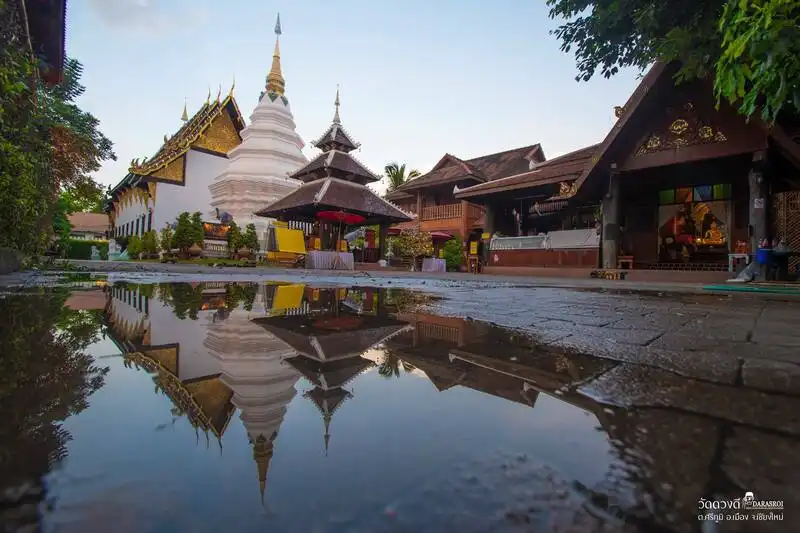
Wat Duang Dee is a historic temple located in Chiang Mai’s Old City, close to the Three Kings Monument, in Si Phum Subdistrict, Mueang Chiang Mai District. Its central location makes it easy to reach on foot from many important landmarks within the old city moat. Despite being surrounded by lively streets, the temple maintains a calm and reflective atmosphere, making it a meaningful place for both local worshippers and visitors seeking cultural depth.
Although the exact date of the temple’s founding is not clearly recorded, historical research and local documentation indicate that Wat Duang Dee is one of the long-established temples of Chiang Mai. Over time, it has been known by several names, including Wat Phanthunom Dee, Wat Udom Dee, and Wat Phanom Dee. The current name, “Duang Dee,” meaning “good fortune,” is considered highly auspicious and is one reason why the temple continues to attract Thai and international visitors throughout the year.
A key piece of historical evidence comes from an inscription discovered on the base of a metal Buddha image housed in the vihara. This inscription was documented during a research project conducted in 1970, led by Dr. Hans Penth, with Khun Puangkam Tuikhiao serving as a research assistant. The inscription is written in ancient Lanna (Tai Yuan) script and records the year 859 of the Chulasakarat era, corresponding to 2039 CE, during the reign of King Yot Chiang Rai.
The inscription suggests that the Buddha image was created at this site rather than brought from elsewhere, indicating that the temple was already active during that period. It also references the name Wat Ton Mak Nuea, or “Northern Areca Palm Temple,” which is believed to be an earlier name associated with Wat Duang Dee. Based on this evidence, scholars generally conclude that the temple was established after King Mangrai founded Chiang Mai, likely under the patronage of a member of the local ruling elite.
Wat Duang Dee also appears in important historical narratives related to the political history of Chiang Mai. In 2304 CE, records indicate that the abbot of the temple was invited to disrobe and was briefly installed as the ruler of Chiang Mai. This unusual event highlights the influential role that senior monks and temples once played in the political life of the city. However, in 2306 CE, Chiang Mai and the wider Lanna region once again fell under Burmese rule.
In 2317 CE (Chulasakarat 1136), Chao Kawila, with military support from King Taksin of Thonburi, successfully reclaimed Chiang Mai from Burmese control. From that point onward, the city gradually recovered and flourished, eventually becoming the cultural center of northern Thailand that it is today. Wat Duang Dee remained an active part of this historical continuum, serving both religious and community functions.
Beyond its religious role, Wat Duang Dee also played an important part in the educational history of Chiang Mai. The temple was once used as a learning center for the children of nobles and officials. It also served as a temporary classroom for students of Yupparaj Wittayalai School before the school’s permanent buildings were completed. These roles underline the temple’s significance as a center of knowledge and social development in earlier periods.
Architecturally, the temple features a white Lanna-style chedi that creates a sense of simplicity and calm. Visitors can also observe traditional wooden details in certain areas, adding warmth and character to the temple grounds. Morning visits are especially pleasant, with cooler temperatures and fewer crowds, while late-afternoon light enhances the visual depth of the buildings and decorative elements.
Many visitors come to Wat Duang Dee to pray for good fortune, in keeping with the auspicious meaning of the temple’s name. Worshippers typically make merit quietly, dress modestly, and show respect for areas used for religious practice. During special ceremonies or merit-making events, visitors are advised to follow posted guidelines and be mindful of ongoing rituals.
Getting There Wat Duang Dee is located within Chiang Mai’s Old City, close to the Three Kings Monument. It can easily be reached on foot from many major attractions inside the moat. Red songthaews, taxis, and private vehicles are also convenient options. Visitors arriving by car should allow extra time to find parking, especially in the late afternoon or on weekends when the Old City area becomes busier.
| Place Name | Wat Duang Dee |
| Location | Si Phum Subdistrict, Mueang Chiang Mai District, Chiang Mai (near the Three Kings Monument) |
| Key Characteristics | Historic Old City temple, calm atmosphere, white Lanna-style chedi, auspicious temple name associated with good fortune |
| Historical Period | Post–founding period of Chiang Mai; inscription dated Chulasakarat 859 (2039 CE) |
| Key Evidence | Lanna-script inscription on a metal Buddha image base; historical records of Chiang Mai’s political history |
| Name Origin | Named “Duang Dee,” meaning good fortune; historically known by several names including Wat Ton Mak Nuea |
| Getting There | Walkable from Old City landmarks; accessible by songthaew, taxi, or private car |
| Current Status | Open to visitors and worshippers |
| Contact Phone | 098-454-4579 |
Frequently Asked Questions (FAQ)
Q: Where is Wat Duang Dee located?
A: Wat Duang Dee is located in Chiang Mai’s Old City, near the Three Kings Monument in Si Phum Subdistrict.
Q: Why do people visit Wat Duang Dee?
A: Visitors come to pray for good fortune, explore Chiang Mai’s history, and experience a peaceful temple atmosphere in the Old City.
Q: How old is Wat Duang Dee?
A: While the exact founding date is unclear, inscriptions indicate activity at the site as early as 2039 CE.
Q: Is there an entrance fee?
A: No, admission is free. Donations are welcome according to personal faith.
Q: Can I visit Wat Duang Dee without a car?
A: Yes, the temple is easily accessible on foot from many Old City attractions or by local transport.
 Category: ●Places of Worship
 Group: ●Temple
Last Update : 10 MonthAgo
 Last Update : 10 MonthAgo
 Click to Access the Navigation Map GPS
Wat Duang Dee Map
Recommend

 Art, Culture and Heritage
 Historical Sites and Monuments(8)
 Landmarks and Memorials(5)
 Royal Palace(2)
 Art, Craft Centres, Tradition(43)
 Museums(24)
 Educational Places
 Museum for Study(2)
 Educational Gardens, Farm(5)
 Training Center(1)
 University
 Public university(1)
 Autonomous Universities(2)
 Rajamangala University of Technology(1)
 Rajabhat University(1)
 Private University(5)
Temple(79)
Private University(5)
Temple(79)
 Mosque(2)
 Other Sacred Sites(17)
 Research and Development
 Royal Project(45)
 Suburban Living
 Village, Community(41)
 Local Market(14)
 Nature and Wildlife
 National Parks and Marine Reserves(18)
 Mountain (Doi)(21)
 Dam, Reservoir, Lake(26)
 Waterfalls(43)
 Hot Springs(12)
 Caves(11)
 River, Canal(6)
 Other natural attractions(14)
 Entertainment and Agricultural
 Zoos and Aquariums(3)
 Animal camps and shows(3)
 Stadium(1)
 Farms, Parks and Ecotourism(19)
 Waterpark(2)
 Theater(1)
 Outdoor and Adventure Activities(10)
 Shopping
 Shopping and Night Market(6)
 Restaurant
 Michelin Star(1)
 Michelin Guide(23)
 Call Customer Service in Tourism
 Call Customer Service in Tourism(1)
 Travel Articles, Recipes
 Travel Review, Food Review(25)
 Food Menu, North Recipes(30)
 Thai Desserts, North Recipes(17)


