
lovethailand home >North Travel Attractions >Chiang Mai Travel Attractions >Mae Ai >Tha Ton > Mok Cham Royal Project Development Center
TL;DR: Mok Cham Royal Project Development Center, Chiang Mai attractions : Research and Development, Royal Project.
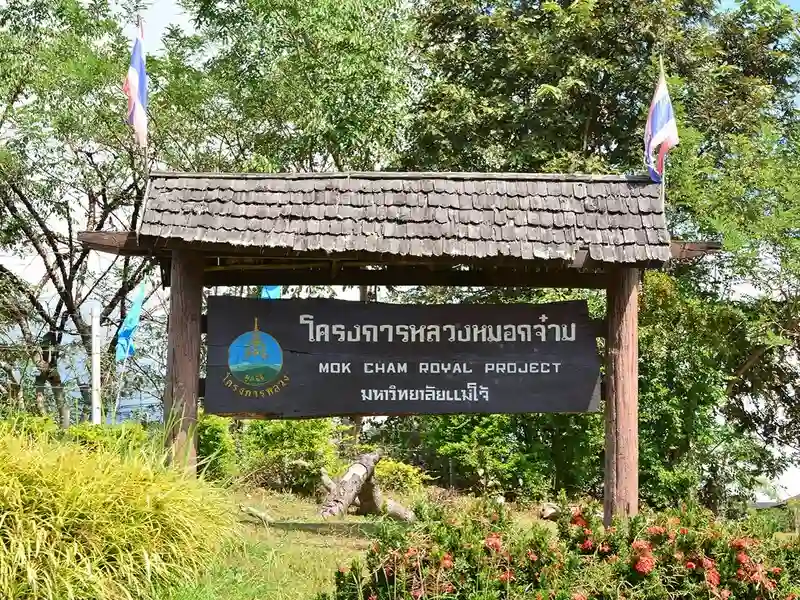
Mok Cham Royal Project Development Center
Open Days: Recommended to check/arrange an appointment in advance before traveling
Opening Hours: Recommended 08.30–16.30 (may change depending on field operations)
Mok Cham Royal Project Development Center is a genuinely peaceful Chiang Mai getaway for anyone who wants a quiet Northern Thailand trip and to see real, on-the-ground highland development without a staged vibe. The heart of this place is practical work under the Royal Project and royal initiatives, aimed at helping communities build stable livelihoods, reduce job insecurity, and manage natural resources in balance with the way of life along the Kok River basin.
The story of this area traces back to 1969 (B.E. 2512), when His Majesty the King visited the Musoe (Lahu) community at Wang Din Village in Mae Ai District, Chiang Mai. This is a border area about 10 kilometers from the Thailand–Myanmar frontier. Seeing the hardship and difficult living conditions firsthand became the starting point of an idea: people here deserved support to live better, through livelihood development and land management that truly fits the local geography.
Later, the Mok Cham Royal Project Development Center was established in 1983 (B.E. 2526) to support the royal initiative. The center has been under the responsibility of Maejo University (in terms of academic support and development work), with its operational base in Huai Sala Village—a location that connects conveniently to surrounding communities within the Kok River basin.
Overall, the center’s responsibility area covers approximately 10,437.76 rai across about 15 villages. The population is highly diverse, including Akha, Tai Lue, Lisu, Musoe (Lahu), Yao, Tai Yai (Shan), Karen, Khon Mueang, and Yunnan Chinese. This diversity means “development” cannot be one-size-fits-all; it must be designed to match each community’s way of life, language, beliefs, and local economic structure. Geographically, the center sits around 450–550 meters above sea level on lowland terrain along the Kok River, surrounded by complex mountain ridges—so you see both river-based agriculture and hillside community life within the same landscape.
For agricultural learning and agro-tourism, the charm is seeing tangible examples of “alternative crops” in real production settings. You’ll find a wide mix of vegetables and field crops such as purple eggplant (dark-stem type), Japanese pumpkin, orange pumpkin, white pumpkin, bitter melon, green beans, ornamental gourds, royal red beans, and black-skinned soybeans, along with mango orchards featuring multiple cultivars such as Nuan Kham, R2E2, Irwin, Palmer, and more. A small but lovely highlight is tasting sweet passion fruit fresh from the vine—turning the visit from simply “seeing” into experiencing the outcome of agricultural support that truly works for farmers.
What sets Mok Cham apart from typical photo-stop destinations is its strong cultural dimension. Nearby communities carry distinct identities you can learn from, such as Akha life in Huai Sala Village, including traditional ornament-making and weaving, as well as the Akha Swing Festival (Lo Swing Ceremony), often held around August. It is a powerful cultural scene that communicates community spirit without needing much explanation.
Another side of the experience is Tai Lue life in Wang Phai Village. Many visitors are impressed by the traditional processing of konjac (buek), bamboo basketry, Tai Lue cuisine, and Tai Lue music, which is both melodic and lively. In some periods, community homestays may be available, making the visit more than a quick stop—it becomes time spent with people and their stories.
And when it comes to Tai Yai (Shan) culture, Ban Mai Mok Cham is a key highlight. The community is home to Wat Mai Mok Cham, built in a beautiful Tai Yai style, and the Chao Kru Mo Tai Museum, which presents Tai Yai daily life, heritage, and roots in one place. This often leaves travelers feeling that “art and faith” are not distant ideas—they live here. If you come in the right season, you may also hear about Tai Yai annual festivals held continuously across all 12 months. Well-known examples include Poi Sang Long (often around April), Poi Luen Sip-Et / Chong Phara (commonly after Songkran), and Poi Luang honoring Chao Kru Mo Tai (often around February). These seasonal rhythms can give your trip a “calendar” and deeper meaning beyond a casual visit.
On the nature side, many people enjoy boat trips along the Kok River. There are short routes starting from the Tha Ton pier to Wang Phai Village, and longer routes continuing toward Chiang Rai Province (it’s best to check boat schedules and water conditions by season). Another interesting stop is Malika Hot Spring in Ban Mueang Ngam, a simple place to unwind after a long drive.
Souvenirs here typically go in two directions. First, seasonal Royal Project produce sold at the center and at participating farms. Second, handicrafts such as silverwork, handwoven textiles from hill-tribe communities, and bamboo furniture—all reflecting local skills and the ability to turn cultural capital into sustainable income.
For accommodation and food, the center has 1 guesthouse that can accommodate about 10 people. Generally, there is no permanent restaurant inside the center, but meals can be arranged in advance by ordering (especially suitable for groups). Nearby accommodation options are often found in the Tha Ton subdistrict area, about 15 kilometers before reaching the center, including resorts and hotels, as well as some community homestays in villages such as the Wang Phai area—a good fit for travelers who want to be closer to local life and take things slow.
Getting There From Chiang Mai city, the distance is approximately 190 kilometers. Take Highway 107 (Chiang Mai–Fang), passing through Mae Rim, Mae Taeng, Chiang Dao, Chai Prakan, and Fang, then continue to Tha Ton in Mae Ai District (near the bridge over the Kok River). Next, enter Highway 1089 and continue to around Kilometer 37, then turn left into a short access road for about 200 meters to reach the center area. In general, most vehicle types can travel the route, but you should allow extra time because it is a long-distance trip. In the rainy season, drive especially carefully.
If you want this trip to be “more than just sightseeing,” treat the area as a real working landscape for communities and staff. Follow designated guidance, avoid disturbing production or demonstration plots, and if your goal is culture, check festival periods in advance so you don’t miss the most vibrant moments of community life.
| Name | Mok Cham Royal Project Development Center |
| Location | Huai Sala Village, Mae Ai District, Chiang Mai (Kok River basin zone) |
| Project Type | Royal Project / Royal Initiative (established in 1983) |
| Responsibility Area | Approximately 10,437.76 rai (around 15 villages) |
| Elevation | Approximately 450–550 meters above sea level |
| Landscape | Lowland terrain along the Kok River, surrounded by complex mountain ridges |
| Main Highlights | Agro-tourism (vegetable/field-crop plots, mango orchards, seasonal produce tasting), learning local ethnic cultures, Kok River boat trips (seasonal) |
| Culture & Traditions | Akha: Swing Festival (often around August); Tai Yai (Shan): Poi Sang Long (often around April) and other annual merit-making festivals; Tai Lue: food, music, crafts (depends on community activities) |
| On-site Accommodation | 1 guesthouse (about 10-person capacity) – recommended to contact/arrange in advance |
| Food On-site | Generally no permanent restaurant – meals can be arranged by ordering in advance (recommended for groups) |
| Travel Summary | From Chiang Mai take Highway 107 to the Tha Ton area (Mae Ai), then Highway 1089 to the access turn to the center (total distance about 190 km) |
| Nearby Attractions (with Distance) | Tha Ton area (about 15 km) Wat Tha Ton / Thaton Chedi area (about 15–20 km) Kok River boat pier (Tha Ton zone) (about 15–20 km) Tai Lue community at Wang Phai Village (distance depends on exact destination) (about 10–25 km) Malika Hot Spring (Ban Mueang Ngam) (about 20–35 km) Note: Distances are approximate for planning. Please confirm with navigation maps before departure. |
| Popular Restaurants Nearby (Distance–Phone) | Thaton River View Resort (restaurant/riverfront zone) (about 15–20 km) – 053-373-174 The Maekok River Village Resort (Food & Drink/Restaurant) (about 15–25 km) – 053-053-628 Kalavela Cafe (Tha Ton area) (about 15–25 km) – 063-883-7154 Note: Tha Ton has multiple dining options. Distances vary by your exact start point and route. Call/check maps before going. |
| Popular Accommodations Nearby (Distance–Phone) | Thaton River View Resort (about 15–20 km) – 053-373-174 The Maekok River Village Resort (about 15–25 km) – 053-053-628 Thaton Garden Resort (about 15–25 km) – 053-459-288 Thaton Hill Resort (about 15–25 km) – 061-351-9729, 053-053-669 |
| Contact | Phone: 081-961-2677 (recommended to contact/arrange before traveling) |
Frequently Asked Questions (FAQ)
Q: Who is Mok Cham Royal Project Development Center best for?
A: It’s ideal for travelers who want a quiet trip, enjoy learning about highland agriculture and ethnic community life, and want to see real royal-initiative development work rather than a rushed sightseeing itinerary.
Q: What can I do there?
A: Walk through Royal Project production plots (vegetables, field crops, mango orchards), taste seasonal produce when available, learn about nearby ethnic cultures, and plan a Kok River boat trip depending on the season.
Q: What is the best time to visit?
A: Late rainy season into cool season is often comfortable for travel with pleasant weather. The rainy season can be very lush, but you should allow extra time and drive carefully because it’s a long-distance route and some sections may be wet or slippery.
Q: If I want to see the Akha Swing Festival, when should I go?
A: It is often around August, but details can vary by community and year. It’s best to check schedules with local communities/contacts in advance.
Q: Where can I see Tai Yai (Shan) temples and local heritage exhibits?
A: Wat Mai Mok Cham and the Chao Kru Mo Tai Museum are key Tai Yai cultural points in the area, offering insight into art, faith, and daily life.
Q: What are good options for an overnight stay?
A: If you want to stay close to the center’s working area, ask about the on-site guesthouse in advance. For more convenience (facilities and dining), stay in the Tha Ton area and drive in and out according to your plan.
Tel : 053451463
 Tel : 053451463
Mobile : 0819612677
 Mobile : 0819612677
 Category: ●Research and Development
 Group: ●Royal Project
Last Update : 10 MonthAgo
 Last Update : 10 MonthAgo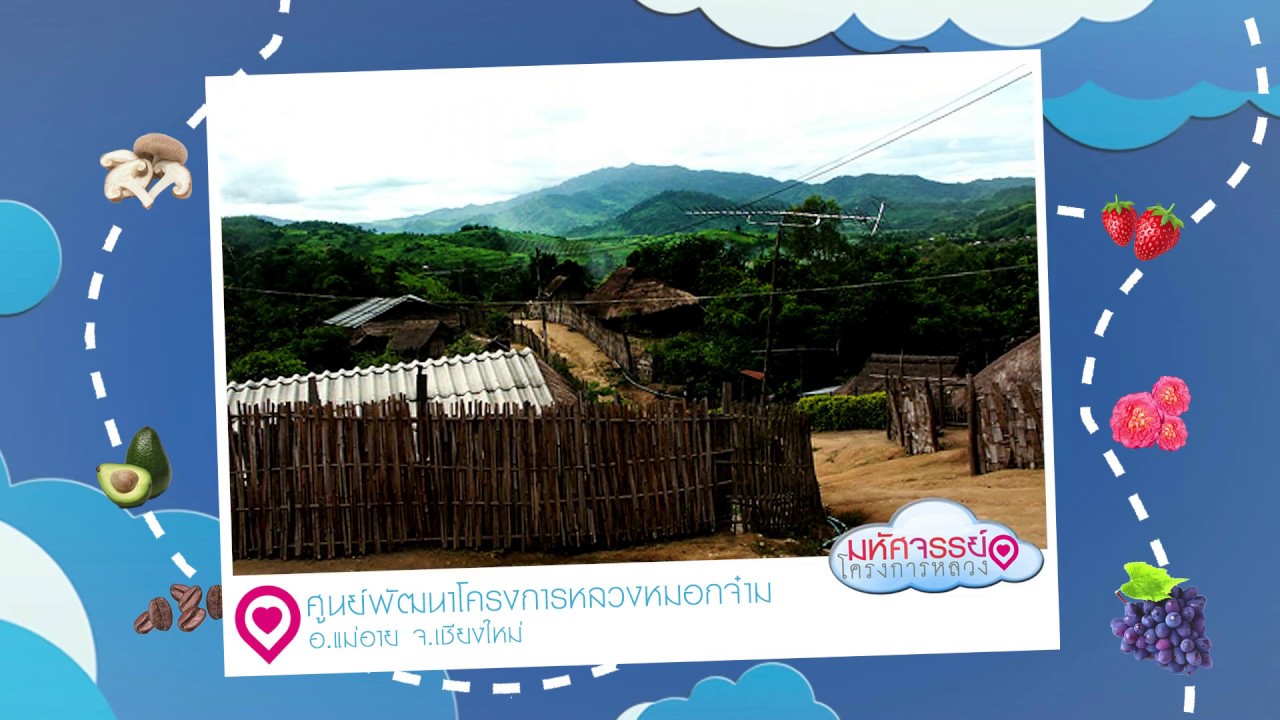
 Click to Access the Navigation Map GPS
Mok Cham Royal Project Development Center Map
Recommend

 Art, Culture and Heritage
 Historical Sites and Monuments(8)
 Landmarks and Memorials(5)
 Royal Palace(2)
 Art, Craft Centres, Tradition(43)
 Museums(24)
 Educational Places
 Museum for Study(2)
 Educational Gardens, Farm(5)
 Training Center(1)
 Places of Worship
 Temple(79)
 Mosque(2)
 Other Sacred Sites(17)
Royal Project(45)
Other Sacred Sites(17)
Royal Project(45)
 Suburban Living
 Village, Community(41)
 Local Market(14)
 Nature and Wildlife
 National Parks and Marine Reserves(18)
 Mountain (Doi)(21)
 Dam, Reservoir, Lake(26)
 Waterfalls(43)
 Hot Springs(12)
 Caves(11)
 River, Canal(6)
 Other natural attractions(14)
 Entertainment and Agricultural
 Zoos and Aquariums(3)
 Animal camps and shows(3)
 Stadium(1)
 Farms, Parks and Ecotourism(19)
 Waterpark(2)
 Theater(1)
 Outdoor and Adventure Activities(10)
 Shopping
 Shopping and Night Market(6)
 Restaurant
 Michelin Star(1)
 Michelin Guide(23)
 Call Customer Service in Tourism
 Call Customer Service in Tourism(1)
 Travel Articles, Recipes
 Travel Review, Food Review(24)
 Food Menu, North Recipes(30)
 Thai Desserts, North Recipes(17)


