

 Home
Home Chiang Mai(










Wat San Pu Loei
Rating: 4.2/5 (5 votes)
 Search By
  Map
Map 
 Have Map
  No Map
Chiang Mai attractions
Attractions in Thailand
Open Days: Daily
Opening Hours: 08.00–17.00
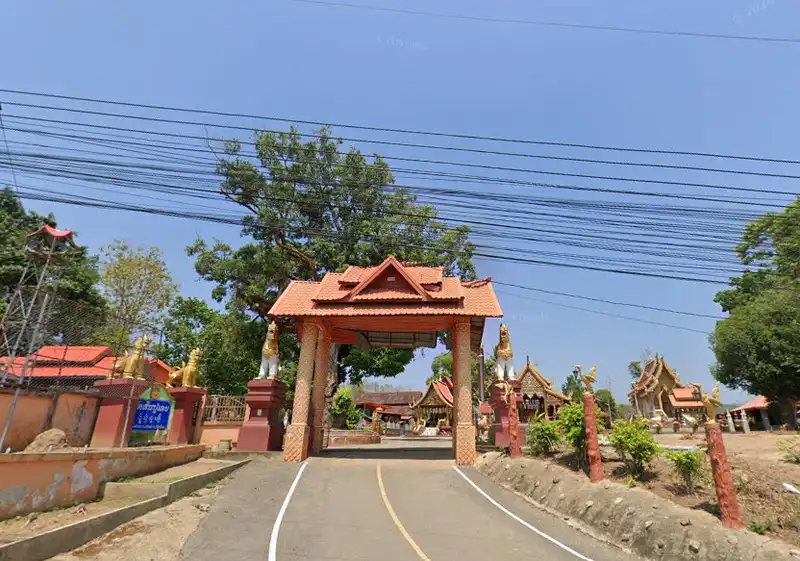
Wat San Pu Loei is an old temple in Mae Taeng District, Chiang Mai, well known among locals as a “community temple” that continues to serve as the village’s spiritual anchor. Beyond being a place for religious ceremonies, it also functions as a gathering space for merit-making events, traditional festivals, and community learning activities. Basic information about the temple notes that it was formerly called “Wat Sahri Boonnak,” located at 121/1 Moo 6, Mae Taeng Subdistrict, Mae Taeng District, Chiang Mai. The temple is under the Mahanikaya sect and covers a total area of 8 rai 1 ngan 11 square wah, with land documentation recorded as Nor Sor 3 Gor No. 745, page 45, book 8G, which helps confirm the temple’s standing in terms of land administration and site management.
The overall setting of Wat San Pu Loei truly reflects a “temple at the heart of everyday life.” Its boundaries are directly tied to the community landscape: the south and north sides border the village, the east side borders the rice-field road, and the west side borders gardens and forest. This layout keeps the temple’s surroundings distinctly rural Mae Taeng—quiet, simple, and naturally woven into daily rhythms, from mornings when villagers head out to the fields to evenings when they return home. The temple is not a rushed “check-in” stop, but a place suited to slow walking, quiet observation, and gently resetting your pace.
Historically, Wat San Pu Loei is recorded as having been established in 2420 BE (1877 CE) and later granted Wisungkhamsima in 2541 BE (1998 CE), an important milestone indicating official recognition of the temple’s ecclesiastical status. This further strengthens the temple’s role in the community, both for key monastic rites and as a center for merit-making traditions. In addition, the temple was selected by Thailand’s National Office of Buddhism as an “Educational Park in a Temple” for the year 2546 BE (2003 CE). For travelers who want more than a surface-level temple visit, this detail matters because it reflects the idea of elevating the temple into a structured learning space for religion, ethics, and community-based education.
What makes Wat San Pu Loei truly “story-worthy” is not only its founding year or land records, but also the complete set of religious architecture and functional spaces typical of a Northern Thai community temple. Information indicates the temple includes key structures such as a viharn (assembly hall), ubosot (ordination hall), chedi (stupa), bell tower, monks’ quarters, dining hall, kitchen, sermon hall, and other supporting facilities. This means that when you step inside, you can see a working “temple system” in action—spaces for monastic rites, religious practice, daily living for monks, and community gathering. That is exactly why temples like this often become the village’s heart: they support both ritual life and everyday life in one place.
A point many visitors appreciate (especially those seeking something different from Chiang Mai’s old-city temple routes) is the rural Mae Taeng atmosphere—still natural, yet easy to reach. Because the temple sits within Mae Taeng Subdistrict, a corridor of several travel styles, it pairs well with nearby nature routes (dams/national parks/rivers) and cultural routes (notable temples in the wider area). Stopping by Wat San Pu Loei can work as a calm pause on the way, or as a gentle starting point before heading out to Mae Taeng’s natural attractions. The overall feeling is peaceful, simple, and quietly grounding.
Another role that should not be overlooked is the temple as a place where the community gathers its collective strength. Annual merit-making events, Kathina ceremonies, forest-robes offerings, Buddhist holy-day observances, and public-benefit activities often happen through the shared effort of villagers. Wat San Pu Loei carries traces of this community connection through local Mae Taeng activity information that has been mentioned in local media, showing that the temple remains “alive” as an ongoing space for people to do good together, rather than a place reserved only for formal rituals.
If you come with a cultural lens, it’s worth taking time to walk through the temple’s main components at an unhurried pace. Start from the viharn and ubosot as the core ritual areas, observe how the courtyard connects to the sermon hall, then follow the paths toward the monks’ quarters and kitchen area—the temple’s “back-of-house” that supports daily operations. You may notice a simple truth: a strong community temple is often not “beautiful because it is decorated,” but beautiful because its spaces are thoughtfully functional, orderly, and truly usable by people.
If your intention is merit-making, consider bringing small offerings such as flowers, incense, and candles, or donating according to your faith at the temple donation box. If you happen to meet villagers or temple staff—especially in the morning or during community events—you may hear additional local details, such as stories surrounding the former name of the temple, older residents’ memories of the area, or key events held at the temple. That is part of the charm of community temples like this: much of the history lives in people’s memories just as much as in documents.
Getting There From Chiang Mai city, drive toward Mae Taeng District (via the main road into the district). Then proceed into Mae Taeng Subdistrict and head to Moo 6 following the temple location. It is recommended to use a navigation map and search for “Wat San Pu Loei, Mae Taeng” for accuracy, as there may be several small junctions within the community. The temple is within the village area and can be accessed conveniently by car or motorbike. If you want to confirm the most suitable route or visit time, you can call 053-471-227.
| Name | Wat San Pu Loei |
| Location | 121/1 Moo 6, Mae Taeng Subdistrict, Mae Taeng District, Chiang Mai 50150 |
| Highlights | Mahanikaya community temple in rural Mae Taeng; complete temple structures; selected as an Educational Park in a Temple (2003) |
| Period | Founded in 2420 BE; Wisungkhamsima granted in 2541 BE |
| Key Evidence / Notes | Temple area 8 rai 1 ngan 11 square wah; key structures include viharn, ubosot, chedi, bell tower, monks’ quarters, dining hall, kitchen, sermon hall, etc. |
| Former Name | Formerly known as “Wat Sahri Boonnak” |
| Open Days | Daily (recommended to confirm by phone) |
| Opening Hours | Recommended 08.00–17.00 (please confirm by phone) |
| Getting There | Drive from Chiang Mai city to Mae Taeng District → enter Mae Taeng Subdistrict → proceed to Moo 6 (search “Wat San Pu Loei, Mae Taeng” on maps for accuracy) |
| Fees | No admission fee information found (temples are generally free to enter) |
| Facilities | Main religious structures and supporting buildings as noted (viharn, ubosot, sermon hall, bell tower, monks’ quarters, dining hall, kitchen, etc.) |
| Nearby Attractions (with Distance) | Mae Ngat Somboon Chon Dam (approx. 15–25 km) Mae Taeng rafting / riverside activity zone (approx. 10–20 km) Si Lanna National Park (approx. 25–40 km) Wat Ban Den Sali Si Muang Kaen (approx. 25–35 km) Mae Taeng town / service area (approx. 5–12 km) |
| Popular Restaurants Nearby (distance & phone) | Lab Ton Kham (approx. 8–15 km) Tel. 081-530-2813 (also 081-920-1482) Hug Home Cafe & Bistro (approx. 8–18 km) Tel. 065-223-2896 Baan Suan Chomchan (approx. 10–20 km) Tel. 053-047-111, 089-433-5819 Hug & Hope Cafe’ (approx. 8–18 km) Tel. 065-504-3850 Khao Kha Moo Lang Baan (Cho Lae/Mae Taeng area) (approx. 5–15 km) Tel. 098-261-7463 |
| Popular Accommodations Nearby (distance & phone) | Phusanfah Resort (approx. 15–30 km) Tel. 087-702-9888 Sibsan Resort & Spa Maeteang (approx. 15–30 km) Tel. 053-338-888 Cherpue Chiangmai (approx. 20–40 km) Tel. 095-451-0095 Chill Feel Resort Chiang Mai (approx. 15–35 km) Tel. 097-956-2945 Villa De Phu (approx. 15–35 km) Tel. 080-317-9987 |
| Contact Number | 053-471-227 |
| Current Status | Open and active as a community temple in Mae Taeng District |
Frequently Asked Questions (FAQ)
Q: Where is Wat San Pu Loei located?
A: It is located at 121/1 Moo 6, Mae Taeng Subdistrict, Mae Taeng District, Chiang Mai.
Q: When was Wat San Pu Loei founded?
A: The temple is recorded as having been founded in 2420 BE and granted Wisungkhamsima in 2541 BE.
Q: What was the former name of Wat San Pu Loei?
A: It was formerly known as Wat Sahri Boonnak.
Q: What can visitors see inside the temple?
A: Key structures include a viharn, ubosot, chedi, bell tower, sermon hall, monks’ quarters, dining hall, kitchen, and other supporting buildings.
Q: Who should I contact to confirm directions or visiting times?
A: You can contact the temple at 053-471-227.
 Wat San Pu Loei Map
 Category:
  Group:
  Tag: ●Wat San Pu Loei●wat san pu loei ●mae taeng temple ●temples in chiang mai ●chiang mai travel ●northern thailand travel ●community temple thailand ●wat sahri boonnak ●cultural temples chiang mai ●mae taeng attractions Last Update: 3 MonthAgo
Comment
 Nearby Attractions
| Keyword (Advance) |
 Facebook Fanpage
 Region
 Art, Culture and Heritage
 Historical Sites and Monuments(
 Landmarks and Memorials(
 Royal Palace(
 Art, Craft Centres, Tradition(
 Museums(
 Educational Places
 Museum for Study(
 Educational Gardens, Farm(
 Training Center(
 University
 Mosque(
 Other religious and spiritural sites(
 Research and Development
 Royal Project(
 Suburban Living
 Village, Community(
 Local Market(
 Nature and Wildlife
 National Parks and Marine Reserves(
 Mountain (Doi)(
 Dam, Reservoir, Lake(
 Waterfalls(
 Hot Springs(
 Caves(
 River, Canal(
 Other natural attractions(
 Entertainment and Agricultural
 Zoos and Aquariums(
 Animal camps and shows(
 Stadium(
 Farm, Parks, Gardens and Ecotourism(
 Waterpark(
 Theater(
 Outdoor and Adventure Activities(
 Shopping
 Shopping and Night Market(
 Restaurant
 Michelin Star(
 Michelin Guide(
 Call Customer Service in Tourism
 Call Customer Service in Tourism(
 Travel Articles, Recipes
 Travel Review, Food Review(
 Food Menu, North Recipes(
 Thai Desserts, North Recipes(
 Copyright 2012,