

 Home
Home Chiang Mai(










Wat Wang Daeng
Rating: 3.6/5 (9 votes)
 Search By
  Map
Map 
 Have Map
  No Map
Chiang Mai attractions
Attractions in Thailand
Open Days: Daily
Opening Hours: 08.00–17.00
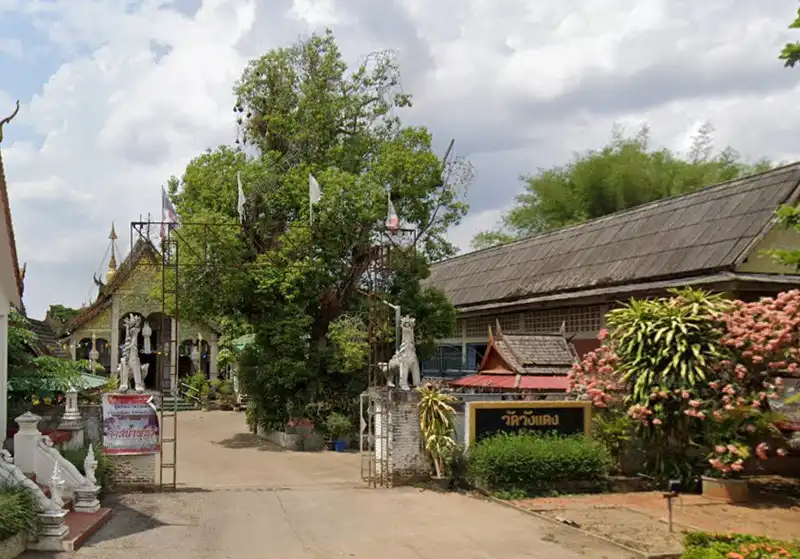
Wat Wang Daeng is an old community temple located in Village No. 2, Inthakhil Subdistrict, Mae Taeng District, Chiang Mai Province. Situated north of Chiang Mai city, the surrounding area still preserves the rural landscape of Lanna communities. Wat Wang Daeng is not only a place of worship but also a space that reflects the close relationship between Buddhism, local people, and the natural environment of northern Thailand.
Within Mae Taeng District, Wat Wang Daeng has long played an important role in the daily life of the Inthakhil community. From the past to the present, the temple has served as a venue for religious ceremonies, a spiritual anchor, and a gathering place for villagers. Merit-making rituals, Buddhist holy days, annual festivals, and everyday social interactions continue to take place within the temple grounds.
The area surrounding Wat Wang Daeng remains predominantly agricultural, with houses scattered rather than densely clustered. Upon entering the temple, visitors immediately sense a calm and peaceful atmosphere, clearly different from temples in urban Chiang Mai. The absence of traffic noise and crowds allows the temple to function as a place of quiet reflection and mental rest.
Historically, there is no official record identifying the exact year Wat Wang Daeng was founded. However, local oral accounts suggest that the temple was established alongside the early settlement of the Inthakhil community. The name “Wang Daeng” is believed to derive from local geographical characteristics, possibly referring to a basin or lowland area with reddish soil. Naming temples after natural features is common in Lanna culture and reflects the close bond between temples and their surroundings.
In Lanna society, temples were never built in isolation. Wat Wang Daeng demonstrates this clearly through its location, layout, and building orientation, all of which were adapted to the terrain, local beliefs, and community lifestyle. Seen from this perspective, the temple is not only a sacred site but also a cultural structure that has shaped community identity over generations.
The principal Buddha image and the stupa at Wat Wang Daeng form the spiritual heart of the temple. Local residents frequently come to pay respects, believing that worship here brings peace, removes obstacles, and supports success in life and work. Prayers for longevity, good health, and family harmony are especially common, reflecting values rooted in the agricultural traditions of northern Thailand.
The artistic elements of Wat Wang Daeng represent traditional Lanna folk-style craftsmanship, emphasizing simplicity rather than grandeur. The temple buildings are well proportioned and harmoniously integrated with their environment. Decorative details reflect the skills of local artisans, passed down through generations, expressing faith more than ornamentation.
One distinctive feature of Wat Wang Daeng is its main hall, which faces south—an uncommon orientation among Lanna temples, which typically face east or north according to auspicious beliefs. This unusual alignment invites interpretation, possibly influenced by local geography, environmental conditions, or specific community beliefs at the time of construction.
In Lanna temple design, orientation plays an important role, affecting sunlight, airflow, access routes, and symbolic meaning. The south-facing hall of Wat Wang Daeng suggests a flexible and pragmatic approach, prioritizing harmony with the landscape over strict adherence to traditional conventions.
Beyond its religious role, Wat Wang Daeng continues to function as a community center for Inthakhil residents. In Lanna culture, temples are places of learning, support, and social connection. Wat Wang Daeng brings together multiple generations, from children learning moral values to elders seeking a peaceful place for reflection.
During major Buddhist festivals such as Visakha Bucha Day, the beginning and end of Buddhist Lent, the temple becomes lively with communal merit-making activities. These occasions highlight the enduring bond between the temple and the community, even as modern lifestyles evolve.
A key belief associated with Wat Wang Daeng is the idea of becoming a “protective shelter” for one’s descendants, often described metaphorically as being a shade-giving tree. This belief emphasizes stability, responsibility, and long-term family continuity rather than individual wealth or fame.
Visitors often come to Wat Wang Daeng to pray for a smooth and obstacle-free life, good health, longevity, and the ability to support their families. These wishes reflect a worldview shaped by patience, self-reliance, and long-term planning rooted in agricultural life.
For travelers, Wat Wang Daeng offers a very different experience from Chiang Mai’s famous urban temples. There are no crowds, souvenir stalls, or rushed itineraries. Visitors can explore the grounds at a relaxed pace, observe architectural details, and absorb the tranquil atmosphere.
Careful observation reveals subtle beauty in the temple’s layout, the calm proportions of its buildings, and the sincerity of its craftsmanship. These qualities define the charm of a genuine Lanna community temple, increasingly rare in commercialized tourist areas.
From a travel perspective, Wat Wang Daeng fits naturally into a Mae Taeng itinerary. While many travelers visit Mae Taeng for nature-based activities such as rafting, reservoirs, or mountain scenery, a stop at the temple adds cultural and spiritual depth to the journey.
The temple is ideal for a peaceful morning visit before other activities or as a quiet pause later in the day. Its accessible location and calm environment allow for flexible scheduling within a Mae Taeng travel plan.
Getting There From Chiang Mai city, drive toward Mae Taeng District and continue into Inthakhil Subdistrict. The temple is located within the community and can be easily reached using online navigation maps. The route is suitable for private vehicles year-round.
Visitors are advised to dress modestly and behave respectfully to honor the religious nature of the site and the surrounding community. Such mindfulness helps preserve the peaceful atmosphere of the temple.
When viewed within the broader context of Lanna temples in Chiang Mai, Wat Wang Daeng stands apart from large city temples. While royal temples emphasize grandeur and historical significance, Wat Wang Daeng represents everyday spirituality rooted in community life.
This distinction makes Wat Wang Daeng a living cultural record, demonstrating how Buddhism and local traditions continue through small, community-based temples. Overlooking such places means missing an essential layer of Chiang Mai’s cultural identity.
Although not widely known among international tourists, Wat Wang Daeng is ideal for travelers seeking authentic local experiences and cultural immersion. It reveals a quieter side of Chiang Mai defined by sincerity, simplicity, and continuity.
In conclusion, Wat Wang Daeng may not impress through size at first glance, but its calm presence, strong community roots, and cultural depth gradually reveal their significance. Visiting this temple is not merely sightseeing but an opportunity to understand the foundations of Lanna culture and the ongoing role of Buddhism in everyday life.
| Name | Wat Wang Daeng |
| Location | Village No. 2, Inthakhil Subdistrict, Mae Taeng District, Chiang Mai Province |
| Highlights | Peaceful Lanna community temple, rare south-facing main hall |
| Period | No official founding date; believed to align with early Inthakhil settlement |
| Key Features | Principal Buddha image, stupa, traditional Lanna folk craftsmanship |
| Name Origin | Likely derived from local geographical features such as red soil or lowland basin |
| Access | Accessible by private vehicle from Chiang Mai city via Mae Taeng |
| Status | Open daily for worship and visits |
| Contact Number | 086-192-3963 |
| Nearby Attractions (Approx. Distance) | Mae Ngat Somboon Chon Dam (approx. 20 km) Raming Tea Plantation (approx. 18 km) Jungle View Coffee (approx. 20 km) Mae Malai Market (approx. 15 km) Mae Taeng River rafting areas (approx. 25 km) |
| Popular Restaurants Nearby | Muanjai Café (approx. 3 km) Tel. 095-145-8141 No.148 Café by Raming Tea (approx. 12 km) Tel. 053-242-292 Hom-Nuan Café (approx. 8 km) Tel. 083-569-2513, 062-979-1596 Ken’s House Sweet & Café (approx. 10 km) Tel. 089-851-5408 Lung Dech Tea Farm (approx. 18 km) Tel. 081-163-3765 |
| Popular Accommodations Nearby | Ban Thara Resort (approx. 12 km) Tel. 083-545-6828 Phu San Fah Resort (approx. 14 km) Tel. 053-106-437 Sibsan Resort & Spa Maetaeng (approx. 25 km) Tel. 081-980-9070 Maetang Hotel Chiang Mai (approx. 20 km) Tel. 094-796-5599, 053-471-777 Ban Plaifah Homestay Chiang Mai (approx. 15 km) Tel. 098-807-2656 |
Frequently Asked Questions (FAQ)
Q: Where is Wat Wang Daeng located?
A: It is located in Village No. 2, Inthakhil Subdistrict, Mae Taeng District, Chiang Mai Province.
Q: What makes Wat Wang Daeng unique?
A: The temple’s main hall faces south, which is uncommon in Lanna temple layouts, and it retains a peaceful community atmosphere.
Q: What do people usually pray for at Wat Wang Daeng?
A: Visitors commonly pray for a smooth life, good health, longevity, freedom from obstacles, and family stability.
Q: What type of travelers is Wat Wang Daeng suitable for?
A: It is ideal for cultural travelers, those seeking quiet temples, and visitors interested in authentic local experiences.
Q: Is Wat Wang Daeng easy to reach?
A: Yes, it is easily accessible by private vehicle from Chiang Mai city via Mae Taeng, using online navigation maps.
 Wat Wang Daeng Map
 Category:
  Group:
  Tag: ●Wat Wang Daeng●wat wang daeng ●temples in mae taeng ●chiang mai temples ●lanna temple ●mae taeng attractions ●cultural temple chiang mai ●northern thailand temples ●local temples chiang mai ●quiet temples chiang mai Last Update: 2 MonthAgo
Comment
 Nearby Attractions
| Keyword (Advance) |
 Facebook Fanpage
 Region
 Art, Culture and Heritage
 Historical Sites and Monuments(
 Landmarks and Memorials(
 Royal Palace(
 Art, Craft Centres, Tradition(
 Museums(
 Educational Places
 Museum for Study(
 Educational Gardens, Farm(
 Training Center(
 University
 Mosque(
 Other religious and spiritural sites(
 Research and Development
 Royal Project(
 Suburban Living
 Village, Community(
 Local Market(
 Nature and Wildlife
 National Parks and Marine Reserves(
 Mountain (Doi)(
 Dam, Reservoir, Lake(
 Waterfalls(
 Hot Springs(
 Caves(
 River, Canal(
 Other natural attractions(
 Entertainment and Agricultural
 Zoos and Aquariums(
 Animal camps and shows(
 Stadium(
 Farm, Parks, Gardens and Ecotourism(
 Waterpark(
 Theater(
 Outdoor and Adventure Activities(
 Shopping
 Shopping and Night Market(
 Restaurant
 Michelin Star(
 Michelin Guide(
 Call Customer Service in Tourism
 Call Customer Service in Tourism(
 Travel Articles, Recipes
 Travel Review, Food Review(
 Food Menu, North Recipes(
 Thai Desserts, North Recipes(
 Copyright 2012,