
lovethailand home >North Travel Attractions >Chiang Mai Travel Attractions >Phrao >Long Khot > Wat Phrathat Doi Wiang Chai Mongkhon
TL;DR: Wat Phrathat Doi Wiang Chai Mongkhon is located at 467 Moo 6, Ban Luang, Long Khot Subdistrict, Phrao District, Chiang Mai, open Daily, hours Recommended 06.00–18.00 (allow time for the uphill drive and the viewpoint).
Wat Phrathat Doi Wiang Chai Mongkhon
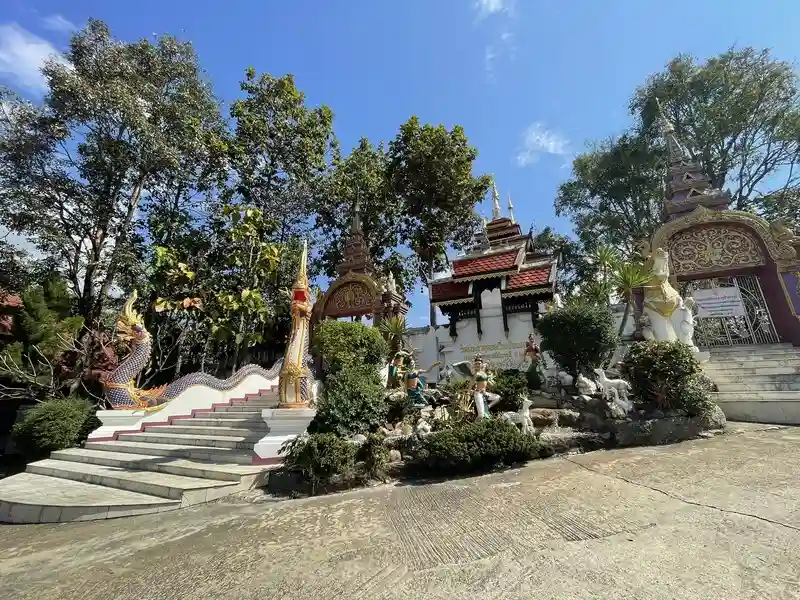
Open Days: Daily
Opening Hours: Recommended 06.00–18.00 (allow time for the uphill drive and the viewpoint)
Wat Phra That Doi Wiang Chai Mongkhon (widely known as the “19-Spired Merit Stupa” / Phra Maha That Chedi Barami 19 Yot) is located in Ban Luang, Long Khot Subdistrict, Phrao District, Chiang Mai. It is an important heritage site where local narrative and archaeological evidence are often discussed side by side—linking the “Phra Chao Liap Lok” legend (which speaks of the Buddha’s journey through the Lanna region) with traces of an ancient city wall and settlement patterns associated with the Mangrai dynasty. In this sense, the site is more than a place of worship; it is a meeting point of faith, history, and a hilltop landscape that opens out to wide views of Phrao.
The name “Doi Wiang” invites reflection from the beginning, because in Lanna cultural usage the word “wiang” commonly relates to a town area with moats and defensive walls. With the temple described as standing on an ancient wall line of Phrao, the image becomes clearer: this hill was likely both strategic and ceremonial—a vantage point high enough to observe movement across the valley, and at the same time a fitting place to establish a reliquary stupa as a spiritual anchor for the community.
The core of the site is the stupa itself, often described as more than 700 years old. During restoration work in 2003 (B.E. 2546), it is said that antiquities dated to roughly 600–700 years were unearthed. Items mentioned in local accounts include bricks inscribed with Fak Kham (old Lanna) script, Sangkhalok ceramics, earthenware, a stupa finial made of “thong jangko” alloy, and other artifacts. For visitors, these details function as tangible reassurance that the site’s antiquity is not sustained by oral tradition alone; there are physical traces that help keep the past in focus.
Local documentation commonly organizes the history of Phra That Doi Wiang Chai Mongkhon into two eras, creating a clear and compelling narrative framework. The first era is the “origin of Phra That Doi Wiang,” referenced in the Phra Chao Liap Lok legend. The story tells that the Buddha, accompanied by Ananda, rested on Doi Wiang during his journey through this region. Because the hill was close to a village, residents came in large numbers to offer alms each day. Before departing, the Buddha is said to have given strands of hair relic to the villagers, who then joined together to build a chedi to enshrine the relic—forming what is now known as Phra That Doi Wiang. The deeper meaning of this account is that the “phra that” is not a solitary structure; it is portrayed as the collective outcome of community devotion, shaped by shared memory and shared participation.
The second era is connected to the Mangrai dynasty. The narrative states that in 1281 (B.E. 1824), King Mangrai established Phrao as a military base and granary. Before leaving the city, he is said to have stopped and camped near Phra That Doi Wiang in the Ban Luang area. Present-day discussion also mentions excavated wall alignments called “wiang around Phra That Doi Wiang,” described as reaching four concentric layers, and the presence of a viharn on Doi Wiang—details that have led to the suggestion that the area may have been linked to royal halts or temporary residence by high-status figures in the past. The recurring motif of “encampment” across multiple periods emphasizes that Doi Wiang’s geography was suited not only to sacred symbolism, but also to oversight and long-distance visibility.
Another episode that reflects the site’s role in travel routes, campaigns, and restoration is the account of the year 1385 (B.E. 1928), when King Kue Na Thammikaraj traveled to Phrao with a large procession of elephants, horses, and foot soldiers. One white elephant is said to have carried Buddhist scriptures and important Buddha images. The procession reportedly stopped here, and the stupa was restored before entering Phrao. This image of “restoring the sacred site before entering the city” illustrates a key pattern in Lanna society: worldly authority and religious patronage often moved together, reinforcing one another.
In practical terms, visiting Wat Phra That Doi Wiang Chai Mongkhon often feels like “a gradual opening of perspective.” As elevation increases, the horizon expands, and that widening view can naturally quiet smaller worries without effort. It is a place best approached without haste—walking slowly, speaking less, and allowing the mountains and forest that surround Phrao to do the work of reorganizing thoughts.
A highlight that helps the visit become more than a photo stop is the viewpoint terrace arranged by the temple, offering clear panoramic views across Long Khot and the broader Phrao area. The layered green forested ridges make it easy to understand why, in earlier times, a hill like this served both strategic advantage and spiritual symbolism. When a sacred landmark is visible from afar, it can create a sense of refuge and orientation—both “a place to rely on” and “a marker of the land” at the same time.
From an art-and-architecture perspective, the “multi-spired” concept of the 19-spired stupa gives the structure a rhythm of light and shadow different from a single-spired chedi. Multiple finials draw the gaze upward toward the sky in a natural way, and when set against the hilltop terrain, the overall impression tends to feel “grand without being oppressive”—grand because the landscape supports it, not solely because of size.
For visitors interested in material evidence, the mention of Fak Kham script on bricks is particularly notable, because Fak Kham is among the important writing systems used historically in Lanna and can link the site to literacy and record-keeping traditions of the period. Likewise, references to Sangkhalok ceramics and earthenware can point toward older networks of production, trade, and exchange, suggesting that the area was not isolated but connected to wider regional interactions over a long span of time.
In broader Lanna devotional practice, worship at a phra that is often simple yet grounded: setting an intention, offering flowers and incense, and making merit according to one’s means. The essential element is composure. A hilltop temple does not require speed. When time is given to silence, the space functions like a natural meditation hall—turning wind into a reminder of mindfulness, and turning distant views into a quiet lesson in letting go.
For a more spiritual reading, this temple fits the idea of “seeing far to understand what is near.” The farther the eyes travel across the valley, the more clearly one may notice what is closest—breath and the mind in motion. Many visitors find that thoughts become lighter when they allow their attention to rest on the mountains and forest without forcing additional meaning. This is the distinct charm of a hilltop reliquary site: it does not speak loudly, yet it gently leads people to speak less inside themselves.
The most suitable times to visit are usually early morning or late afternoon, when the sun is softer. Early morning offers cooler air and quiet surroundings; late afternoon brings gentler light and deeper shadows that give the spires more dimension. If time allows, remaining quietly at the viewpoint terrace for 10–15 minutes without reaching for a phone can make the experience “stay with you” beyond the visit itself—what returns is often a calmer state of mind and the sense that life still has room to breathe.
Getting There The temple is in Ban Luang, Long Khot Subdistrict, Phrao District, Chiang Mai. The main route is to drive from Chiang Mai city via Highway 1001 (Chiang Mai–Phrao). Once in Phrao, continue to Long Khot and Ban Luang, then follow local roads up to Doi Wiang using directional signs. The uphill section can be steep and winding; drive carefully and use low gear where appropriate, especially during the rainy season when the road surface may be slippery. It is advisable to allow extra travel time and check the vehicle condition before the ascent.
| Name | Wat Phra That Doi Wiang Chai Mongkhon (Phra Maha That Chedi Barami 19 Yot) |
| Location | 467 Moo 6, Ban Luang, Long Khot Subdistrict, Phrao District, Chiang Mai |
| Highlights | Hilltop reliquary stupa, panoramic views over Phrao and Long Khot, viewpoint terrace, “19 spires” concept as a community landmark of faith |
| Period / Antiquity | Often described as 700+ years old; antiquities dated around 600–700 years were mentioned in connection with a 2003 restoration |
| Key Evidence | Bricks with Fak Kham script, Sangkhalok ceramics, earthenware, a “thong jangko” stupa finial, and other artifacts (as referenced in accounts of the 2003 restoration) |
| Legend / Origin | The Phra Chao Liap Lok legend says the Buddha rested on Doi Wiang and gave hair relic to villagers, who built a chedi to enshrine it |
| Historical Link | Narratives connect the site to Mangrai-era encampments; “four layers” of walls around the reliquary are mentioned, consistent with a strategic hilltop position |
| Travel | Drive via Highway 1001 to Phrao, continue to Long Khot and Ban Luang, then follow local signs up Doi Wiang; steep and winding sections require cautious driving |
| Current Status | Open for worship and faith-based travel; viewpoint terrace available; suitable for merit-making and landscape viewing |
| Facilities | Viewpoint terrace and resting areas; worship space (bring drinking water and comfortable walking shoes) |
| Fees | Free (donations welcomed) |
| Nearby Attractions with Distance | Wat Doi Mae Pang (approx. 20–35 km) Si Lanna National Park (some areas in Phrao) (approx. 35–65 km) Tel. 053-479-079, 053-317-495, 053-479-090 Nong Khrok Hot Spring (approx. 25–45 km) Tel. SAO San Sai 053-123-039 Phrao town / Phrao market area (approx. 8–15 km) Scenic ridge viewpoints around Phrao (along the Doi Wiang approach roads) (approx. 0–10 km) |
| Popular Restaurants Nearby | Krua Khao Sen & Cha Toepto (Phrao town) (approx. 10–18 km) Tel. 065-561-5762 Chu Cafe Phrao (Phrao town) (approx. 10–18 km) Tel. 093-447-7665 Cha Hom Ban Khun Yai (Granny Tea House) (Phrao town) (approx. 10–18 km) Tel. 081-535-2663 Mae Daeng Noodle / Khanom Sen / Khao Soi (near Hwy 1001, Phrao area) (approx. 10–20 km) Tel. 088-431-5309, 085-705-4120 Lan Koon View Doi House (food/drinks available) (approx. 12–25 km) Tel. 053-474-739 |
| Popular Accommodations Nearby | Phrao Boutique Hotel (Phrao town) (approx. 10–18 km) Tel. 053-474-020 Wan Chan View Resort (Phrao town / nearby area) (approx. 10–20 km) Tel. 088-260-2444 83 Bungalow (Phrao town / nearby area) (approx. 10–20 km) Tel. 084-482-8999 Ban Suan Ai Dao (Phrao town / nearby area) (approx. 10–25 km) Tel. 095-965-0251 Saisiri Boutique Resort (Phrao town / nearby area) (approx. 10–25 km) Tel. 087-567-9911 PM Coffee & Homestay (Pa Miang / Phrao zone) (approx. 25–60 km) Tel. 064-319-6010 |
| Contact Number | 087-182-4044 |
Frequently Asked Questions (FAQ)
Q: Where is Wat Phra That Doi Wiang Chai Mongkhon located?
A: It is in Ban Luang, Long Khot Subdistrict, Phrao District, Chiang Mai. The temple sits on a hill and is known for the 19-spired reliquary stupa and wide views over the Phrao area.
Q: Approximately how old is this site?
A: It is often described as more than 700 years old, and antiquities dated around 600–700 years were mentioned in connection with restoration work in 2003.
Q: What kinds of antiquities were reported during restoration?
A: Accounts mention bricks with Fak Kham script, Sangkhalok ceramics, earthenware, a “thong jangko” finial, and other artifacts, supporting the site’s long historical continuity.
Q: How does the Phra Chao Liap Lok legend relate to the stupa?
A: The legend says the Buddha rested on Doi Wiang and gave hair relic to villagers, who then built a chedi to enshrine the relic, forming what is known today as Phra That Doi Wiang.
Q: Why is the site described as a historic encampment point?
A: The hilltop setting offers long-distance visibility, making it suitable for oversight and temporary encampment, and narratives also mention multiple wall layers around the reliquary area that align with a strategic position.
Q: What should not be missed once reaching the top?
A: The 19-spired reliquary stupa and the viewpoint terrace, which provides a clear panoramic view across Long Khot and the wider Phrao landscape.
Q: How can the temple be contacted for information?
A: Call 087-182-4044.
 Category: ●Places of Worship
 Group: ●Temple
Last Update : 9 MonthAgo
 Last Update : 9 MonthAgo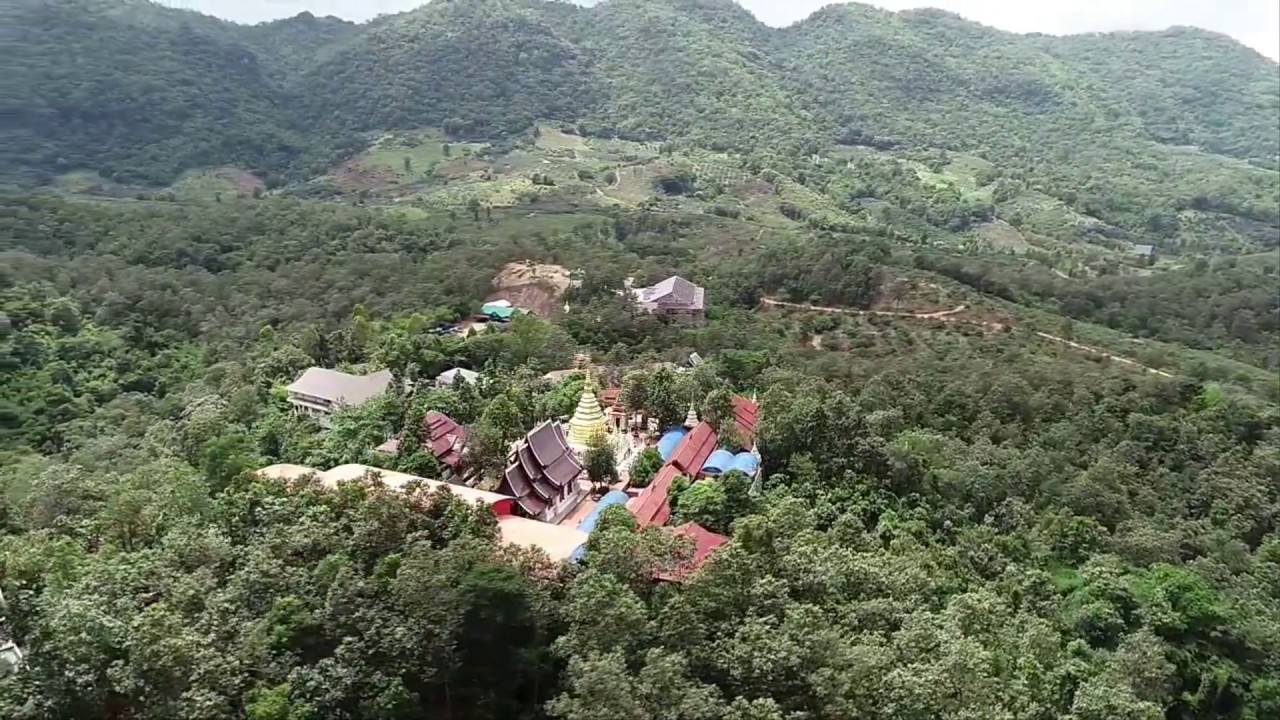
 Click to Access the Navigation Map GPS
Wat Phrathat Doi Wiang Chai Mongkhon Map
Recommend

 Art, Culture and Heritage
 Historical Sites and Monuments(8)
 Landmarks and Memorials(5)
 Royal Palace(2)
 Art, Craft Centres, Tradition(43)
 Museums(24)
 Educational Places
 Museum for Study(2)
 Educational Gardens, Farm(5)
 Training Center(1)
Temple(79)
Training Center(1)
Temple(79)
 Mosque(2)
 Other Sacred Sites(17)
 Research and Development
 Royal Project(44)
 Suburban Living
 Village, Community(41)
 Local Market(14)
 Nature and Wildlife
 National Parks and Marine Reserves(16)
 Mountain (Doi)(21)
 Dam, Reservoir, Lake(26)
 Waterfalls(43)
 Hot Springs(12)
 Caves(11)
 River, Canal(6)
 Other natural attractions(14)
 Entertainment and Agricultural
 Zoos and Aquariums(2)
 Animal camps and shows(3)
 Stadium(1)
 Farms, Parks and Ecotourism(19)
 Waterpark(2)
 Theater(1)
 Outdoor and Adventure Activities(10)
 Shopping
 Shopping and Night Market(6)
 Restaurant
 Michelin Star(1)
 Michelin Guide(23)
 Call Customer Service in Tourism
 Call Customer Service in Tourism(1)
 Travel Articles, Recipes
 Travel Review, Food Review(15)
 Food Menu, North Recipes(30)
 Thai Desserts, North Recipes(17)


