
lovethailand home >North Travel Attractions >Chiang Mai Travel Attractions >Muang Chiang Mai >Hai Ya > Wat Nantaram
TL;DR: Wat Nantaram is located at Nantararam Rd., Soi 5, Haiya Subdistrict, Mueang Chiang Mai District, Chiang Mai, open Daily, hours 06.00–18.00.

Wat Nantaram
Open Days: Daily
Opening Hours: 06.00–18.00
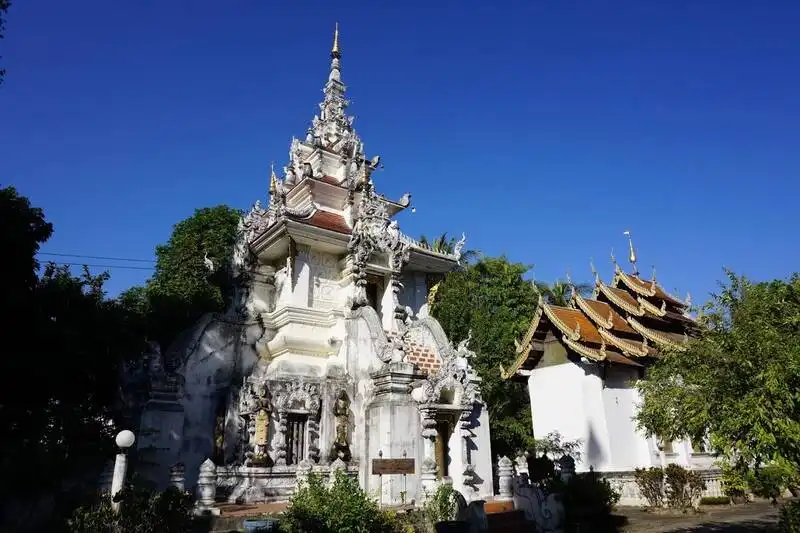
Wat Nantaram is a historic temple in Chiang Mai, located on Nantararam Road, Soi 5, in the Haiya area. Its setting is especially convenient for travelers because it sits close to Wua Lai Road, a well-known neighborhood for traditional silverwork and the popular Saturday walking street market. What makes this temple feel special is the contrast: outside, the area is lively and full of local life; inside the temple grounds, the atmosphere becomes noticeably calm, shaded, and quietly dignified—very much like an old city temple that still belongs to its community.
Local tradition connects Wat Nantaram with the belief in the Buddha’s hair relic. The story is often told as taking place after the end of Buddhist Lent, when the Buddha traveled to teach the Dhamma. As the narrative goes, when the Buddha passed through the southwest side of what is now Chiang Mai, he stopped at a bamboo grove where a villager named Thamira lived in a small hut. Thamira invited the Buddha to stay and offered the morning meal. The Buddha then foretold that this place would become a monastery in the future, to be known as Nantaram, and entrusted Thamira with a single strand of hair. Thamira enshrined it by building a stupa in the bamboo grove, which later grew into the temple seen today. Whether visitors come as believers or simply as curious travelers, the story gives the temple a gentle sense of sacred continuity that many people find meaningful.
Wat Nantaram is also remembered as one of the important temples of Chiang Mai in older local accounts. While the exact historical criteria behind that status is not always clear in surviving records, the temple’s identity has long been linked to relic veneration and to the spiritual geography of the old city. For many visitors, this means the experience is not only about sightseeing, but also about slowing down, paying respect, and feeling how Chiang Mai’s faith traditions are woven into everyday urban life.
Architecturally, the temple offers several highlights that reward careful observation. The main viharn (assembly hall) is recorded as being constructed during the period of Chao Kawilorot Suriyawong in 1862. It features classic Lanna craftsmanship, including a beautifully carved wooden gable with floral motifs. Standing in front of the viharn, you can sense the Lanna preference for elegance and warmth rather than heavy grandeur—a style that feels refined without being intimidating.
A distinctive detail is found at the stair railings: figures of Garuda embracing a Naga on both sides. This is more than decoration; it is often interpreted as a symbolic reference to rank and authority in the era of Chiang Mai’s rulers within the Rattanakosin period. Even if you are not deeply familiar with iconography, the posture and energy of the sculpted figures are striking and worth a closer look from both angles.
Behind the viharn stands the principal stupa, known locally as Phra Borommathat Chao Chedi. It is regarded as the temple’s main focus of devotion, believed to enshrine sacred relics. The stupa has a layered history of construction and restoration. Records describe a major construction in 2062 BE to encase an earlier, much smaller original stupa, followed by restorations in later decades, including gilding work and the addition of ornate umbrella finials, as well as a later phase of metal cladding around the structure. Understanding this timeline makes the stupa feel like a living monument shaped by generations, rather than a single, fixed artifact.
Visitors may also wish to see the viharn that houses Luang Pho Phet, a revered Buddha image believed to be over 500 years old, as well as the Dharma library (Ho Tham / Ho Trai), a two-story white structure in an adapted Lanna style, decorated with elegant stucco work and apsara figures at the corners. Another quiet landmark within the grounds is the large ancient reclining Buddha, facing north toward the stupa, creating a serene visual relationship between the two sacred forms.
Beyond its religious and artistic value, Wat Nantaram has also been described in local accounts as connected to significant historical events and senior monastic figures. Today, it continues to function as a meaningful community space. The grounds are broad and green, with many mature trees. In the evenings, it is common to see local residents using the area for light exercise and community activities—an everyday scene that makes the temple feel deeply integrated into neighborhood life.
Getting There Wat Nantaram is easy to reach from central Chiang Mai. From the Chiang Mai Gate area, you can head toward Wua Lai Road and then turn into Nantararam Road, entering Soi 5 to reach the temple. Songthaews (red trucks) and ride-hailing options are widely available in the city. If you plan to visit on Saturday, expect heavier traffic and more limited parking due to the Wua Lai Walking Street. In that case, allowing extra time and walking in from a practical drop-off or parking point can be the most comfortable approach. As with all temples in Thailand, modest clothing and a quiet, respectful manner are appreciated, especially around the viharn and the main stupa where worshippers may be praying.
| Name | Wat Nantaram (Haiya, Mueang Chiang Mai) |
| Location | Nantararam Rd., Soi 5, Haiya Subdistrict, Mueang Chiang Mai District, Chiang Mai |
| Key Characteristics | Historic Lanna temple near Wua Lai; hair-relic tradition; carved wooden gable; Garuda embracing Naga stair details; principal stupa and important sacred images |
| Period | Recorded viharn construction in 1862; principal stupa has multiple restoration phases (including 1961, 1984, 1999) |
| Travel | From Chiang Mai Gate: head to Wua Lai Rd., turn into Nantararam Rd., enter Soi 5; Saturdays are busier due to the walking street, so plan extra time |
| Nearby Attractions (approx. distance) | Wua Lai Walking Street (0.3 km), Wat Sri Suphan (0.4 km), Chiang Mai Gate (0.6 km), Wat Chedi Luang (1.3 km), Tha Phae Gate (1.8 km) |
| Popular Restaurants Nearby (approx. distance) | Aum Vegetarian Restaurant (0.5 km) Tel 089-853-9796, Khao Soi Wua Lai (0.6 km) Tel 053-200-605, SP Chicken (1.2 km) Tel 080-500-5035, Huen Phen (1.4 km) Tel 086-911-2882, Dash Teak House (2.2 km) Tel 053-279-230 |
| Popular Accommodations Nearby (approx. distance) | Chiang Mai Gate Hotel (0.7 km) Tel 053-203-895, Wualai Boutique Hotel (0.8 km) Tel 092-476-1499, Pingviman Hotel (1.3 km) Tel 053-281-799, Raming Lodge Hotel & Spa (2.4 km) Tel 053-271-777, Tamarind Village (2.1 km) Tel 053-418-896 |
| Facilities | Shaded grounds, calm atmosphere for worship and a slow walk around the temple |
| Fees | No admission fee (donations welcome) |
| Contact Number | 053-233-178 |
Frequently Asked Questions (FAQ)
Q: What is Wat Nantaram closest to?
A: It is very close to Wua Lai Walking Street and Wat Sri Suphan, making it easy to combine temple time with a relaxed stroll in the Haiya–Wua Lai area.
Q: What should I not miss inside the temple?
A: The carved wooden gable of the viharn, the Garuda-and-Naga stair details, and the principal stupa that forms the main devotional heart of the temple.
Q: Is Saturday a difficult day to visit?
A: The area becomes much busier due to the walking street market, so traffic and parking can be harder. Visiting earlier and walking in can be the easiest option.
Q: What should I wear when visiting?
A: Modest clothing is best. Quiet, respectful behavior is appreciated, especially around the viharn and stupa where worshippers may be praying.
Q: Is this a good temple for a calm, less crowded visit?
A: Yes. Even though it is in the city, the grounds feel peaceful—especially in the morning or late afternoon.
 Category: ●Places of Worship
 Group: ●Temple
Last Update : 10 MonthAgo
 Last Update : 10 MonthAgo
 Click to Access the Navigation Map GPS
Wat Nantaram Map
Recommend

 Art, Culture and Heritage
 Historical Sites and Monuments(8)
 Landmarks and Memorials(5)
 Royal Palace(2)
 Art, Craft Centres, Tradition(43)
 Museums(24)
 Educational Places
 Museum for Study(2)
 Educational Gardens, Farm(5)
 Training Center(1)
Temple(79)
Training Center(1)
Temple(79)
 Mosque(2)
 Other Sacred Sites(17)
 Research and Development
 Royal Project(44)
 Suburban Living
 Village, Community(41)
 Local Market(14)
 Nature and Wildlife
 National Parks and Marine Reserves(16)
 Mountain (Doi)(21)
 Dam, Reservoir, Lake(26)
 Waterfalls(43)
 Hot Springs(12)
 Caves(11)
 River, Canal(6)
 Other natural attractions(14)
 Entertainment and Agricultural
 Zoos and Aquariums(2)
 Animal camps and shows(3)
 Stadium(1)
 Farms, Parks and Ecotourism(19)
 Waterpark(2)
 Theater(1)
 Outdoor and Adventure Activities(10)
 Shopping
 Shopping and Night Market(6)
 Restaurant
 Michelin Star(1)
 Michelin Guide(23)
 Call Customer Service in Tourism
 Call Customer Service in Tourism(1)
 Travel Articles, Recipes
 Travel Review, Food Review(15)
 Food Menu, North Recipes(30)
 Thai Desserts, North Recipes(17)


