
lovethailand home >North Travel Attractions >Chiang Mai Travel Attractions >Fang >Wiang > Wat Chong Tok (Wat Ton Rung)
TL;DR: Wat Chong Tok (Wat Ton Rung) is located at Phra Nang Sam Phiu Community, Village No. 3, Wiang Subdistrict, Fang District, Chiang Mai (same area as the King Fang–Phra Nang Sam Phiu, open Daily, hours Recommended 08.00–17.00.

Wat Chong Tok (Wat Ton Rung)
Open Days: Daily
Opening Hours: Recommended 08.00–17.00
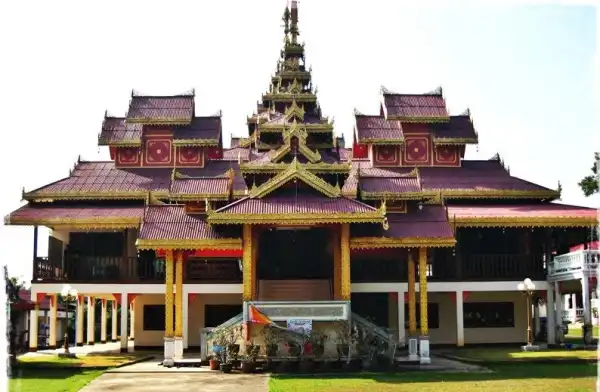
Wat Chong Tok (Wat Ton Rung) is one of those temples that makes a trip to Fang more than just nature spots or local food. Located in the Phra Nang Sam Phiu Community, Village No. 3, Wiang Subdistrict, Fang District, Chiang Mai Province, this temple quietly reveals a deep layer of cultural roots in the area. The surroundings are part of an older community zone, calm and unhurried, still holding onto a northern rhythm of life. The temple is believed to be no less than a century old, and it is closely connected to the history of Shan (Tai Yai) people who migrated into Fang. At first glance, the temple feels simple and gentle, but if you take time to observe, you will notice details that communicate Shan identity through architecture and the way the temple space is arranged.
One of the most interesting things about this temple is its “name,” which reflects the temple’s growth and the community’s story. Locals refer to it as both Wat Chong Tok and Wat Ton Rung. In Shan temple context, the word “Chong” commonly refers to a temple or monastic place, signaling Shan cultural roots rather than being simply a Chiang Mai temple. The word “Tok,” as told in local narratives, often carries a positional meaning—as the “western side” or “downstream side” temple when compared with the earlier temple in the same area. This ties in with the story that Shan devotees first established Wat Chong Paen (also known as Chong Ok) as a primary temple, and later, part of the faith community separated to establish a new temple, which became Wat Ton Rung (Chong Tok) today. The two temples are thus regarded as “sister temples,” sharing connected roots of faith and local history in the same neighborhood.
In terms of history, Wat Chong Tok is commonly described as being built by Shan families who migrated into the area. After construction, additional waves of Shan migrants continued to support and maintain the temple, bringing their own Shan architectural language into the buildings and decorative details. This is why the temple carries a distinct Shan character that many temple lovers and photographers appreciate. As for the exact year of construction, different sources sometimes mention different dates, but the overall picture consistently indicates that the temple is over 100 years old, roughly around the early 25th Buddhist century. For visitors, what matters most is not a single perfect number but the visible continuity of community care—maintenance, merit-making, and the temple’s ongoing role as a center of community life through the Buddhist calendar, such as major merit ceremonies, Kathina, Pha Pa, and seasonal observances.
If you come specifically to observe “Shan architecture,” Wat Chong Tok is a very good starting point. Shan temple aesthetics often feel elegant and restrained, with a gentle sense of proportion and refined craftsmanship. Even if some parts have been restored over time, the overall mood remains. Look for elements such as the viharn’s overall structure, roof rhythms that create layered shadows, and the delicate approach to decorative motifs. Where present, details along the eaves and gables tend to feel intricate and soft rather than bold. The temple layout also reflects a practical, lived-in “community temple” character—built for real religious use and daily community rhythms, not only for display.
Another point often mentioned is the “unusual orientation” of the viharn, which is said to face south—not something you see everywhere in Lanna temples. A simple way to understand this as a traveler is that orientation can relate to older settlement patterns, the original access route of the community, convenience of movement, or how the temple was designed to receive wind and light during the hours it is actually used. If you visit in the morning, observe the light falling on the front of the viharn and how the roof shadows move. The way the light lands can make architectural details feel sharper and the atmosphere more still and contemplative—the kind of calm many people seek when they come to pray.
For many visitors, making wishes here is not about fantasy, but about everyday life: hoping difficult things ease up, work becomes smoother, family life stays steady, or simply having the strength to keep going. Shan-rooted community temples often feel warm because you can sense that the place is not just a tourist stop—it is a space locals lean on in hard days, good days, and new beginnings. If you want prayer to feel more meaningful, try staying with a quiet moment—incense, palms together, and a clear intention spoken softly to yourself. The calm of the temple becomes a backdrop that helps your mind settle, and that stillness is often what gives prayer its weight.
It is best to explore the temple slowly. Start by paying respects at the viharn or main sacred area, then walk around to notice craftsmanship details around the buildings. Look at rooflines, columns, and the “spaces between” structures—because those spaces often reveal how locals actually use the temple. For photos, consider angles that show the viharn and layered rooflines (if present), because those shots often communicate Shan character better than a straight-on front view. Dress modestly, avoid loud voices, and do not enter areas clearly reserved for monks or for community rituals. If ceremonies are happening, follow signs or ask politely before taking close-range photos, to respect people participating in religious activities.
Getting There: From Fang town center, head into Wiang Subdistrict toward the Phra Nang Sam Phiu Community (Village No. 3). The temple lies in the same zone as important local points such as the King Fang–Phra Nang Sam Phiu Monument and other nearby Shan-related temples. Getting around Fang is easiest by private car or motorcycle, especially if you plan to visit multiple sites in one day. If you are coming from Chiang Mai city and planning to stay overnight in Fang, it is a good idea to visit Wat Chong Tok as a morning stop, then continue to Wat Chong Paen/Chong Ok or other Fang highlights afterward. This way, you can explore the temple without rushing and still have time for food and natural attractions in the afternoon.
If you want a more engaging itinerary, plan a “one-day Shan heritage route in Fang.” Start at Wat Chong Tok to observe the atmosphere and architecture, then continue to Wat Chong Paen (Chong Ok), which is often described as an earlier Shan temple in the neighborhood. After that, stop by the King Fang–Phra Nang Sam Phiu Monument to connect community narratives with local history. This kind of route helps you remember not only that you visited, but also why these temples exist here and why the community is proud of them.
| Place Name | Wat Chong Tok (Wat Ton Rung) |
| Location | Phra Nang Sam Phiu Community, Village No. 3, Wiang Subdistrict, Fang District, Chiang Mai (same area as the King Fang–Phra Nang Sam Phiu Monument) |
| Characteristics | Shan community temple with a peaceful atmosphere, notable Shan-style architecture/art elements, and a distinctive building orientation (the viharn is said to face south) |
| Period | Early 25th Buddhist century (approximately over 100 years old) |
| Key Evidence | Shan craftsmanship and architectural features in the temple buildings, plus local narratives of construction and continuous Shan community patronage |
| Name Origin | “Chong” is commonly used for temples in Shan context; “Chong Tok” suggests the western-side positioning compared to earlier temples; “Wat Ton Rung” is tied to local naming and memory of the temple setting |
| Travel | From Fang town center, head into Wiang Subdistrict toward the Phra Nang Sam Phiu community (Village No. 3). Private car/motorcycle recommended for flexible multi-stop travel. |
| Current Status | Open as a community temple and cultural travel point in Fang District (recommended to visit in the morning–afternoon for clearer architectural viewing) |
| Facilities | Temple grounds and community-style parking areas (please park without blocking local traffic or temple activity zones) |
| Fees | No fee information available (typically, temple visits do not require an entrance fee) |
| Nearby Tourist Attractions with Distance | King Fang–Phra Nang Sam Phiu Monument (approx. 0.5–1 km) Wat Chong Paen (Chong Ok) (approx. 1–2 km) Wat Phra Bat Udom (approx. 1–3 km) Fang town market / town center zone (approx. 1–3 km) Fang Hot Springs (approx. 10–15 km) |
| Popular Restaurants Nearby | Cupper Coffee and Bakery (approx. 2–4 km) Tel. 053-452-836, 093-138-9665 Je Hua Noodles (approx. 2–4 km) Tel. 089-263-6527 Baan Rim Nam Restaurant, Fang (approx. 1–3 km) Tel. 053-382-174, 081-828-9367 Parichat Khao Soi (approx. 2–4 km) Tel. 053-451-164 Suki Niep (approx. 2–4 km) Tel. 053-452-948 |
| Popular Accommodations Nearby | KhunYu Place (approx. 2–5 km) Tel. 053-453-344, 053-453-319, 098-748-3615 Fang Villa Hotel (approx. 2–5 km) Tel. 053-453-369, 086-424-2324 Tangerine Ville Hotel (approx. 2–6 km) Tel. 053-452-114 Phumanee Home Hotel (approx. 2–6 km) Tel. 053-452-875 Baan Saen Fang Hotel (approx. 2–6 km) Tel. 053-903-900 |
Frequently Asked Questions (FAQ)
Q: Are Wat Chong Tok and Wat Ton Rung the same temple?
A: Yes. In local usage, Wat Chong Tok and Wat Ton Rung refer to the same temple. The different names reflect local naming traditions and the temple’s position within the Shan temple network in Fang.
Q: Why is this temple connected to Shan (Tai Yai) people?
A: The temple is commonly described as being established and maintained by Shan migrants and their faith community, which is reflected in the temple’s architectural character and local narratives.
Q: What are the highlights to look for when visiting?
A: Focus on the overall viharn form, the rhythm of layered rooflines (where present), delicate decorative details, and how the temple space is arranged as a functional community temple.
Q: What is nearby that can be visited in the same trip?
A: The temple is close to the King Fang–Phra Nang Sam Phiu Monument and Wat Chong Paen (Chong Ok), making it ideal for a connected cultural route within Fang.
Q: How should visitors dress and behave inside the temple?
A: Dress modestly, keep voices low, respect areas used by monks and community rituals, and be mindful about photography if ceremonies are taking place.
 Category: ●Places of Worship
 Group: ●Temple
Last Update : 9 MonthAgo
 Last Update : 9 MonthAgo
 Click to Access the Navigation Map GPS
Wat Chong Tok (Wat Ton Rung) Map
Recommend

 Art, Culture and Heritage
 Historical Sites and Monuments(8)
 Landmarks and Memorials(5)
 Royal Palace(2)
 Art, Craft Centres, Tradition(43)
 Museums(24)
 Educational Places
 Museum for Study(2)
 Educational Gardens, Farm(5)
 Training Center(1)
Temple(79)
Training Center(1)
Temple(79)
 Mosque(2)
 Other Sacred Sites(17)
 Research and Development
 Royal Project(44)
 Suburban Living
 Village, Community(41)
 Local Market(14)
 Nature and Wildlife
 National Parks and Marine Reserves(16)
 Mountain (Doi)(21)
 Dam, Reservoir, Lake(26)
 Waterfalls(43)
 Hot Springs(12)
 Caves(11)
 River, Canal(6)
 Other natural attractions(14)
 Entertainment and Agricultural
 Zoos and Aquariums(2)
 Animal camps and shows(3)
 Stadium(1)
 Farms, Parks and Ecotourism(19)
 Waterpark(2)
 Theater(1)
 Outdoor and Adventure Activities(10)
 Shopping
 Shopping and Night Market(6)
 Restaurant
 Michelin Star(1)
 Michelin Guide(23)
 Call Customer Service in Tourism
 Call Customer Service in Tourism(1)
 Travel Articles, Recipes
 Travel Review, Food Review(15)
 Food Menu, North Recipes(30)
 Thai Desserts, North Recipes(17)


