
lovethailand home >North Travel Attractions >Chiang Mai Travel Attractions >Fang >Wiang > Wat Chong Ok (Wat Chong Paen)
TL;DR: Wat Chong Ok (Wat Chong Paen) is located at Phra Nang Sam Phiu Community, Village No. 3, Wiang Subdistrict, Fang District, Chiang Mai, open Daily, hours Recommended 08.00–17.00.
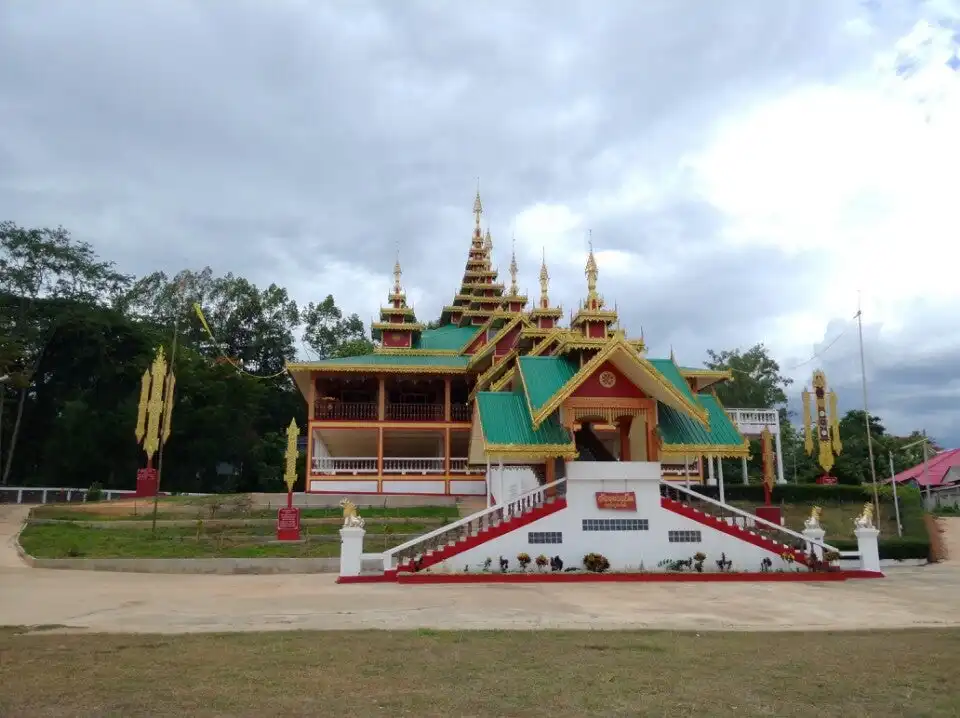
Wat Chong Ok (Wat Chong Paen)
Open Days: Daily
Opening Hours: Recommended 08.00–17.00
Wat Chong Ok (Wat Chong Paen) is located in the Phra Nang Sam Phiu community, Village No. 3, Wiang Subdistrict, Fang District, Chiang Mai Province. It is an ancient Shan (Tai Yai) temple that has stood for more than a century and serves as a vital spiritual and cultural anchor for the local Shan community in northern Thailand. Beyond its role as a religious site, the temple represents a living record of Shan migration, settlement, and identity in Fang.
The construction of Wat Chong Ok was initiated by Shan families who migrated to the Fang area in the past. Establishing a temple was not only an act of faith but also a way to lay social and cultural foundations for the community. In Shan tradition, the word “Chong” refers to a monastery or temple. The name “Wat Chong Paen” therefore directly reflects the temple’s identity as a Shan Buddhist monastery rather than merely a local nickname.
After the temple was completed, waves of Shan migrants continued to care for and develop the site. Religious activities, communal maintenance, and cultural practices were sustained across generations. The temple gradually became the heart of the community, with its layout and atmosphere reflecting Shan values of simplicity, calmness, and harmony with daily life rather than monumental grandeur.
As the Shan population in the area expanded, part of the congregation separated to establish another nearby monastery, Wat Ton Rung, also known locally as “Chong Tok.” Rather than symbolizing division, the relationship between Wat Chong Ok and Wat Ton Rung illustrates the organic growth of the community. The two temples are regarded as sister temples, mutually supporting religious and social life in Fang.
The Phra Nang Sam Phiu community itself is an old settlement rich in legends, local history, and collective memory. Wat Chong Ok plays a key role in maintaining these connections, hosting annual merit-making ceremonies, ordinations, chanting rituals, and life-cycle ceremonies. Through these activities, the temple continues to bind generations together and preserve the cultural fabric of the Shan people in Fang.
In terms of belief, visitors and locals alike come to Wat Chong Ok primarily seeking peace of mind, spiritual balance, and continuity rather than immediate personal wishes. The temple functions as a space for reflection and emotional grounding, allowing people to reconnect with their roots and with Buddhist principles embedded in Shan culture.
Getting There Wat Chong Ok is situated within the Phra Nang Sam Phiu community in Wiang Subdistrict, Fang District. It is easily accessible from Fang town, with roads reaching directly into the community. The area is suitable for a cultural walk and temple visit. Visitors are advised to dress modestly and respect the local way of life.
| Name | Wat Chong Ok (Wat Chong Paen) |
| Location | Phra Nang Sam Phiu Community, Village No. 3, Wiang Subdistrict, Fang District, Chiang Mai |
| Key Features | Ancient Shan Buddhist temple and spiritual center of the Phra Nang Sam Phiu community |
| Period | Over 100 years old |
| Nearby Attractions | Phra Nang Sam Phiu Monument (approx. 1 km) Wat Ton Rung (Chong Tok) (approx. 1.5 km) Wat Phra That Chom Kitti, Fang (approx. 3 km) Doi Pha Hom Pok National Park (approx. 25 km) |
| Nearby Restaurants | Khao Soi Parichat, Fang (3–5 km) Tel. 053-451-164 Wiang Fang Wang Kung (3–6 km) Tel. 053-451-492 |
| Nearby Accommodations | Fang Modern Hotel (3–6 km) Tel. 086-439-1843 Khunyuw Place (3–6 km) Tel. 053-453-319 |
Frequently Asked Questions (FAQ)
Q: What type of temple is Wat Chong Ok?
A: It is an ancient Shan (Tai Yai) Buddhist temple built and maintained by the Shan community in Fang District.
Q: Are Wat Chong Ok and Wat Chong Paen the same place?
A: Yes. “Wat Chong Paen” is the traditional Shan name for Wat Chong Ok.
Q: What kind of travel experience is Wat Chong Ok suitable for?
A: The temple is ideal for visitors interested in cultural heritage, Shan history, and peaceful community-based tourism.
 Category: ●Places of Worship
 Group: ●Temple
Last Update : 10 MonthAgo
 Last Update : 10 MonthAgo
 Click to Access the Navigation Map GPS
Wat Chong Ok (Wat Chong Paen) Map
Recommend

 Art, Culture and Heritage
 Historical Sites and Monuments(8)
 Landmarks and Memorials(5)
 Royal Palace(2)
 Art, Craft Centres, Tradition(43)
 Museums(24)
 Educational Places
 Museum for Study(2)
 Educational Gardens, Farm(5)
 Training Center(1)
Temple(79)
Training Center(1)
Temple(79)
 Mosque(2)
 Other Sacred Sites(17)
 Research and Development
 Royal Project(44)
 Suburban Living
 Village, Community(41)
 Local Market(14)
 Nature and Wildlife
 National Parks and Marine Reserves(16)
 Mountain (Doi)(21)
 Dam, Reservoir, Lake(26)
 Waterfalls(43)
 Hot Springs(12)
 Caves(11)
 River, Canal(6)
 Other natural attractions(14)
 Entertainment and Agricultural
 Zoos and Aquariums(2)
 Animal camps and shows(3)
 Stadium(1)
 Farms, Parks and Ecotourism(19)
 Waterpark(2)
 Theater(1)
 Outdoor and Adventure Activities(10)
 Shopping
 Shopping and Night Market(6)
 Restaurant
 Michelin Star(1)
 Michelin Guide(23)
 Call Customer Service in Tourism
 Call Customer Service in Tourism(1)
 Travel Articles, Recipes
 Travel Review, Food Review(18)
 Food Menu, North Recipes(30)
 Thai Desserts, North Recipes(17)


