
lovethailand home >North Travel Attractions >Chiang Mai Travel Attractions >Muang Chiang Mai >Si Phum > Kao Wi Tu
TL;DR: Kao Wi Tu. It is a Thai dessert. How to cook steamed sticky rice. Bring to a boil and mix with sugarcane juice. Once it has been stirred, it will be.

Kao Wi Tu
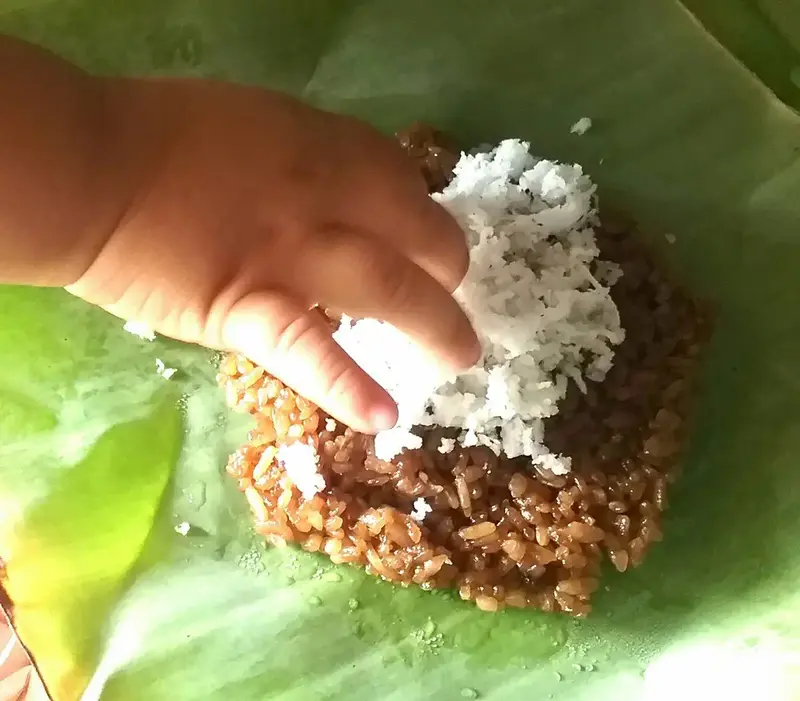
Kao Wi Tu It is a Thai dessert. How to cook steamed sticky rice. Bring to a boil and mix with sugarcane juice. Once it has been stirred, it will be put into a container. leave to dry Then cut into pieces, sprinkle with white sesame seeds, eat with grated coconut.
Dessert menu north This is very popular in merit making. especially at the northern temple When the villagers bring glutinous rice to the monks Then there are too many relatives in the temple will bring glutinous rice to people with sugarcane juice Jake is a kind of rice for the villagers to eat.
Raw material
- 3 cups of steamed glutinous rice
- 4 tbsp white sesame
- 1 tablespoon of salt
- 2 cups of water
- 2 tablespoons of sugar
- 2 cups of crushed sugarcane juice
Method
1. Add water to the glutinous rice. Then follow with sugar and salt, stir until the sugar dissolves. added sugar will make glutinous rice clear Then add crushed sugarcane juice. and people to match.
2. The next step is to put it on fire. Low heat by waiting until the sugar has settled and becomes sticky and lumpy.
3. Put oil on the tray that we use to make the mold. Sticky rice will not stick to the print. don't need to put a lot Otherwise one will be greasy. Then scoop the red glutinous rice, put it into the tray and use a spoon to press it down firmly.
4. The last step is sprinkled with white sesame seeds. and leave to cool and Kannaen Island rice Then cut the poki words. will be square Or triangle, circle, and you like, then ready to eat.
| Name | Khao Vitu (Red Sticky Rice Dessert) |
| Other Names | Red Sticky Rice, Khao Niao Daeng |
| Category | Traditional Thai Dessert / Northern Thai Snack |
| Region | Northern Thailand |
| Main Ingredients | Steamed Sticky Rice, Sugarcane Syrup, Sugar, Salt, White Sesame Seeds |
| Optional Ingredients | Grated Coconut (served alongside for added richness) |
| Key Characteristics | Sticky rice cooked with sugarcane syrup until thick and glossy, then pressed into a tray and cut into pieces |
| Taste | Sweet, slightly salty, rich, and fragrant from sugarcane |
| Texture | Soft, chewy, slightly firm when cooled, and cohesive |
| Key Process | Cooking sticky rice with sugarcane syrup over low heat until thick, then pressing into a mold |
| Cooking Method | Stir-cooking and setting |
| Heat Level | Low heat to prevent burning and ensure even absorption of syrup |
| Serving Style | Cut into square, triangle, or round pieces, topped with sesame seeds |
| Occasions | Temple fairs, merit-making events, and community gatherings |
| Cultural Significance | Represents resourcefulness by using leftover sticky rice from merit-making and sharing within the community |
| Best Serving Condition | Warm for softer texture, or at room temperature for a firmer bite |
| Important Tip | Cook until the mixture thickens properly to ensure it holds shape when cut |
| Precaution | Undercooking results in a loose texture, while overcooking makes it too hard |
Frequently Asked Questions (FAQ)
Q: What is Khao Vitu?
A: Khao Vitu is a traditional Northern Thai dessert made by cooking sticky rice with sugarcane syrup until thick, then shaping and cutting into pieces.
Q: Is it the same as red sticky rice?
A: Yes, Khao Vitu is a regional name for red sticky rice dessert in Northern Thailand.
Q: Why is sugarcane syrup used?
A: It provides the characteristic brown-red color and rich natural sweetness.
Q: How long should it be cooked?
A: It should be cooked over low heat until the mixture thickens and becomes sticky.
Q: Why press it into a mold?
A: Pressing helps the rice bind together firmly, making it easier to cut into neat pieces.
Q: When is it usually prepared?
A: It is commonly made during temple festivals and merit-making events.
Q: Can it be eaten with other ingredients?
A: Yes, it is often served with grated coconut for added flavor and richness.
Q: When is the best time to eat it?
A: It is best enjoyed warm for a soft texture or at room temperature for a firmer consistency.
Q: How long can it be stored?
A: It can be stored for 1–2 days, but the texture will become firmer over time.
Q: What is the ideal texture?
A: It should be soft, chewy, slightly firm, and hold its shape when cut.
 Category: ●Travel Articles, Recipes
 Group: ●Thai Desserts, North Recipes
Last Update : 5 MonthAgo
 Last Update : 5 MonthAgo
Recommend

 Art, Culture and Heritage
 Historical Sites and Monuments(8)
 Landmarks and Memorials(5)
 Royal Palace(2)
 Art, Craft Centres, Tradition(43)
 Museums(24)
 Educational Places
 Museum for Study(2)
 Educational Gardens, Farm(5)
 Training Center(1)
 Places of Worship
 Temple(79)
 Mosque(2)
 Other Sacred Sites(17)
 Research and Development
 Royal Project(45)
 Suburban Living
 Village, Community(41)
 Local Market(14)
 Nature and Wildlife
 National Parks and Marine Reserves(18)
 Mountain (Doi)(21)
 Dam, Reservoir, Lake(26)
 Waterfalls(43)
 Hot Springs(12)
 Caves(11)
 River, Canal(6)
 Other natural attractions(14)
 Entertainment and Agricultural
 Zoos and Aquariums(3)
 Animal camps and shows(3)
 Stadium(1)
 Farms, Parks and Ecotourism(19)
 Waterpark(2)
 Theater(1)
 Outdoor and Adventure Activities(10)
 Shopping
 Shopping and Night Market(6)
 Restaurant
 Michelin Star(1)
 Michelin Guide(23)
 Call Customer Service in Tourism
 Call Customer Service in Tourism(1)
 Travel Review, Food Review(24)
 Food Menu, North Recipes(30)
Thai Desserts, North Recipes(17)
Food Menu, North Recipes(30)
Thai Desserts, North Recipes(17)


