
lovethailand home >North Travel Attractions >Chiang Mai Travel Attractions >Muang Chiang Mai >Si Phum > Kut Curry
TL;DR: Kut Curry., Thai traditional food northern food Local vegetables that the northern people like to cook. Phak Kut is a vegetable in the fern family.

Kut Curry
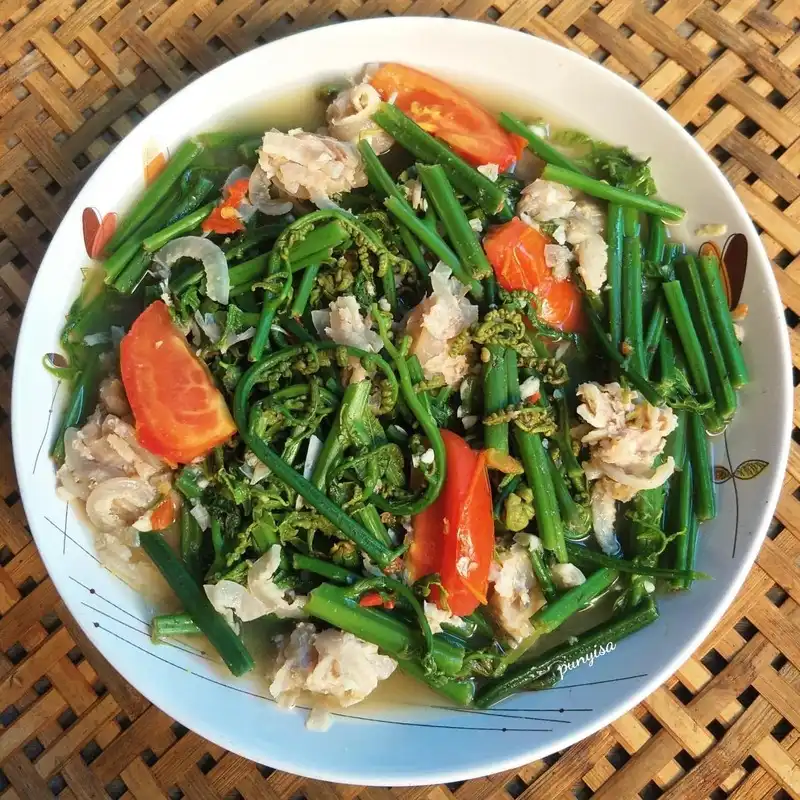
Kut Curry, Thai traditional food northern food Local vegetables that the northern people like to cook. Phak Kut is a vegetable in the fern family. Likes to live in the cool, humid places in the forest. propagate by budding Young shoots can be eaten. Northern villagers like to make orange curry with fish and kaffir lime juice. In addition to being able to make food It's also an herb. Phak Kut tends to grow along the water's edge or in wetlands rather than in the forest. And they are often found during the rainy season because it is the best growth period. The most popular vegetables are the leaves and young shoots. It is a popular northern food in Chiang Mai.
Ingredient
1. 1 cup coarsely chopped cabbage leaves.
2. Any fish such as catfish, tilapia, mackerel, cut into pieces 1 piece.
3. Bergamot juice.
4. Tomatoes.
Spices Curry
1. 5 fresh chili peppers, the amount you like, spicy.
2. Lemongrass 1 head.
3. 5 cloves of garlic.
4. 3/4 tbsp pickled fish.
Method
1. Prepare 1 cup of water, wait for it to boil, add curry paste, wait for it to boil.
2. Put the catfish down. Do not stir. It will make the fish fishy. Wait for boiling.
3. Add vegetables, tomatoes, wait until cooked, season with kaffir lime juice, fish sauce, turn off the heat, add kaffir lime juice and basil leaves to add aroma to the curry.
Ancient people had the ability to eat vegetables for medicinal purposes. And treatment is so perfect that many people in the present may have to accept each other ever. Which can bring vegetables, vegetables, vegetables, local vegetables that have many properties to use in cooking Get a lot of herbal food that is beneficial to the body.
Kut is a vegetable that is high in iron, beta-carotene, phosphorus, vitamin A, vitamin C and vitamin E. Therefore, it is a healthy vegetable that provides quite a variety of important nutrients to the body. Therefore, it should be eaten frequently, alternating with other fruits and vegetables. so that the body receives complete nutrients.
Benefits of cabbage
1. Help strengthen the body. Boosts immunity and helps fight free radicals (leaves).
2. Help cure anemia (leaves).
3. Help nourish the blood. This is because vegetables are the number 1 most iron-containing vegetable (leaves).
4. Help nourish eyes (leaves).
5. Kut is rich in iron and beta-carotene. Eating vegetables with meat will help the body absorb minerals better and also nourish the body (leaves).
6. The leaves are boiled to make drinking water. Helps to cure fever (leaves).
7. Phak Kut is a vegetable that has properties to help quench the heat. Allows the body to adjust the temperature to suit the season.
8. Helps reduce cholesterol levels in the blood (leaves).
9. Diuretic (leaves).
10. Help cure toxic inflammation (leaves).
11. Helps reduce high blood pressure (leaves).
12. Helps prevent scurvy (leaves).
13. Kut is a vegetable that is very high in fiber. thus helping the excretory system work well (leaves).
Kut vegetables should not be eaten raw or raw because they contain high amounts of oxalate. and may cause kidney inflammation and cause gallstones Therefore, it should be boiled or cooked before eating.
| Name | Gaeng Pak Good (Northern Thai Vegetable Fern Curry) |
| Category | Northern Thai Food / Traditional Herbal Soup |
| Main Ingredients | Young fiddlehead fern (Pak Good), fish, kaffir lime juice, tomatoes, and local curry paste |
| What is Pak Good? | A type of edible fern commonly found in moist forest areas and along streams, especially during the rainy season |
| Popular Region | Northern Thailand, especially Chiang Mai and surrounding provinces |
| Season Availability | Rainy season, when the fern grows rapidly in natural environments |
| Taste Profile | Lightly sour from kaffir lime, savory from fish and herbs, with fresh and slightly crisp texture from the fern |
| Distinctive Feature | A refreshing herbal soup using wild vegetables with high nutritional value |
| Common Fish Types | Catfish, tilapia, or mackerel, depending on local availability |
| Key Herbs & Spices | Fresh chili, lemongrass, garlic, and fermented fish paste (pla ra) |
| Nutritional Value | High in iron, beta-carotene, vitamins A, C, and E, phosphorus, and dietary fiber |
| Health Benefits | Supports immune system, improves digestion, nourishes blood, and helps regulate body temperature |
| Precaution | Should not be eaten raw due to high oxalate content; always cook before consumption |
| Serving Style | Served hot with sticky rice or steamed rice |
| Cultural Significance | Represents Northern Thai lifestyle of using seasonal wild vegetables and herbal ingredients from nature |
Frequently Asked Questions (FAQ)
Q: What is Gaeng Pak Good?
A: Gaeng Pak Good is a Northern Thai curry made from young edible fern cooked with fish, herbs, and a slightly sour broth.
Q: What is Pak Good?
A: Pak Good is a type of edible fern that grows in moist environments such as forests and near streams, especially during the rainy season.
Q: What does Gaeng Pak Good taste like?
A: It has a light sour and savory taste, with a refreshing herbal aroma and a slightly crisp texture from the fern.
Q: What kind of fish is used in this dish?
A: Common choices include catfish, tilapia, or mackerel, depending on availability and preference.
Q: Is Gaeng Pak Good healthy?
A: Yes, it is rich in vitamins, minerals, and dietary fiber, making it a nutritious traditional dish.
Q: Can Pak Good be eaten raw?
A: No, it should always be cooked before eating due to its natural oxalate content.
Q: When is the best time to find Pak Good?
A: The best time is during the rainy season when the plant grows abundantly.
Q: How is this dish typically served?
A: It is served hot and commonly eaten with sticky rice or steamed rice.
Q: What cultural aspect does Gaeng Pak Good represent?
A: It reflects Northern Thai traditions of using seasonal wild vegetables, simple cooking methods, and natural herbal ingredients.
 Category: ●Travel Articles, Recipes
 Group: ●Food Menu, North Recipes
Last Update : 2 MonthAgo
 Last Update : 2 MonthAgo
Recommend

 Art, Culture and Heritage
 Historical Sites and Monuments(8)
 Landmarks and Memorials(5)
 Royal Palace(2)
 Art, Craft Centres, Tradition(43)
 Museums(24)
 Educational Places
 Museum for Study(2)
 Educational Gardens, Farm(5)
 Training Center(1)
 Places of Worship
 Temple(79)
 Mosque(2)
 Other Sacred Sites(17)
 Research and Development
 Royal Project(44)
 Suburban Living
 Village, Community(41)
 Local Market(14)
 Nature and Wildlife
 National Parks and Marine Reserves(16)
 Mountain (Doi)(21)
 Dam, Reservoir, Lake(26)
 Waterfalls(43)
 Hot Springs(12)
 Caves(11)
 River, Canal(6)
 Other natural attractions(14)
 Entertainment and Agricultural
 Zoos and Aquariums(2)
 Animal camps and shows(3)
 Stadium(1)
 Farms, Parks and Ecotourism(19)
 Waterpark(2)
 Theater(1)
 Outdoor and Adventure Activities(10)
 Shopping
 Shopping and Night Market(6)
 Restaurant
 Michelin Star(1)
 Michelin Guide(23)
 Call Customer Service in Tourism
 Call Customer Service in Tourism(1)
 Travel Review, Food Review(15)
Food Menu, North Recipes(30)
Travel Review, Food Review(15)
Food Menu, North Recipes(30)
 Thai Desserts, North Recipes(17)


