
lovethailand home >North Travel Attractions >Chiang Mai Travel Attractions >Mae Rim >Pong Yaeng > Mae Sa Mai Royal Project Development Center
TL;DR: Mae Sa Mai Royal Project Development Center is located at Pong Yaeng Subdistrict, Mae Rim District, Chiang Mai, Thailand, open Daily, hours 08.00–17.00.

Mae Sa Mai Royal Project Development Center
Open Days: Daily
Opening Hours: 08.00–17.00
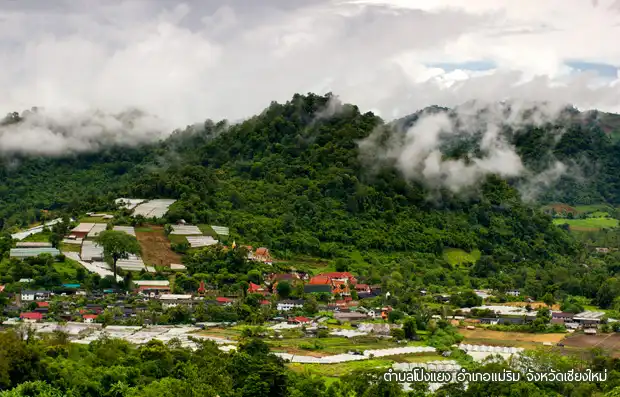
Mae Sa Mai Royal Project Development Center is a peaceful highland destination in Chiang Mai that brings together cool mountain landscapes and the long-standing legacy of royal development initiatives. Rather than being a typical sightseeing spot, this area represents a working Royal Project site where agricultural research, watershed conservation, and community livelihoods are closely interconnected, offering visitors both relaxation and meaningful insight.
The origins of Mae Sa Mai date back to 1969, when His Majesty King Bhumibol Adulyadej traveled by royal helicopter to this area, arriving at opium fields in full bloom. He then proceeded to visit the Hmong village of Mae Sa Mai and worked in the area for approximately two hours. This visit marked a turning point, laying the foundation for a highland development approach that placed local people and sustainable livelihoods at its core.
One frequently mentioned detail from this royal visit is His Majesty’s observation of pigs, an essential livestock animal in Hmong daily life. At the time, these pigs were small and yielded limited productivity. In response, His Majesty graciously granted two improved piglets along with fodder crop varieties for cultivation. This seemingly modest gesture reflected the Royal Project philosophy: begin with practical household needs, then gradually strengthen income stability and food security.
In 1974, development work in Mae Sa Mai formally began in cooperation with Maejo Institute of Agricultural Technology (now Maejo University). By 1982, systematic research and production of cool-climate crop seeds were underway, leading to the official establishment of Mae Sa Mai Royal Project Development Center. Its primary objectives were to improve living standards, create sustainable occupations, reduce forest encroachment, and eliminate opium cultivation through viable agricultural alternatives.
The Center oversees an area of approximately 23.59 square kilometers (about 14,743 rai) at an elevation of around 990 meters above sea level. It supports four villages: Ban Mae Sa Noi, Ban Mae Sa Mai, Ban Muang Kham, and Ban Kong Hae. Most residents are Hmong and local northern Thai people, practicing Buddhism, traditional spirit beliefs, and Christianity. The terrain is predominantly mountainous with steep slopes, and the average temperature is about 23°C, making it well suited for temperate-climate crops.
Agricultural tourism is the core experience at Mae Sa Mai. Visitors can explore demonstration plots of cool-climate vegetables such as head lettuce, baby carrots, and bi-color sweet corn, which are cultivated year-round. There are also fruit plots featuring seedless grapes, avocados, and raspberries, illustrating how highland conditions can be effectively utilized for diverse agricultural production.
During the cool season, flower research plots add vibrant colors to the landscape, with varieties such as salvia, French marigolds, and gerbera. Greenhouses cultivating sweet peppers in red, yellow, and green are another highlight, demonstrating the integration of research, quality control, and commercial viability. Every plot serves not only as a display but also as part of a knowledge-transfer system for local farmers.
One of the most memorable seasonal scenes at Mae Sa Mai is the lychee orchards cascading along steep hillsides. From May to June, the trees bear clusters of bright red fruit, and the road leading into the Center becomes a scenic corridor that vividly reflects the relationship between agriculture and mountainous terrain.
Nature-based tourism is another strong appeal. The Doi Pha Klong and Dong Saeng Forest Nature Trail, approximately 1.5 kilometers long and about 8 kilometers from the Center, offers opportunities to observe orchids, lichens, wild lilies, rafflesia-related species, and medicinal plants. Within the Center itself, a viewpoint at around 1,400 meters above sea level provides elevated views of surrounding villages and mountain ranges.
Another nearby attraction is Tham That Cave, a small cave with stalactites and stalagmites, approximately 4 meters deep and located about 2 kilometers from the Center. It is suitable for a brief visit as part of a broader nature exploration itinerary.
Cultural tourism allows visitors to engage with the everyday life of the Hmong community, including textile weaving, traditional clothing production, spinning-top making, and other handicrafts. Particularly notable is the intricate embroidery created by Hmong women, often worn during important festivals and ceremonies.
The most prominent cultural events are the Hmong New Year festival, held each January, featuring traditional attire, ball tossing, spinning-top games, and community celebrations. The Moon Worship Festival is also held during the same period, reflecting the deep-rooted beliefs and cultural heritage of highland communities.
Souvenirs from Mae Sa Mai typically include embroidered textiles, woven fabrics, batik-style cloth, and silver jewelry crafted by local artisans. These items not only represent cultural identity but also provide direct income support for the community.
Accommodation options include one guesthouse within the Center, accommodating up to 15 visitors, as well as tents with sleeping bags available for rent. Visitors bringing their own tents are charged a maintenance fee. In Mae Sa Mai village, a group of six homestays can host approximately 20–24 guests. There are no restaurants within the Center itself; however, dining options are available in Pong Yaeng Nok village, about 3 kilometers before the ascent to the Center.
Getting There Mae Sa Mai Royal Project Development Center is located approximately 38 kilometers from Chiang Mai city. Take Highway 107 (Chiang Mai–Fang) to Mae Rim District, then turn left at kilometer marker 17 onto Highway 1096 (Mae Rim–Samoeng). Continue for about 15–16 kilometers until reaching Wat Pong Yaeng Chaloem Phra Kiat, then turn left and drive approximately 3 kilometers. The Center will be on the left-hand side. The road is fully paved but winding, so careful driving is recommended.
| Name | Mae Sa Mai Royal Project Development Center |
| Location | Pong Yaeng Subdistrict, Mae Rim District, Chiang Mai, Thailand |
| Key Characteristics | Royal Project development center, highland agriculture research, agricultural tourism, community-based development |
| Important Periods | 1969 (Royal visit), 1974 (development initiated), 1982 (seed research) |
| Responsible Area | Approximately 23.59 sq.km (14,743 rai), covering 4 villages |
| Nearby Attractions with Distance | Doi Pha Klong – Dong Saeng Forest Nature Trail (approx. 8 km) Tham That Cave (approx. 2 km) Mon Jam (approx. 12 km) Queen Sirikit Botanic Garden (approx. 18 km) Pong Yaeng Adventure Park – Jungle Coaster & Zipline (approx. 10 km) |
| Popular Restaurants Nearby | Pong Yaeng Angdoi Restaurant (approx. 7 km) Tel. 085-618-8885 di BOSCO Coffee Specialist (approx. 8 km) Tel. 099-384-8686 WTF Coffee Camp (approx. 9 km) Tel. 081-885-0710 Tune In Garden, Pong Yaeng (approx. 8 km) Tel. 087-185-2951 Mi | Zü Restaurant by Onsen @ Moncham (approx. 13 km) Tel. 053-111-606 |
| Popular Accommodations Nearby | Mon Jam Camping (approx. 12 km) Tel. 081-806-3993 Mon Hmong Homestay (approx. 13 km) Tel. 081-320-6908 Mon Mon Homestay (approx. 13 km) Tel. 098-121-2721 Pong Yang Farm & Resort (approx. 9 km) Tel. 095-691-0707 Maesa Valley Garden Resort (approx. 16 km) Tel. 053-290051, 081-998-7472 |
Frequently Asked Questions (FAQ)
Q: When is the best time to visit Mae Sa Mai Royal Project Development Center?
A: The cool season is ideal for walking through farms and enjoying mountain scenery, while May to June is especially scenic during the lychee harvest season.
Q: Are there restaurants inside the Center?
A: There are no restaurants within the Center. Visitors are advised to dine in Pong Yaeng Nok village before ascending to the site.
Q: Can visitors stay overnight?
A: Yes. Accommodation options include guesthouses, tents, and homestays in Mae Sa Mai village. Advance reservations are recommended during peak seasons.
Tel : 053313300
 Tel : 053313300
Mobile : 0898519922
 Mobile : 0898519922
 Category: ●Research and Development
 Group: ●Royal Project
Last Update : 10 MonthAgo
 Last Update : 10 MonthAgo
 Click to Access the Navigation Map GPS
Mae Sa Mai Royal Project Development Center Map
Recommend

 Art, Culture and Heritage
 Historical Sites and Monuments(8)
 Landmarks and Memorials(5)
 Royal Palace(2)
 Art, Craft Centres, Tradition(43)
 Museums(24)
 Educational Places
 Museum for Study(2)
 Educational Gardens, Farm(5)
 Training Center(1)
 Places of Worship
 Temple(79)
 Mosque(2)
 Other Sacred Sites(17)
Royal Project(45)
Other Sacred Sites(17)
Royal Project(45)
 Suburban Living
 Village, Community(41)
 Local Market(14)
 Nature and Wildlife
 National Parks and Marine Reserves(18)
 Mountain (Doi)(21)
 Dam, Reservoir, Lake(26)
 Waterfalls(43)
 Hot Springs(12)
 Caves(11)
 River, Canal(6)
 Other natural attractions(14)
 Entertainment and Agricultural
 Zoos and Aquariums(3)
 Animal camps and shows(3)
 Stadium(1)
 Farms, Parks and Ecotourism(19)
 Waterpark(2)
 Theater(1)
 Outdoor and Adventure Activities(10)
 Shopping
 Shopping and Night Market(6)
 Restaurant
 Michelin Star(1)
 Michelin Guide(23)
 Call Customer Service in Tourism
 Call Customer Service in Tourism(1)
 Travel Articles, Recipes
 Travel Review, Food Review(24)
 Food Menu, North Recipes(30)
 Thai Desserts, North Recipes(17)


