
lovethailand home >North Travel Attractions >Chiang Mai Travel Attractions >Fang >Mae Sun > Mae Soon Oil Production Site
TL;DR: Mae Soon Oil Production Site, Chiang Mai attractions : Art, Culture and Heritage, Landmarks and Memorials.

Mae Soon Oil Production Site
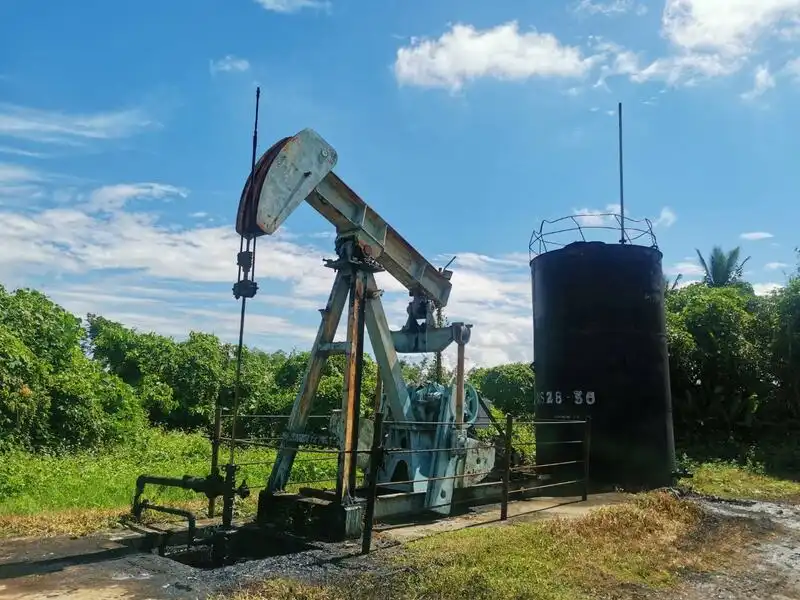
Open Days: Every day (open outdoor area)
Opening Hours: 08:00–17:00 (daytime visit recommended for safety)
Mae Soon Oil Production Site, Chiang Mai Province is one of Thailand’s most significant historical locations in the field of energy. It was here that the country’s first official petroleum exploration began more than a century ago. Today, the quiet rural landscape of Mae Soon may appear unassuming, yet it was once an open-air laboratory for geologists and state agencies during the early development of Thailand’s petroleum industry. Visiting this area is like stepping back to the origins of Thai energy exploration—origins that have shaped the nation’s economic and industrial progress to this day.
The story begins in 1921 (B.E. 2464), when Prince Kamphaeng Phet Akkarayothin, then serving as Commander of the Royal Railway Department, initiated exploratory drilling for crude oil in Mae Soon, Fang District, Chiang Mai. The first drilling area was known as “Bo Chao Luang” (The Royal Well). His vision was to find domestic energy sources to support transportation and emerging industries in Siam. This was one of the earliest attempts to extract petroleum from beneath Thai soil.
Shortly after the initial exploration, various government agencies continued studies and drilling experiments in the area. By the mid-20th century, Mae Soon had become well-known among early petroleum engineers. In 1956 (B.E. 2499), the Thai Cabinet officially transferred responsibility for the crude oil operations in Fang from the Department of Mineral Resources to the Military Energy Department. Although the amount of crude oil discovered in Mae Soon–Fang was not commercially viable, the research, field experiments, and development of technical personnel laid an essential foundation for Thailand’s petroleum knowledge in later decades.
To understand the site’s significance, it is useful to revisit what “petroleum” actually is. Petroleum is a naturally occurring hydrocarbon compound found in sedimentary rock layers formed over millions of years under intense heat and pressure. The remains of plants, animals, and microorganisms gradually transform into crude oil. When refined, petroleum yields a wide range of products such as gasoline, diesel, kerosene, fuel oil, liquefied petroleum gas, and numerous petrochemicals including plastics, fertilizers, and synthetic rubber. These products are woven into nearly every aspect of modern life.
Although Mae Soon is no longer an active drilling site, remnants of early exploration can still be seen—such as the terrain around the old drilling area and low-lying ground where machinery was once installed. Much of the equipment has disappeared over time, reclaimed by nature, yet the region’s geological character and foothill landscape still reflect why this area was selected for early petroleum studies. Visitors who appreciate geology, industrial history, and local heritage will find the area surprisingly enriching.
The atmosphere is peaceful and rural, with cool breezes drifting from the mountains along the Thai–Myanmar border. This setting helps visitors imagine the early days when drilling rigs and field researchers worked here. While the site may not be visually dramatic, its value lies in its educational significance and its role in the narrative of how Thailand began to understand and develop its own energy resources.
Visitors can observe the landscape around the old well site and talk with local residents—especially elders in Ban Pang Sak—who remember stories of Bo Chao Luang, the exploratory activities, and the historical atmosphere of Fang in earlier times. These oral histories deepen the experience, turning Mae Soon from a simple relic into a living outdoor classroom.
Getting There From Chiang Mai, take Highway 107 (Chiang Mai–Fang), passing Mae Rim, Mae Taeng, and Chiang Dao before reaching Fang District. Upon entering Mae Soon Subdistrict, look for Wat Theppharasit in Ban Pang Sak. Turn into the small road beside the temple and continue for approximately 3 kilometers. The route is accessible by private car, with a mix of paved and dirt roads. Daytime travel is recommended to clearly observe the terrain. Travelers without a private vehicle can hire a local songthaew or taxi from Fang town to reach the site.
For those planning a short trip, the surrounding area offers several attractive stops such as local temples, agricultural gardens, Fang Hot Springs, and the route toward Doi Pha Hom Pok National Park. This makes it easy to combine educational tourism with natural sightseeing in a single half-day or day trip.
| Name | Mae Soon Oil Production Site, Ban Pang Sak, Mae Soon Subdistrict, Fang District, Chiang Mai Province |
| Location | Beside the entrance road next to Wat Theppharasit, Ban Pang Sak, Moo 2, Mae Soon Subdistrict, Fang District, Chiang Mai, about 3 km from Highway 107 |
| Key Features | Thailand’s first official petroleum exploration site, featuring remnants of old wells and a quiet rural setting suitable for learning about early energy history and local geology |
| Period / Background | Exploration began in 1921 under Prince Kamphaeng Phet Akkarayothin. Multiple state agencies later conducted further studies. In 1956, operations were transferred to the Military Energy Department, marking an important stage in Thailand’s early petroleum research. |
| Key Evidence / Notable Features | Old drilling locations, characteristic foothill terrain ideal for early exploration, and visible traces of former equipment sites around Ban Pang Sak |
| Name Origin | Named after Mae Soon Subdistrict, where the early exploration took place. “Bo Chao Luang” refers to the royal well first drilled under Prince Kamphaeng Phet Akkarayothin. |
| Getting There | Take Highway 107 from Chiang Mai to Fang. Turn into the small road beside Wat Theppharasit and continue 3 km to the historic site. |
| Nearby Attractions | - Wat Theppharasit (0.5 km) - Wat Phra Bat Udom (4 km) - Old Wiang Fang Town (5 km) - Fang Hot Springs (15 km) - Doi Pha Hom Pok National Park (22 km) |
| Nearby Restaurants | - Jae Mei Yunnan Suki Restaurant (5 km, 081-366-3010) - Food stalls and local eateries at Fang Market (4–5 km) |
| Nearby Accommodations | - Fang Modern Hotel (5 km, 086-439-1843) - Guesthouses in Fang town (varies by budget and reviews) |
| Facilities | Open natural grounds with small access roads and parking areas. No on-site restrooms; visitors should prepare essential items beforehand. |
| Entrance Fees | Free of charge |
Frequently Asked Questions (FAQ)
Q: Is the Mae Soon Oil Production Site still open to visitors?
A: Yes, visitors can explore the area as a community learning site. However, it is not a formally managed tourist attraction, so daytime visits are recommended for safety.
Q: Is oil still produced in this area?
A: No commercial production currently exists. The site serves as a historical landmark marking Thailand’s earliest petroleum exploration.
Q: What type of visitor would enjoy this site?
A: Anyone interested in energy history, geology, quiet rural landscapes, or cultural heritage will appreciate the site. It is ideal for those who prefer meaningful, educational travel experiences.
Q: Can I get there using public transportation?
A: Yes. Take a bus from Chiang Mai to Fang, then hire a local songthaew or taxi and ask to be dropped off at “the road beside Wat Theppharasit in Ban Pang Sak.”
Q: Are there facilities available on-site?
A: Facilities are minimal. The area is mostly open land without restrooms or shops. Visitors should bring water, sun protection, and necessary supplies.
 Category: ●Art, Culture and Heritage
 Group: ●Landmarks and Memorials
Last Update : 8 MonthAgo
 Last Update : 8 MonthAgo
 Click to Access the Navigation Map GPS
Mae Soon Oil Production Site Map
Recommend

 Historical Sites and Monuments(8)
Landmarks and Memorials(5)
Historical Sites and Monuments(8)
Landmarks and Memorials(5)
 Royal Palace(2)
 Art, Craft Centres, Tradition(43)
 Museums(24)
 Educational Places
 Museum for Study(2)
 Educational Gardens, Farm(5)
 Training Center(1)
 Places of Worship
 Temple(79)
 Mosque(2)
 Other Sacred Sites(17)
 Research and Development
 Royal Project(44)
 Suburban Living
 Village, Community(41)
 Local Market(14)
 Nature and Wildlife
 National Parks and Marine Reserves(16)
 Mountain (Doi)(21)
 Dam, Reservoir, Lake(26)
 Waterfalls(43)
 Hot Springs(12)
 Caves(11)
 River, Canal(6)
 Other natural attractions(14)
 Entertainment and Agricultural
 Zoos and Aquariums(2)
 Animal camps and shows(3)
 Stadium(1)
 Farms, Parks and Ecotourism(19)
 Waterpark(2)
 Theater(1)
 Outdoor and Adventure Activities(10)
 Shopping
 Shopping and Night Market(6)
 Restaurant
 Michelin Star(1)
 Michelin Guide(23)
 Call Customer Service in Tourism
 Call Customer Service in Tourism(1)
 Travel Articles, Recipes
 Travel Review, Food Review(15)
 Food Menu, North Recipes(30)
 Thai Desserts, North Recipes(17)


