
lovethailand home >Northeastern Travel Attractions >Bueng Kan Travel Attractions >Mueang Bueng Kan >Bueng Kan > Wat Photharam (Wat Luangpho Phra Yai)
TL;DR: Wat Photharam (Wat Luangpho Phra Yai) is located at Ban Tha Khrai, Moo 5, Bueng Kan Subdistrict, Mueang Bueng Kan District, Bueng Kan Province, open Daily, hours 08.00 – 18.00.
Wat Photharam (Wat Luangpho Phra Yai)
Open Days: Daily
Opening Hours: 08.00 – 18.00
Wat Photharam, also known as Wat Luang Pho Phra Yai Ban Tha Khrai, is an important Buddhist temple near Bueng Kan town. Located along Highway 212 on the Bueng Kan–Nakhon Phanom route, the temple enshrines Luang Pho Phra Yai, a revered Buddha image in the subduing Mara posture with a lap width of about 2 meters. It is regarded as a sacred Buddha image of Bueng Kan and remains deeply respected by local residents. The temple is suitable for worship, merit-making, learning local legends, seeing the ordination hall, viewing an old riverboat display, and beginning a cultural route around Bueng Kan town and the Mekong River area.
Wat Photharam, widely known among local people as Wat Luang Pho Phra Yai Ban Tha Khrai, is located at Ban Tha Khrai, Moo 5, Bueng Kan Subdistrict, Mueang Bueng Kan District, Bueng Kan Province. It is one of the key spiritual landmarks of Bueng Kan and plays an important role in local faith, community history, and cultural tourism. The temple is approximately 5 to 7 km from Bueng Kan town along Highway 212, the Bueng Kan–Nakhon Phanom route. Because it is close to the town and easy to reach, it is an ideal first stop for visitors before continuing to other attractions such as Wat Ahong Silawat, Three Whale Rock, Phu Sing, Nong Kut Thing, and Wat Phu Tok.
The spiritual heart of Wat Photharam is Luang Pho Phra Yai, a revered Buddha image in the subduing Mara posture enshrined inside the ordination hall. The image is about 2 meters high with a lap width of about 2 meters. The left hand rests palm-up on the lap, while the right hand rests downward over the knee, with the fingers extended in an orderly form. The Buddha image sits on a square pedestal that was strengthened and renovated in 1994. Its golden appearance, calm expression, and long-standing connection with the local community make it one of the most meaningful Buddha images in Bueng Kan.
The importance of Luang Pho Phra Yai is not based only on its size or artistic value. It comes from the legend of its discovery and the faith that has been passed down through generations. Local accounts tell of people who migrated from Mueang Yot, which corresponds to present-day Yasothon, and settled along the Mekong River before moving toward the Chai Buri area, now part of Bueng Kan District. When they found Ban Tha Khrai suitable for settlement, they began clearing dense forest for farming and living. During the clearing, they discovered an old Buddha image covered with vines and hidden within thick vegetation. This discovery became the foundation of the community’s devotion to Luang Pho Phra Yai.
According to the local legend, after villagers removed the vines and cleaned the area, they found that the finial of the Buddha image had been broken, believed to have happened when a wild elephant pulled the vines while feeding. Around the same area, people also found traces of a religious space, pottery fragments, ancient jars, and old household objects. These findings led villagers to believe that the site had once been a sacred Buddhist place. The discovery of Luang Pho Phra Yai was therefore more than the discovery of an old Buddha image. It was the rediscovery of the spiritual and historical roots of Ban Tha Khrai.
Since its discovery, the Buddha image has not been moved from its original location. Only the broken finial was repaired, and the pedestal was reinforced around the original base to ensure stability. This preservation of the original location is deeply meaningful to local people because it keeps Luang Pho Phra Yai connected to the sacred place where it was found. Devotees have continued to visit the temple to worship, make merit, ask for blessings, and return with gold paint or offerings when their wishes are fulfilled. Over time, the Buddha image became fully gilded and even more strongly associated with local faith.
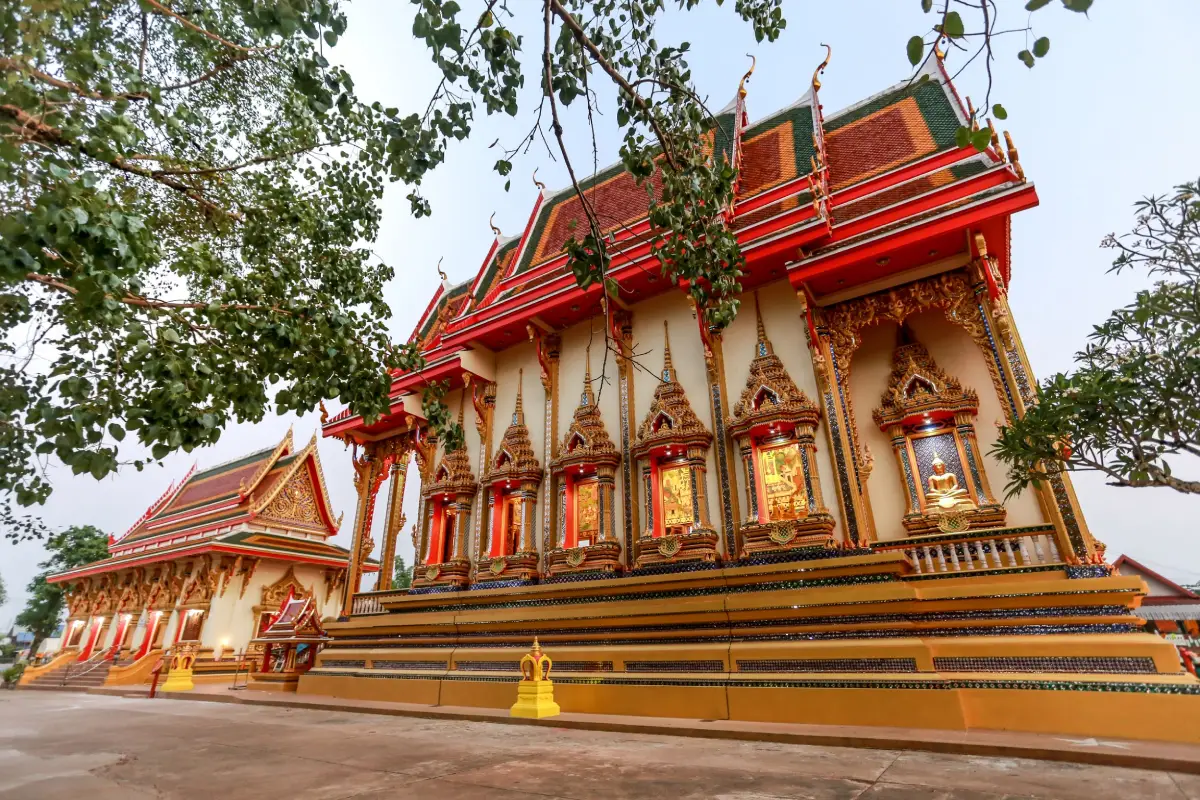
The ordination hall that houses Luang Pho Phra Yai is the most important area of the temple. Its architecture reflects the beauty of Thai temple design in the upper northeastern region. The roof, pediment, staircase, and decorative elements create a dignified visual presence. Naga motifs and Buddhist ornaments add to the sacred atmosphere. As visitors enter the temple grounds, the ordination hall immediately stands out as the spiritual center of the site.
Inside the ordination hall, the atmosphere is quiet and devotional. Luang Pho Phra Yai is placed as the main focus, surrounded by offerings, flowers, candles, and religious objects. The temple has specific worship practices for the ordination hall. Men may enter the hall to pay respect, while women worship from the outside or from areas arranged by the temple. There is also a pavilion or worship area for a replica of Luang Pho Phra Yai, allowing all visitors to pay respect comfortably and appropriately. Following the temple’s guidance helps preserve the sacred order of the site.
Wat Photharam is especially important during its annual ceremonies. Local people hold celebrations for Luang Pho Phra Yai twice a year. The first is around the full moon of the third lunar month, connected with Bun Khao Chi and the offering of prasat phueng. The second is after the Songkran Festival, when the community holds a ceremony to respectfully bathe Luang Pho Phra Yai. These events are not only religious ceremonies. They are community gatherings that express gratitude, preserve local traditions, and strengthen social bonds in Ban Tha Khrai and Bueng Kan.
Bun Khao Chi is one of the important merit-making traditions of northeastern Thailand. Khao chi, or grilled sticky rice, is closely related to the food culture of Isan, where sticky rice is central to daily life. By connecting this tradition with the celebration of Luang Pho Phra Yai, Wat Photharam becomes a place where food culture, community identity, and Buddhist devotion meet. During the festival, people come to make merit, offer religious items, meet relatives, and participate in activities that have been preserved by the local community.
The post-Songkran bathing ceremony for Luang Pho Phra Yai is another highly meaningful event. Devotees come to pour water in respect, receive blessings, and take part in a tradition that marks renewal, gratitude, and auspicious beginnings. The atmosphere is filled with faith and warmth. The annual continuity of this ceremony shows that Wat Photharam remains a living spiritual center, not merely a tourist site.
Beyond Luang Pho Phra Yai, Wat Photharam also has an old riverboat displayed within the temple grounds. This boat adds a historical dimension to the visit because Bueng Kan has long been connected with the Mekong River. The river shaped settlement, trade, transport, fishing, and cultural exchange between communities on both banks. Seeing an old boat within the temple allows visitors to connect Buddhist faith with riverside life and the wider history of Bueng Kan as a Mekong province.
The atmosphere of Wat Photharam is peaceful, welcoming, and easy to explore. It is a suitable destination for visitors who want a calm temple experience without traveling far from town. The grounds include open areas for walking, taking photos, resting, and joining religious activities. The ordination hall forms the central point, while pavilions and worship areas support different types of visitors. Families, elderly travelers, and cultural visitors can all enjoy the temple comfortably because it does not require hiking or long walking routes.
The temple’s location is one of its major advantages. It is close to Bueng Kan town and lies on a road that connects easily to other attractions. Travelers staying in town can visit Luang Pho Phra Yai in the morning or late afternoon. With limited time, Wat Photharam can be paired with Chao Mae Song Nang Shrine, the Lao Market or Mekong riverside walking street, and riverside restaurants in town. With more time, visitors can continue to Wat Ahong Silawat, famous for the Navel of the Mekong River, or travel onward to Three Whale Rock and Phu Sing.
Visiting Wat Photharam gives travelers a meaningful introduction to Bueng Kan before exploring the province’s natural attractions. Luang Pho Phra Yai reflects the deep bond between the local community and Buddhism. Beginning a trip here helps visitors understand that Bueng Kan is not only a province of dramatic rocks, mountain temples, and the Mekong River. It is also a place of local legends, migration stories, settlement memory, and spiritual continuity.
For those interested in local history, Wat Photharam is a strong example of how community narratives shape the identity of a place. The discovery of the Buddha image in dense forest, the repair of the broken finial, the presence of pottery fragments and old objects, and the annual ceremonies all create a deeper story than a simple sightseeing stop. These stories are part of the shared memory that helps local people understand their roots and continue their traditions.
Culturally, the temple shows how an Isan Buddhist temple functions as more than a place of worship. It is a community center, a festival ground, a keeper of sacred objects, a place for tradition, and a space where outsiders can learn about local identity. Wat Photharam is therefore suitable both for Thai visitors who wish to make merit and for foreign travelers who want to understand how Buddhism works at a community level in northeastern Thailand.
Worshipping Luang Pho Phra Yai is deeply meaningful for local residents. People often come to ask for blessings related to good fortune, work, health, family, and success. When they feel comforted or fulfilled, they return to make merit, join temple ceremonies, or offer support to the temple. This continuing devotion makes Luang Pho Phra Yai more than a work of Buddhist art. It is a living spiritual center to which people return again and again.
For photography, Wat Photharam offers several attractive viewpoints. Visitors can photograph the front of the ordination hall, the roof details, the staircase, Naga decorations, temple bells, gongs, and the old boat display. Photography should always be done respectfully, especially around the ordination hall and worship areas. Visitors should avoid taking photographs where signs prohibit it and should not treat sacred spaces as ordinary photo backdrops.
The best time to visit is in the morning or late afternoon, when the weather is more comfortable and the light is suitable for photography. Those who want a quiet visit may prefer weekdays or early morning. Those who want to experience community faith at its strongest should plan around the full moon of the third lunar month or the post-Songkran period, when the temple holds important ceremonies for Luang Pho Phra Yai.
A typical visit takes about 45 minutes to 1.5 hours. Visitors who come only to worship and see the ordination hall may spend less than an hour. Those who want to read the story, take photos, view the old boat, and rest quietly in the temple grounds should allow more time. Speaking with local people or caretakers can also add context and help visitors understand the temple’s importance more deeply.
Getting There is easiest by private car, rental car, or local transport. From Bueng Kan town, take Highway 212 on the Bueng Kan–Nakhon Phanom route toward Ban Tha Khrai. The distance is about 5 to 7 km, and the drive usually takes around 10 minutes depending on traffic. Travelers arriving by intercity bus can get off in Bueng Kan town and continue by hired local transport. Because the temple is close to town, it is one of the easiest cultural stops to include in a Bueng Kan itinerary.
Travelers from Bangkok can reach Bueng Kan by private car, long-distance bus, or by flying to nearby airports such as Udon Thani or Nakhon Phanom and continuing by road. Once in Bueng Kan town, Wat Photharam is easy to reach and can be used as a first stop, a short half-day cultural visit, or a peaceful final stop before returning to accommodation.
Visitors should dress respectfully, speak quietly, follow the temple’s instructions, avoid entering restricted areas, and not touch sacred objects without permission. Women who wish to pay respect to Luang Pho Phra Yai should worship from the area arranged by the temple. Men entering the ordination hall should remove shoes and maintain proper conduct. Respectful behavior is essential because the temple remains an active sacred site and an important spiritual center for the local community.
For families with children, Wat Photharam is a good place to teach temple etiquette, local faith, and community history. Children can see an important Buddha image, learn why local people respect Luang Pho Phra Yai, and understand how annual ceremonies bring a community together. Elderly visitors can also access the temple more easily than nature attractions that require hiking or long walking.
For foreign visitors, Wat Photharam provides a clear and accessible introduction to Thai Buddhism at the community level. The temple has a revered Buddha image, a local discovery legend, annual ceremonies, and the atmosphere of a real local temple. It shows that in Thailand, an important Buddha image is not only an object of art. It is a center of merit-making, blessing, memory, and community connection.
In a wider Bueng Kan journey, Wat Photharam deserves a place on the main route because it combines easy access, strong spiritual value, community history, ongoing traditions, and meaningful temple features. It may not be a large natural landmark like Three Whale Rock or Wat Phu Tok, but it explains the soul of Bueng Kan through Luang Pho Phra Yai, the sacred Buddha image that continues to unite people from the past to the present.
A visit to Wat Photharam is therefore more than a short worship stop. It is a way to enter the story of Ban Tha Khrai, understand the faith of the Mekong-side community, and appreciate a local temple that remains alive through worship, memory, festivals, and community participation. Travelers who want a complete understanding of Bueng Kan should include this temple in their journey.
| Name | Wat Photharam, or Wat Luang Pho Phra Yai Ban Tha Khrai |
| Location | Ban Tha Khrai, Moo 5, Bueng Kan Subdistrict, Mueang Bueng Kan District, Bueng Kan Province |
| Address | Bueng Kan Subdistrict, Mueang Bueng Kan District, Bueng Kan 38000, Thailand |
| Highlights | Luang Pho Phra Yai, a revered Buddha image of Bueng Kan; beautiful ordination hall; annual ceremonies; and an old riverboat displayed within the temple grounds |
| History | An important temple of Ban Tha Khrai with a local legend about the discovery of Luang Pho Phra Yai in dense forest. The Buddha image pedestal was strengthened and renovated in 1994. |
| Name Origin | Wat Photharam is the official temple name, while Wat Luang Pho Phra Yai is the popular name referring to the sacred Buddha image enshrined at the temple. |
| Distinctive Features | A temple near Bueng Kan town known for local faith, community history, and annual ceremonies centered on Luang Pho Phra Yai |
| Main Buddha Image | Luang Pho Phra Yai, a Buddha image in the subduing Mara posture, about 2 meters high with a lap width of about 2 meters, enshrined inside the ordination hall |
| Travel Information | From Bueng Kan town, take Highway 212 on the Bueng Kan–Nakhon Phanom route to Ban Tha Khrai. The distance is about 5 to 7 km and the drive takes around 10 minutes. |
| Current Status | Open for visitors and worshippers |
| Open Days | Daily |
| Opening Hours | 08.00 – 18.00 |
| Fees | No admission fee. Visitors may make merit according to their faith. |
| Facilities | Parking area, worship areas, ordination hall, pavilion, photo spots, old riverboat display, and rest areas within the temple grounds |
| Main Areas / Zones | 1. Ordination Hall Enshrining Luang Pho Phra Yai 2. Worship Area In Front Of The Ordination Hall 3. Pavilion For The Replica Of Luang Pho Phra Yai 4. Temple Courtyard And Annual Ceremony Area 5. Old Riverboat Display 6. Temple Architecture And Bell Photo Spots |
| Caretaker | The temple monastic community and Ban Tha Khrai local community |
| Important Visitor Etiquette | Dress respectfully, follow temple instructions, and observe the worship rules for entering or worshipping around the ordination hall. |
| Nearby Tourist Attractions | 1. Chao Mae Song Nang Shrine, Mueang Bueng Kan, about 5 km 2. Lao Market / Mekong Riverside Walking Street, about 6 km 3. Nong Kut Thing, about 13 km 4. Wat Ahong Silawat, or Kaeng Ahong, about 23 km 5. Three Whale Rock, Phu Sing, about 35 km 6. Wat Jetiyakhiri Wihan, or Wat Phu Tok, about 60 km |
| Nearby Restaurants | 1. Hug Na Moo Kratha, about 1 km, Tel. 088-227-3432 2. Khlong Samran Restaurant, about 8 km, Tel. 082-109-2865, 086-483-9465, 063-830-5754 3. Im Nam Samran & Samranjai Cafe, about 6 km, Tel. 099-470-7774 4. Krua Rim Khong Bueng Kan, about 6 km, Tel. 061-056-8964 5. Steak Rim Khong, about 6 km, Tel. 096-587-4256 6. Tam Yam Yua By Miki, Rim Khong Bueng Kan Branch, about 6 km, Tel. 082-689-1316 |
| Nearby Accommodations | 1. Ban Tha Khrai Community Homestay, about 1 km, Tel. 086-990-6826 2. The One Hotel Bueng Kan, about 7 km, Tel. 042-492-234, 091-057-5159 3. BK Place Hotel Bueng Kan, about 8 km, Tel. 099-638-0988, 082-495-2125, 085-005-0589 4. Century Grand Hotel, about 7 km, Tel. 081-956-9141 5. Vipat Bueng Kan Hotel, about 7 km 6. Pen Nueng Hotel Bueng Kan, about 8 km |
Frequently Asked Questions (FAQ)
Q: Where is Wat Photharam, or Wat Luang Pho Phra Yai, located?
A: Wat Photharam is located at Ban Tha Khrai, Moo 5, Bueng Kan Subdistrict, Mueang Bueng Kan District, Bueng Kan Province, about 5 to 7 km from Bueng Kan town along Highway 212.
Q: What are the opening hours of Wat Photharam?
A: The temple is open daily from 08.00 to 18.00.
Q: Is there an entrance fee for Wat Photharam?
A: There is no admission fee. Visitors may make merit or donations according to their faith.
Q: Why is Luang Pho Phra Yai important?
A: Luang Pho Phra Yai is a revered Buddha image of Bueng Kan with a local legend of being discovered in dense forest. It has long been a spiritual center for local residents.
Q: Can women enter the ordination hall to worship Luang Pho Phra Yai?
A: The temple has specific worship rules. Women may worship from the outside or from areas arranged by the temple, while visitors should follow the temple’s instructions respectfully.
Q: When are the main ceremonies at Wat Photharam held?
A: The temple holds major ceremonies twice a year: around the full moon of the third lunar month for Bun Khao Chi and after Songkran for the respectful bathing ceremony of Luang Pho Phra Yai.
Q: What can visitors see inside Wat Photharam?
A: Visitors can see the ordination hall, Luang Pho Phra Yai, the replica worship pavilion, temple courtyard, architectural details, bells and gongs, and the old riverboat display.
Q: What attractions can be visited after Wat Photharam?
A: Nearby and onward attractions include Chao Mae Song Nang Shrine, Lao Market, Nong Kut Thing, Wat Ahong Silawat, Three Whale Rock, and Wat Phu Tok.
 Category: ●Places of Worship
 Group: ●Temple
Last Update : 2 MonthAgo
 Last Update : 2 MonthAgo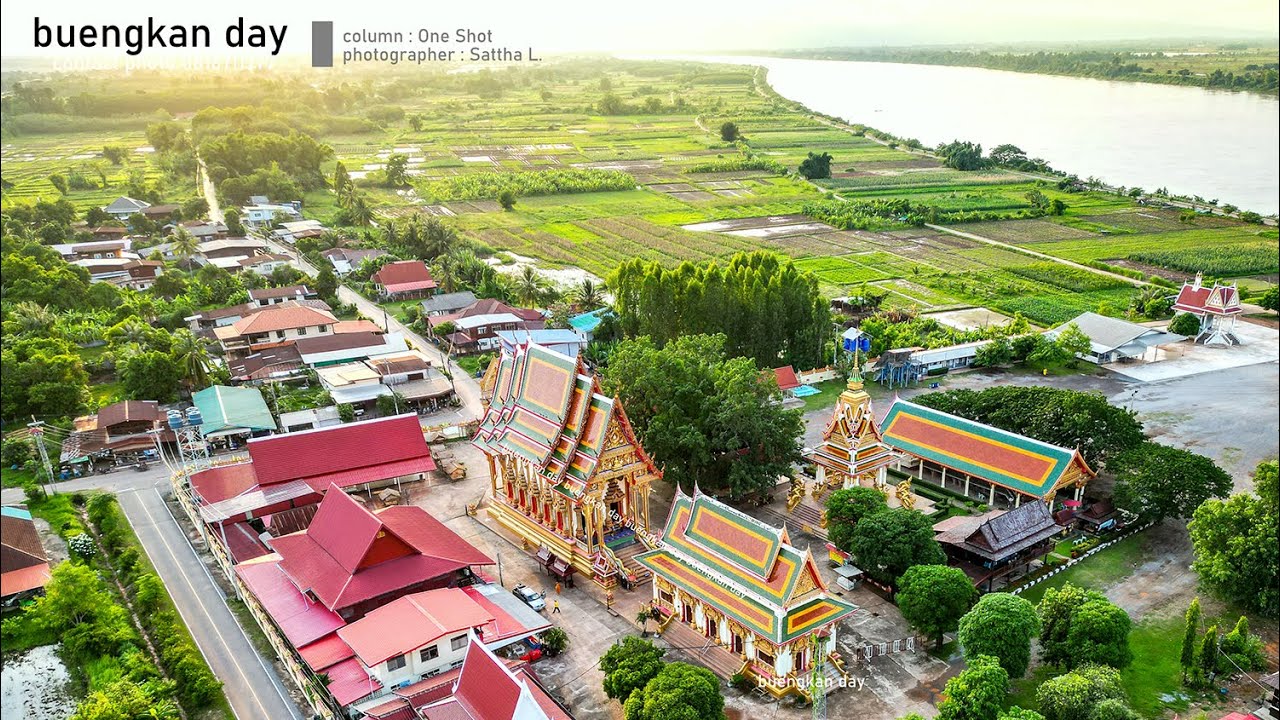
 Click to Access the Navigation Map GPS
Wat Photharam (Wat Luangpho Phra Yai) Map
Recommend

 Art, Culture and Heritage
 Museums(1)
Temple(12)
Museums(1)
Temple(12)
 Other Sacred Sites(1)
 Suburban Living
 Local Market(1)
 Nature and Wildlife
 National Parks and Marine Reserves(1)
 Mountain (Doi)(1)
 Waterfalls(1)
 River, Canal(4)
 Entertainment and Agricultural
 Waterpark(1)


