
TL;DR: Wat Phong is located at Ban Pong, Moo 4, Bo Kaeo Subdistrict, Na Muen District, Nan Province, open Daily, hours Open During Regular Temple Hours.
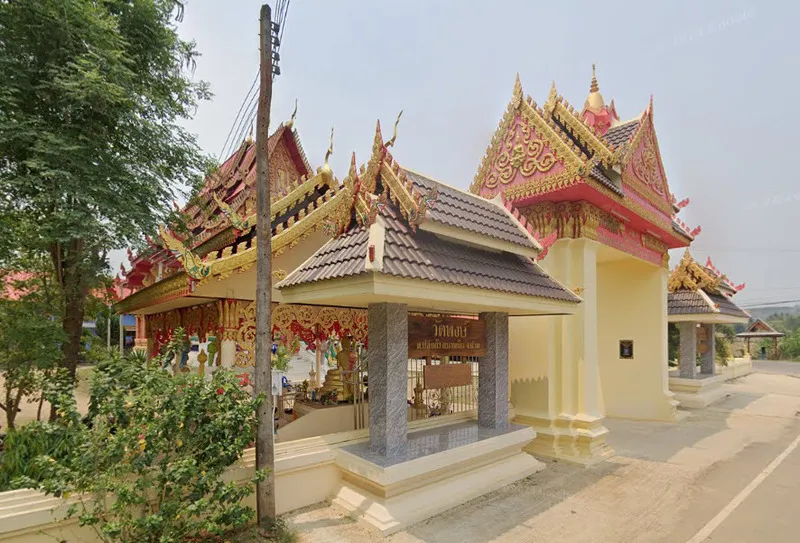
Wat Phong
Open Days: Daily
Opening Hours: Open During Regular Temple Hours
Wat Phong is located in Ban Pong, Moo 4, Bo Kaeo Subdistrict, Na Muen District, Nan Province. It is an old community temple with a long history closely connected to several villages in the area. The temple was originally known as “Wat Pong” and began as a small monastic place called Aram Ban Mon in Ban Hua Thung, Moo 9. Over time, the temple was moved several times as the local communities expanded and searched for a more suitable site. Its present location reflects the shared faith and cooperation of the people in Bo Kaeo Subdistrict.
The most important spiritual landmark associated with Wat Phong is Phra That Chom Chaeng, a sacred stupa located to the east of the temple. It is regarded as the main stupa of Wat Phong and a center of devotion for Ban Pong and nearby communities. Every year, the local people hold the Phra That Chom Chaeng worship ceremony around Makha Bucha Day. The event includes merit-making, alms-giving, meditation practice, candlelight procession, Lanna-style offering processions, folk performances, traditional music, fireworks, rockets, and old-style floating lanterns using smoke from fire.
Wat Phong is suitable for travelers who want to visit a local temple, understand the history of village settlement in Na Muen District, and experience an active Buddhist tradition connected with a sacred local stupa. The temple is not only a place for worship but also a cultural site that preserves the memory of communities such as Ban Pong, Ban Na Yang, Ban Hua Thung, Ban Huai Chuak, Ban Huai Ho, Ban Pa Kha, Ban Na Panong, and Ban Na Bon, which were connected to the temple’s relocation and religious development over time.
The early history of Wat Phong began with the name “Wat Pong.” It was originally located in the Ban Hua Thung area, Moo 9, where villagers called it Aram Ban Mon. The people who came to make merit at Aram Ban Mon included residents from Ban Hua Thung, Ban Huai Chuak, and Ban Huai Ho. In this early period, the place served as a shared religious center for several villages rather than a temple belonging to only one community.
Later, Aram Ban Mon was moved to an area called Pak Kong Kao Si, which is now around Ban Na Yang, Moo 7, near the homes of Achan Phin Inpata and Pho Chai Wetmano. This relocation reflected the changing needs of the local population and the search for a more appropriate place for religious activities. As the surrounding villages continued to grow, the villagers moved the monastic site again from Pak Kong Kao Si to Ban Na Yang Tai, which is now Moo 11.
The Ban Na Yang Tai area later became associated with the village hall of Moo 11. After that, villagers from Ban Pong, Ban Na Yang, Ban Pa Kha, Ban Na Panong, and Ban Na Bon discussed building a new temple opposite Phra That Chom Chaeng. They believed that the temple should be located together with the sacred stupa, reflecting the Lanna concept that a temple and its stupa form a spiritual pair: the temple as a place for Buddhist practice and the stupa as a sacred center of faith.
The land once believed to be suitable for the temple opposite Phra That Chom Chaeng is now under private ownership, because the temple could not provide land documents such as Nor Sor Kor or Sor Kor 1 to confirm its claim. The temple was finally moved to its present location because the devotees saw that the site was a flat area, or “piang” in the local language. It was surrounded by forest and wildlife, making it peaceful and suitable for a Buddhist temple.
The origin of the temple’s old name is closely connected with the geography and oral history of the area. According to local stories, villagers once hunted a wild boar that was injured and later died in a rice field south of the temple. This story became linked with the names Ban Pa Kha and Ban Na Yang, as the area had makha and yang trees. To the northwest and south of the area were ponds or wetlands rich with fish. Local people called such water areas “po” or “pong,” leading to the name Wat Pong.
As temple administration and communication with government offices became more formal, the name Wat Pong caused confusion in official mail and documents. Some letters were mistakenly sent to Wat Bong in Na Noi District. A monk later changed the name from “Wat Pong” to “Wat Phong” to make official communication clearer. The name Wat Phong has been used since then.
The value of Wat Phong lies not only in its name and relocation history but also in its role as a spiritual center for the people of Bo Kaeo Subdistrict. The temple is a place for merit-making, Buddhist ceremonies, listening to sermons, maintaining local traditions, and gathering for community events. Its connection with several villages makes Wat Phong a symbol of shared devotion and communal identity.
Phra That Chom Chaeng is one of the most important elements of Wat Phong. Located to the east of the temple in Ban Pong, Moo 4, Bo Kaeo Subdistrict, Na Muen District, the stupa covers an area of more than 2 rai and is regarded as the main stupa of Wat Phong. Although its exact construction date is unknown, elders have passed down a story linking the stupa with a wandering monk from Uttaradit Province.
According to local legend, the wandering monk traveled at night and arrived at the area of the stupa at dawn. He set up his umbrella tent and practiced meditation there. At night, he saw a shining crystal-like light emerging from the area where the stupa now stands, along with a silver-and-gold boat beneath the ground. He then built a stupa to enshrine and cover the sacred spot. The name “Chom Chaeng” is therefore associated with dawn, light, and auspicious spiritual vision.
Later, a monk named Bun Long traveled from Tha Pla District in Uttaradit Province and reached Phra That Chom Chaeng. Seeing that the stupa was in poor condition, he discussed its restoration with the village headman, village committee, local residents of Ban Pong, and the monastic community. The restoration of the stupa reflects the continuing power of local faith and the community’s commitment to preserving sacred heritage.
The annual worship ceremony of Phra That Chom Chaeng was traditionally held during the fifth lunar month, or on Makha Bucha Day. In the past, the ceremony was held within a small circle of Wat Phong devotees, so people outside the area rarely knew where Phra That Chom Chaeng was or what its story was. In earlier times, villagers worshipped the stupa by lighting ceremonial fireworks and performing water-pouring rituals for the stupa.
Today, Phra That Chom Chaeng is part of Wat Phong and is located at 30 Ban Pong, Moo 4, Bo Kaeo Subdistrict, Na Muen District, Nan Province. The Phra That Chom Chaeng worship ceremony is held every year on Makha Bucha Day. Activities include merit-making, alms-giving, meditation practice, candlelight procession, folk performances such as salo, saw, and sueng music, stage performances, Lanna offering processions, daytime rockets offered to the stupa, nighttime fireworks, and traditional smoke-powered floating lanterns.
The Phra That Chom Chaeng worship ceremony is more than an annual religious event. It brings together Buddhism, Lanna music, local performance, merit-making, sacred stupa worship, traditional processions, and community participation. These activities allow younger generations to experience their cultural roots while helping visitors understand that Wat Phong is a living cultural space, not just a quiet temple.
For cultural travelers, Wat Phong is a meaningful destination for learning about local temple history, village migration, sacred stupas, and Lanna Buddhist traditions. Visitors can walk around the temple grounds, pay respect to Phra That Chom Chaeng, and learn how the temple’s relocation story mirrors the growth and adaptation of the local communities in Na Muen District.
Wat Phong is located in Bo Kaeo Subdistrict, an area with several important temples and cultural sites. It can be included in an itinerary with Wat Bo Kaeo, Wat Na Wai, Wat Don Mun, and natural attractions in Na Muen and Na Noi districts. This route is suitable for travelers who want to experience ancient temples, Lanna culture, rural communities, and the landscape of southern Nan in one journey.
Getting There is most convenient by private car. From Nan city, travel through Wiang Sa District, then continue toward Na Noi and Na Muen districts before entering Bo Kaeo Subdistrict and Ban Pong. Most of the route follows paved roads connecting local communities. Travelers should allow enough time, as Na Muen District is located in the southern part of Nan Province and is relatively far from Nan city.
Visitors should dress modestly, speak respectfully, and observe proper temple etiquette. During the Phra That Chom Chaeng worship ceremony, visitors should follow the guidance of the temple and community because the event includes religious rituals and large local participation. Photography should be done respectfully, especially during merit-making, candlelight processions, and other sacred activities.
When visiting Wat Phong, it is worth spending time understanding the story behind the temple’s name, its transformation from Wat Pong to Wat Phong, its connection with Phra That Chom Chaeng, and its role as a shared religious center for several villages. These stories give the temple deeper meaning beyond its physical space.
For those interested in local traditions, Makha Bucha Day is the most culturally significant time to visit Wat Phong, as the annual Phra That Chom Chaeng worship ceremony takes place then. The event is filled with devotion, community cooperation, Lanna cultural expressions, and Buddhist practice that continues to be passed down through generations.
Wat Phong is therefore one of the important community temples in Bo Kaeo Subdistrict. It deserves wider recognition as a temple with a sacred stupa, a strong local tradition, and a deep historical connection to village life in Na Muen District. Its charm lies in its quiet rural atmosphere, oral history, and living faith.
A visit to Wat Phong offers more than a simple temple stop. It provides insight into how a Buddhist temple can preserve community memory. From Aram Ban Mon to Pak Kong Kao Si, Ban Na Yang Tai, and the present temple site; from Wat Pong to Wat Phong; and from the legend of a shining crystal and silver-gold boat to the annual worship ceremony on Makha Bucha Day, every part of Wat Phong’s story reflects the deep bond between faith, place, and people.
| Name | Wat Phong |
| Location | Ban Pong, Moo 4, Bo Kaeo Subdistrict, Na Muen District, Nan Province |
| Address | 30 Ban Pong, Moo 4, Bo Kaeo Subdistrict, Na Muen District, Nan Province, Thailand |
| Highlights | Phra That Chom Chaeng, the sacred stupa of Wat Phong, the temple’s relocation history, and the annual Phra That Chom Chaeng worship ceremony on Makha Bucha Day |
| History | Originally known as Wat Pong, the temple began as Aram Ban Mon in Ban Hua Thung before being relocated several times and renamed Wat Phong |
| Name Origin | The original name “Wat Pong” came from a local term associated with ponds or wetlands. It was later changed to “Wat Phong” to avoid confusion in official communication |
| Distinctive Features | A community temple connected with several villages in Bo Kaeo Subdistrict and centered around the sacred Phra That Chom Chaeng |
| Main Areas / Zones | Wat Phong temple grounds, Phra That Chom Chaeng, ceremonial area, and annual worship ceremony space |
| Abbot / Caretaker | Phra Baidika Aphiyut Intapanyo |
| Important Tradition | The Phra That Chom Chaeng worship ceremony is held every year on Makha Bucha Day, featuring merit-making, alms-giving, meditation, candlelight procession, Lanna offering procession, folk music, rockets, fireworks, and traditional smoke-powered floating lanterns |
| Travel Information | Best reached by private car from Nan city via Wiang Sa, Na Noi, and Na Muen districts before entering Bo Kaeo Subdistrict and Ban Pong |
| Current Status | An active community temple in Ban Pong and the location of Phra That Chom Chaeng, the sacred stupa of Wat Phong |
| Nearby Tourist Attractions | 1. Phra That Chom Chaeng, About 1 km 2. Wat Bo Kaeo, About 7 km 3. Wat Na Wai, About 10 km 4. Wat Don Mun, About 15 km 5. Pak Nai Fishing Village, About 35 km |
| Nearby Restaurants | 1. Song Ruay Restaurant, Na Muen District, About 12 km, Tel. 089-5558478, 054-787469 2. Nan Tai Cafe & Eatery, About 12 km, Tel. 085-3579934 3. Sinthai Raft Restaurant, Pak Nai, About 35 km, Tel. 093-0482120 4. Song Bua Raft, Pak Nai, About 35 km, Tel. 085-7191473 |
| Nearby Accommodations | 1. Na Muen Resort, About 12 km, Tel. 086-1898677 2. Sin Lodge, About 13 km, Tel. 085-5671623 3. Chai Thung Homestay, Na Muen District, About 13 km, Tel. 085-0413815 |
Frequently Asked Questions (FAQ)
Q: Where is Wat Phong located?
A: Wat Phong is located in Ban Pong, Moo 4, Bo Kaeo Subdistrict, Na Muen District, Nan Province.
Q: What was the original name of Wat Phong?
A: Wat Phong was originally called Wat Pong and began as Aram Ban Mon in Ban Hua Thung, Moo 9.
Q: Why was the name changed from Wat Pong to Wat Phong?
A: The name was changed to avoid confusion in official documents and mail with another temple of a similar name.
Q: How is Phra That Chom Chaeng related to Wat Phong?
A: Phra That Chom Chaeng is the sacred stupa of Wat Phong and is located to the east of the temple.
Q: When is the Phra That Chom Chaeng worship ceremony held?
A: It is held every year on Makha Bucha Day, with merit-making, alms-giving, meditation, candlelight procession, Lanna offering processions, and traditional rocket and lantern activities.
Q: Who is the abbot of Wat Phong?
A: The abbot of Wat Phong is Phra Baidika Aphiyut Intapanyo.
Q: What type of travel is Wat Phong suitable for?
A: It is suitable for temple visits, cultural tourism, local history learning, and experiencing the Phra That Chom Chaeng worship tradition in Na Muen District.
Q: How can visitors get to Wat Phong?
A: The most convenient way is by private car from Nan city through Wiang Sa, Na Noi, and Na Muen districts to Bo Kaeo Subdistrict and Ban Pong.
 Category: ●Places of Worship
 Group: ●Temple
Last Update : 5 MonthAgo
 Last Update : 5 MonthAgo
 Click to Access the Navigation Map GPS
 Art, Culture and Heritage
 Landmarks and Memorials(6)
 Art, Craft Centres, Tradition(6)
 Museums(4)
 Historic Homes and Cities(1)
 Art Gallery(1)
 Educational Places
 Educational Gardens, Farm(1)
Temple(68)
Educational Gardens, Farm(1)
Temple(68)
 Church(1)
 Other Sacred Sites(18)
 Research and Development
 Royal Project(2)
 Suburban Living
 Village, Community(13)
 Local Market(1)
 Nature and Wildlife
 National Parks and Marine Reserves(9)
 Mountain (Doi)(6)
 Dam, Reservoir, Lake(16)
 Waterfalls(28)
 Hot Springs(1)
 Caves(11)
 River, Canal(5)
 Other natural attractions(10)
 Entertainment and Agricultural
 Farms, Parks and Ecotourism(4)
 Outdoor and Adventure Activities(2)


