
lovethailand home >Northeastern Travel Attractions >Kalasin Travel Attractions >Sahasakan >Non Buri > Sirindhorn Museum
TL;DR: Sirindhorn Museum is located at Non Buri Subdistrict, Sahatsakhan District, Kalasin Province, Thailand, open Tuesday – Sunday, hours 09.30 – 16.30.
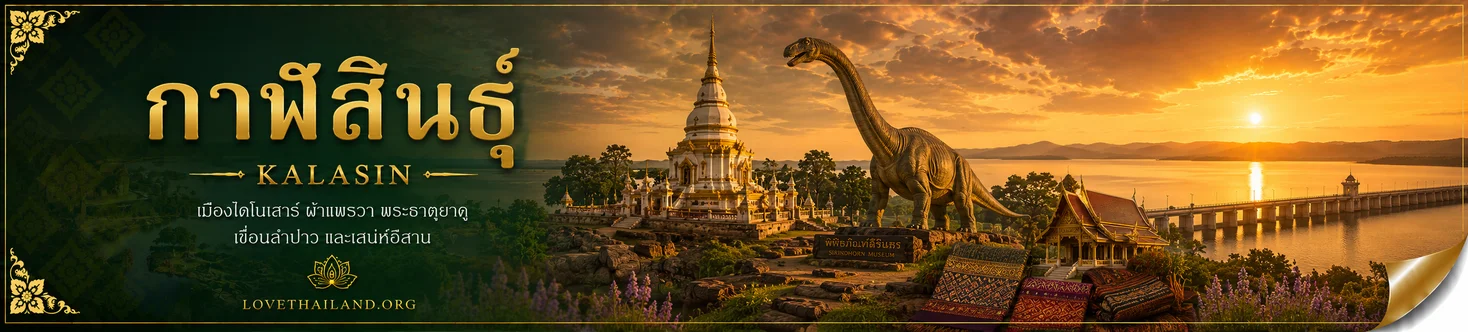
Sirindhorn Museum
Open Days: Tuesday – Sunday
Opening Hours: 09.30 – 16.30
Sirindhorn Museum in Kalasin Province is one of Thailand’s most important dinosaur museums and paleontological learning centers. Located at 200 Moo 11, Non Buri Subdistrict, Sahatsakhan District, Kalasin Province, the museum stands close to the Phu Kum Khao dinosaur excavation site and Wat Sakkawan. It is a major destination for families, students, teachers, researchers, and travelers interested in dinosaurs, fossils, geology, the history of life, and the deep natural history of northeastern Thailand. This is not just a place to see dinosaur skeletons. It is a scientific gateway that helps visitors understand how the land of Kalasin once formed part of an ancient ecosystem inhabited by giant prehistoric animals millions of years ago.
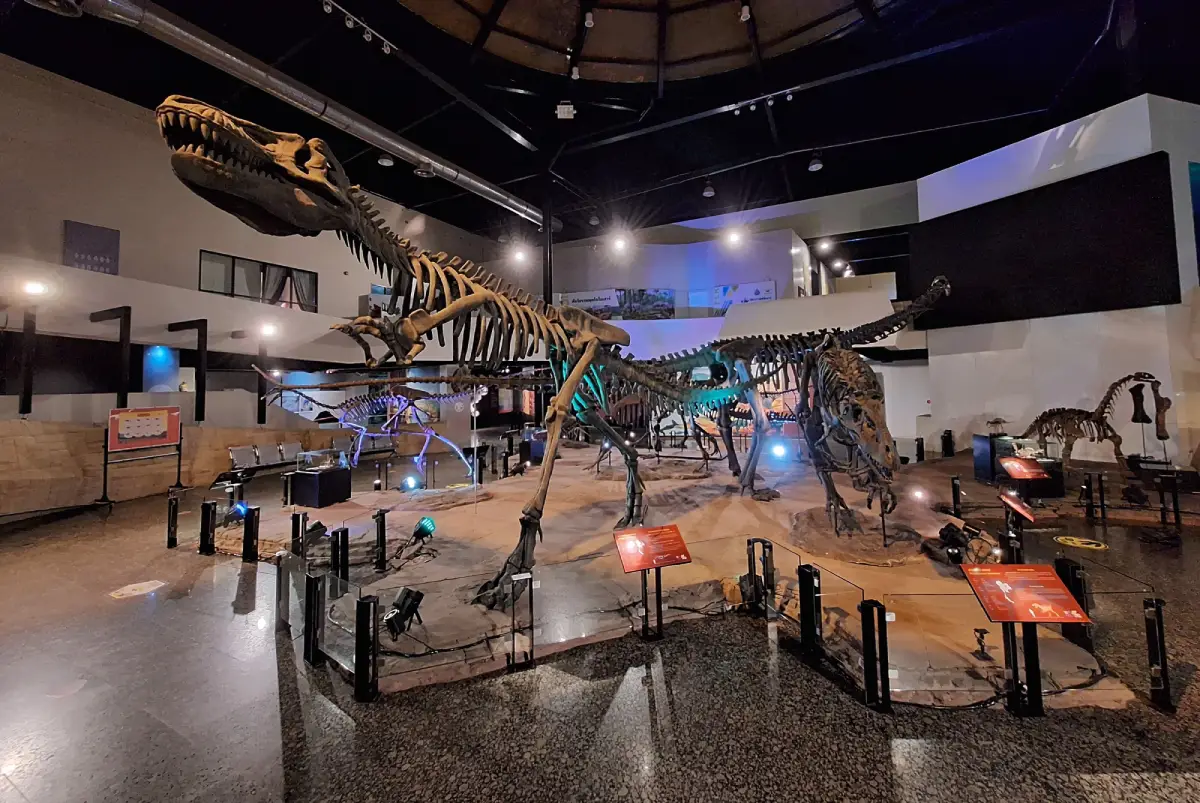
The strength of Sirindhorn Museum lies in the way it connects an actual fossil excavation area with a modern exhibition building. Visitors can learn through real fossils, replica skeletons, life-size dinosaur models, multimedia presentations, scientific explanations, research displays, and storytelling technology. The museum takes visitors on a chronological journey from the origin of the universe and Earth to the rise of life, ancient life forms, the age of dinosaurs, dinosaur lifestyles, fossil research, the evolution of mammals, and the evolution of humans. For foreign travelers, this makes the museum one of the clearest and most accessible places in Thailand to understand paleontology in a real local context.
The museum originated from the Phu Kum Khao fossil site, a hillside area in Sahatsakhan District. The site became famous after the discovery of numerous herbivorous dinosaur bones, especially the remains of Phuwiangosaurus sirindhornae. In 1994, dinosaur skeletons were discovered near the present excavation area by Phra Khru Wijit Sahatsakhun, the abbot of Wat Sakkawan at that time. After this discovery, teams from the Department of Mineral Resources began systematic excavation in late 1994. Their work revealed that Phu Kum Khao was one of the most complete herbivorous dinosaur fossil sites in Thailand.
The importance of Phu Kum Khao comes from both the number and the condition of the fossils. More than 700 bones from several herbivorous dinosaurs of different sizes were found at the site. Important pieces included thigh bones, vertebrae, ribs, teeth, jaw fragments, skull pieces, and many bones that were preserved in close association. These fossils lay within rock layers on the slope of Phu Kum Khao, a hill shaped somewhat like a large cover or dome. The concentration of fossils in this area made Phu Kum Khao a highly valuable scientific site and provided strong evidence that northeastern Thailand once supported large prehistoric animals during the age of dinosaurs.
In 1995, Her Royal Highness Princess Maha Chakri Sirindhorn visited the fossil site. This royal visit became a turning point in the development of the Phu Kum Khao Dinosaur Museum project. A temporary building was constructed to protect the excavation site, and the Department of Mineral Resources later built research facilities for conservation, study, and fossil collection. The site was gradually developed into Sirindhorn Museum, with its name graciously bestowed in honor of Princess Maha Chakri Sirindhorn. Today, the museum reflects both scientific importance and the pride of Kalasin Province in its prehistoric heritage.
Officially opened in 2007, Sirindhorn Museum is widely recognized as Thailand’s first dinosaur research center and museum. Unlike a conventional display museum, it is grounded in a real excavation site, real fossil evidence, and continuous scientific work. The museum therefore presents not only finished exhibits but also the process behind discovery: fieldwork, fossil preparation, preservation, classification, scientific comparison, and interpretation. Visitors can see how a fossil changes from a bone in the ground into a source of knowledge about ancient life.
The exhibition route begins with the origin of the universe and the Earth. This first zone explains how the universe, the solar system, and the planet Earth came into being. It helps visitors see that dinosaurs are part of a much larger story. Before life existed, Earth had to pass through long periods of astronomical and geological change. Beginning with this big picture allows visitors to understand Kalasin’s fossils as part of the global history of the planet rather than as isolated local objects.
The second zone explains the origin of life. It introduces the early conditions of Earth, including volcanic activity, asteroid impacts, the cooling of the planet, the formation of atmosphere and water, and the gradual emergence of life. This zone is important because it shows that life did not appear suddenly. It developed through long natural processes over billions of years. For children and first-time visitors, this section makes the beginning of biological history easier to understand.
The third zone focuses on ancient life in the Paleozoic Era. It presents primitive organisms, marine life, early plants, ancient animals, changing environments, and the gradual expansion of life from sea to land. This zone helps visitors understand what came before the dinosaurs. Dinosaurs did not appear in isolation; they were part of a long evolutionary sequence that began with much older life forms. The Paleozoic story provides the foundation for understanding later ecosystems.
The fourth zone presents the Mesozoic Era, often known as the age of dinosaurs. This is the core theme of the museum. Visitors learn about the climate, landscapes, plants, and animals of the Mesozoic world, as well as dinosaurs discovered in Thailand. The displays include large models, skeletons, fossil information, and explanations of dinosaur groups. The story of Phuwiangosaurus sirindhornae and other Thai dinosaur fossils helps foreign visitors understand that Thailand has important paleontological evidence of international scientific value.
The fifth zone explores dinosaur lifestyles. It explains how dinosaurs moved, fed, protected themselves, hunted, lived in groups, cared for their young, and eventually became extinct. This zone makes dinosaurs feel like real living animals rather than static skeletons. Visitors can imagine how large herbivores moved across ancient landscapes, how carnivores fitted into food chains, and how extinction changed the course of life on Earth. For families, this is one of the most engaging parts of the museum.
The sixth zone explains fossil research and the scientific process of bringing dinosaurs back to life through evidence. This does not mean reviving dinosaurs physically. It means reconstructing their appearance, behavior, and environment from fossil remains. Visitors learn that fossils must be carefully excavated, mapped, cleaned, strengthened, catalogued, studied, compared, and interpreted. This zone gives real value to paleontology because it shows that every scientific conclusion depends on careful evidence.
The seventh zone presents the evolution of mammals after the age of dinosaurs. It explains how mammals diversified during the Cenozoic Era through periods such as the Paleocene, Eocene, Oligocene, Miocene, Pliocene, Pleistocene, and Holocene. This zone shows that extinction can open space for new forms of life. After dinosaurs disappeared, mammals expanded into many ecological roles, eventually leading to the world of animals familiar to us today.
The eighth zone tells the story of human evolution. Through skeleton replicas, drawings, photographs, diagrams, and videos, visitors learn about early human ancestors, walking upright, tool use, changes in skull and brain structure, social life, and the development of civilization. This zone places human beings at the very end of a long timeline of life. It helps visitors understand that human history is short when compared with the age of Earth and the millions of years of life that came before us.
The ninth zone is the rotating exhibition area. It allows the museum to present special topics, temporary exhibitions, science activities, youth programs, and updated knowledge. This makes the museum active and worth revisiting. Visitors who have been before may find new displays and seasonal programs, while schools and families can use the space for learning activities throughout the year.
Among the museum’s important exhibits are the thigh bone of the herbivorous dinosaur Isanosaurus attavipachi, dating to approximately 209 million years ago, and the bones of Phuwiangosaurus sirindhornae, one of the most complete dinosaur skeletons found in Thailand. These objects are valuable not only because they are old, but because they are scientific evidence. A single fossil bone can reveal information about age, size, movement, species, environment, and evolutionary relationships when studied properly.
The nearby Phu Kum Khao dinosaur excavation site makes the museum experience even more meaningful. Visitors can connect the fossils seen inside the exhibition building with the real landscape where they were discovered. This is especially important for students because it shows that science begins in the field, with rock layers, maps, tools, observation, and careful recording. A visit to both the museum and the excavation area gives a fuller understanding of how paleontological knowledge is created.
Sirindhorn Museum is highly suitable for family travel. Children are often fascinated by the large dinosaur models, skeletons, fossils, and interactive learning atmosphere. Adults can learn about the natural history of northeastern Thailand in a deeper way. Teachers can use the museum as an outdoor classroom for geology, biology, evolution, paleontology, science communication, and environmental education. The museum also provides group visit services, meeting rooms, youth camp activities, event spaces, a restaurant, and a souvenir shop.
A general visit usually takes about 2–3 hours. Visitors who want to read every panel, watch multimedia presentations, take photos, visit the souvenir shop, and explore the nearby excavation area should allow more time. Rushing through the museum only for photos with dinosaur models may cause visitors to miss many important parts, including fossil research methods, the relationship between dinosaurs and ancient environments, and the scientific importance of Kalasin’s fossil record.
Getting There is easiest by private car from Mueang Kalasin District. Take Highway 227 toward Sahatsakhan District, then continue to Non Buri Subdistrict and Wat Sakkawan. The museum is located close to the Phu Kum Khao dinosaur excavation site. Travelers without a private car can take a bus to Kalasin Province and continue by local transport to Sahatsakhan. Travelers flying from Bangkok can land at Khon Kaen Airport and continue by road to Kalasin and Sahatsakhan.
The best time to visit is in the morning or early afternoon, when there is enough time to explore all exhibition zones before closing. On weekends and holidays, families and school groups may be more numerous, so visitors should allow extra time for parking and ticketing. Comfortable shoes are useful, and families with children should prepare water and basic travel items. Visitors should not touch fossils or restricted objects and should follow museum rules when taking photographs.
The museum can be combined with several nearby attractions in Sahatsakhan District. Visitors can see the Phu Kum Khao excavation site, Wat Sakkawan, Wat Phutthanimit Phu Khao, Thepsuda Bridge, Lam Pao Reservoir, and local restaurants around Sahatsakhan. A good one-day route can begin with the museum in the morning, continue to the excavation site and nearby temples, stop for lunch in Sahatsakhan, and finish with views around Lam Pao Reservoir or Thepsuda Bridge.
Overall, Sirindhorn Museum is one of the most rewarding attractions in Kalasin Province. It combines science, tourism, education, local pride, and natural history in one place. Visitors will discover that Kalasin is not only known for Praewa silk, Pong Lang music, and local traditions, but also for million-year-old dinosaur fossils of national scientific importance. A visit here is not simply about seeing dinosaurs; it is about understanding how fossils connect the distant past with present-day learning.
| Name | Sirindhorn Museum, Kalasin |
| Location | Non Buri Subdistrict, Sahatsakhan District, Kalasin Province, Thailand |
| Address | 200 Moo 11, Non Buri Subdistrict, Sahatsakhan District, Kalasin Province 46140, Thailand |
| Coordinates | 16.6933422, 103.5219333 |
| Highlights | Thailand’s first dinosaur museum, fossil learning center, geology exhibitions, evolution displays, dinosaur skeletons, and the nearby Phu Kum Khao dinosaur excavation site |
| History | Developed from the Phu Kum Khao Dinosaur Research Center after the discovery of herbivorous dinosaur skeletons in 1994 and officially opened as Sirindhorn Museum in 2007 |
| Name Origin | The name Sirindhorn Museum was graciously bestowed in honor of Her Royal Highness Princess Maha Chakri Sirindhorn for the dinosaur research and learning center at Phu Kum Khao |
| Distinctive Features | A chronological exhibition route from the origin of the universe and Earth to the origin of life, ancient life, dinosaurs, fossil research, mammals, and human evolution |
| Travel Information | From Mueang Kalasin, take Highway 227 toward Sahatsakhan District for about 30–35 km, then continue to Non Buri Subdistrict and Wat Sakkawan. Travelers without a car can take a bus to Kalasin and continue by local transport to Sahatsakhan |
| Current Status | Open as a fossil, geology, and dinosaur learning museum under the Department of Mineral Resources |
| Open Days | Tuesday – Sunday; closed on Monday |
| Opening Hours | 09.30 – 16.30 |
| Fees | Thai nationals: adults 50 baht / children 20 baht Foreigners: adults 150 baht / children 70 baht Free admission groups include children aged 12 and under, seniors aged 60 and over, students, veterans, people with disabilities, monks, novices, nuns, religious practitioners, and DMR volunteer cardholders according to museum announcements |
| Facilities | Permanent and rotating exhibitions, nearby excavation site, meeting rooms, restaurant, souvenir shop, youth camp areas, group visit booking service, and educational activity spaces |
| Main Areas / Zones | Zone 1: The Origin Of The Earth And Universe Zone 2: The Origin Of Life Zone 3: Ancient Life Zone 4: The Age Of Dinosaurs Zone 5: Dinosaur Lifestyles Zone 6: Fossil Research And Bringing Dinosaurs Back To Life Through Evidence Zone 7: Evolution Of Mammals Zone 8: Evolution Of Humans Zone 9: Rotating Exhibitions Phu Kum Khao Dinosaur Excavation Area Meeting Rooms, Restaurant, And Souvenir Shop |
| Caretaker / Managing Organization | Department of Mineral Resources, Ministry of Natural Resources and Environment |
| Main Contact Number | 0-4387-1014, 0-4387-1393-4, 0-4387-1612-6, 081-846-2371 |
| Official Website / Official Page | Sirindhorn Museum, Kalasin by the Department of Mineral Resources and the official Facebook page Sirindhorn Museum-Dinosaur museum |
| Nearby Tourist Attractions | 1. Phu Kum Khao Dinosaur Excavation Site, about 0.1 km 2. Wat Sakkawan, about 0.3 km 3. Wat Phutthanimit Phu Khao, about 10 km 4. Thepsuda Bridge, about 14 km 5. Dok Ket Beach / Lam Pao Reservoir, about 17 km 6. Wat Phutthawat Phu Sing, about 20 km 7. Kalasin City Art Hall, about 35 km, Tel. 0-4384-0163 |
| Nearby Restaurants | 1. Krua Mae Kong, about 1 km, Tel. 084-717-5825 2. Baan Choeng Khao Restaurant, about 2 km, Tel. 080-734-8715 3. Huen Pha Khao, about 3 km, Tel. 097-305-0888 4. Together Cafe Sahatsakhan, about 3 km, Tel. 083-414-3809 5. Rungroj Som Tam, Grilled Chicken And Grilled Fish, about 3 km, Tel. 085-066-0784 6. Lert Pochana Khao Man Kai, about 3 km, Tel. 087-853-0790 |
| Nearby Accommodations | 1. Miss Love Poolvilla Sahatsakhan Kalasin, about 1 km, Tel. 086-041-6065 2. Baan Suan Khwam Hug Resort, about 2 km, Tel. 082-117-9083 3. Sukwan Boutique Home Resort, about 2 km, Tel. 094-540-2607 4. Iyara Resort Kalasin, about 3 km, Tel. 098-661-4929 5. Phupeng House Resort, about 4 km, Tel. 082-477-7702 6. Rich Lam Pao Resort, about 9 km, Tel. 091-575-4507 |
Frequently Asked Questions (FAQ)
Q: Where Is Sirindhorn Museum Located?
A: Sirindhorn Museum is located at 200 Moo 11, Non Buri Subdistrict, Sahatsakhan District, Kalasin Province, near Wat Sakkawan and the Phu Kum Khao dinosaur excavation site.
Q: What Are The Opening Days And Hours Of Sirindhorn Museum?
A: The museum is open Tuesday to Sunday from 09.30 to 16.30 and is closed on Monday.
Q: How Much Is The Admission Fee?
A: Thai nationals pay 50 baht for adults and 20 baht for children. Foreigners pay 150 baht for adults and 70 baht for children. Some groups receive free admission according to museum announcements.
Q: What Can Visitors See Inside Sirindhorn Museum?
A: Visitors can see exhibitions on the origin of the universe and Earth, the origin of life, ancient life, the dinosaur age, dinosaur lifestyles, fossil research, mammal evolution, human evolution, rotating exhibitions, dinosaur skeletons, and large models.
Q: Is Sirindhorn Museum Good For Children?
A: Yes. The museum is highly suitable for children because it has dinosaur models, skeleton displays, multimedia learning tools, clear explanations, and educational activities that make science enjoyable.
Q: How Long Should Visitors Spend At The Museum?
A: A good visit usually takes about 2–3 hours. Visitors who want to read all displays, watch media, take photos, and visit the souvenir shop should allow more time.
Q: How Do Travelers Get From Kalasin City To Sirindhorn Museum?
A: From Mueang Kalasin, take Highway 227 toward Sahatsakhan District for about 30–35 km, then continue to Non Buri Subdistrict and Wat Sakkawan. The museum is close to the Phu Kum Khao excavation site.
Q: What Nearby Places Can Be Visited After Sirindhorn Museum?
A: Good nearby places include the Phu Kum Khao dinosaur excavation site, Wat Sakkawan, Wat Phutthanimit Phu Khao, Thepsuda Bridge, Lam Pao Reservoir, Wat Phutthawat Phu Sing, and Kalasin city.
 Category: ●Art, Culture and Heritage
 Group: ●Museums
Last Update : 3 MonthAgo
 Last Update : 3 MonthAgo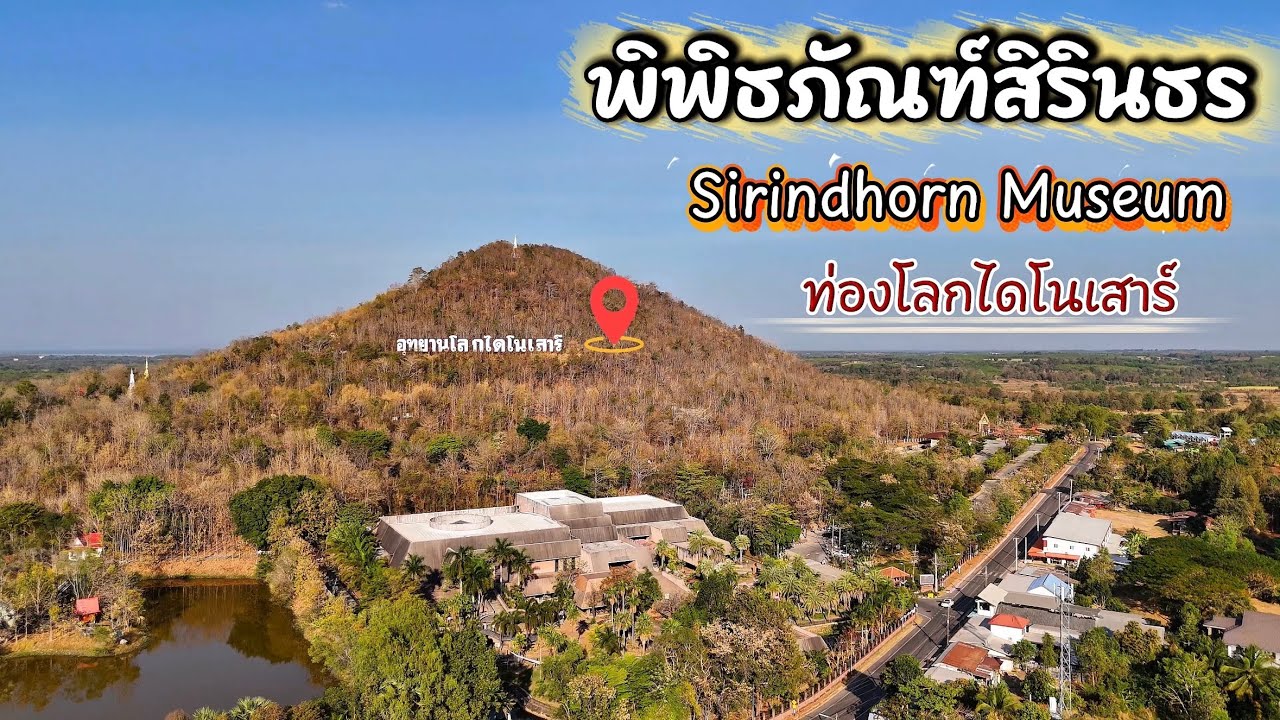
 Click to Access the Navigation Map GPS
 Historical Sites and Monuments(2)
 Landmarks and Memorials(3)
 Art, Craft Centres, Tradition(4)
Museums(3)
Art, Craft Centres, Tradition(4)
Museums(3)
 Art Gallery(1)
 Educational Places
 Educational Gardens, Farm(1)
 Places of Worship
 Temple(21)
 Other Sacred Sites(6)
 Suburban Living
 Village, Community(3)
 Nature and Wildlife
 National Parks and Marine Reserves(3)
 Mountain (Doi)(2)
 Dam, Reservoir, Lake(5)
 Waterfalls(4)
 Caves(2)
 River, Canal(3)
 Bays and Beaches(1)
 Other natural attractions(2)
 Entertainment and Agricultural
 Animal camps and shows(1)
 Farms, Parks and Ecotourism(2)
 Travel Articles, Recipes
 Travel Review, Food Review(1)


