
 Home
Home North(
 Chiang Mai(


Wat Khok
Rating: 3.5/5 (4 votes)
 Search By
  Map
Map
 Have Map
  No Map
Pathum Thani attractions
Attractions in Thailand
Open Days: Daily
Opening Hours: It is best to contact the temple before visiting
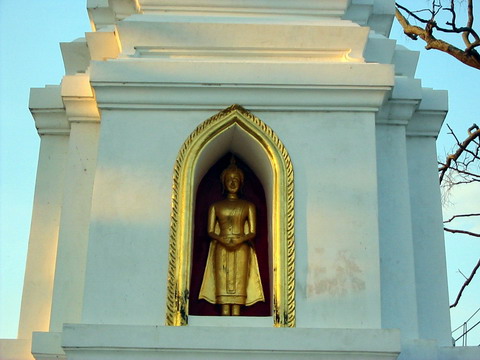
Wat Khok is an old Mon temple in Bang Prok Subdistrict, Mueang Pathum Thani District, Pathum Thani. It is a good choice for travelers who want to explore a quiet historic temple near Bangkok while also learning more about the Mon cultural heritage that has shaped Pathum Thani for generations. Inside the temple, visitors will find a seated Buddha image in meditation posture, a white Mon-style chedi, an old teak sermon hall, and a mother-of-pearl inlaid ebony pulpit that reflects the craftsmanship of an earlier era.
Although Wat Khok is not one of the most heavily promoted attractions in Pathum Thani, that is precisely what makes it appealing. The temple has a calm, local atmosphere and still feels closely tied to the surrounding community. Instead of a crowded tourist setting, visitors experience a working temple where religion, memory, and neighborhood life remain connected. This gives Wat Khok a more intimate character than larger and more famous temples in the province.
Wat Khok is a royal-recognized common temple under the Dhammayut order. It stands on the northern bank of Khlong Wat Khok in Bang Prok. The temple’s name reflects the traditional landscape of the area, where settlements were often associated with slightly raised ground or a “khok.” Its location near waterways also matches the long historical pattern of settlement in Pathum Thani, where temples, canals, and rivers played central roles in both religious and community life.
Historical records indicate that the temple was established in 1866 and received its royal boundary marker for ordination ceremonies in 1868. This places Wat Khok within a period when Mon communities in Pathum Thani were already well established. Pathum Thani has long been known for its strong Mon heritage, so Wat Khok is not simply an old temple in the district; it is also part of a broader cultural landscape shaped by Mon migration, belief, and temple-building traditions.
One of the most valuable aspects of Wat Khok is the way it preserves physical traces of that past. The sermon hall was built from teak, with redwood pillars that are more than 100 years old. For visitors interested in architecture, this is one of the temple’s most important features. Wooden religious buildings of this type are becoming harder to find in their original form, and even when they survive, they often lose part of their old atmosphere through later renovations. At Wat Khok, the old timber structure still helps convey the age and character of the site.
Another important feature is the old pulpit made from ebony and decorated with mother-of-pearl inlay. This is not just a decorative object. It is also a meaningful piece of temple heritage that reflects fine craftsmanship and the artistic values of the period in which it was made. For anyone interested in temple art, even a single object like this can reveal how much care and skill once went into the religious furnishings of local temples.
The principal Buddha image in meditation posture remains the spiritual focal point of the temple. The atmosphere around the sacred area is peaceful, making Wat Khok especially suitable for quiet visits, merit-making, and respectful temple walks. Many visitors appreciate places like this because they offer a more personal and reflective experience than major tourist temples.
The most recognizable landmark at Wat Khok is its white Mon-style brick-and-plaster chedi. This structure immediately signals the temple’s Mon identity. In Pathum Thani, where Mon heritage is deeply woven into local history, such a chedi is more than an architectural detail. It serves as a visual reminder of the community that helped shape the temple and the wider cultural identity of the province.
The chedi also has a meaningful recent story. In 2018, lightning struck its top and caused damage. The temple later restored the structure and enshrined sacred relics inside the chedi. This gives the monument an added spiritual significance. It is not only a visual highlight of the temple but also an object of devotion for worshippers who come to pay respect.
Walking through the temple grounds, visitors can still sense the character of an old riverside community temple. The former waterfront pavilion has already deteriorated, but the ordination hall has been restored and remains in good condition. This contrast reflects the reality faced by many older temples in Thailand. Time, weather, and the burden of maintenance affect different structures in different ways, yet the temple continues to function because the community still supports and values it.
Wat Khok is especially interesting for travelers who enjoy cultural tourism rather than fast-paced sightseeing. It is the kind of place where the value lies in observing details: the lines of the chedi, the grain of the old wooden columns, the quiet movement of local life, and the temple’s relationship to canals and rivers. These elements together create a setting that feels grounded in place and history.
The temple is currently led by Phra Khru Pathum Thammaphirak (Chomphu), the abbot. This helps confirm that Wat Khok remains an active temple today. In recent years, there have also been local reports related to activity and development at the temple, as well as flood conditions affecting the Wat Khok community area. These details show that the temple continues to be part of everyday local life rather than a site preserved only as a historic landmark.
Because of its location in Mueang Pathum Thani, Wat Khok can easily be included in a broader cultural route around the province. Visitors can combine it with other nearby temples, museum stops, and riverside community areas in the city. This makes it a useful stop for anyone planning a one-day Pathum Thani itinerary focused on history, faith, and local heritage.
For travelers searching for a Mon temple in Pathum Thani, Wat Khok offers a rewarding experience. It may not be the province’s most famous temple, but it has the kind of depth that serious cultural travelers often appreciate: verified historical dates, active religious use, a clear Mon architectural identity, and preserved wooden elements that still carry the spirit of the past.
Getting There is relatively easy by private car. From the Mueang Pathum Thani district office area, you can follow Thetsaban Bamrung Road, enter the Pathum Thani Sai Nai route, then turn into Soi Thetsaban 2 before continuing to Wat Khok Road. The temple is located in Bang Prok, within a local waterside community. If you use a navigation app, searching for “Wat Khok Bang Prok Pathum Thani” is the simplest approach. Travelers using public transport should first come into central Pathum Thani and then continue by local motorcycle taxi or hired vehicle.
As with any active Buddhist temple in Thailand, visitors should dress modestly, speak softly, and behave respectfully within the grounds. This is especially important around the ordination hall, sermon areas, and places where monks or local worshippers may be carrying out religious activities.
In summary, Wat Khok is a historic temple in Pathum Thani that deserves more attention from travelers interested in cultural heritage. Its white Mon-style chedi, old wooden sermon hall, principal Buddha image, and antique inlaid pulpit all contribute to its significance. More importantly, it remains a living temple within an active local community, which gives the site a sense of authenticity that many visitors now value highly.
| Name | Wat Khok |
| Location | Bang Prok Subdistrict, Mueang Pathum Thani District, Pathum Thani |
| Address | 1 Wat Khok Road, Bang Prok, Mueang Pathum Thani, Pathum Thani 12000 |
| Coordinates | 13.998208, 100.532653 |
| Highlights | Historic Mon temple, white Mon-style chedi, teak sermon hall, antique mother-of-pearl inlaid ebony pulpit |
| History | Established in 1866 and granted royal ordination boundary in 1868 |
| Name Origin | The name reflects the older raised-ground settlement landscape near Khlong Wat Khok |
| Distinctive Features | Dhammayut temple with a seated principal Buddha image, white Mon chedi, restored ordination hall, and preserved wooden heritage structures |
| Travel Information | Accessible by car from central Pathum Thani via Thetsaban Bamrung Road, Pathum Thani Sai Nai route, Soi Thetsaban 2, and Wat Khok Road |
| Current Status | An active temple with ongoing local religious use and community activity |
| Open Days | Daily |
| Fees | No admission fee |
| Facilities | Parking area, temple grounds, pavilion areas, worship spaces |
| Main Areas / Zones | Ordination hall, Mon-style chedi, sermon hall, principal Buddha image area |
| Abbot / Caretaker | Phra Khru Pathum Thammaphirak (Chomphu) |
| Main Contact Number | 02-581-6133 |
| Nearby Tourist Attractions | 1) Wat Chinwararam Worawihan – around 2 km 2) Pathum Thani Museum – around 3 km 3) Wat Sala Chao Riverside Market – around 4 km 4) Wat Makham – around 6 km 5) Wat Hong Pathumawat – around 7 km |
| Nearby Restaurants | 1) Cha Daneen Ban Rimnam – around 1 km, Tel. 082-784-3891 2) no.45 – around 2 km, Tel. 082-496-3546 3) Pad Thai Kung Sod Hoi Thod Bang Prok – around 2 km, Tel. 089-042-5870 4) Nitan Cafe – around 3 km, Tel. 095-935-1139 5) Baan Dokchan Rimnam – around 4 km, Tel. 02-581-2575, 063-930-9989 |
| Nearby Accommodations | 1) Sansuk Apartment – around 3 km, Tel. 080-909-0611 2) Ploen Ploen Residence – around 4 km, Tel. 062-823-2710, 090-937-8730 3) Pathum Thani Place Hotel – around 11 km, Tel. 02-157-2672, 02-157-2778-79 4) Tinidee Hotel Bangkok Golf Club – around 12 km, Tel. 02-147-5858, 063-205-7034 5) Progress Mansion – around 14 km, Tel. 02-959-6868, 089-000-3883 |
Frequently Asked Questions (FAQ)
Q: Where is Wat Khok located?
A: Wat Khok is in Bang Prok Subdistrict, Mueang Pathum Thani District, Pathum Thani, within a local waterside community near central Pathum Thani.
Q: Is Wat Khok a Mon temple?
A: Yes. Wat Khok is recognized as a Mon temple, and its identity is especially reflected in the white Mon-style chedi and the wider cultural context of Pathum Thani’s Mon heritage.
Q: When was Wat Khok established?
A: Historical records state that the temple was established in 1866 and received its royal ordination boundary in 1868.
Q: What are the main highlights inside the temple?
A: The main highlights include the principal Buddha image in meditation posture, the white Mon-style chedi, the old teak sermon hall, and the antique mother-of-pearl inlaid ebony pulpit.
Q: Is there an entrance fee?
A: No. Wat Khok does not charge an admission fee.
Q: Who is the current abbot of Wat Khok?
A: The current abbot is Phra Khru Pathum Thammaphirak (Chomphu).
Q: What kind of traveler would enjoy Wat Khok most?
A: Wat Khok is ideal for visitors who enjoy quiet temple visits, local history, Mon cultural heritage, and authentic community-based cultural travel near Bangkok.
 Wat Khok Map
 Category:
  Group:
  Tag: ●Wat Khok●wat khok ●wat khok pathum thani ●wat khok bang prok ●mon temple pathum thani ●temples in pathum thani ●historic temple in pathum thani ●bang prok temple ●wat khok travel guide ●pathum thani cultural attraction ●pathum thani temple near bangkok Last Update: 2 HourAgo
Comment
 Nearby Attractions
| Keyword (Advance) |
 Facebook Fanpage
 Region
 Art, Culture and Heritage
 Historical Sites and Monuments(
 Landmarks and Memorials(
 Art, Craft Centres, Tradition(
 Museums(
 Art Gallery(
 Educational Places
 Museum for Study(
 Library(
 Training Center(
 University
 Mosque(
 Other religious and spiritural sites(
 Research and Development
 Royal Project(
 Suburban Living
 Local Market(
 Floating Market(
 Nature and Wildlife
 River, Canal(
 Entertainment and Agricultural
 Animal camps and shows(
 Stadium(
 Amusement Park(
 Waterpark(
 Copyright 2012,