
lovethailand home >Central Travel Attractions >Lop Buri Travel Attractions >Muang Lop Buri >Tha Hin > Wat Phra Si Rattana Mahathat
TL;DR: Wat Phra Si Rattana Mahathat is located at Tha Hin Subdistrict, Mueang Lopburi District, Lopburi Province, open Every Day, hours 07:00 – 17:00.
Wat Phra Si Rattana Mahathat
Open Days: Every Day
Opening Hours: 07:00 – 17:00
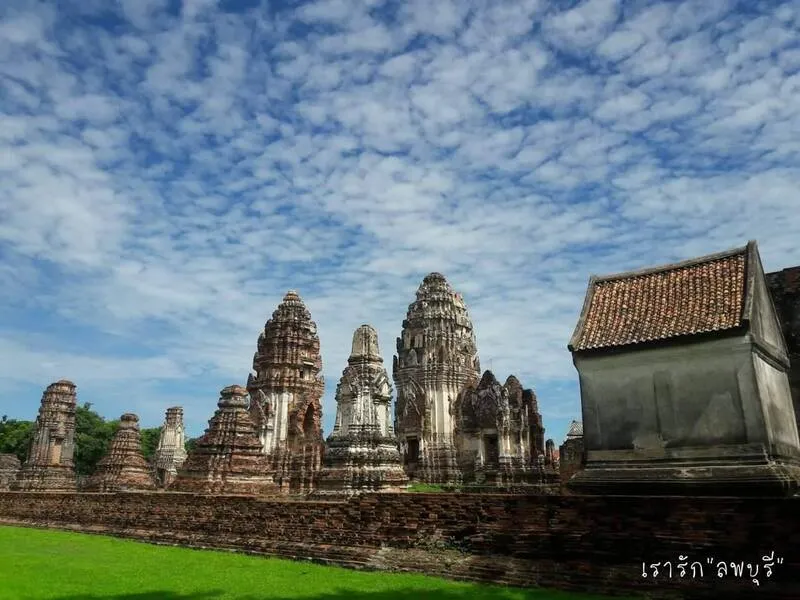
Wat Phra Si Rattana Mahathat is an important historical site in Lopburi, located directly opposite Lopburi Railway Station in Tha Hin Subdistrict, Mueang Lopburi District, Lopburi Province. This temple is not merely an old temple in the ordinary sense, but one of the historical, artistic, and cultural centers of Lopburi that reflects the transformation of the city across many historical periods. Although there is no definite evidence showing exactly when it was built, the structures within the temple grounds clearly tell the story of Lavo, Lopburi, and Ayutthaya. For this reason, Wat Phra Si Rattana Mahathat is one of the key sites that history lovers should not overlook when visiting Lopburi.
One of the aspects that makes Wat Phra Si Rattana Mahathat especially interesting is its location directly opposite Lopburi Railway Station and close to several major historical landmarks such as Phra Prang Sam Yot, Phra Kan Shrine, Ban Wichayen, and King Narai’s Palace. This makes the temple one of the central points for exploring Lopburi’s old city on foot in a continuous route. Visitors do not need to travel far from the city’s main attractions in order to experience a large historical monument that contains overlapping layers of history within a single area.
Although there is no clear evidence indicating the exact period in which Wat Phra Si Rattana Mahathat was built, the architectural style and restoration work from different periods reveal that this monument has undergone a long historical development. The key structures of the temple, especially the principal prang, show the influence of Lavo or Lopburi art closely related to Khmer culture. At the same time, some parts of the complex, such as the Royal Viharn and the Ubosot, display restoration work from the Ayutthaya period, especially during the era when Lopburi held great significance under the reign of King Narai the Great.
Upon entering the temple grounds, the first structure encountered is the Changing Pavilion, which is a very important element of Wat Phra Si Rattana Mahathat. This pavilion was used as the place where the king would remove his royal attire before proceeding to religious ceremonies in the viharn or ubosot. Its importance does not lie merely in its function as an auxiliary structure, but in the fact that it reflects the temple’s former direct connection to royal rituals and the court. Today, only a few leaning pillars and partial remains of the pavilion survive, but even in its incomplete state, it still clearly conveys the former prestige and sacred role of this area.
Beyond the Changing Pavilion stands a large hall commonly referred to as the Royal Viharn. This building is especially fascinating from an architectural perspective because its entrance doors are in a traditional Thai rectangular form, while the windows are designed in a Gothic style associated with France. Inside the viharn is a pedestal base placed at the center. This combination reflects the clear blending of foreign influence with Thai artistic traditions and further demonstrates the importance of Lopburi as a city that had strong connections with the Western world during the reign of King Narai the Great. Seeing Gothic-style windows in a Thai historical monument is therefore a particularly interesting detail for those interested in architectural history.
To the south of the Royal Viharn is a smaller ubosot, distinguished by doors and windows that are entirely French in style. This further emphasizes that the temple complex of Wat Phra Si Rattana Mahathat was not merely a conventional old temple, but also a site that reflects the reception of foreign influence and the subtle blending of multiple architectural traditions. When the ubosot, viharn, and Changing Pavilion are viewed together, they reveal a carefully organized sequence of ceremonial space, beginning with the royal preparation before entering sacred ritual areas within the temple.
The most striking structure of Wat Phra Si Rattana Mahathat is the great central prang, which is said to be the tallest prang in Lopburi Province. This prang was built as a Buddhist reliquary tower using laterite covered with plaster, and it is decorated with stucco reliefs depicting Buddha images and scenes from the life of the Buddha. The pediment of the prang also reflects the influence of Mahayana Buddhism, while the gopura-like entrance elements of the great prang are in the Lavo artistic style with highly refined stucco decoration. This is one of the most important features confirming that the monument is closely connected with the artistic world of both Khmer and Lavo traditions.
The special value of the great prang lies not only in its size or shape, but also in the fact that it underwent restoration many times across different historical periods. Scholars assume that the prang was probably first built during the height of Khmer influence, but was later restored in the reigns of King Maha Chakkraphat, King Naresuan the Great, and King Narai the Great. As a result, its decorative motifs and structural features clearly contain a mixture of artistic styles from different eras. This overlapping of styles is precisely what makes Wat Phra Si Rattana Mahathat so historically valuable, because visitors can read the historical development of Lopburi directly through the bricks, plaster, and decorative details of the prang.
In addition to the principal prang, the temple also contains subsidiary prangs of great interest. One especially notable example is the subsidiary prang to the northwest, which is decorated with stucco figures of celestial beings in prayer at each corner of the star-fruit-shaped base projections. The faces of these figures are square, their eyebrows meet in a continuous line, and their crowns are triangular with radiating halos around them. Such artistic details are considered very beautiful and are rarely seen elsewhere in Thailand. For this reason, visitors who are interested in ancient Thai art should take time to look closely, because the charm of Wat Phra Si Rattana Mahathat lies not only in its monumental structures, but also in the hidden details of stucco work and artistic design found throughout the complex.
Another reason Wat Phra Si Rattana Mahathat is widely known is its connection with the famous amulet known as Phra Hu Yan, one of the best-known amulets of the Lopburi period. Historical accounts suggest that the great prang once housed a large number of Buddha images, and many Phra Hu Yan amulets were reportedly unearthed from this area, making them among the most renowned Lopburi-style amulets in Thailand. This association means that Wat Phra Si Rattana Mahathat is important not only in academic history and tourism, but also in the world of popular belief and Thai amulet collecting.
The atmosphere of Wat Phra Si Rattana Mahathat today is calm, solemn, and filled with the character of the old city. Most of the monument remains are open-air, allowing visitors to walk freely around the grounds and clearly see the relationship between the different structures, including the Changing Pavilion, the Royal Viharn, the Ubosot, and the great prang. The site is not merely a group of ruins standing still in time, but rather a kind of living historical plan that continues to communicate knowledge. Visiting in the morning or late afternoon makes the details of the laterite, brickwork, and stucco decorations even more visible, making it especially suitable for both artistic study and photography.
Wat Phra Si Rattana Mahathat is also highly significant for tourism because it is located directly opposite Lopburi Railway Station, making it extremely easy to access whether by train, private car, van, or local public transportation. Travelers planning either a one-day trip or an overnight stay in Lopburi can easily include this temple in their main itinerary. Especially when combined with nearby sites such as Phra Prang Sam Yot, Phra Kan Shrine, Ban Wichayen, and King Narai’s Palace, it becomes part of a highly rewarding old-city route that offers history, architecture, and cultural heritage all within a short distance.
For those who are seriously interested in Thai history, Wat Phra Si Rattana Mahathat is one of the places that helps explain Lopburi more deeply than the city’s popular image as the “monkey city” or merely a collection of famous landmarks. This site brings together the relationship between royal authority, court ritual, Lavo art, Khmer influence, Ayutthaya-period restoration, and Western connections during the reign of King Narai the Great in one remarkable location. As visitors walk through each part of the historical complex, they are not simply looking at old buildings, but reading the story of an ancient city through real evidence that still survives before them.
Getting There is extremely convenient because Wat Phra Si Rattana Mahathat stands directly opposite Lopburi Railway Station. Those arriving by train can get off at the station and walk across to the temple immediately. Visitors traveling by car can use Phra Ya Kamjad Road or other roads within the old city area of Lopburi, with Lopburi Railway Station serving as an easy landmark. Those arriving from Bangkok by van or bus can get off in Lopburi city and continue by local transport or hired vehicle to the temple without difficulty.
In conclusion, Wat Phra Si Rattana Mahathat is a historical monument of exceptional value in terms of history, art, archaeology, and cultural tourism. Important features such as the Changing Pavilion, the Royal Viharn, the Ubosot, the great central prang, the subsidiary prangs, and the story of Phra Hu Yan make this place much more than just an old temple. It is a learning site that opens a new and deeper perspective on Lopburi. For those who want to understand the old city of Lopburi beyond a superficial visit, Wat Phra Si Rattana Mahathat is truly a place worth stopping to explore.
| Place Summary | Wat Phra Si Rattana Mahathat is an important temple and large historical monument in Lopburi city, located opposite Lopburi Railway Station. It has long served as a religious and historical center of the city since ancient times. |
| Highlights | A large Bayon-style Khmer prang, the royal Changing Pavilion, and a significant group of historical structures throughout the temple complex. |
| History / Period | Its origins date back to the Khmer period around the 18th Buddhist century, and it was later restored and continuously used during the Ayutthaya period, especially when Lopburi served as a royal capital in the reign of King Narai the Great. |
| Abbot | Phra Khru Wisutthisinachan |
| Address | Tha Hin Subdistrict, Mueang Lopburi District, Lopburi Province |
| Coordinates | 14.7992, 100.6539 |
| Getting There | Located directly opposite Lopburi Railway Station, visitors can easily cross the road to the temple, taking only a few minutes from the station. |
| Open Days | Every Day |
| Opening Hours | 06:00 – 18:00 |
| Facilities | Parking area, restrooms, souvenir shops, and space for religious ceremonies |
| Nearby Attractions | 1. Phra Kan Shrine – 0.3 km. 2. Phra Prang Sam Yot – 0.4 km. 3. King Narai National Museum – 0.7 km. 4. King Narai’s Palace – 0.7 km. 5. Ban Wichayen – 0.9 km. |
| Nearby Restaurants | 1. Lung Liang Beef Noodle Shop – 0.5 km. Tel. 036-411-555 2. Ko Tee Chicken Rice Shop – 0.4 km. Tel. 081-852-8821 3. Tha Hin Boat Noodle Shop – 0.6 km. Tel. 089-911-2765 4. Krua Lopburi Restaurant – 1.2 km. Tel. 036-412-233 5. Riverside Floating Kitchen Lopburi – 2.3 km. Tel. 036-411-804 |
| Nearby Accommodations | 1. Lopburi Inn Hotel – 0.9 km. Tel. 036-412-300 2. Nett Hotel Lopburi – 1.2 km. Tel. 036-422-608 3. Windsor Resort – 2.1 km. Tel. 036-413-600 4. Benjatara Boutique Resort – 2.8 km. Tel. 036-421-707 5. Grand Lopburi Hotel – 3.5 km. Tel. 036-413-222 |
Frequently Asked Questions (FAQ)
Q: Where is Wat Phra Si Rattana Mahathat in Lopburi located?
A: Wat Phra Si Rattana Mahathat is located directly opposite Lopburi Railway Station on Phra Ya Kamjad Road, Tha Hin Subdistrict, Mueang Lopburi District, Lopburi Province.
Q: In which period was Wat Phra Si Rattana Mahathat built?
A: There is no definite evidence indicating exactly when it was built, but the historical remains within the temple show traces of construction and restoration across several periods, especially the great prang, which is closely associated with Lavo and Khmer artistic traditions.
Q: What is the Changing Pavilion?
A: The Changing Pavilion was the place where the king would remove his royal attire before entering religious ceremonies in the viharn or ubosot. It is an important piece of evidence showing the temple’s connection with royal ritual.
Q: What is the most outstanding feature of Wat Phra Si Rattana Mahathat?
A: Its most important highlight is the great prang, which is the tallest prang in Lopburi Province, along with the Royal Viharn, the Ubosot, the Changing Pavilion, and the subsidiary prangs decorated with rare stucco celestial figures.
Q: How is Phra Hu Yan connected with Wat Phra Si Rattana Mahathat?
A: Historical information suggests that the great prang once housed many Buddha images, and Phra Hu Yan, a famous Lopburi-period amulet, was discovered in this area in large numbers, making it highly renowned.
Q: What time is Wat Phra Si Rattana Mahathat open to visitors?
A: It is open every day from 07:00 to 17:00.
Q: How much is the entrance fee to Wat Phra Si Rattana Mahathat?
A: The entrance fee is 10 baht for Thai visitors and 50 baht for foreign visitors, or a combined ticket can be purchased for admission to several historical sites in the old city.
 Category: ●Places of Worship
 Group: ●Temple
Last Update : 7 MonthAgo
 Last Update : 7 MonthAgo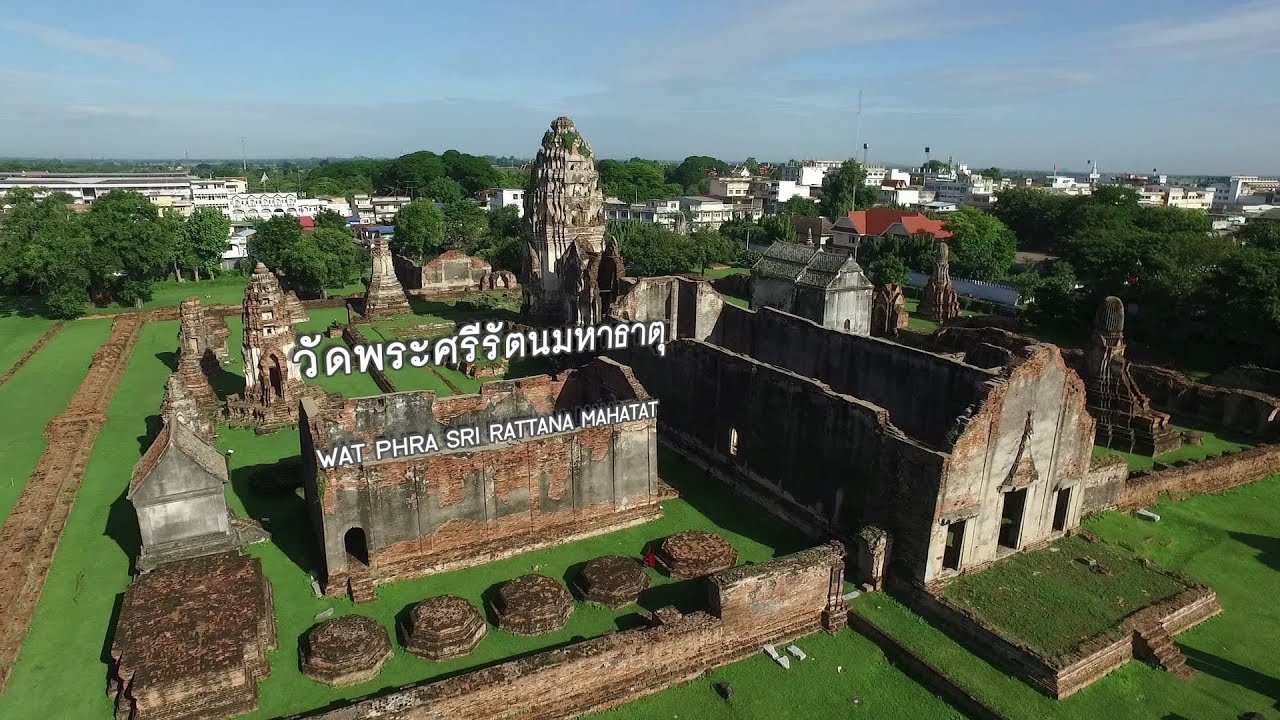
 Click to Access the Navigation Map GPS
Wat Phra Si Rattana Mahathat Map
Recommend

 Art, Culture and Heritage
 Historical Sites and Monuments(5)
 Landmarks and Memorials(3)
 Royal Palace(1)
 Art, Craft Centres, Tradition(7)
 Museums(11)
 Historic Homes and Cities(1)
Temple(25)
Historic Homes and Cities(1)
Temple(25)
 Other Sacred Sites(3)
 Suburban Living
 Village, Community(4)
 Floating Market(1)
 Nature and Wildlife
 National Parks and Marine Reserves(2)
 Mountain (Doi)(3)
 Dam, Reservoir, Lake(4)
 Waterfalls(5)
 Hot Springs(1)
 Caves(2)
 Flower Field(1)
 Entertainment and Agricultural
 Zoos and Aquariums(2)
 Farms, Parks and Ecotourism(4)
 Outdoor and Adventure Activities(1)
 Travel Articles, Recipes
 Travel Review, Food Review(1)


