
lovethailand home >North Travel Attractions >Chiang Rai Travel Attractions >Wiang Pa Pao >Wiang > Mae Poon Luang Royal Project Development Center
TL;DR: Mae Poon Luang Royal Project Development Center, open Daily, hours 06:00 – 17:00. Highlights include Demonstration plots of peaches and plums, oolong tea gardens, Tea No. 12, statice and caspia flowers, sea-of-fog viewpoints, and Lisu.
Mae Poon Luang Royal Project Development Center
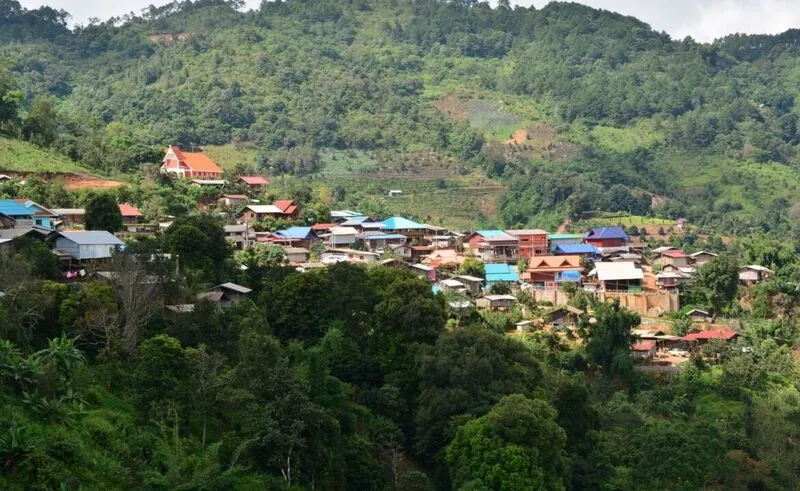
Open Days: Daily
Opening Hours: 06:00 – 17:00
Mae Poon Luang Royal Project Development Center is one of the most distinctive highland agricultural development areas in northern Thailand because it clearly reflects the transformation of a forested landscape that was once converted into a vast opium-growing area back into a place of quality agriculture, nature-based tourism, cultural value, and community life with its own unmistakable character. Seen from the present day, this is no longer just a viewpoint stop or an agricultural demonstration area, but a concrete example of highland development that connects forest, water, livelihoods, and the quality of life of local communities in a meaningful way.
Mae Poon Luang Royal Project Development Center was established in 1980 after the Mae Poon Luang area had faced large-scale opium cultivation covering around 1,400 rai. Although many residents earned considerable income from opium, their overall quality of life did not improve accordingly. Many households still struggled with poor health conditions, unstable living standards, and limited educational opportunities for children and youth. The Royal Project Foundation therefore stepped in to lay the groundwork for development, aiming to provide the community with more sustainable livelihood alternatives that would no longer destroy local natural resources.
The center was originally located at Ban Mae Poon Luang, Wiang Subdistrict, Wiang Pa Pao District, Chiang Rai. However, transportation in the past was extremely inconvenient, especially during the rainy season when access routes became very difficult. For this reason, the operational site was moved to Ban Khun Chae, Mae Wan Subdistrict, Phrao District, Chiang Mai in 1984 so that field operations, transportation, and connections with surrounding communities could function more effectively. Even though the office moved to the Chiang Mai side, the story of Mae Poon Luang remains deeply linked to its original area in Chiang Rai, both historically and culturally, and travelers still recognize it as one of the Royal Project travel destinations associated with Chiang Rai.
Today, Mae Poon Luang Royal Project Development Center has an original area of responsibility of about 26.68 square kilometers, with an additional 45.20 square kilometers under expansion request. The area lies at an elevation of around 1,000–1,400 meters above sea level, giving it a cool climate that is highly suitable for many temperate crops. This altitude also gives Mae Poon Luang a strikingly layered landscape, with overlapping mountain ridges in the distance, lush forest in many parts, and seas of mist that form under favorable weather conditions. As a result, the area has a charm comparable to many of the best-known mountain destinations in northern Thailand.
One of Mae Poon Luang’s greatest strengths is agricultural tourism, because visitors can closely explore both demonstration plots and real village farmland. Within the Sam Li sub-unit area, there are demonstration fruit plots such as peaches and plums, both of which thrive in the cool climate of the highlands. In addition, tea gardens owned by farmers allow visitors not only to see but also to taste tea in the actual production environment. These include Yuan Zhi Oolong, Tea No. 12, and Sam Ruedu tea varieties. This makes a visit to Mae Poon Luang more than just a walk through plantations. It becomes a chance to understand how premium highland crops emerge from the interaction of terrain, knowledge, and Royal Project support systems.
Beyond tea and fruit trees, village agricultural plots are equally interesting because they clearly reflect how highland communities have adapted over time. Crops such as celery, parsley, and spinach are examples of vegetables that can be harvested year-round in this climate. Travelers interested in agriculture will see that this center was not created simply as a showcase for produce, but as a place where crops are directly tied to real income and real improvements in the lives of local residents. That is what gives a visit here more substance than simply taking photos and moving on.
Another memorable highlight is the beauty of statice and caspia flowers, which bloom throughout the year and add continuous color to the landscape of the center. For people who enjoy photography or love mountain flower gardens, Mae Poon Luang offers special appeal because these flowers are not planted merely as decorative backdrops. They are part of an agricultural system designed to generate added value for the community. The overall atmosphere therefore feels more natural and alive than that of destinations landscaped only for sightseeing.
In terms of nature, Mae Poon Luang Royal Project Development Center has its own sea-of-fog viewpoints and sunrise and sunset viewing spots within the center. Visitors can enjoy sweeping views of mountain ridges and forest stretching all around them. On clear days, the Ban Khun Chae viewpoint reveals shimmering light across the mountains and scattered cloud layers, a scene that many compare to natural diamonds glittering in the landscape. This beauty does not appear every day, but when it does, it becomes a vivid memory because it is entirely shaped by real weather and the natural rhythm of the mountains.
The Khun Chae–Mae Poon Luang–Huai Sai route is another particularly appealing route, especially during the rainy season when it becomes suitable for off-road style travel for those who enjoy nature and light adventure. This route offers beautiful mountain scenery, deep green forest, and lively streams, while also opening opportunities for activities such as forest walks, waterfall play, and quiet relaxation in a natural woodland setting. The natural character of this zone makes it ideal for travelers who want a peaceful, uncrowded experience and who value landscapes more than commercial attractions.
Viewed from a cultural perspective, Mae Poon Luang is highly valuable because it is home to three main ethnic groups: Lisu, Lahu, and Akha. The lifestyle of each group is still clearly visible through festivals, language, clothing, handicrafts, and daily routines. The Lisu New Year ceremony, known as “Kin Wor,” is usually held around February, while the new rice ceremony of the Lisu people is generally observed in August. These traditions are not merely annual events; they are moments when the community reaffirms its identity and allows visitors to see living highland culture in an authentic way.
Another special aspect of Mae Poon Luang is the chance to see community life unfold without hurry. Houses, agricultural plots, villagers at work, and everyday routines all help visitors understand that highland development is not only about crops. It is also about relationships between people, forests, water, and land. Seen through this perspective, Mae Poon Luang becomes more than a tourist stop. It becomes a place where both the past and present of change in the highlands can be observed in a very natural way.
Souvenirs from Mae Poon Luang are also highly appealing. Highland vegetables and temperate fruits connect directly to the produce of the local community, while the embroidery and needlework of the Lahu and Lisu people reflect cultural skills passed down through generations. Oolong tea leaves are another excellent souvenir for those who want to bring home the taste and atmosphere of the area. Souvenirs like these make travel more meaningful because buying them is not just about taking home a product, but also about supporting the local economy and carrying part of the place’s story with you.
In terms of accommodation and facilities, Mae Poon Luang Royal Project Development Center has one guesthouse within the center that can accommodate around 20 people, along with rental tents for 4 people including a sleeping bag. This makes it suitable for travelers who want to stay overnight and fully enjoy the atmosphere of the early morning and evening. Although the center itself does not provide a restaurant service, nearby village shops offer a basic level of convenience for visitors. At the same time, the Ban Khun Chae area and surrounding route now also have a growing number of small cafes and accommodations, making overnight travel here relatively manageable for general travelers.
Getting There There are 2 routes to Mae Poon Luang Royal Project Development Center. The first starts from Chiang Mai city via Highway 1001, the Chiang Mai–Phrao route, for about 108 kilometers. After entering Phrao District, continue on the paved road toward Wiang Pa Pao District and Ban Khun Chae for another approximately 22 kilometers. The second route uses Highway 118, the Chiang Mai–Chiang Rai road, until Kilometer 52 in Wiang Pa Pao District, then turns onto Highway 1150 for about 33 kilometers. Both routes are accessible by all types of vehicles, and travelers who do not drive can also hire a car from the Chang Phueak Bus Terminal area.
What makes Mae Poon Luang especially attractive from a travel-planning perspective is that it serves as a connection point between the mountain atmosphere of Phrao and the historical landscape memory of Wiang Pa Pao. It is therefore suitable both for travelers coming from Chiang Mai and for those planning to continue onward to Chiang Rai. A day trip is possible, but staying for one night provides a much better chance to fully appreciate the natural setting, especially at sunrise and in the evening when temperatures drop noticeably and the highland character of the place becomes far more vivid.
As a Royal Project destination, Mae Poon Luang stands out because it does not focus only on the beauty of agricultural plots or flower gardens. Instead, it is especially strong in terms of mountain atmosphere, community life, and its clear historical role in the transformation of a highland area. Travelers who are interested in highland development can easily understand why the Royal Project has played such an important role in mountain communities, and why a place like Mae Poon Luang deserves to be seen in person at least once.
Overall, Mae Poon Luang Royal Project Development Center is a destination that suits travelers who love nature, agriculture, culture, and a deeper kind of journey beyond ordinary check-in tourism. The area offers sea-of-fog views, tea gardens, temperate fruit plots, mountain flowers, natural travel routes, and ethnic community life all within one setting. As a result, it is a peaceful destination with substance and enough depth to reward travelers who prefer to absorb a place slowly rather than simply pass through it.
| Name | Mae Poon Luang Royal Project Development Center |
| Location Summary | A highland agricultural, natural, and cultural tourism destination linked to the historical area of Wiang Pa Pao and the current operational site at Ban Khun Chae, notable for tea plots, temperate fruits, flowers, sea-of-fog viewpoints, and ethnic community life. |
| Current Location | Ban Khun Chae, Moo 8, Mae Wan Subdistrict, Phrao District, Chiang Mai 50190 |
| Original Historical Location | Ban Mae Poon Luang, Wiang Subdistrict, Wiang Pa Pao District, Chiang Rai 57170 |
| Approximate Coordinates | Ban Khun Chae, Mae Wan Subdistrict, Phrao District, Chiang Mai |
| Highlights | Demonstration plots of peaches and plums, oolong tea gardens, Tea No. 12, statice and caspia flowers, sea-of-fog viewpoints, and Lisu, Lahu, and Akha community life. |
| History / Period | Established in 1980 to address opium cultivation and improve the quality of life of highland communities, then relocated to Ban Khun Chae in 1984. |
| Caretaker | Royal Project Foundation / Highland Research and Development Institute network |
| Distinctive Features | Highland area at 1,000–1,400 meters above sea level, cool climate, suitable for temperate crops, and ideal for sea-of-fog viewing in some seasons. |
| Travel Information | From Chiang Mai, take Highway 1001 to Phrao, then continue to Ban Khun Chae for about 22 km, or take Highway 118 and turn onto Highway 1150 for about 33 km. All types of vehicles can access the area. |
| Current Status | Still operating in the Ban Khun Chae area |
| Open Days | Daily |
| Opening Hours | 06:00 - 17:00 |
| Entrance Fee | No verified public entrance fee information |
| Facilities | On-site guesthouse for around 20 people, 4-person rental tents with sleeping bags, and village shops in the surrounding area |
| Main Contact Number | 053-939259, 081-9526352 |
| Website / Agency Information Source | HRDI / Royal Project Area Information |
| Nearby Tourist Attractions | 1. Ban Khun Chae Viewpoint – about 1 km 2. Mae Tho Waterfall Forest Park – about 18 km 3. Khun Chae National Park – about 22 km 4. Khun Chae Waterfall – about 23 km 5. Ban Mae Poon Luang – about 20 km |
| Nearby Restaurants | 1. Sun Ha Cafe, Ban Khun Chae – about 2 km, Tel. 064-035-8372 2. Sai Than Khun Chae, Khun Lao Coffee – about 19 km, Tel. 094-626-5963 3. Ban Khun Chae village shops – about 1 km 4. Restaurant area near Khun Chae National Park – about 22 km 5. Mae Poon Luang community food shops – about 20 km |
| Nearby Accommodations | 1. Khun Chae Mountain View – about 2 km, Tel. 080-677-3161 2. Ban Khun Chae local accommodation – about 2 km, Tel. 097-228-1030 3. Kao Coffee Homestay – about 19 km, Tel. 065-491-4537 4. Khun Chae National Park camping ground – about 22 km, Tel. 053-609262 5. Mae Poon Luang Center guesthouse – on-site, Tel. 053-939259 |
Frequently Asked Questions (FAQ)
Q: Is Mae Poon Luang Royal Project Development Center in Chiang Rai or Chiang Mai?
A: Historically, the area is linked to Ban Mae Poon Luang in Wiang Pa Pao District, Chiang Rai, but the current operational site is at Ban Khun Chae in Phrao District, Chiang Mai.
Q: What are the main highlights of Mae Poon Luang Royal Project Development Center?
A: Its highlights include oolong tea gardens, temperate fruit plots, highland flowers, sea-of-fog viewpoints, and the cultural life of three ethnic communities.
Q: When is the best time to visit?
A: The late rainy season through winter is an excellent time to visit because the weather is cool, the scenery is open and beautiful, and the mountain atmosphere is especially striking.
Q: Is there accommodation inside the center?
A: Yes. The center has an on-site guesthouse and rental tents, making it suitable for travelers who want to stay overnight and enjoy the atmosphere in the morning and evening.
Q: Are there restaurants inside the center?
A: The center itself does not have a full restaurant service, but there are village shops and small food options in the surrounding area.
Q: Can regular cars reach the center?
A: Yes. All types of vehicles can access the area, so the journey is relatively convenient compared with many mountain destinations.
Q: What other places can be visited nearby?
A: Travelers can continue their trip to Ban Khun Chae Viewpoint, Mae Tho Waterfall Forest Park, Khun Chae National Park, and Khun Chae Waterfall.
Tel : 053263816
 Tel : 053263816
 Category: ●Research and Development
 Group: ●Royal Project
Last Update : 6 MonthAgo
 Last Update : 6 MonthAgo
 Click to Access the Navigation Map GPS
Mae Poon Luang Royal Project Development Center Map
Recommend

 Art, Culture and Heritage
 Historical Sites and Monuments(3)
 Landmarks and Memorials(7)
 Art, Craft Centres, Tradition(6)
 Museums(8)
 Historic Homes and Cities(1)
 Educational Places
 Museum for Study(1)
 Library(1)
 Educational Gardens, Farm(3)
 Places of Worship
 Temple(38)
 Other Sacred Sites(5)
Royal Project(9)
Other Sacred Sites(5)
Royal Project(9)
 Suburban Living
 Village, Community(16)
 Local Market(5)
 Nature and Wildlife
 National Parks and Marine Reserves(20)
 Mountain (Doi)(20)
 Dam, Reservoir, Lake(8)
 Waterfalls(16)
 Hot Springs(6)
 Caves(8)
 River, Canal(10)
 Sea, Beach(1)
 Other natural attractions(3)
 Entertainment and Agricultural
 Animal camps and shows(1)
 Farms, Parks and Ecotourism(9)
 Waterpark(1)
 Shopping
 Shopping and Night Market(2)
 Call Customer Service in Tourism
 Call Customer Service in Tourism(1)
 Travel Articles, Recipes
 Travel Review, Food Review(1)
 Food Menu, North Recipes(1)


