

 Home
Home Chiang Mai(
















Thai Phonograph and Gramophone Museum
Rating: 3.8/5 (6 votes)
 Search By
  Map
Map 
 Have Map
  No Map
Bangkok attractions
Attractions in Thailand
Status: Permanently Closed
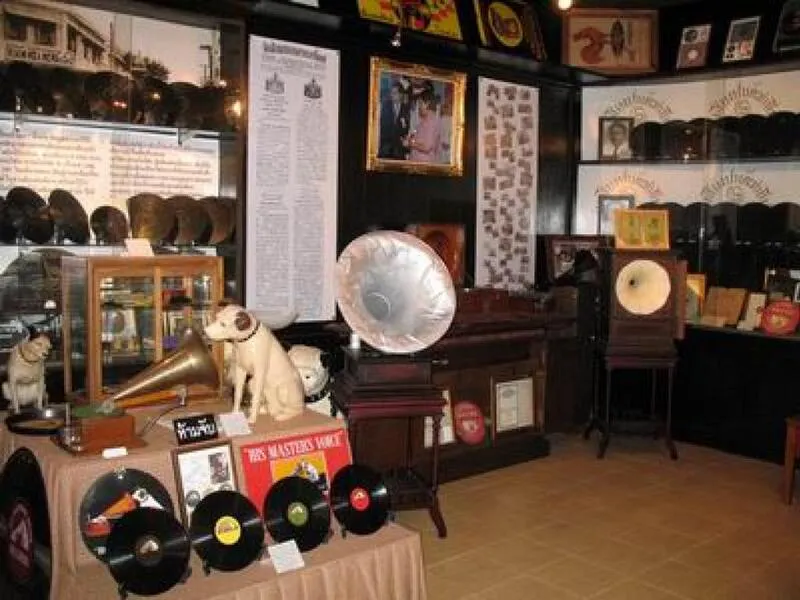
Thai Phonograph and Gramophone Museum was a highly specialized museum that once served as a space for preserving “early sound technology” in Thai society. Its exhibitions focused on various forms of phonographs and gramophones, which represent the foundational origins of sound recording and playback, long before the world entered the eras of radio, electrical records, cassette tapes, and today’s digital media.
The museum was established by the Association of Thai Phonograph and Gramophone Conservators, driven by a commitment to preserve knowledge related to historical sound equipment so that it would not disappear with time. These devices were not merely old objects, but concrete evidence of a moment in human history when sound could first be “stored,” fundamentally changing the relationship between sound, music, and everyday life.
In terms of content, phonographs and gramophones can be seen as bridge technologies linking a world where sound existed only at the moment it was produced, to a world where sound could be recorded, replayed, and transmitted across time. The museum’s exhibitions therefore did not treat these devices simply as collectibles, but aimed to explain their working principles, mechanisms, materials, and the social contexts that allowed recorded sound to become part of Thai life.
The museum’s visiting format in the past was quite distinctive. It was open only on Sundays, with two sessions per day, each limited to a maximum of 10 visitors and lasting approximately one hour. This structure created an intimate viewing experience, more like sitting and listening to stories from a collector than walking through a large-scale exhibition. Visitors gained both technical knowledge and cultural perspectives at the same time.
From a cultural perspective, the Thai Phonograph and Gramophone Museum helped illustrate that “sound” itself is a form of cultural heritage. Music, spoken voices, and recorded sounds from the past act as windows through which we can better understand the tastes, technologies, and ways of perceiving the world of people in different eras. Preserving sound equipment, therefore, is not just about keeping old objects, but about preserving collective memory.
Although the museum has now permanently closed, its role remains significant as an example of dedicated efforts to conserve specialized knowledge. It also serves as inspiration for viewing Thai history as something not limited to images, objects, or architecture alone, but also inclusive of “sound” that once resonated through people’s everyday lives.
| Name of Learning Resource | Thai Phonograph and Gramophone Museum |
| Founder / Organizer | Association of Thai Phonograph and Gramophone Conservators |
| Type of Exhibition | Phonographs, gramophones, and related equipment, with technical and cultural explanations |
| Main Theme | History of sound technology, early sound recording, and listening culture in Thai society |
| Former Visiting Format | Open only on Sundays, two sessions per day, limited to 10 visitors per session, approximately one hour per session |
| Admission Fee (Former) | 100 THB |
| Current Status | Permanently closed (historical information only) |
Frequently Asked Questions (FAQ)
Q: What was the Thai Phonograph and Gramophone Museum?
A: It was a specialized museum that once exhibited and shared knowledge about phonographs and gramophones, early sound-recording technologies that played an important role in the development of music and communication in Thai society.
Q: Who founded this museum?
A: The museum was established by the Association of Thai Phonograph and Gramophone Conservators, a group of collectors and enthusiasts interested in the history of sound technology.
Q: Why are phonographs and gramophones important?
A: These devices marked the beginning of sound recording, allowing music and spoken voices to be preserved and transmitted across time, greatly influencing music culture, performance, and everyday life in the past.
Q: What was the museum’s visiting format like in the past?
A: The museum was open only on Sundays, with two sessions per day, each limited to a maximum of 10 visitors and lasting about one hour, creating a close and immersive learning experience.
Q: Is the museum still open today?
A: No. The museum is now permanently closed. This article is therefore presented as historical documentation and a record of its cultural significance.
Q: Does the museum still have value even though it is closed?
A: Yes. The museum remains valuable as an example of sound heritage preservation and as a reminder that “sound” is an essential part of history and culture, just like objects or architecture.
 Tel: 029399920, 029399553
 Thai Phonograph and Gramophone Museum Map
 Category:
  Group:
  Tag: ●Thai Phonograph and Gramophone Museum●thai phonograph museum ●gramophone museum thailand ●sound technology history thailand ●early sound recording ●phonograph and gramophone ●sound heritage ●specialized museum thailand ●audio history museum ●permanently closed museum Last Update: 2 MonthAgo
Comment
 Nearby Attractions
| Keyword (Advance) |
 Region
|
 Phra Nakhon(
 Copyright 2012,