
 Home
Home North(
 Chiang Mai(


Bangkok Local Museum (Bang Khun Thian District)
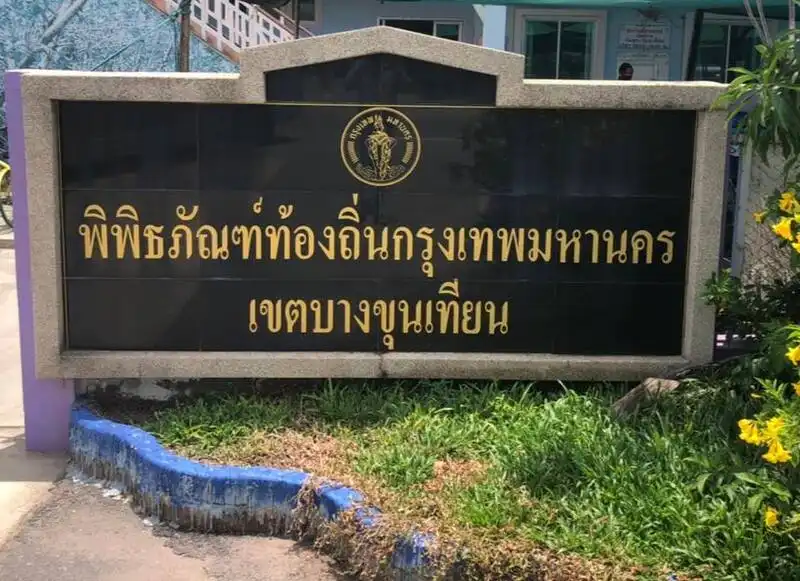
Rating: 3.3/5 (7 votes)
 Search By
  Map
Map 
 Have Map
  No Map
Bangkok attractions
Attractions in Thailand
Open Days: Daily (For group visits, please send an official letter in advance to the Principal of Khlong Phitthayalongkon School)
Opening Hours: 09:00 – 16:00
Bangkok Local Museum (Bang Khun Thian District) is one of those Bangkok places that quietly changes how you see the city. It is not about skyscrapers or central landmarks, but about a Bangkok that grew up with orchards, old canals, waterways, and mangrove forests at the city’s edge. The museum reflects the Bangkok Metropolitan Administration’s idea that each district should have a dedicated space to tell its own local story in a structured way—history, culture, everyday life, and community wisdom gathered over generations—so visitors can picture the district clearly rather than only reading about it in books.
The location itself reinforces that “real local” concept. The museum uses space within Khlong Phitthayalongkon School in Tha Kham Subdistrict, Bang Khun Thian District, along Rama 2 Road—a major route in southern Bangkok. On one hand, that makes it easy for people in the area to access. On the other, it makes the stories feel grounded in the community rather than relocated somewhere far away. As you walk through, it can feel like stepping into a “city classroom” where the district’s lived experience has been arranged into chapters you can read with your eyes and your attention.
The exhibition narrative typically guides you from the big picture into smaller details: the origins of the name “Bang Khun Thian,” the orchard systems that once defined this side of Bangkok, and how the landscape gradually shifted as major roads and urban growth moved in. These stories help connect the dots: why Bang Khun Thian can hold “orchards,” “canals,” and “coastal/mangrove areas” within a single district, and why so many residents have remained closely tied to water, wind, and saline soil even while living inside Bangkok.
A section that many visitors find especially compelling is the story of Bang Khun Thian’s orchards and the broader memory of “Bang Mod orange groves.” In earlier decades, this area produced seasonal fruit and garden crops that helped feed the city, with canal water playing a central role. The “Bang Mod oranges” story, in particular, often reads like a symbol of a time when Bangkok still had large, living agricultural zones close to home. The museum frames “orchards” not as simple planting areas, but as community economic systems, water-management practices, and a kind of local intelligence shaped by the rhythms of tides and brackish-water environments—all of which supported households along canal networks.
Another layer of charm is how the museum explains Bangkok’s changing physical form—the city’s “shape” over time. If you only look at Bangkok today, you see roads and buildings. But historically, the city grew through water and canals: transportation, trade, and settlement patterns followed waterways long before modern roads arrived. Bang Khun Thian highlights this vividly because it sits where the city meets a coastal ecosystem, with brackish water, mudflats, and mangrove belts working in constant interaction with the sea. Through that lens, issues such as seawater intrusion, coastal erosion, or saline soil stop feeling abstract. They become part of the reality of a district built upon an ecosystem that is always shifting.
In its local-history section, the museum also connects Bang Khun Thian to national-scale narratives, including stories associated with King Taksin the Great and travel routes in an era when waterways functioned as the main highways of Siam. When you bring that story back to Bang Khun Thian, it becomes easier to see why canal corridors, river access, and coastal gateways mattered—strategically and economically—and why this district was never merely a “suburban edge,” even if it can feel that way today.
There are also displays about rice farming in earlier periods and everyday household objects from the past. These details give Bang Khun Thian’s life-story real texture: how people lived, what tools they used, how they stored food, how orchard and field work was organized, and how community life depended on mutual support. Things that can feel flat on a page often become instantly clear when you see physical objects. You start to understand the kind of thinking required to live well in an environment shaped by tides, mud, and changing water levels.
Another interesting thread is the museum’s presentation of historical figures associated with local memory—such as Sunthorn Phu and King Nangklao (Rama III). This approach gently reminds visitors that local history is not separate from national history. Local places are where important people traveled, acted, or were remembered, and where “big history” intersected with daily life. It shifts your museum experience from simply receiving information to connecting people, place, and time into a single storyline.
And in Bang Khun Thian, you cannot skip the mangroves. This is one of Bangkok’s most distinctive edge-of-city landscapes. The museum helps lay the groundwork for why mangroves matter: coastal protection, wave buffering, nursery habitats for aquatic life, bird and biodiversity shelter, and a living resource tied to livelihoods and food. Once you have that context, visiting an actual mangrove learning trail in the district feels more meaningful. You see that the forest is not outside the city. It is one part of the city that still breathes.
One practical, hands-on appeal of Bang Khun Thian is how museum learning can connect to the outside landscape. Many visitors extend their trip by renting a bicycle to explore mangrove areas, or by visiting brackish-water agriculture projects that demonstrate how communities adapt to salinity and tidal conditions. In a big-city context, this is a clear lesson in living with nature rather than waiting for nature to stop changing. The district’s story is, in many ways, a story of adaptation.
If you want the most satisfying half-day plan, start at the museum to build a clear picture, then go out into the district to feel the place in real life—whether that means heading toward the Bang Khun Thian coastal zone, driving along canal-side routes as time allows, or ending with a proper seafood meal in the area. Bang Khun Thian is the kind of district where stories and flavors fit naturally together. The museum helps you “know,” and the district helps you “feel.” Put together, the picture becomes vivid without trying too hard.
Getting There The museum is located within Khlong Phitthayalongkon School in Tha Kham Subdistrict, Bang Khun Thian District, along Rama 2 Road. The most convenient option is to drive or use a taxi/ride-hailing app. Pin your map to “Khlong Phitthayalongkon School” or “Bangkok Local Museum (Bang Khun Thian District).” Allow extra time for traffic on Rama 2, especially in the morning and late afternoon. For group visits, please follow the museum’s guidance to send an official letter to the school in advance so on-site arrangements run smoothly.
| Place Name | Bangkok Local Museum (Bang Khun Thian District) |
| Location | Within Khlong Phitthayalongkon School, Tha Kham, Bang Khun Thian, Bangkok (Rama 2 Road area) |
| Highlights | District-level local museum presenting Bang Khun Thian’s history, culture, and community wisdom—local livelihoods, name origins, orchards/Bang Mod orange heritage, Bangkok’s changing geography, King Taksin-related travel narratives, past rice farming, traditional household objects, notable figures, and mangrove ecosystem stories |
| Theme Period | Bang Khun Thian local history (canal life, agriculture, orchards, coastal mangroves) linked to broader Bangkok and Siam historical contexts |
| Key Displays | Community lifestyle exhibits, district name origins, orchard and Bang Mod orange stories, Bangkok’s geographic form over time, King Taksin travel-route narratives, past rice-farming life, traditional tools and household objects, notable historical figures, and mangrove/coastal learning topics |
| Concept | A Bangkok Metropolitan Administration district museum created to support learning about Bang Khun Thian’s local history, culture, and wisdom |
| Open Days | Daily (For group visits, please send an official letter in advance to the school principal) |
| Opening Hours | 09:00 – 16:00 |
| Admission | Free |
| Facilities | Indoor exhibition space within a school building (contact in advance for group visits); activities may connect to the district such as bicycle rental for mangrove exploration or brackish-water agriculture learning (details depend on on-site coordination) |
| Travel | Best by private car/taxi/ride-hailing; pin “Khlong Phitthayalongkon School” or the museum name (Rama 2 area) and allow extra time for peak-hour traffic |
| Current Status | Open during stated hours (group visits should coordinate via an official letter in advance) |
| Contact | 095-141-5381, 02-452-5001 |
| Nearby Attractions (Approx. Distance) |
Hidden Siam – 6 km (Tel. 081-383-7266)
Central Plaza Rama 2 – 8 km (Tel. 02-866-4300)
The Bright Rama 2 – 10 km (Tel. 099-446-4626)
Seacon Square Srinakarin – 18 km (Tel. 02-721-8888)
Suan Luang Rama IX – 20 km (Tel. 02-106-2674)
|
| Popular Restaurants Nearby (Approx. Distance) |
Rueangrit Seafood (Bang Khun Thian) – 12 km (Tel. 02-452-2285, 091-186-9911)
Krua Baimai Chai Khlong – 12 km (Tel. 085-233-8893)
Krua Khun On Seafood – 11 km (Tel. 063-890-2999)
Rungfa 1 Seafood – 12 km (Tel. 081-648-9713)
Khob Thale Seafood – 12 km (Tel. 099-319-1896)
|
| Popular Accommodations Nearby (Approx. Distance) |
Park Village Rama II – 5 km (Tel. 02-415-1122)
Eurna Resort Hotel – 6 km (Tel. 02-415-3078, 02-415-3079)
Latin Garden (Tha Kham) – 6 km (Tel. 02-848-1818, 081-422-6482)
The Choice Hotel (Rama 2) – 9 km (Tel. 081-655-7233)
Platinum Place (Rama 2) – 10 km (Tel. 02-899-1499)
|
Frequently Asked Questions (FAQ)
Q: Which days is the Bangkok Local Museum (Bang Khun Thian District) open?
A: It is generally open daily, but for group visits it is recommended to coordinate in advance by sending an official letter to Khlong Phitthayalongkon School according to the visit guidelines.
Q: What are the opening hours?
A: The museum is generally open from 09:00 – 16:00.
Q: How much is the admission fee?
A: Admission is free.
Q: What will I mainly learn from one visit?
A: You will get a clear picture of Bang Khun Thian’s local history and canal-and-orchard life, Bang Mod orange heritage, Bangkok’s changing geography, King Taksin-related narratives, past rice-farming life, mangrove ecosystem value, and local wisdom around brackish-water environments.
Q: If I have half a day, where should I go next to complete the trip?
A: Consider continuing to the Bang Khun Thian coastal/mangrove learning areas, then finishing with a seafood meal in the district to experience both the stories and the real atmosphere of the place.
 Tel: 024524792, 024525001
 Bangkok Local Museum (Bang Khun Thian District) Map
 Category:
  Group:
  Tag: ●Bangkok Local Museum (Bang Khun Thian District)●bangkok local museum ●bang khun thian museum ●things to do in bang khun thian ●rama 2 attractions ●local history museum bangkok ●bang khun thian mangrove ●bang mod orange history ●cultural attractions bangkok ●community museum thailand ●mangrove forest bangkok
Last Update: 2 MonthAgo
Tag: ●Bangkok Local Museum (Bang Khun Thian District)●bangkok local museum ●bang khun thian museum ●things to do in bang khun thian ●rama 2 attractions ●local history museum bangkok ●bang khun thian mangrove ●bang mod orange history ●cultural attractions bangkok ●community museum thailand ●mangrove forest bangkok
Last Update: 2 MonthAgo
Comment
 Nearby Attractions
| Keyword (Advance) |
 Region
|
 Phra Nakhon(
 Copyright 2012,