
 Home
Home North(
 Chiang Mai(


Wat Makut Kasattriyaram Ratchaworawihan
Rating: 4/5 (4 votes)
 Search By
  Map
Map 
 Have Map
  No Map
Bangkok attractions
Attractions in Thailand
Open Days: Daily
Opening Hours: 08:00 – 19:00
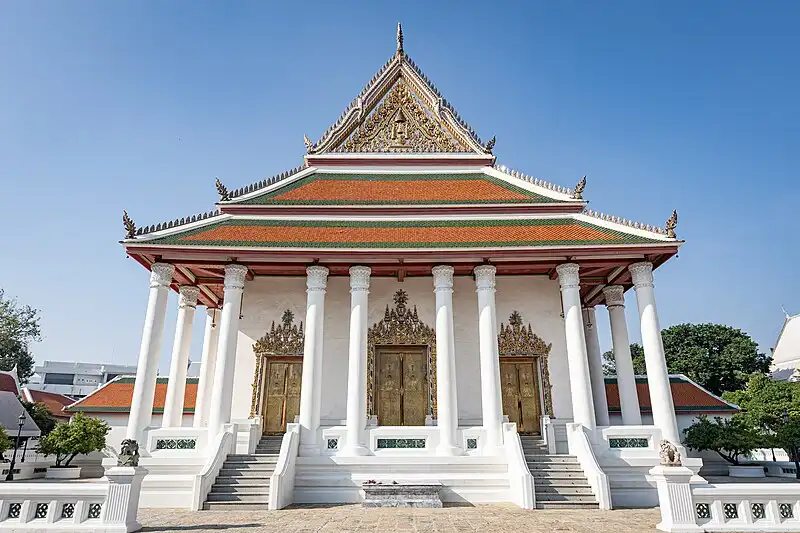
Wat Makut Kasattriyaram Ratchaworawihan is one of those Bangkok temples that rewards you for slowing down. Set along Khlong Phadung Krung Kasem near Ratchadamnoen Nok Road, it sits right where the city’s history and everyday life overlap. Many people recognize the name because it is a royal temple, but once you step inside, the real charm is the idea behind its creation in King Rama IV’s era—linking the temple to the canal, city planning, and an intention to line the outer moat canal with temples in a way that echoed Ayutthaya. If you like exploring Bangkok at a gentle pace and collecting details as you go, this is an easy stop to love: calm atmosphere, layered history, and plenty to notice.
The story begins with the digging of Khlong Phadung Krung Kasem as the outer moat of the capital. After the canal line was completed, King Rama IV envisioned temples arranged along the canal banks, similar to what could be seen in the old capital of Ayutthaya. He therefore ordered the construction of Wat Makut Kasattriyaram and positioned it as a paired temple with Wat Sommanat Wihan along the same canal corridor. Construction was completed around 2411 B.E. At first, it was temporarily called “Wat Nambanyat,” and after the reign ended, it came to be known by its granted royal name, “Wat Makut Kasattriyaram,” derived from the royal epithet. This context matters because it frames the temple not only as a place of faith, but also as a living document of how the city was imagined in Rama IV’s time—seeing canals as the capital’s lifelines and placing spiritual centers along them for people to gather around.
One detail that often makes history lovers pause longer is that Wat Makut Kasattriyaram is among the Rattanakosin-area temples with a “double boundary marker” system, or two layers of sema stones. The first layer is called the Mahasima, set within small structures at the corners of the perimeter wall. The second layer surrounds the ordination hall (ubosot) and is called the Khandhasima. In temples with two layers like this, monks can convene to perform sanghakamma (formal monastic acts) in both the ordination hall and the viharn (assembly hall). It’s the kind of detail that can be easy to miss if you don’t know it’s there, but once you do, the whole layout starts to feel purposeful—disciplined, structured, and logically planned.
If you want to enjoy the visit without feeling lost, start by taking in the perimeter wall and corners first, then move toward the main buildings. A signature of Wat Makut is how clearly it signals King Rama IV’s identity through symbols—especially the royal emblem of the Great Crown (Phra Maha Mongkut), Rama IV’s insignia. You can spot crown motifs on gables and above doorway and window arches of both the ubosot and the viharn. Walking with a “spot-the-crown” mindset turns the visit into more than temple-hopping; it becomes a small hunt for the era-coded details the builders intentionally left behind.
Another feature that elevates Wat Makut and makes it feel different from many other temples is the interior mural program inside the ordination hall, which is described as unusually specific in content. Accounts mention scenes related to disciples in Pali sources and commentaries, along with compositions depicting meditation practice, dhutanga observances, and themes tied to monastic discipline. On the inner faces of windows and doors, there are also carefully written verses and sutta passages in ornate script. Taken together, the murals don’t read as decoration alone; they feel like a visual space for communicating practice and discipline—fitting the broader character often associated with Rama IV’s era, where emphasis on principles and systematic learning stands out.
If you want the trip to feel truly rewarding, try walking just a little slower than usual. Wat Makut doesn’t rely on instant spectacle. Its beauty is in the “gradual reveal”: sema boundaries, the logic of ritual space, and the small crown emblems appearing across architectural elements. Morning light is gentle and helps details pop; late afternoon softens the canal-side atmosphere and makes strolling easier. Dress respectfully, keep your voice low, and follow on-site guidance—especially when lay visitors are paying respects or when monks are using the space for religious duties.
Getting There Wat Makut Kasattriyaram Ratchaworawihan sits along Khlong Phadung Krung Kasem near Ratchadamnoen Nok Road. The easiest way is usually to use public transport and walk within the old-city area, since routes around the temple connect smoothly to the Thewet–Dusit–Ratchadamnoen zones. If you use the MRT, you can get off at an old-town area station and continue by a short ride or a walk depending on weather and time. Driving is possible, but parking can be limited in the historic center, so it helps to allow extra time and plan to walk as your main mode—especially if you want to link multiple nearby landmarks in one day.
| Name | Wat Makut Kasattriyaram Ratchaworawihan (วัดมกุฏกษัตริยารามราชวรวิหาร) |
| Location | 330 Krung Kasem Road, Bang Khun Phrom, Phra Nakhon, Bangkok 10200 |
| Key Highlights | Canal-side royal temple near Ratchadamnoen Nok; Rama IV era concept of lining the canal with temples; double sema boundaries (Mahasima and Khandhasima); Rama IV crown emblem motifs on gables and architectural arches; ubosot murals with distinctive themes on disciples, meditation practice, and monastic discipline |
| Period | Rattanakosin Period (initiated in the reign of King Rama IV; completed around 2411 B.E.) |
| Key Evidence / Significance | Founded by royal initiative alongside Khlong Phadung Krung Kasem and paired with Wat Sommanat Wihan; two-layer sema system allows sanghakamma in both ubosot and viharn; prominent Rama IV crown-emblem decorations; murals in the ubosot described as thematically distinct from many other temples |
| Name Origin | Initially called “Wat Nambanyat”; later known by the granted name “Wat Makut Kasattriyaram,” derived from the royal epithet |
| Abbot (Latest) | Phra Thep Wachiramedhacharn (Boonruam Atthakamo) |
| Travel | Canal-side location near Ratchadamnoen Nok; best reached by public transport + walking in the old-town area; MRT in the old-town zone then short ride/walk depending on conditions; driving possible but parking is limited, so plan extra time and walk for convenience |
| Current Status | Open for visits and worship |
| Contact Number (Verified) | 02-281-2089 |
| Nearby Tourist Attractions (Distance) | Wat Sommanat Wihan (วัดโสมนัสวิหาร) (approx. 0.7 km) Thewet Market (ตลาดเทเวศร์) (approx. 1.3 km) Bank of Thailand Museum (พิพิธภัณฑ์ธนาคารแห่งประเทศไทย) (approx. 1.6 km) Ananta Samakhom Throne Hall (พระที่นั่งอนันตสมาคม) (approx. 2.2 km) Wat Benchamabophit Dusitwanaram (วัดเบญจมบพิตรดุสิตวนาราม) (approx. 2.7 km) Khao San Road (ถนนข้าวสาร) (approx. 3.1 km) |
| Popular Restaurants Nearby (Distance + Phone) | Krua Mongkut (ครัวมงกุฏ) (approx. 0.1 km) – 02-282-3188 Khao Tom Peng Peng (ข้าวต้มเพ่งเพ้ง) (approx. 2.8 km) – 086-332-9959 Jiew Ped Yang (จิวเป็ดย่าง) (approx. 1.4 km) – 094-848-4731 Ber Nueng (เบอร์หนึ่ง) (approx. 1.6 km) – 02-628-6868 Suki Thewet (สุกี้เทเวศร์) (approx. 1.5 km) – 02-282-1033 |
| Popular Accommodations Nearby (Distance + Phone) | Shanti Lodge Bangkok (approx. 0.2 km) – 02-282-3551 The Raweekanlaya Bangkok (approx. 0.4 km) – 02-628-5999 Trang Hotel Bangkok (approx. 0.7 km) – 02-282-0022 Nouvo City Hotel (approx. 1.8 km) – 02-282-7500 sala rattanakosin bangkok (approx. 3.6 km) – 02-622-1388 |
Frequently Asked Questions (FAQ)
Q: Where is Wat Makut Kasattriyaram Ratchaworawihan located?
A: The temple is located along Khlong Phadung Krung Kasem near Ratchadamnoen Nok Road in Bangkok’s old-town area, making it easy to link with routes around Thewet, Dusit, and Ratchadamnoen.
Q: Why was Wat Makut built in King Rama IV’s era?
A: Accounts describe that after Khlong Phadung Krung Kasem was dug as the outer moat canal, King Rama IV envisioned temples lining the canal banks similar to Ayutthaya. He therefore ordered this temple to be built and paired it with Wat Sommanat Wihan.
Q: What does the “two-layer sema” system mean?
A: It refers to two boundary-marker layers: the Mahasima around the perimeter corners and the Khandhasima around the ubosot. This arrangement allows formal monastic acts to be performed in both the ubosot and the viharn.
Q: Why are crown motifs seen in many places around the temple?
A: The Great Crown emblem is associated with King Rama IV. It appears as a key motif on gables and architectural arches, acting as a clear signature of the era.
Q: How are the ubosot murals different from those in other temples?
A: Descriptions highlight themes that are more specific and practice-oriented, including disciples in Pali sources and commentaries, depictions of meditation practice and dhutanga observances, and carefully written verses or sutta passages on inner doors and windows.
Q: What are good nearby places to visit after Wat Makut?
A: Popular next stops include Wat Sommanat Wihan, Thewet Market, the Bank of Thailand Museum, Ananta Samakhom Throne Hall, and Wat Benchamabophit, all within an easy old-town route.
 Wat Makut Kasattriyaram Ratchaworawihan Map
 Category:
  Group:
  Tag: ●Wat Makut Kasattriyaram Ratchaworawihan●wat makut kasattriyaram ratchaworawihan ●wat makut bangkok ●bangkok royal temple ●phadung krung kasem canal temple ●rama iv crown motif ●double sema boundary ●ratchadamnoen nok temple ●old town bangkok temple ●things to do in bangkok old town ●temples near thewet Last Update: 2 MonthAgo
Comment
 Nearby Attractions
| Keyword (Advance) |
 Region
|
 Phra Nakhon(
 Copyright 2012,